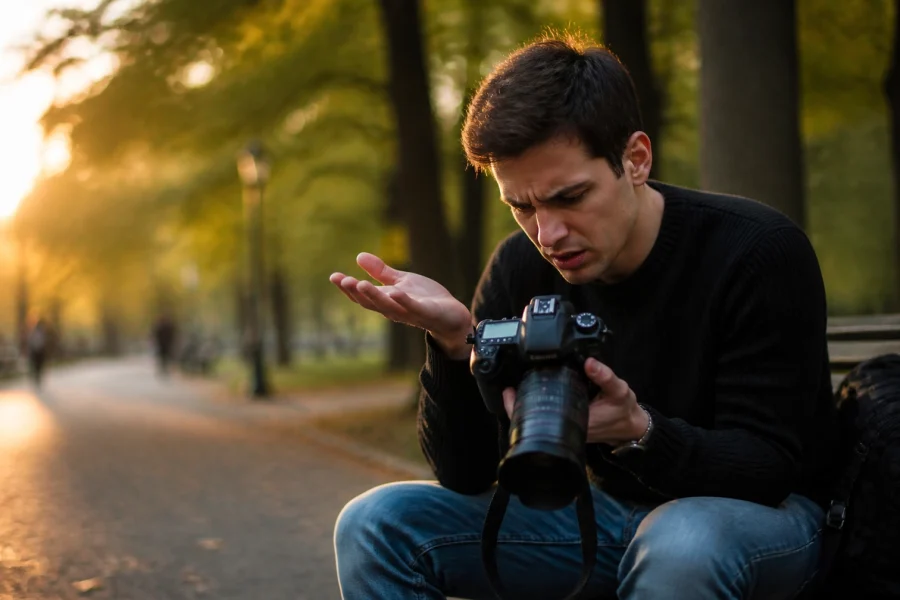
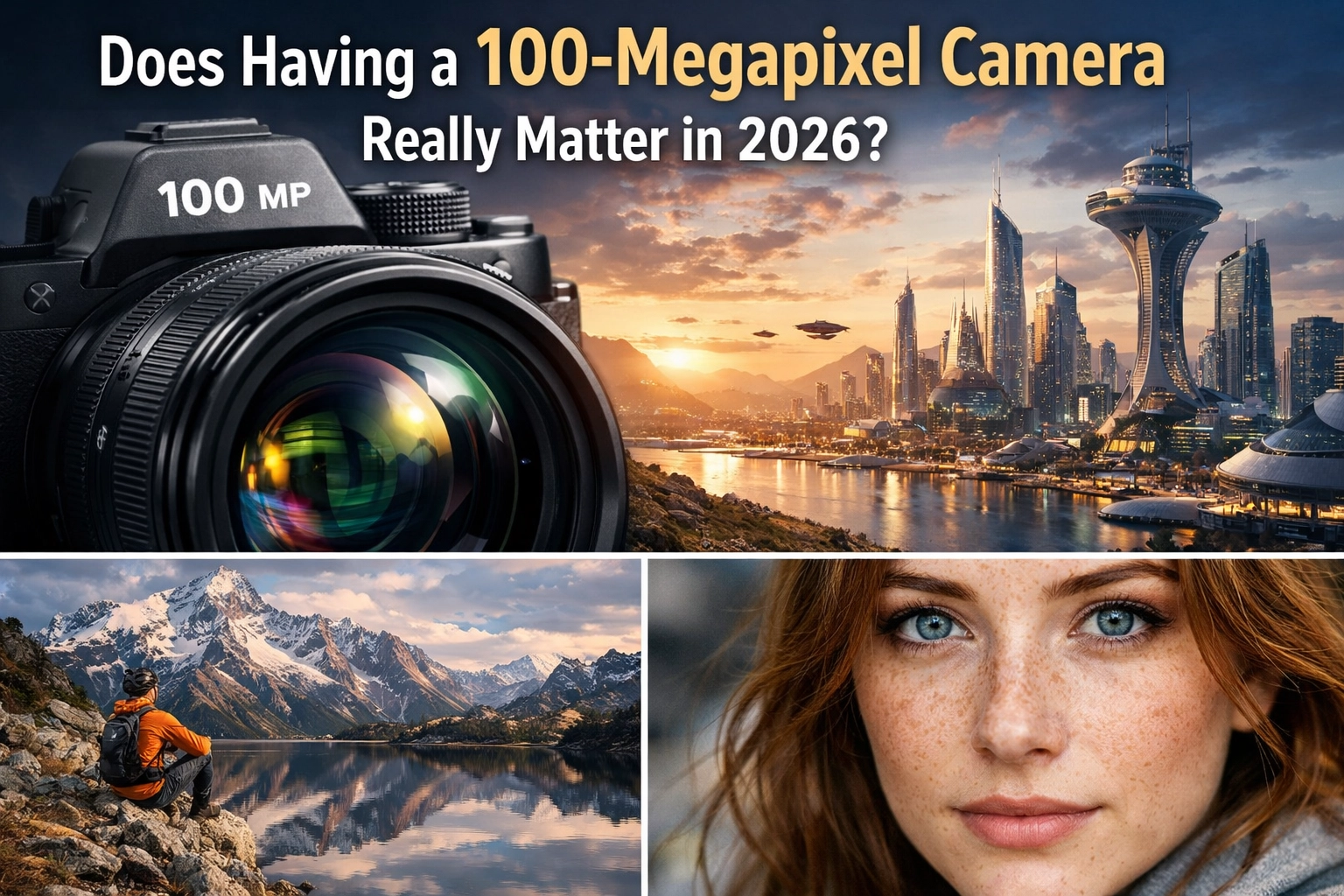
Welcome to 2026. It’s a world where your phone probably has more computing power than the Apollo 11 mission and your coffee machine probably knows your mood before you do. In the photography world, we’ve hit a point where "entry-level" cameras are doing things that professional rigs couldn’t touch a decade ago. But there’s one number that still makes people stop and stare: 100 megapixels.
For a long time, the "megapixel war" felt like it had reached a stalemate. Most of us agreed that 24 to 45 megapixels was the "sweet spot." It was enough for a sharp print, plenty for Instagram, and didn't make our hard drives scream in agony. But as we settle into 2026, 100-megapixel sensors are becoming more common, appearing in medium format beasts and even some high-end full-frame contenders.
The question is: does it actually matter? Or is it just a marketing flex designed to make you reach for your wallet? Let’s break down the reality of high-resolution shooting in today's landscape.
The "More is Better" Trap
In the early days of digital, megapixels were everything. Moving from 3MP to 6MP was a game-changer. Moving from 6MP to 12MP felt like gaining a superpower. But we’ve hit the point of diminishing returns. If you’re mostly sharing your work on social media or viewing it on a standard 4K monitor, you technically only need about 8.3 megapixels to fill that screen.
So, why go to 100?
When you look at the current market, as discussed in our breakdown of does new camera gear really matter in 2026, the hardware is often ahead of our actual needs. However, "need" and "want" are two different things in art. 100 megapixels isn't about filling a phone screen; it's about what happens when you want to go big, really big.
The Superpower of Cropping
This is the single biggest argument for high-resolution sensors in 2026. Imagine you’re out in the field, perhaps exploring some hidden gem locations for travel photography. You’re shooting a stunning landscape, but you realize later that there’s a much more compelling vertical composition hidden inside your wide-angle horizontal shot.
With a 24MP camera, cropping in that aggressively might leave you with a 6MP or 8MP file. It’s fine for a quick post, but you’ve lost the ability to print it large. With a 100MP sensor, you can crop 50% of the image away and still have a 50MP file. That’s more resolution than most professional flagship cameras had just a few years ago.
For wildlife photographers or sports shooters who can’t always get close enough to the action, 100 megapixels is essentially a "digital zoom" that actually works. You have the freedom to recompose your shot in post-production without sacrificing the integrity of the image.
Printing: From Your Screen to the Wall
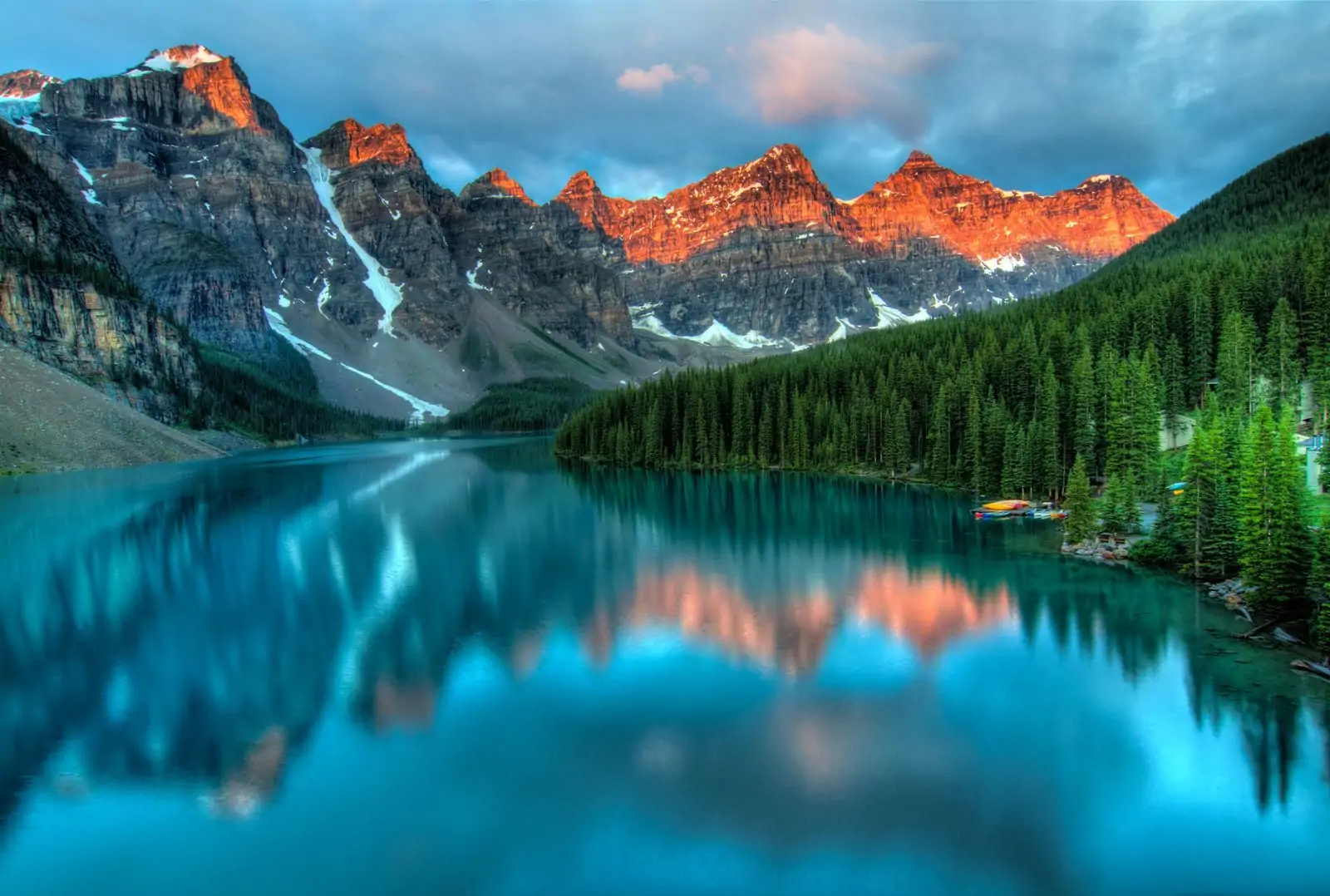
If you are a fine art photographer selling prints at www.edinfineart.com, resolution is your best friend. To get a truly tack-sharp print at 300 DPI (dots per inch), a 100MP file allows you to print at roughly 40×30 inches without any upscaling.
In 2026, we’re seeing a resurgence in physical media. People want tangible art. When you stand in front of a massive landscape print, the "micro-detail" is what makes it immersive. It’s the texture of the moss on a rock or the individual leaves in a distant forest. This is where 100MP shines. It provides a level of depth and "lifelike" quality that lower resolution sensors simply can’t replicate. If you're looking to capture these details, you might want to check out some top spots for stunning nature imagery to put that resolution to the test.
The Technical Reality: It’s Not Just About Pixels
It’s important to remember that resolution doesn't exist in a vacuum. A 100MP sensor is only as good as the glass you put in front of it. In 2026, lens technology has had to catch up. Older lenses often can’t "resolve" that much detail, meaning the image might look soft even if the file size is huge.
Furthermore, dynamic range and color science often matter more than raw pixel count. A 100MP image with poor dynamic range will look "flatter" and less professional than a 45MP image with 15 stops of dynamic range. When you’re looking at how to choose the best mirrorless camera for 2026, always look at the sensor's overall performance, not just the headline number.
The Aesthetics of High Resolution
There is a specific "look" to high-resolution files, especially those coming from medium format sensors like the ones found in the Fuji GFX series or Hasselblad. It’s often referred to as the "medium format look." It’s a combination of a larger sensor size, shallower depth of field at equivalent focal lengths, and that massive amount of data.
This setup is perfect for photographers who enjoy using rare textures for tangible aesthetic photography. The way a 100MP sensor renders fabric, skin, or weathered wood is almost tactile. It feels like you could reach into the frame and touch the subject.
The Hidden Costs: Storage and Speed
Before you run out and buy the latest 100MP monster, we need to talk about the "boring" stuff. A single uncompressed RAW file from a 100MP camera can easily exceed 200MB. If you’re a wedding photographer taking 3,000 photos a day, you’re looking at 600GB of data per shoot.
In 2026, while SSDs are cheaper and faster, the sheer volume of data still requires a robust workflow. You’ll need:
- Fast Memory Cards: CFexpress Type B or faster are mandatory to prevent the camera's buffer from locking up.
- A Powerful Computer: Editing these files requires serious RAM and GPU power. If you try to open 20 of these files in a heavy editor on an old laptop, you’ll have enough time to go make a sandwich while it renders.
- Cloud and Physical Storage: You’ll burn through terabytes faster than ever.
If you’re working at a pro level, like the team at www.proshoot.io, this is just the cost of doing business. But for a hobbyist, it can become a significant headache.
Editing 100MP Files: The Software Side
The good news is that software in 2026 is smarter than ever. AI-driven editing tools like Luminar have made handling large files much more efficient. Instead of your computer struggling to process every single pixel in real-time, these programs use smart previews and hardware acceleration to keep the experience smooth.
Using Luminar also allows you to take advantage of AI upscaling if you didn't shoot with 100MP. This begs the question: if AI can upscale a 45MP image to 100MP with incredible accuracy, do you actually need the native resolution? For most people, the answer is "probably not." But for the purist, there is no substitute for native data. Native pixels always hold more "micro-contrast" and fine detail than generated ones.
Travel and Landscapes
If you’re the type of photographer who spends their weekends looking for secluded paradises to enhance your photography portfolio, 100MP might be your best friend. When you find that perfect vista, like one of these lesser-known vistas for enigmatic photos, you want to capture every ounce of light and shadow.
High resolution is particularly useful in water photography. Capturing the spray of a waterfall or the intricate patterns of a wave requires fast shutter speeds and lots of detail. When you have 100MP to work with, you can see every individual droplet. For more on this, check out our techniques for stunning water photography guide.
The "VFX and Compositing" Factor
For commercial photographers working in high-end advertising or VFX, 100MP is almost a requirement. When you’re compositing multiple elements into a single frame, having that extra pixel density makes masking and edge detection much easier. It gives the post-production team "room to breathe." If you’re looking to get into this professional sphere, I highly recommend browsing the resources at Shut Your Aperture for advanced technical tips.
When 100MP Doesn't Matter (and Might Hurt)
Let’s be real for a second. If your primary goal is street photography or fast-paced documentary work, a 100-megapixel camera might actually hinder you.
- Speed: High-res sensors often have slower readout speeds, leading to "rolling shutter" issues in video or fast action.
- Low Light: Generally, the smaller the individual pixels (photosites), the more noise you get at high ISOs. While 2026 sensor tech has improved this, a 24MP sensor with larger pixels will almost always perform better in the dark than a 100MP sensor of the same size.
- Focus Accuracy: At 100MP, any tiny miss in focus is magnified. If your focus is off by a hair, it’s glaringly obvious.
If you’re making 7 mistakes you’re making with landscape photography, a higher resolution camera won't fix them, it will just make them more visible.
The Workflow Bottleneck
It’s not just about storage; it’s about time. Uploading a gallery of 100MP images to a client can take hours depending on your connection. Even in 2026, with widespread high-speed internet, moving gigabytes of data is a chore. If you're a travel photographer jumping between picturesque coastal escapes, you might not always have the bandwidth to move these massive files.
Is 100MP the New Standard?
By the end of 2026, 100MP won't be the "standard" for everyone, but it will be the standard for "quality-first" photography. Just as 24MP became the baseline for hobbyists, 100MP is becoming the baseline for fine art, commercial, and high-end landscape work.
If you are just starting out, don't feel pressured to chase the highest number. Focus on storytelling in photography. A compelling story shot on a 12MP camera will always beat a boring photo shot at 100MP. You can find more inspiration on building a narrative in your work over at blog.edinchavez.com.
Final Verdict: Does it Really Matter?
The short answer: It depends on your output.
- It Matters If: You print larger than 24×36 inches, you crop heavily (wildlife/macro), or you do high-end commercial compositing.
- It Doesn't Matter If: Your work lives almost exclusively online, you value high-speed burst shooting, or you don't want to spend thousands on new hard drives and a faster Mac.
In 2026, we have the luxury of choice. We are no longer limited by the technology, but by our own needs and budgets. Whether you're shooting on a compact point-and-shoot for fun or a 100MP medium format rig for a gallery show at www.edinstudios.com, the best camera is still the one that makes you want to go out and shoot.
If you're still on the fence about your next upgrade, take a look at our guide on finding hidden gems for stunning travel photography. Sometimes, a change of scenery matters a lot more than a change of sensor.
So, do you need 100 megapixels? Probably not. Do you want them? After seeing the level of detail they can produce, the answer is almost certainly yes. Just make sure your computer is ready for the workout.