Hey there! If you’ve been following Shut Your Aperture, you know we live and breathe the clicking of shutters. It’s March 2026, and the photography world is moving faster than a high-speed sync flash. Whether you are just picking up your first camera or you’ve been lugging around a tripod for decades, there is always something new to learn, a new piece of glass to drool over, or a fresh technique to master.
In this massive guide, we are going to dive deep into the world of photography tutorials, look at the heavy-hitting gear of 2026, and catch up on the news that is shaping how we see the world.
Photography for Beginners: Where to Start?
Starting your journey can feel like trying to drink from a firehose. You’ve got buttons, dials, menus, and terms like "chromatic aberration" flying at you. Take a breath. Photography for beginners isn't about having the most expensive setup; it’s about understanding light.
Before you buy a bag full of lenses, spend time on Shut Your Aperture. Understanding the fundamentals is the best investment you can make. The biggest mistake most newbies make is staying in "Auto" mode forever. Auto mode is like buying a Ferrari and never taking it out of first gear. It’s safe, but you’re missing out on all the power.
 Save
Save
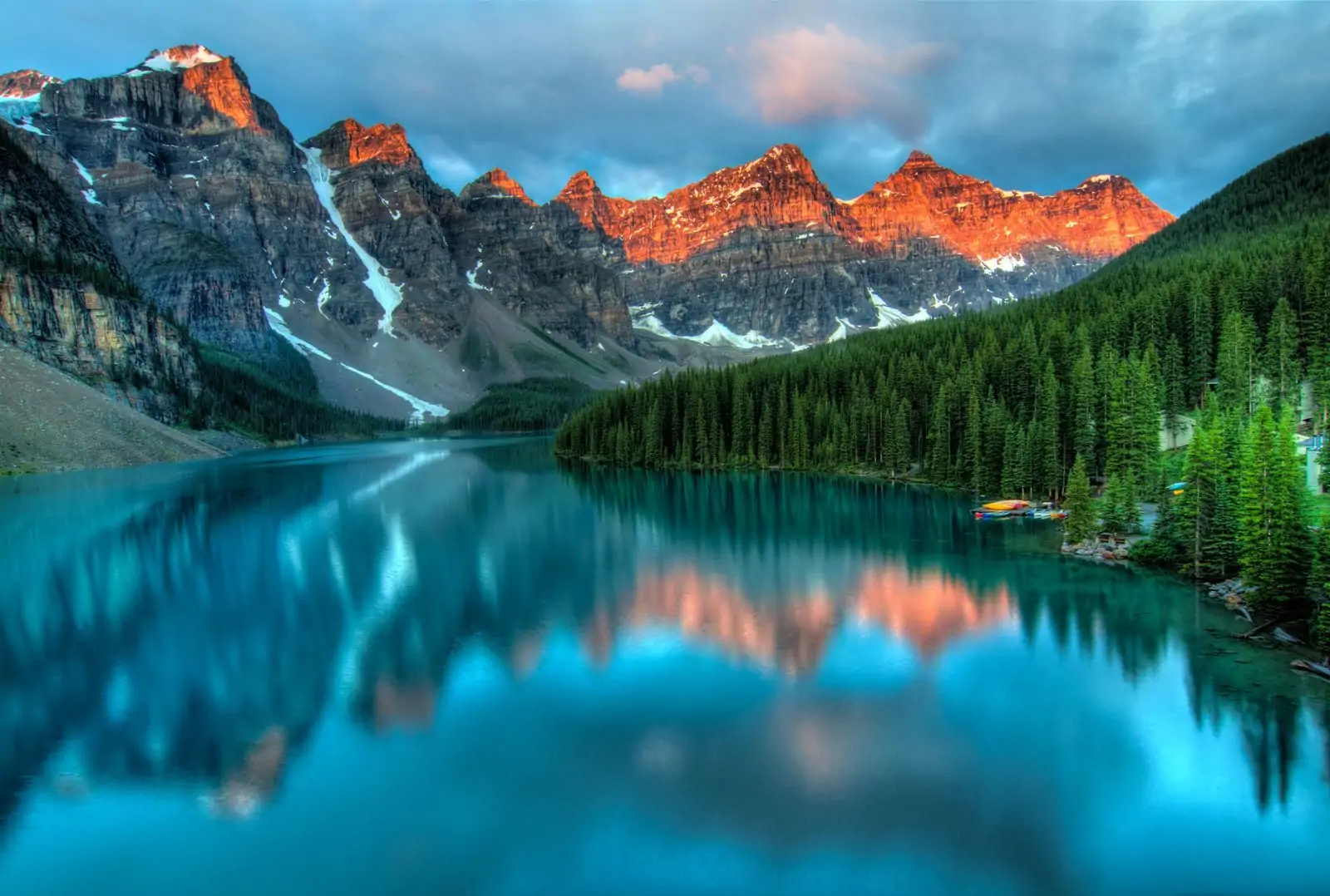
A beginner photographer holding a modern mirrorless camera, looking at a stunning sunset, focusing on the basics of composition.
How to Use Manual Mode Camera
If you want to take control of your creative vision, you have to learn how to use manual mode camera. It boils down to the "Exposure Triangle."
- Aperture: This controls your depth of field. Want that blurry background (bokeh) in your portraits? Open it up (lower f-number).
- Shutter Speed: This controls motion. Want to freeze a bird in flight? Crank it up to 1/2000s. Want those silky waterfalls? Slow it down.
- ISO: This is your camera’s sensitivity to light. Keep it low (100-400) for clean shots. Raise it only when you have to, or you’ll get "noise" (that grainy look).
Mastering these three is the foundation of all high-quality photography tutorials. Once you stop fighting the camera and start telling it what to do, your photos will change overnight. If you want to see some professional examples of what manual control can do, check out the galleries at Edin Fine Art.
Landscape Photography Tips: Capturing the Grandeur
Landscape photography is a test of patience. You’re at the mercy of Mother Nature, and she doesn't always play nice. But when the light hits just right, it’s magic.
Here are a few quick landscape photography tips for your next trek:
- The Blue Hour and Golden Hour: Everyone talks about the Golden Hour (just after sunrise/before sunset), but the Blue Hour (just before sunrise/after sunset) offers a moody, ethereal vibe that is often overlooked. You can find some ethereal landscapes for captivating shots if you know where to look.
- Leading Lines: Use roads, rivers, or even shadows to lead the viewer’s eye into the frame.
- The Foreground Matters: Don't just focus on the distant mountain. Find a cool rock, a flower, or a patch of ice in the foreground to give the image depth.
For those looking for something off the beaten path, we’ve covered some lesser-known vistas for enigmatic photos that will make your portfolio stand out.
Street Photography Ideas: Finding Beauty in the Mundane
Street photography is about the "decisive moment." It’s raw, it’s fast, and it requires you to be a bit of a ninja. If you’re stuck for street photography ideas, try these:
- Silhouettes: Find a strong light source (like a sunset or a bright shop window) and wait for someone to walk past.
- Reflections: Puddles after a rainstorm are your best friend. Flip the photo upside down in post-processing for a trippy effect.
- The "Waiting Game": Find a background with amazing geometry or a cool mural, and just wait. Eventually, the right person will walk into the frame.
Street photography is less about the gear and more about the "vibe." If you’re looking for high-end production ideas or commercial street vibes, see what the pros are doing over at Edin Studios.
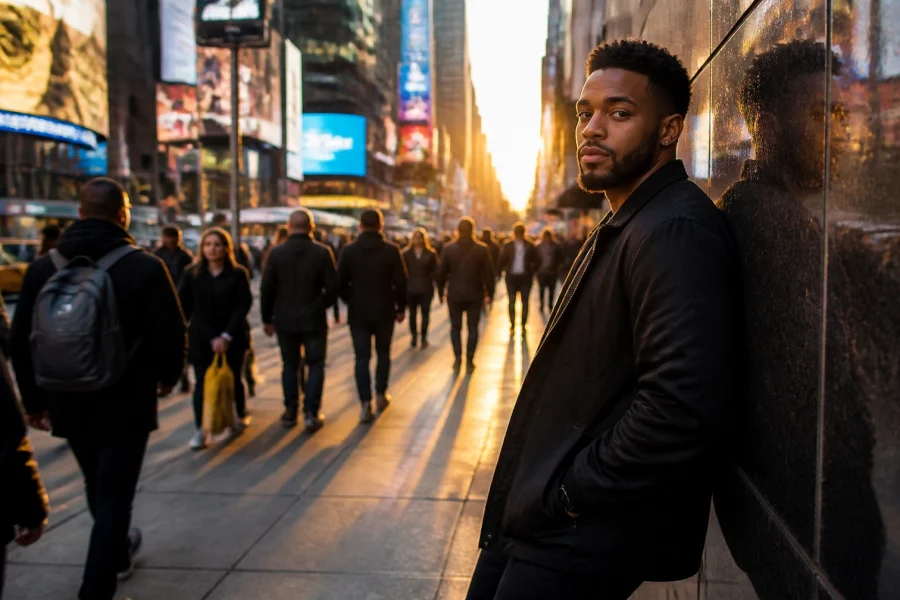
A gritty, high-contrast street photography scene in a neon-lit city, capturing a candid moment of a person walking through shadows.
Portrait Photography Techniques: Beyond the "Cheese"
A great portrait isn't just a photo of a person; it’s a story. To level up your portrait photography techniques, you need to focus on the eyes. If the eyes aren't sharp, the photo is usually a throwaway.
- Use Natural Light: A large window is the best "softbox" you can find. It’s free and creates a beautiful, soft wrap-around light.
- Lens Choice: Use an 85mm or a 50mm lens to get that flattering compression.
- Connection: Talk to your subject. If they are stiff, the photo will look stiff. Make them laugh, or even make them think.
2026 Camera Gear Reviews: The Best Mirrorless Cameras
We’ve reached a point where cameras are essentially mini-supercomputers with lenses attached. If you are looking for the best mirrorless cameras of 2026, the competition is fierce. Based on recent field tests and camera gear reviews, here are the standouts:
The All-Rounder: Nikon Z8
The Nikon Z8 remains a powerhouse. With its 45.7MP sensor and the ability to shoot 8K video at 60fps, it’s arguably the best hybrid camera on the market today. It’s fast, the autofocus is sticky, and the build quality is tank-like.
The Professional’s Choice: Canon EOS R5 Mark II
Canon hasn't slowed down. The R5 Mark II features Eye Control Focus technology, which literally tracks where your eye is looking in the viewfinder to select a focus point. It’s like living in the future. It’s a 45MP beast that is perfect for everything from weddings to sports. For technical specs and deeper dives, ProShoot.io has some great side-by-side comparisons.
The Street King: Ricoh GR IV
For the street photographers who want to stay low-profile, the Ricoh GR IV is the gold standard. It’s tiny, weighs next to nothing (about 262g), and has a 25.7MP APS-C sensor that punches way above its weight class. It’s the ultimate "pocket" camera.
The Travel Specialist: Fujifilm X-E5
If you love that retro aesthetic and the famous Fuji color science, the X-E5 is a fantastic travel companion. It’s lightweight and has a massive range of interchangeable lenses that won't break your back during a day of hiking. Speaking of travel, if you need inspiration for your next trip, check out these hidden gem locations for travel photography.
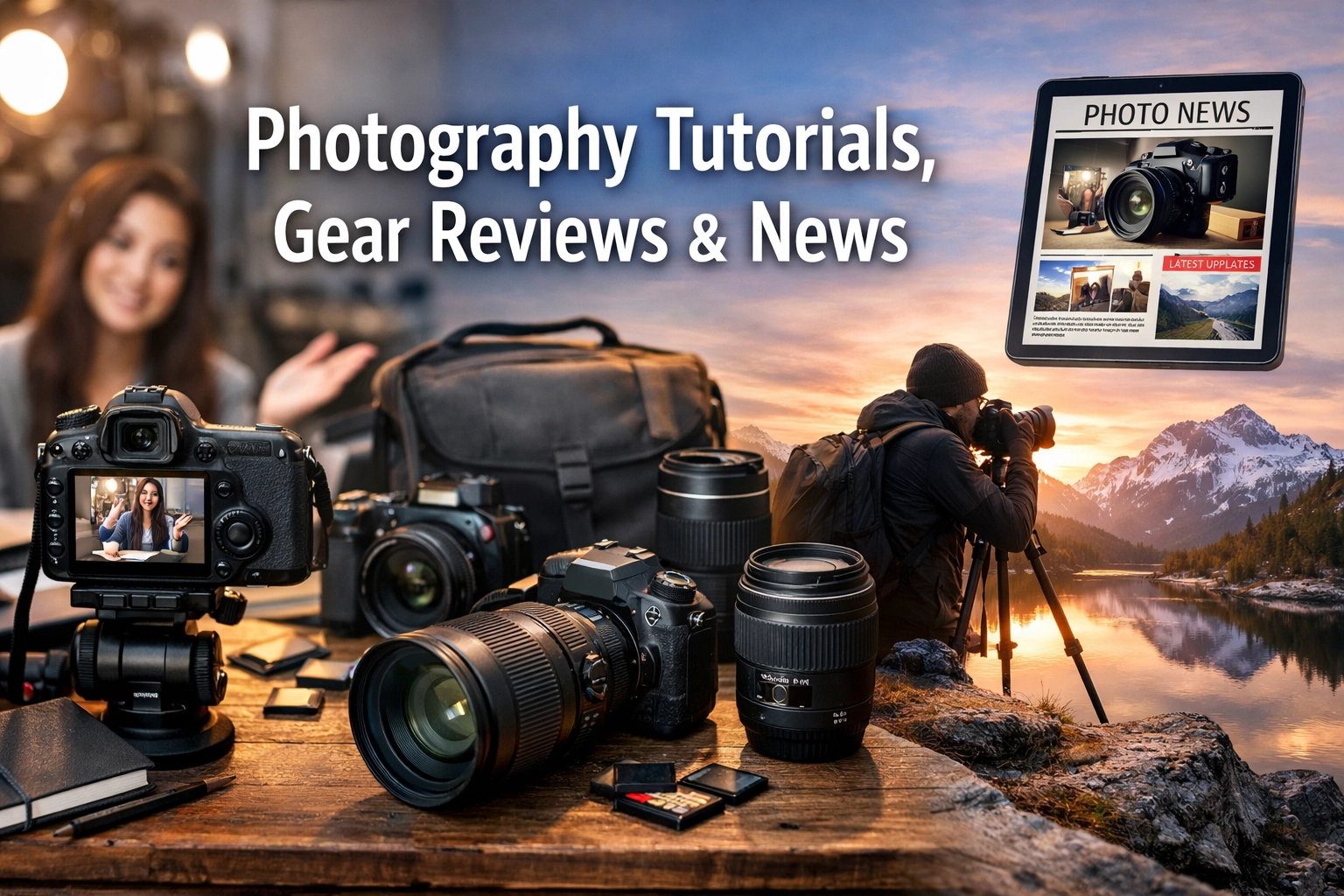
A collection of modern 2026 mirrorless cameras and lenses laid out on a professional photographer's wooden desk.
Photo Editing Tutorials: The Magic of Post-Processing
A RAW file is like a cake mix: it’s got all the ingredients, but you still need to bake it. Photo editing tutorials often get bogged down in technicalities, but the goal is simple: enhance what was already there.
In 2026, AI is doing a lot of the heavy lifting. One of my favorite tools for this is Luminar. It uses AI to handle things like sky replacement, skin retouching, and light manipulation without making the photo look "fake." It saves hours of masking and allows you to focus on the creative side of things.
If you’re looking to get more tactile with your edits, consider using rare textures for tangible aesthetic photography. It gives your digital shots a grit and soul that is hard to replicate with standard sliders.
Photography News: What’s Happening in 2026?
The biggest photography news this year has been the integration of AI-assisted composition within the viewfinder. Manufacturers are starting to include "Composition Guides" that suggest crops and angles in real-time. It’s a polarizing topic: some see it as a "cheat," while others see it as a valuable learning tool for beginners.
We’re also seeing a massive resurgence in film photography, which has led to hybrid digital-analog workflows. Photographers are shooting on film but using high-end scanners to integrate those shots into their digital portfolios. You can see some of this blend of old and new techniques on Edin Chavez’s personal blog.
An artist at a computer with a dual-monitor setup, editing a landscape photo using advanced software, with a focus on color grading.
Putting it All Together
Whether you are looking for photography tutorials to sharpen your skills or reading camera gear reviews to justify that next big purchase, remember why you started. It wasn't about the megapixels or the sensor size; it was about the feeling you get when you capture a moment that will never happen again.
The gear will always get better, and the news will always change, but the fundamentals of light, shadow, and composition remain the same. Go out and use that manual mode camera, find some street photography ideas, and don't be afraid to fail. Some of the best shots I’ve ever taken were complete accidents that happened while I was trying something new.
For more resources, don't forget to explore our sitemaps:
Keep shooting, keep learning, and most importantly, keep shutting your aperture! The world is waiting for your perspective. See you out there in the field.