Street photography is the ultimate adrenaline rush for photographers. There’s something about the unpredictability of the city that keeps us coming back. But let’s be real: after a while, taking photos of people walking past brick walls can start to feel a little… stale. You find yourself walking the same blocks, hitting the same shutter speeds, and coming home with a memory card full of "meh."
If you’re stuck in a creative rut, you don’t need a new camera. You need a new perspective. At Shut Your Aperture, we’re all about keeping things simple but impactful. Whether you’re shooting on a high-end mirrorless or your phone, the magic happens in how you see the world, not just what you’re holding.
Here are 25 creative street photography ideas to help you see the streets in a whole new light.
1. The "Worm’s Eye" View
Most people experience the world at eye level. To make your photos stand out, get low. I mean really low. Sit on the curb or put your camera directly on the pavement. This perspective makes buildings look like giants and gives a heroic scale to everyday pedestrians. It’s a trick used often in professional setups you’ll find on ProShoot.io.
2. Shooting Through Obstructions
Don’t wait for a clear shot. Sometimes the best frame is one that’s partially blocked. Shoot through a chain-link fence, the leaves of a potted plant, or the condensation on a coffee shop window. This creates a sense of "voyeurism" and depth that keeps the viewer’s eye moving.
3. High-Contrast Silhouettes
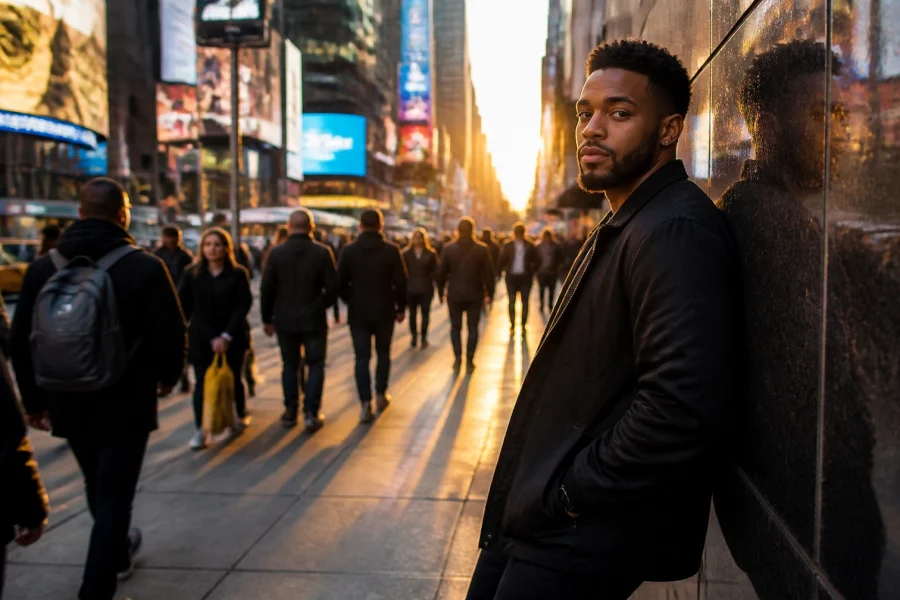
Find a spot where the sun is blasting between two buildings, creating a "stage" of light. Set your exposure for the highlights (the bright parts) so that anyone walking through the light becomes a dark silhouette. If you want to punch up that contrast in post-production, Luminar has some killer tools to make those shadows deep and moody.
4. The "One Spot" Challenge
Pick a single street corner and stay there for one hour. Don’t move. Your goal is to find ten different stories in that one spot. You’ll be surprised at how much you miss when you’re constantly walking. It forces you to notice the subtle interactions and changing light.
5. Intentional Motion Blur (Panning)
Instead of freezing the action, embrace the chaos. Set your shutter speed to something slow: like 1/15th or 1/30th of a second: and follow a moving subject (like a cyclist or a car) with your camera as you take the shot. If done right, the subject will be relatively sharp while the background becomes a colorful smear of speed.
6. Reflections in Puddles
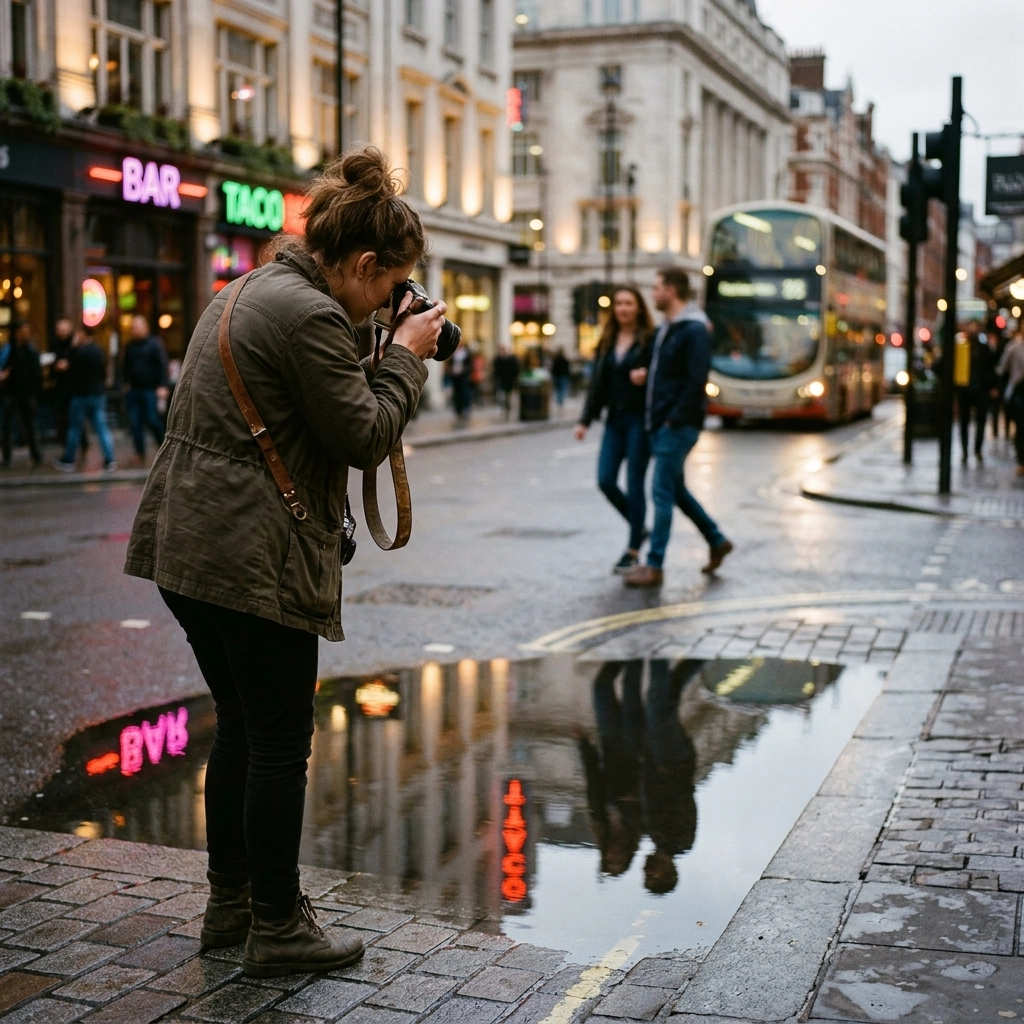
Rainy days are the best days for street photography. Look for puddles on uneven pavement and get your lens as close to the water as possible. Use the reflection to create a symmetrical "alternate universe." For more tips on finding the right environment for these shots, check out our guide on finding hidden gems for stunning travel photography.
7. Urban Minimalism
The city is cluttered. Try to find the opposite. Look for a single person against a massive, plain-colored wall. Use negative space to make your subject look small and isolated. It creates a powerful, quiet narrative in a noisy world.
8. Focus on Hands
You don’t always need a face to tell a story. A businessman clutching a briefcase, an elderly couple holding hands, or a street performer’s calloused fingers playing a guitar can be more expressive than a portrait. Hands tell the story of a life lived.
9. Shoot from the Hip
If you’re feeling shy about pointing a camera at strangers, try "shooting from the hip." Hang your camera around your neck and fire the shutter without looking through the viewfinder. It leads to incredibly candid, unposed moments, though you’ll likely need to crop a bit later.
10. The Monochromatic Color Walk
Pick one color: let’s say red: and only take photos of things that are red. A red mailbox, a red dress, a red taillight. This trains your brain to scan the environment for specific elements rather than just general scenes. It’s a great exercise to sharpen your "photographer’s eye."
11. Rare Textures and Surfaces
Street photography isn't just about people; it's about the "skin" of the city. Look for peeling paint, rusted metal, or weathered posters. Using these rare textures for tangible aesthetic photography can add a layer of grit and realism to your portfolio that most people overlook.
12. Frame Within a Frame
Look for natural frames in the environment: doorways, arches, windows, or even the space between two parked cars. Placing your subject inside these "frames" draws the viewer’s eye directly to the most important part of the image.
13. Nighttime Neon
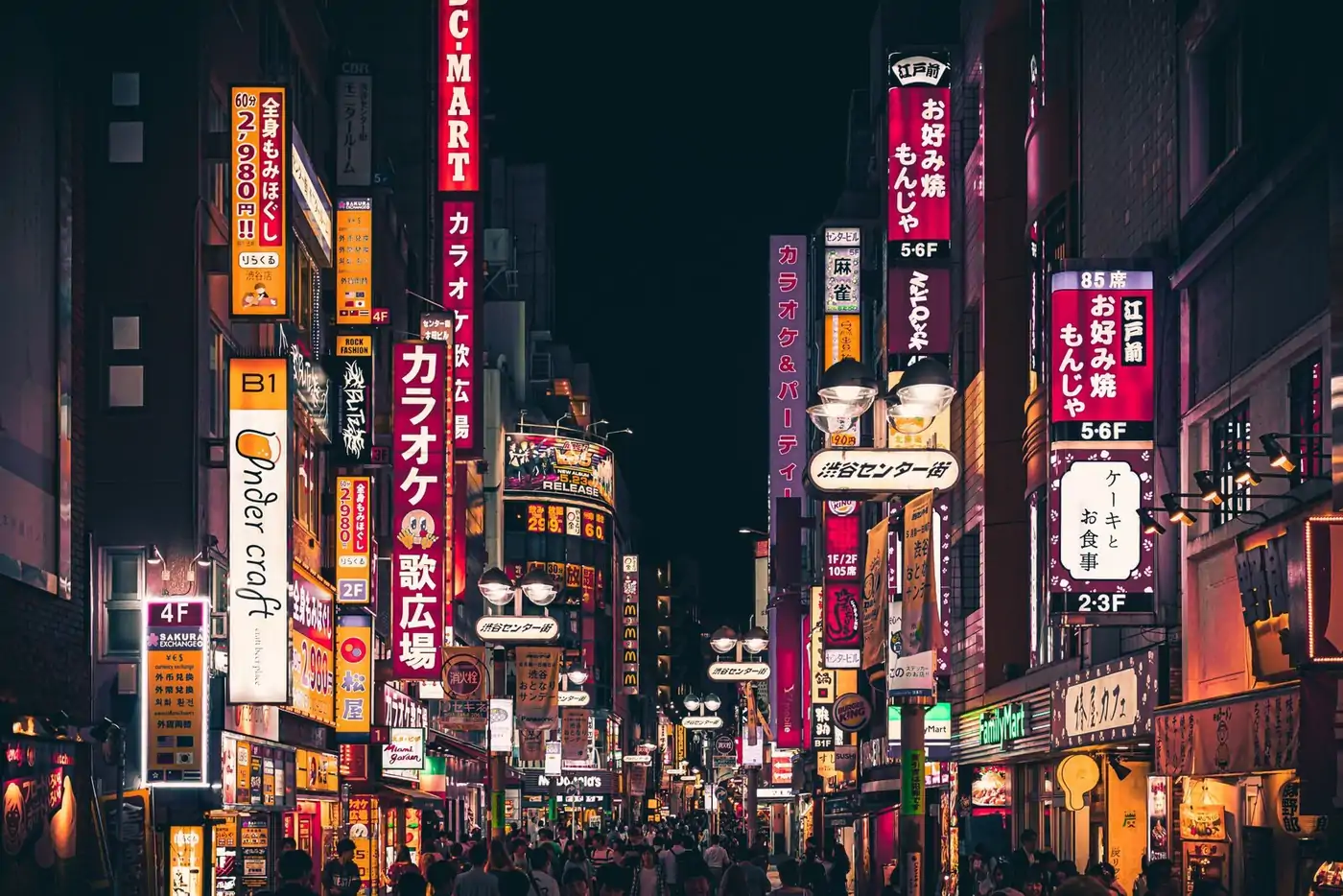
When the sun goes down, the city transforms. Neon signs are perfect light sources for street photography. They provide a cinematic, "Blade Runner" vibe. Position your subject near a neon sign and let the colors wash over their face. You can see some of Edin’s favorite night shots over at blog.edinchavez.com.
14. The Urban Landscape (No People)
Sometimes the street reveals something the viewer would otherwise miss through its emptiness. Focus on the architecture, the shadows, and the inanimate objects left behind. If you're coming from a landscape background, you might find this transition easier. For more on the fundamentals, dive into the ultimate guide to landscape photography tips.
15. Juxtaposition
This is the "classic" street photography move. Look for two things that don't belong together. A wealthy person walking past a "Sale" sign, or a child standing next to a giant, serious statue. Juxtaposition creates irony and humor.
16. Shooting Through Glass
Shop windows, bus windows, and cafes are gold mines. You get a mix of what’s inside the glass and the reflections of what’s behind you. It creates a layered, surreal image that looks like a double exposure but is actually just one shot.
17. The "Statue" Technique
Find a busy sidewalk and stand perfectly still. Let the crowd flow around you. By remaining static, you become invisible to the crowd. People will stop noticing you, allowing you to capture incredibly natural interactions just inches away.
18. Abstract Shadows
Forget the person; photograph their shadow. Long shadows in the late afternoon can create distorted, spindly shapes on the ground that look like modern art. Sometimes the shadow is more interesting than the person casting it.
19. Backlighting (The Halo Effect)
Shoot directly toward the sun during the "golden hour." When someone walks between you and the sun, the light will wrap around them, creating a glowing "rim light" or halo effect. It adds a touch of magic to an otherwise ordinary street scene.
20. Use a Flash in Daylight
It sounds counterintuitive, but using a small flash in broad daylight can create a high-fashion, "paparazzi" look. It fills in harsh shadows and makes colors pop. It’s a bold move that requires some confidence, but the results are undeniably striking. You can find more gear tips for this style on Shut Your Aperture.
21. Focus on Feet
The shoes people wear say a lot about where they’re going and who they are. Sneakers, high heels, muddy boots: crop everything out except the feet and the ground. It’s a unique way to document the "walk of life."
22. In-Camera Double Exposures
Many modern cameras (and apps) allow you to overlay two images. Try taking a photo of a textured wall or a leafy tree, and then overlaying it with a street portrait. It adds a dreamlike, artistic layer to your work.
23. The Cinematic Crop
Change your aspect ratio. Instead of the standard 3:2, try cropping your photos to a wide 16:9 or 2.35:1 (Cinemascope). This immediately makes your street shots look like stills from a movie. It forces you to think about horizontal composition in a new way.
24. Weather Extremes
Don’t pack your camera away when it snows or pours. Heavy rain creates movement, umbrellas provide pops of color, and snow simplifies the background. Extreme weather often brings out extreme emotions in people, which is exactly what you want to capture.
25. The "Reverse" Portrait
Instead of capturing someone's face as they walk toward you, photograph them from behind as they walk away into the distance. It creates a sense of mystery and longing. Where are they going? What’s their story? It leaves the viewer asking questions, which is the mark of a great photo.
Putting It All Together
Street photography is a muscle. The more you use it, the stronger it gets. Don't worry about getting a "masterpiece" every time you step outside. Most of the time, you're just out there to practice seeing.
If you find that your RAW files look a little flat after a long day of shooting, don't be afraid to give them some love in post-processing. Tools like Luminar can help you bring out the details in the shadows or enhance the colors of a sunset street scene without spending hours behind a computer screen.
For more inspiration on where to take these ideas, check out some lesser-known vistas for enigmatic photos or explore the high-end prints at Edin Fine Art to see how professional street and travel photography translates to the gallery wall.
The streets are waiting. Now go out there and shut your aperture!