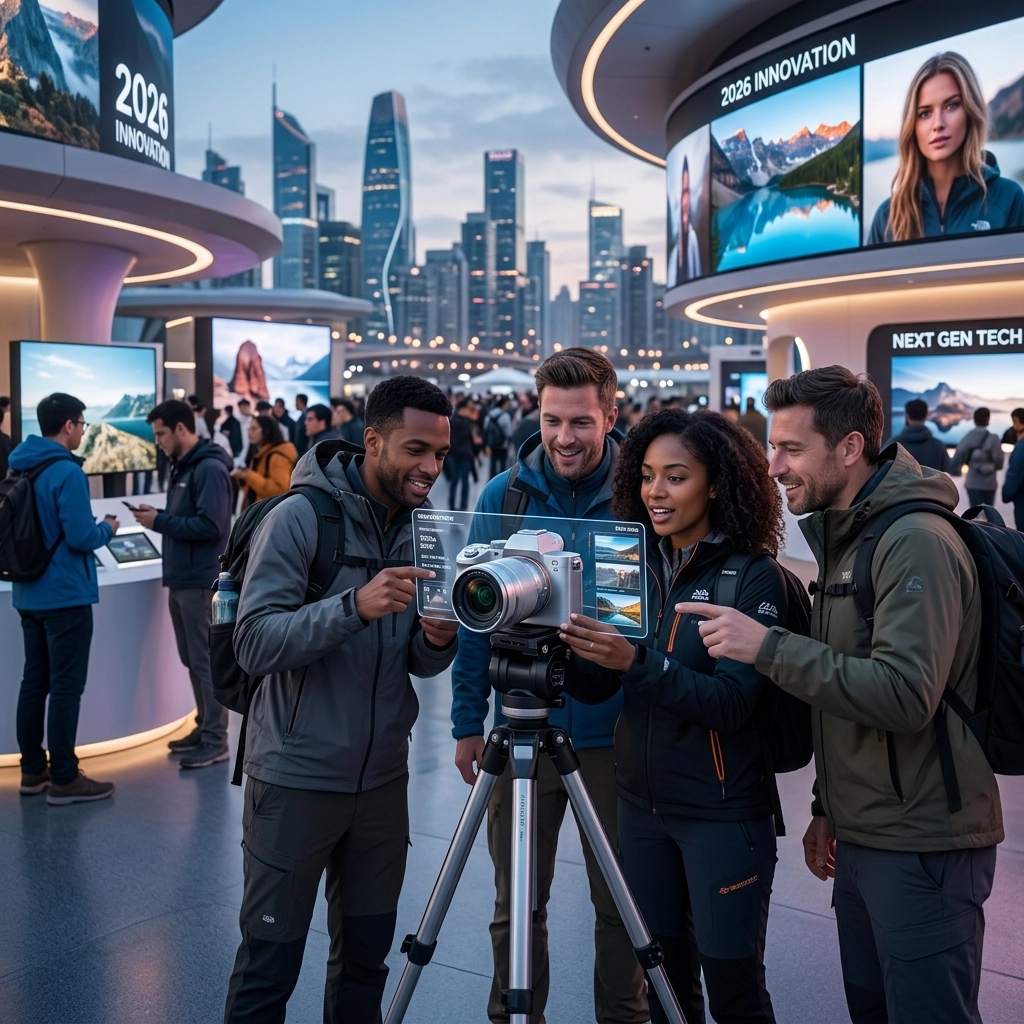
If you walked into the CP+ trade show in Japan last month expecting a barrage of new camera bodies and high-tech lenses, you probably left feeling a bit confused. For the first time in over 25 years, the industry’s heavy hitters: Sony and Canon: showed up with almost nothing new in the way of production-ready hardware.
Welcome to April 2026. The photography world isn’t dying, but it is definitely going through a mid-life crisis.
While the "gear acquisition syndrome" (GAS) crowd is panicking about the lack of new sensors, the rest of the industry is buzzing about a fundamental shift in how we create, edit, and sell our work. From a massive surge in compact cameras to a legal showdown over AI at the Supreme Court, there is a lot to unpack.
So, grab a coffee. Here is why everyone is talking about the latest 2026 photography news and why you need to pay attention if you want to stay relevant.
The CP+ "No-Show" and the Gear Stagnation
For decades, CP+ was the Christmas of the photography world. We expected Sony, Canon, and Nikon to drop bombshells that would make our current kits look like ancient relics. This year? Sony brought zero new products. Canon didn’t have a single production-ready body to show off.
Does this mean innovation has stopped? Not exactly. It means the industry is hitting a plateau in traditional camera development. We’ve reached a point where most modern mirrorless cameras are "too good" for the average user. If you’re still curious about the tech side, you can check out why everyone is talking about mirrorless cameras in 2026 to see how we got here.
Instead of chasing megapixels, manufacturers are focusing on software and supply chain stability. But this stagnation has created a vacuum, and something very interesting is filling it.
The Surprising Revenge of the Compact Camera
While mirrorless camera shipments are forecasted to dip by about 2.6% this year, compact cameras are having a massive "I told you so" moment. They are projected to grow by 13.6% in 2026.
Why? Because people are tired of carrying around a bag that weighs as much as a small toddler.
There’s a growing movement toward "intentional simplicity." Photographers want a dedicated tool that fits in a jacket pocket but still offers a tactile experience that a smartphone just can’t replicate. Whether it’s for street photography or travel, the compact camera is the fastest-growing segment of the market right now. If you’re looking to get back to basics, visiting Shut Your Aperture can help you rediscover the joy of shooting without the bulk.
Supply Chain Drama: The Memory Card Crisis
You might have noticed that getting your hands on high-speed memory cards has become a bit of a nightmare lately. Sony recently suspended orders for memory cards across almost their entire lineup.
The culprit? AI infrastructure.
The massive demand for semiconductors to power AI servers is sucking up all the resources that usually go into making the cards we use to store our photos. It’s a ripple effect that most photographers didn’t see coming. If you’re planning a big shoot, our advice is to buy your storage now. The shortage isn't going away anytime soon, and it’s a stark reminder of how tied our industry is to the broader tech world.
The AI Legal Wild West: SCOTUS Steps In (And Out)
In March 2026, the U.S. Supreme Court declined to hear a major AI copyright case. This sounds like boring legal jargon, but it’s actually a huge deal for anyone who makes a living with a camera.
By refusing to rule, the court has left the industry in a state of limbo. Can you copyright an image that was 50% generated by AI? Who owns the rights when a model is trained on your portfolio? For now, there are no clear answers.
However, AI isn’t just a legal headache; it’s a powerful tool. In the world of post-processing, programs like Luminar are becoming the standard for photographers who want to spend less time behind a screen and more time behind a lens. If you’re just starting to integrate these tools into your work, check out our beginners guide to mastering your workflow to see how to do it without losing your "soul" as an artist.
Aesthetic Trends: Neon, Contrast, and Cinema
If you look at the winning entries of recent photography contests or the high-end galleries at edinfineart.com, you’ll notice a clear shift in style. The "muted minimalist" look that dominated the early 2020s is officially dead.
In 2026, it’s all about:
- Bold Neon Palettes: High-contrast, vibrant colors that pop off the screen.
- Cinematic Storytelling: Photos that look like a still frame from a $100 million movie.
- Graphic Drone Perspectives: Drones are no longer just for "birds-eye" views. They are being used to create structured, graphic compositions that play with geometry and shadow.
These trends aren’t just for art’s sake. In real estate, for example, cinematic techniques can transform property showcases, making a standard home look like a luxury estate.
Real Estate Photography: More Than Just Wide Angles
Real estate continues to be one of the most profitable niches for working photographers. But the expectations have changed. A few years ago, you could get away with a wide-angle lens and some basic HDR. Today, buyers want an emotional connection.
This is where the concept of "luminosity" comes in. Understanding the role of luminosity in real estate photography is the difference between a flat, boring room and a space that feels warm and inviting.
We’re also seeing a massive uptick in aerial photography for real estate. It’s about more than just showing the roof; it’s about showing the lifestyle and the surrounding environment. For more insights on how to break into this market, ProShoot.io is a great resource for professional standards.
Learning from the Masters: The Peter Lik Influence
While we look forward to the future, we also have to look at those who have shaped the industry. Peter Lik remains a polarizing but undeniable force in landscape photography. His ability to manipulate light and perspective has set a standard that many still strive for today.
Whether you love his work or think it’s over-the-top, there are lessons in landscape photography from Peter Lik that every photographer can learn from. Specifically, his techniques behind landscape photography show how much impact post-processing and presentation have on the final value of a piece.
In a world where everyone has a high-quality camera in their pocket, the "fine art" approach: focusing on the print, the scale, and the sheer impact: is more important than ever. You can see how this translates to modern trends by reading about the impact of Peter Lik on photography trends.
Why You Should Care About the Market Shift
You might be thinking, "Edin, I just like taking pictures of my dog and the occasional sunset. Why does the CP+ attendance or the Supreme Court matter to me?"
It matters because these shifts dictate the tools you will have access to and how your work will be perceived.
- If companies stop making new DSLRs or Mirrorless bodies because everyone is buying compacts, your upgrade path changes.
- If AI copyright laws become restrictive, the way you use Luminar or Photoshop could change overnight.
- If the "look" of photography moves toward high-contrast neon, your "natural light" portfolio might start to look dated to potential clients.
Photography has always been a blend of art and technology. In 2026, the technology is taking a breather, which means the art has to step up. This is a great time to experiment. Try new compositions, play with ethereal imagery, or dive deep into shot compositions and buyer attraction.
The Future of the "Pro"
Is photography still essential? For real estate marketing, the answer is a resounding yes. In fact, is photography essential for real estate marketing is a question that has already been answered by the market: 90% of buyers start their search online, and the photos are the first thing they see.
But being a "pro" in 2026 means more than just owning a camera. It means being a storyteller, a drone pilot, an AI editor, and a legal-savvy business person. It’s a lot to handle, but it’s also an incredibly exciting time to be a creator.
If you want to keep up with the daily grind of the industry and see some behind-the-scenes action of how we handle these changes at Shut Your Aperture, head over to blog.edinchavez.com. We’re constantly testing new gear (when it actually comes out) and new techniques to keep our work ahead of the curve.
Final Thoughts
The 2026 photography landscape is a bit of a wild ride. We’re dealing with hardware droughts, memory card shortages, and a legal system that’s trying to catch up with 21st-century tech.
But at the end of the day, the fundamental goal remains the same: capture a moment that makes people stop and look. Whether you do that with a $10,000 mirrorless setup or a resurgent compact camera doesn’t really matter.
What matters is that you understand the shifts happening around you. Don’t get left behind because you were waiting for a new camera body that wasn't coming. Use what you have, embrace the new aesthetics, and maybe buy a few extra memory cards while you still can.
Keep shooting, keep editing, and most importantly, keep your aperture open to new ideas. For more deep dives into the world of professional photography and studio setups, don't forget to visit edinstudios.com.
The industry is changing, and honestly? It’s about time.