For the noise-versus-light tradeoff that sits underneath this whole topic, read our ISO photography guide first.
If you’ve been hanging around the camera world lately, you’ve probably heard the term "AI" whispered more often than "bokeh." But we’re not just talking about software anymore. We aren’t just talking about tripping the shutter in Luminar to swap a gray sky for a sunset.
We’re talking about the actual silicon inside your camera.
It’s April 2026, and the game has officially changed. AI sensors are no longer a "future" technology; they are here, they are smart, and they are making traditional sensors look like floppy disks in a cloud-storage world. If you’re wondering why your favorite photography forums are melting down over this, you’ve come to the right place. Let’s break down why everyone is talking about AI sensors and why you need to pay attention if you want your work to stay relevant.
The Death of the "Dumb" Sensor
For decades, camera sensors were basically light buckets. They sat there, let photons hit them, and converted those photons into electrical signals. Your camera’s processor then did the heavy lifting to turn those signals into a JPEG or a RAW file.
But things are different now. We’ve hit a wall with physical optics. Glass can only be so sharp, and sensors can only be so small before noise ruins everything. Enter the AI sensor. These aren’t just light buckets; they’re "thinking" buckets.
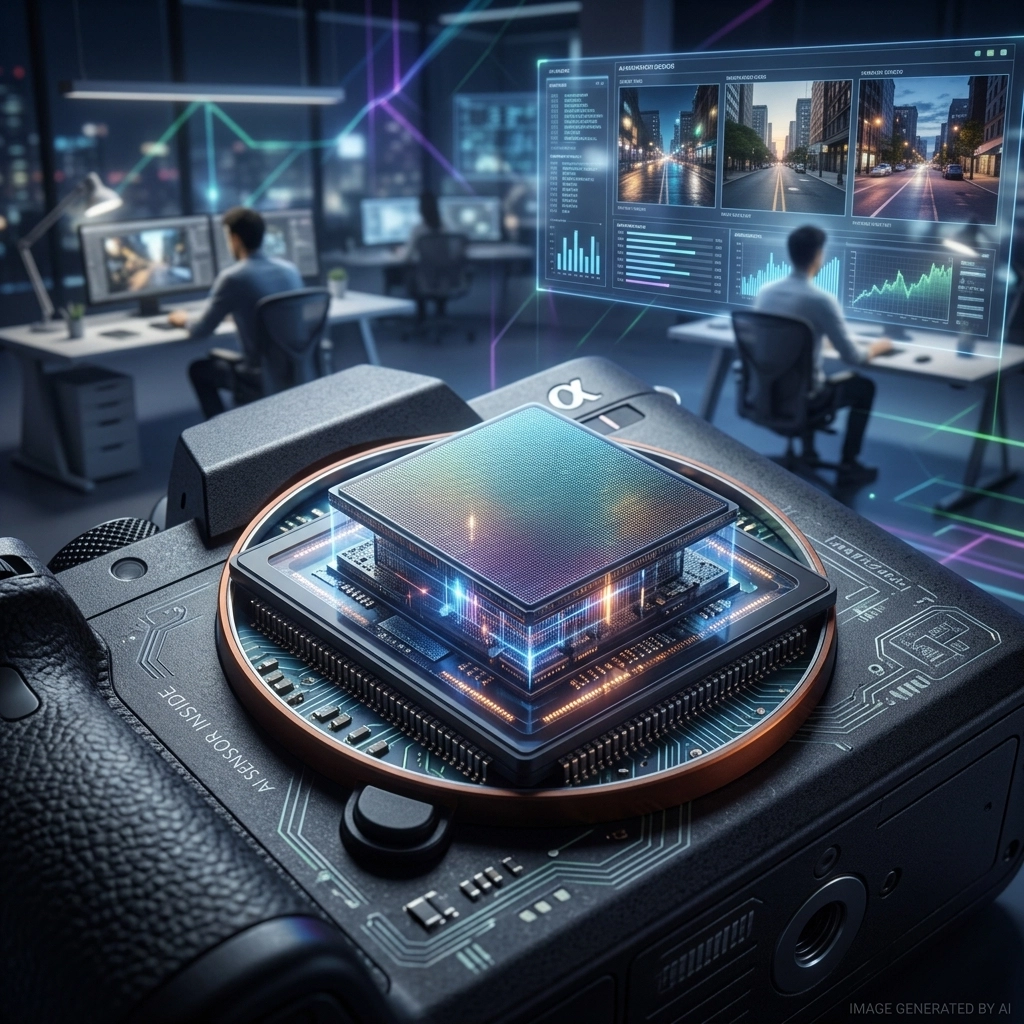
The newest sensors being developed by giants like Sony, Samsung, and even niche innovators are performing computation during the photodetection itself. This means the sensor isn't just capturing light; it’s identifying what it’s looking at before the data even reaches the main processor. Imagine a sensor that knows it’s looking at a bird’s eye and prioritizes that specific group of pixels for maximum detail and zero noise, all in real-time.

Why the Tech World is Obsessed
The buzz isn’t just hype. There are three main reasons why AI sensors are the biggest thing since the transition from film to digital.
1. Breaking the Laws of Physics
We’ve been fighting diffraction and low-light noise since the first Kodak was built. AI sensors are finally winning that fight. Companies are using deep learning to overcome the physical limitations of small sensors. By using "Computational Imaging," systems like the Multiscale Aperture Synthesis Imager (Masi) are replacing thick, heavy glass lenses with arrays of tiny sensors and massive algorithmic power.
You can read more about how these developments are changing the landscape in our guide on how to choose the best mirrorless cameras in 2026.
2. Real-Time Scene Understanding
Old-school autofocus was based on contrast or phase detection. It was fast, but it was "dumb." AI sensors bring "scene understanding" to the table. When you point your camera at a bride walking down the aisle, the sensor recognizes the lace of the dress, the skin tones, and the specific lighting of the chapel. It adjusts the dynamic range for those specific elements instantly. It’s like having a professional editor living inside your sensor.
3. The End of Post-Processing?
This is the controversial one. With AI sensors, much of the work we used to do in Luminar or Photoshop is happening at the moment of capture. If the sensor can remove noise, fix white balance perfectly, and even apply digital lens corrections on the fly, do we even need to sit at a computer anymore? For many pros using the new Caira mirrorless system, the first camera with fully integrated on-board AI, the answer is becoming a resounding "maybe not."
Canon’s Deep Learning Dominance
Canon has been making massive waves recently. Their flagship models, like the EOS R5 Mark II and its successors, have moved beyond simple firmware updates. They are embedding deep learning modules directly into the hardware.
Canon’s engineers have realized that the tradeoff between speed and resolution is a choice photographers shouldn't have to make. By using AI-assisted processing, they can upscale resolution and kill noise simultaneously. This is a massive win for sports and wildlife photographers who need 60fps but don't want their images to look like a grain-fest. If you want to keep up with these rapid-fire updates, check out our photography news and software updates page.
The "Caira" Factor: A Glimpse into the Future
If you haven't heard of Camera Intelligence's "Caira," you will soon. It’s the first mirrorless camera designed from the ground up to be an AI-first device. It doesn't just have an AI sensor; it has a personality.
The Caira uses voice commands powered by generative AI. You can literally tell your camera, "Make this look like a 1970s film stock," or "Remove that distracting trash can in the background," and the sensor/processor combo handles it before you even look at the playback screen. This bridges the gap between the convenience of a smartphone and the power of a full-frame professional rig. It’s a tool that understands intent, not just exposure values.
For those of us who grew up learning the exposure triangle on Shut Your Aperture, this feels like cheating. But for the new generation of creators, it’s a superpower.
What This Means for Real Estate and Commercial Pros
If you’re a pro working in real estate or commercial photography, AI sensors are about to make your life significantly easier (and potentially more profitable).
Think about the dynamic range required for a high-end listing. Usually, that involves bracketing, tripod work, and hours of blending. AI sensors can now perform "intra-frame" tone mapping. They see the blown-out window and the dark corner of the room and balance them perfectly in a single exposure. This kind of tech is already being discussed in our deep dives into the role of luminosity in real estate photography.
By reducing the time spent on-site and in the edit suite, AI sensors allow you to take on more clients without burning out. It’s about efficiency.
The Fork in the Road: Authenticity vs. Result
Every time a new technology drops, we have the "is it still photography?" debate. AI sensors are pushing that debate to the breaking point.
On one side, you have the purists. They want the "experience" of photography, the struggle with the light, the manual settings, the raw, unadulterated file. On the other side, you have the "Outcome" crowd. They just want the best possible image, and they don't care if a neural network helped create the pixels.
I’ve talked about this on blog.edinchavez.com before, photography has always been a blend of tech and art. From the darkroom chemicals to the first digital sensors, we’ve always used tools to enhance our vision. AI sensors are just the latest, albeit most powerful, tool in that shed.
How to Prepare for the AI Sensor Era
You don't need to throw away your current gear tomorrow. But you do need to start shifting your mindset. Here’s how to stay ahead:
- Focus on Composition and Storytelling: The AI can fix your focus and your noise, but it can’t tell a story. It doesn't know why you’re taking the photo. Double down on your creative vision.
- Master Computational Tools: Start getting comfortable with AI-driven software now. If you aren't using Luminar yet, give it a shot. It will get you used to the logic of AI-assisted editing, which is exactly how these new sensors think.
- Stay Updated: The tech is moving fast. Our social media manager, Sonny, is constantly posting about these hardware shifts. We’ve coordinated our efforts to make sure that when a new sensor drops, you get the breakdown here and the quick-hit tips on our social channels.
- Invest in Education: Check out proshoot.io for advanced training on how to integrate these new technologies into a professional workflow.
- Don't Fear the Tech: Use it to your advantage. If a sensor can give you five extra stops of dynamic range, use it to shoot in conditions you never thought possible.
AI Sensors and Beyond: What’s Next?
We are just at the beginning. By 2027 or 2028, we expect to see "Stacked AI Sensors" that can see beyond human vision, capturing infrared and ultraviolet data and blending it into a standard visible-light image to create textures and details we can’t even imagine right now.
We’re also seeing the rise of "Smart Sensors" in medical and industrial fields that identify targets (like anomalies in a scan) the instant they see them. This technology is trickling down into our cameras, giving us tools that can track a subject even through obstacles or in near-total darkness.
If you’re feeling overwhelmed, don’t worry. We’re all learning this together. You can find more structured learning in our ultimate guide to photography tutorials. It’s a great place to ground yourself in the basics before the AI takes over the world (or at least your camera bag).
Final Thoughts (For Now)
The shift to AI sensors is the most significant architectural change in camera history. It’s moving the "intelligence" of the camera from the back-end (post-processing) to the front-end (the sensor itself).
Is it a little scary? Sure. But it’s also incredibly exciting. It means we can stop worrying about technical perfection and start focusing on what really matters: the image. The AI sensor doesn't replace the photographer; it removes the barriers between the photographer and their vision.
Stay curious, keep shooting, and don’t be afraid to let a little silicon help you out. For more updates on everything happening in the world of photography, keep an eye on our latest tips and techniques.
And hey, if you're looking for some inspiration on how to use these new high-tech looks in your work, check out my fine art at edinfineart.com or see what we're up to at the studio over at edinstudios.com.
The future is bright (and perfectly exposed, thanks to AI).