
Before going further, make sure your aperture fundamentals are locked in: our aperture photography guide walks through it shot by shot.
If you feel like your camera bag is suddenly looking a little "vintage," you’re not alone. We’re sitting here in April 2026, and the leap mirrorless technology has taken in the last twelve months is, quite frankly, insane. It’s not just about more megapixels anymore; it’s about how these machines think.
I was talking to Sonny, our Social Media Manager, the other day about how the content cycle has shifted. We’re no longer just "taking photos." We’re capturing data that an AI processor then interprets to give us the perfect shot. Whether you’re a pro or a hobbyist, the tech landing in 2026 is changing the rules of the game. If you’ve been sitting on the fence about upgrading, this is the year the fence probably broke.
The Death of the Mechanical Shutter
The biggest conversation starter this year has been the mainstreaming of the global shutter. While Sony kicked the door down with the A9 III a while back, 2026 is the year this tech trickled down into cameras that don’t cost as much as a used car.
For the uninitiated, a global shutter reads the entire sensor at once. No more "rolling shutter" jelly effect when you’re panning quickly across a skyscraper or a fast-moving car. No more banding under weird LED lights at a wedding.
When you look at the latest photography news and software updates, you’ll see that every major player, Canon, Nikon, Sony, is moving toward a shutter-less future. It makes the cameras quieter, more durable (no moving parts to break), and faster. We’re talking 120 frames per second as a standard, not a "pro-only" flex.

AI Autofocus: The "Magic" Factor
Remember when we used to brag about having 51 focus points? That feels like prehistoric times now. In 2026, autofocus isn't just about finding an eye; it's about predicting where that eye is going to be three seconds from now.
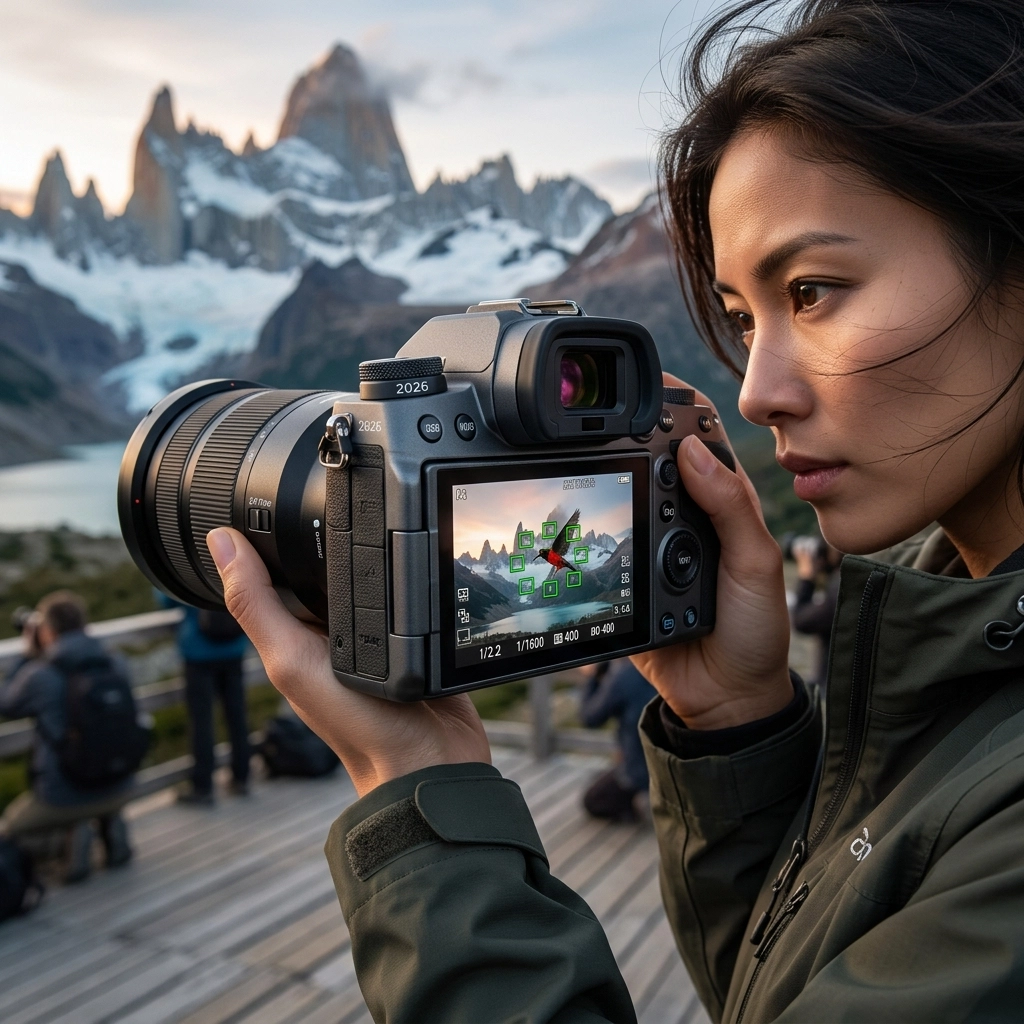
The new AI-driven processors in cameras like the Sony A7 VI and the Canon R5 Mark II use deep learning to recognize subjects. It’s not just "Human" or "Animal" anymore. These cameras recognize "Yoga Pose," "Mountain Biker," and even "Specific Bird Species." If you’re a wildlife photographer, the camera now understands the flight patterns of a Red-Tailed Hawk versus a Seagull. It sounds like sci-fi, but it’s sitting in our hands.
This level of reliability means we’re spending less time "chasing" the focus and more time worrying about composition. If you want to dive deeper into how to master these new systems, check out the ultimate guide to photography tutorials.
The Hybrid Revolution: Video is No Longer an Afterthought
For a long time, "Hybrid" was a bit of a lie. You had a great stills camera that could do "okay" video if you didn't mind it overheating after 10 minutes. In 2026, that compromise is dead.
The current crop of mirrorless cameras are basically cinema cameras that take high-res stills. We’re seeing 8K 60p and 4K 120p with 10-bit internal recording across the board. Manufacturers have finally figured out thermal management without making the cameras the size of a toaster.
This shift is why so many real estate photographers are moving toward cinematic storytelling. If you’ve seen how cinematic techniques can transform property showcases, you know that having a camera that can jump from a 45MP still to a 4K slow-mo walkthrough is a massive competitive advantage.
Computational Photography in a Full-Frame World
We used to laugh at smartphones for using "fake" software tricks to make photos look better. Well, the joke is on us because the big camera brands have officially embraced computational photography.
Canon’s latest neural network upscaling is a prime example. You can take a 24MP image and, in-camera, upscale it to a 96MP masterpiece with virtually no loss in detail. This means you can carry a smaller, faster camera but still deliver "medium format" results when the client asks for a billboard.
Even the way we edit is changing. When I’m cleaning up a shot, I’m almost always using Luminar to handle the heavy lifting. The way 2026 sensor data interacts with AI editing tools is seamless. The raw files coming out of these new mirrorless bodies contain so much dynamic range and metadata that tools like Luminar can practically rebuild a scene from the shadows.
Why 44MP is the New "Sweet Spot"
There was a time when we thought we’d be shooting 200MP sensors by 2026. Instead, the industry has settled into what we’re calling the "44MP Sweet Spot."
Why 44MP? Because it’s the perfect balance for the modern hybrid creator. It’s high enough resolution for high-end commercial prints, but the file sizes aren't so massive that they crash your MacBook or eat up your cloud storage. More importantly, it allows for incredible low-light performance.
If you’re wondering which specific model fits your workflow, I highly recommend reading our breakdown on how to choose the best mirrorless cameras in 2026. It goes into the nitty-gritty of the sensor tech that we’re seeing right now.
Retro Design with Future Tech
One of the coolest trends of 2026 is the "Retro-Future" aesthetic. People want cameras that look like their grandfather’s Leica or Canon AE-1, but with the guts of a spaceship.
Nikon has been killing it with the Z-series retro bodies, and rumors of the Canon RE-1 (a digital homage to their film classics) have been the talk of every photography forum this year. It turns out, we like dials. We like the tactile feel of photography. But we also like having 5-axis in-body image stabilization (IBIS) that lets us shoot 1-second handheld exposures.
The Lens Innovation Nobody Expected
It’s not just the bodies; 2026 has been a wild year for glass. We’re seeing "Hybrid Zooms" that have electronic apertures designed to be perfectly silent for video, with zero focus breathing.
The new RF and Z mount lenses are getting smaller and faster. We’re seeing f/1.2 primes that weigh less than the f/1.8 versions from five years ago. This is thanks to new lens elements that allow for shorter flange distances. If you want to stay updated on these releases, keep an eye on Shut Your Aperture for their deep-dive reviews.
What This Means for You
So, why should you care?
If you’re a professional, the tech in 2026 is a productivity booster. The AI autofocus alone will save you hours of culling through slightly-out-of-focus shots. If you’re a real estate photographer, the role of luminosity in these new high-dynamic-range sensors means you spend less time bracket-shooting and more time composing.
If you’re a hobbyist, this tech makes photography fun again. It removes the technical barriers. You don’t have to spend years mastering "back-button focus" or "micro-adjusting" your lenses. The camera just works. It lets you focus on the art.
The Social Media Impact (Shoutout to Sonny)
The reason everyone is talking about this on TikTok and Instagram is because the barrier to "pro-looking" content has vanished. With the 2026 mirrorless tech, someone can pick up a camera for the first time and produce a stabilized, 10-bit vertical video that looks like it was shot by a Hollywood crew.
This has pushed us creators to be better storytellers. Since the tech is now "easy," the value has shifted back to the vision. You can find more tips on how to elevate that vision in our photography tutorials and news section.
Is it Time to Upgrade?
I get this question a lot over at blog.edinchavez.com. My answer usually depends on what you're shooting, but in 2026, the answer is almost always "Yes."
We’ve reached a plateau where the difference between a 2020 camera and a 2026 camera is night and day. It’s like moving from a flip phone to a modern smartphone. The 2026 generation of mirrorless cameras are more than just tools; they are intelligent partners in the creative process.
If you’re looking to get into the professional market, or just want to make sure your family photos are the best they can be, check out proshoot.io for some gear recommendations that won't break the bank.
Final Thoughts
The photography world moves fast, and 2026 is proving to be a landmark year. From global shutters to predictive AI, the "standard" has been raised. Don't let the tech intimidate you: embrace it. Use it to tell better stories, capture better memories, and maybe even turn your passion into a business.
If you want to see what's possible with this new tech in the world of high-end art, take a look at www.edinfineart.com or www.edinstudios.com. The results speak for themselves.
The 2026 mirrorless revolution isn't just about the cameras; it's about what you can do with them. So, shut your aperture, open your mind to the new tech, and go shoot something amazing.