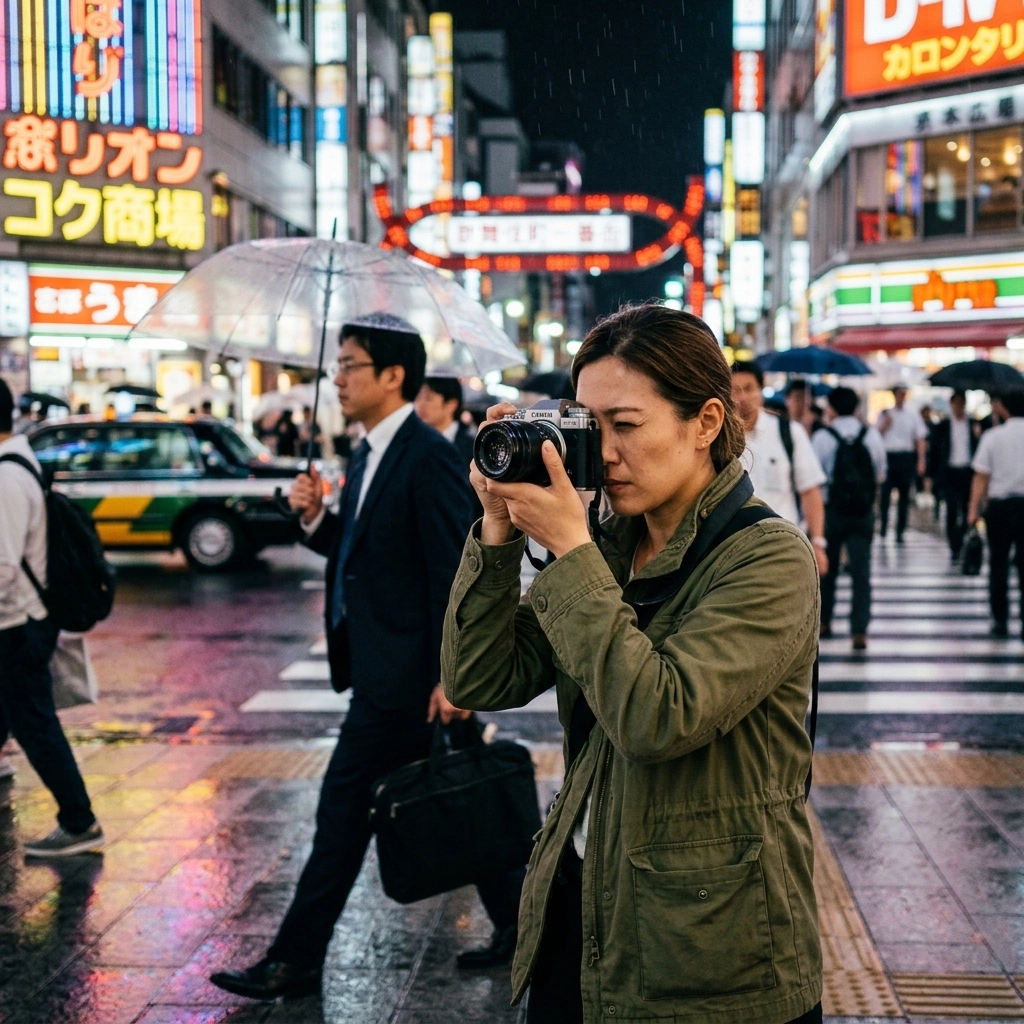
Street photography is the rawest form of the craft. There’s no studio lighting, no models who follow your every command, and definitely no "can we try that again?" once the moment has passed. It’s just you, your camera, and the unpredictable dance of life happening right in front of you.
But let’s be honest: standing on a busy corner with a camera can feel awkward. You might feel like you’re "creeping," or maybe you just feel uninspired by your local surroundings. We’ve all been there. You grab your bag, head out, and then walk around for two hours without pressing the shutter once because nothing felt "epic" enough.
The secret to success isn't finding the perfect city; it’s finding the perfect idea. If you’re looking to level up your game, this guide is packed with street photography ideas and techniques to help you see the world differently.
What is Street Photography, Really?
Before we dive into the ideas, let’s clear something up. Street photography isn't just about taking photos of people on the street. It’s about capturing the human condition. It’s about candidly documenting life and how we relate to our environment.
You don't even need people in the frame for it to be a street photo. An empty park bench with a discarded newspaper, a lone bicycle leaning against a neon-lit wall, or the way shadows fall across an alleyway all count. If it feels like a slice of life that wasn't staged or manipulated, you're doing it right. If you’re just starting out, check out our photography 101 guide to get the basics down before you hit the pavement.
The Two Main Approaches: Hunting vs. Fishing
Most street photographers fall into one of two camps: the hunters and the fishermen.
The Hunter
The hunter is always on the move. You’re walking, scanning the horizon, looking for a moment to happen. When you see a cool subject, you follow them (discreetly!) or position yourself to catch them in a specific light. This is great for covering a lot of ground, but it can be exhausting and often leads to "missed" shots because you weren't ready.
The Fisherman
The fisherman finds a great spot, a "stage", and waits. Maybe it’s a beautiful patch of light, a colorful wall, or a doorway with great geometry. You set your exposure, frame your shot, and wait for the "actor" to walk into the frame. This is often the best way to get high-quality compositions because you’ve already done the hard work of framing before the subject even arrives.

10 Street Photography Ideas to Kickstart Your Creativity
If you’re feeling stuck, try one of these specific prompts the next time you head out.
1. The Juxtaposition Challenge
Juxtaposition is just a fancy word for "putting two things together that don't usually go together." It’s the bread and butter of witty street photography. Look for a businessman standing next to a piece of graffiti that makes him look like he has wings. Or a person walking past a billboard where the person in the ad seems to be looking at them. These "visual puns" are what make street photography so fun.
2. Silhouettes and Shadows
When the sun is low (golden hour), look for high-contrast areas. Find a spot where the sun is hitting a wall but leaving the rest of the street in deep shadow. Expose for the highlights, and anyone walking through the light will become a crisp silhouette. This is a great way to maintain the anonymity of your subjects if you’re still a bit shy about photographing faces. For more on how to manage these tricky lighting situations, check out this guide on mastering natural light.
3. Reflections and Glass
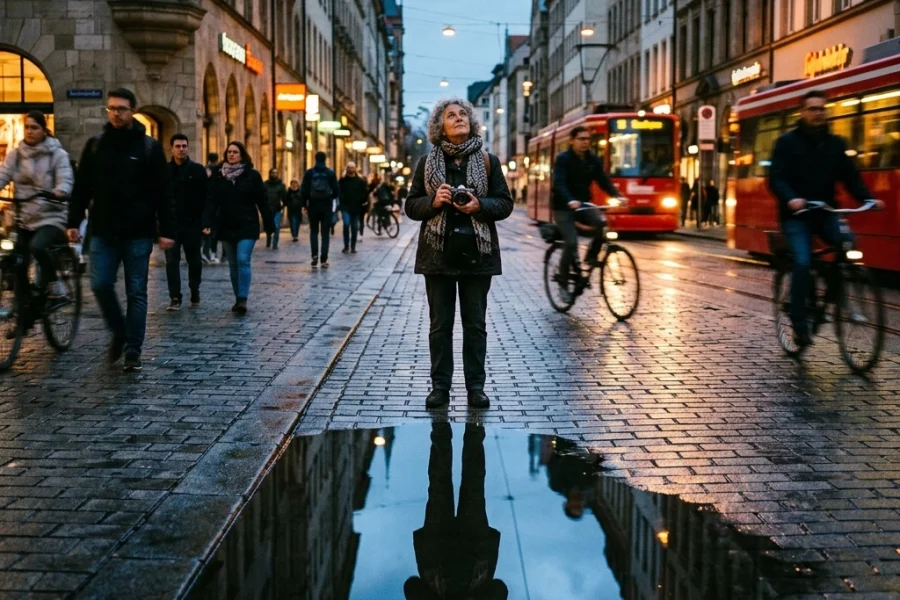
You don't always have to look directly at your subject. Use shop windows, puddles after a rainstorm, or even the side of a polished car. Reflections add a layer of abstraction and complexity to your photos. Shooting through glass also adds "texture", think of raindrops on a window or the distorted reflections of a busy cafe.
4. Focus on the Details
Street photography doesn't always have to be a wide-angle shot of a busy intersection. Sometimes the story is in the details. A pair of worn-out shoes, a hand holding a cigarette, or the way someone grips their umbrella. By isolating these small elements, you tell a much more intimate story.
5. Motion Blur (The Ghost in the Machine)
The world moves fast. Sometimes, capturing that movement is better than freezing it. Use a slower shutter speed (around 1/15th or 1/30th of a second) and pan your camera with a moving subject. Or, keep your camera perfectly still on a tripod (or a trash can) and let the crowds blur past you. This creates a sense of "busyness" and energy that a static shot just can't match. If you're struggling with settings, our guide on how to use manual mode will help you dial in that motion blur.

6. The "Backs of Heads" Project
People often think you need to see a face to see an emotion. Not true. The way someone stands, the slouch of their shoulders, or the hat they’re wearing can tell you everything you need to know. Try a series where you only photograph people from behind. It’s less intrusive and forces you to look at body language.
7. Night Owls: Neon and Artificial Light
Street photography doesn't end when the sun goes down. In fact, that’s when it gets interesting. Look for neon signs, street lamps, and the glow from digital billboards. These light sources create dramatic shadows and vibrant colors. It’s the perfect time to experiment with higher ISO settings and see what your camera is really capable of.
8. Color Blocking
Pick one color, let's say red. Go out and only take photos where the color red is the dominant element. It could be a red car, a red dress, or a red fire hydrant. This trains your brain to stop looking for "subjects" and start looking for "compositions."
9. High-Angle Perspective
Most street photos are taken from eye level. Break the mold. Find a parking garage, a balcony, or a bridge and shoot straight down. People look completely different from above; their shadows become longer, and the patterns of the pavement become part of the art.
10. The Urban Landscape
Sometimes, the "street" itself is the subject. Look for geometry, leading lines, and architecture. How does the city feel? Is it cramped and chaotic, or cold and industrial? Use your camera to document the "bones" of the city. You can find some incredible examples of urban art over at Edin Fine Art.
Technical Gear: What Do You Actually Need?
Here’s the truth: the best camera for street photography is the one you have with you. Some of the most famous street photos in history were taken on grainy film with simple lenses.
However, if you are looking to upgrade, the trend in 2026 is definitely toward smaller, faster systems. AI-powered mirrorless tech has made things like "eye-autofocus" so fast that you almost never miss a shot. If you’re trying to decide which gear to lug around all day, take a look at our comparison of the best mirrorless cameras for 2026.
Lenses
- 35mm: The classic. It’s wide enough to get the environment but tight enough to keep the subject prominent.
- 50mm: The "Nifty Fifty." It mimics the human eye and provides a bit more compression and background blur.
- 28mm: For the brave. You have to get physically close to your subjects, which can be intimidating but results in very immersive photos.

Mastering Your Settings
In the streets, things happen fast. If you’re fumbling with your dials, you’re losing the shot.
Zone Focusing
This is a "pro" secret. Instead of relying on autofocus, which can hunt in low light or get distracted by a passing car, set your camera to manual focus. Set your aperture to something like f/8 or f/11. This creates a large "zone" of focus (for example, everything from 8 feet to 20 feet away will be sharp). Now, you don't have to focus at all, you just have to make sure your subject is within that distance.
Shutter Priority vs. Manual
If the light is changing constantly (walking in and out of shadows), Shutter Priority is your friend. Set your shutter speed to at least 1/250th to freeze motion and let the camera handle the rest. If you want total control, stick to manual. Just make sure you aren't making these common manual mode mistakes.
The Ethics of the Street
Let’s address the elephant in the room: is it okay to take photos of strangers?
In most countries, taking photos in public places is perfectly legal. However, "legal" and "kind" are two different things.
- Be Respectful: If someone notices you and looks uncomfortable, give them a nod and move on. Don't be "that guy" who insists on a shot that someone clearly doesn't want taken.
- The Smile Technique: If someone catches you taking their photo, don't hide your camera or look away guiltily. Smile! Often, a simple "Hey, the light was hitting you perfectly, great shot" is enough to turn a weird moment into a pleasant one.
- Don't Punch Down: Avoid taking photos that are exploitative or make people look bad for no reason. Aim for empathy, not mockery.
For more deep dives into the philosophy of photography, PhotoGuides.org is a fantastic resource for improving your eye and your ethics.
Post-Processing: Bringing the Street to Life
Street photography often requires a bit of "mood" in the edit. You might want to crush the blacks for a noir look or bring out the grit in a city sidewalk.
This is where AI tools are changing the game. Using Luminar allows you to quickly enhance details and fix lighting issues that are common in unpredictable street environments. For example, if you caught a great moment but the sky was a washed-out white mess, AI Sky Replacement can fix that in seconds.
Be careful, though, don't over-edit. Street photography is supposed to feel real. If you’re new to the world of AI editing, avoid these 7 common mistakes to keep your photos looking authentic.

Practice Makes… Well, Better
You’re going to take a lot of bad photos. Like, thousands of them. That’s part of the process. Even the greats like Henri Cartier-Bresson probably had a "hit rate" of one good photo per roll of film.
The key is to keep going. Street photography is a muscle. The more you do it, the more "invisible" you become, and the more you start to anticipate moments before they happen. You’ll start to see patterns in how people move and how light interacts with the city.
If you need more inspiration or want to see what’s happening in the world of photography today, keep an eye on Edin’s blog for regular updates and galleries.
Final Thoughts
Street photography is the ultimate challenge for any photographer. It tests your technical skills, your composition, and your social courage. But when you finally click that shutter and realize you’ve captured a "decisive moment": a slice of history that will never happen exactly that way again: it’s the best feeling in the world.
So, grab your camera, put on some comfortable shoes, and get out there. The street is waiting.

Quick Tips Summary:
- Go Small: Use a small camera and a prime lens to stay discreet.
- Find the Light: Always look for where the light is hitting first, then find the subject.
- Wait for It: Don't be afraid to stand in one spot for 20 minutes.
- Edit with Intent: Use tools like Luminar to enhance the mood of your urban shots.
- Study the Greats: Look at street photography books to see how masters used geometry and timing.