Street photography is often misunderstood. Most people think it’s just about wandering around a city, waiting for a stranger to look at you so you can snap a candid photo before they get annoyed. But let’s be real: if that’s all you’re doing, you’re going to get bored: or punched: pretty quickly.
The best street photography isn’t just about people; it’s about the soul of the city, the play of light, and the tiny details everyone else is too busy to notice. If you’re feeling stuck or your shots are starting to look like every other "guy walking past a wall" photo on Instagram, it’s time to shake things up.
Whether you are just starting with photography 101 or you’re a seasoned pro with a high-end kit, these 25 creative ideas will help you see the world differently.
1. The Single Color Scavenger Hunt
One of the hardest things about the street is that it’s visually chaotic. There’s too much going on. To fix this, give your brain a "filter." Choose one dominant color: let’s say bright yellow: and tell yourself you will only press the shutter when that color is the primary visual force in your frame. This forces you to ignore the distractions and focus on composition and patterns. You’ll be surprised how much your eye sharpens when you’re hunting for a specific hue.
2. Reflections in Unexpected Places
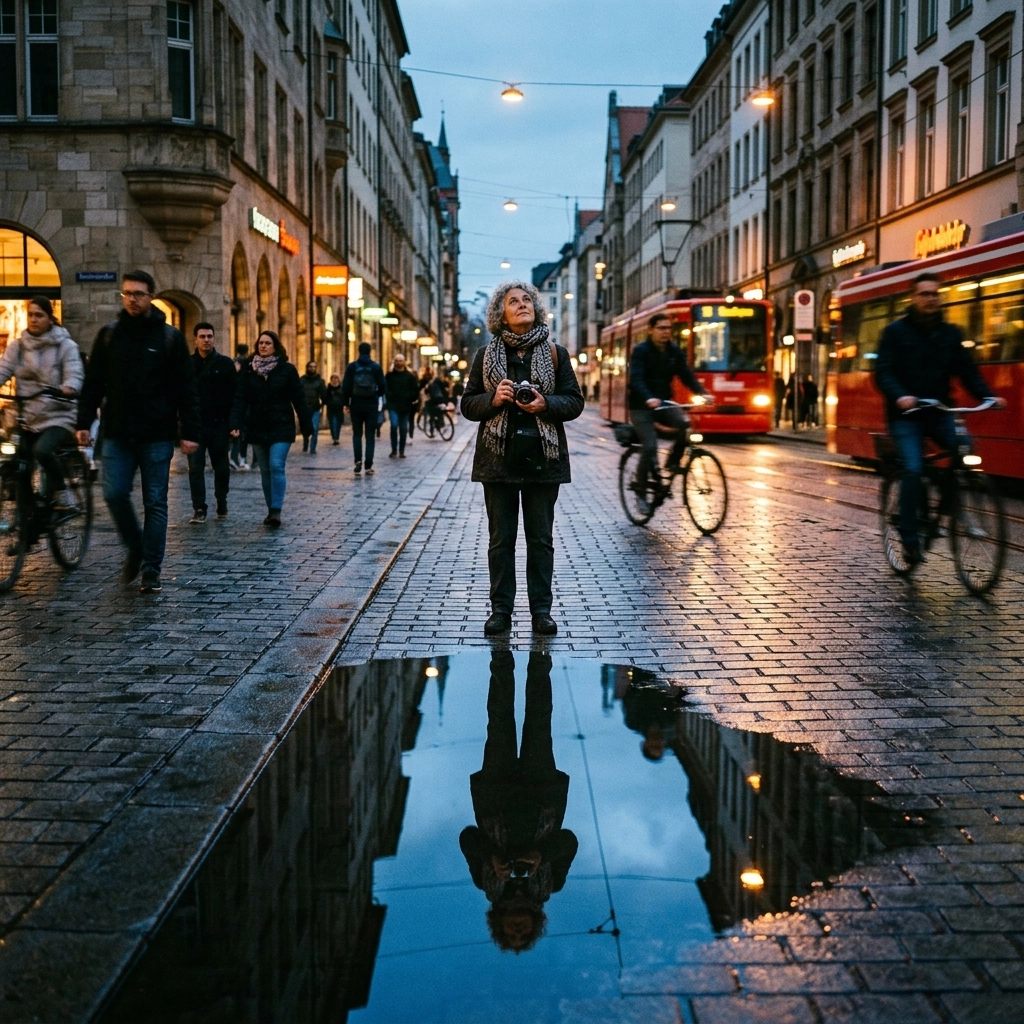
Forget the standard puddle reflection for a second. Look for reflections in polished car hoods, distorted shop windows, or even someone’s sunglasses. This adds a layer of complexity and creates a surreal, dreamlike quality to your work. If you want to master this, you’ll need to understand how light hits surfaces, which is why mastering manual mode is crucial for controlling those tricky exposures.
3. Shooting the Backs of Heads
There is a massive amount of mystery in a person you can’t see. Photographing people from behind removes the "identity" of the subject and turns them into a character in a story the viewer has to finish. Where are they going? What are they thinking? It also takes the pressure off you if you’re still a bit shy about pointing a camera at someone’s face.
4. Silhouette Storytelling
Find a bright light source: a sunset at the end of a street, a glowing storefront, or a harsh street lamp: and expose for the highlights. This turns your subjects into pitch-black shapes. Without facial expressions, you have to rely entirely on gesture and posture to tell the story. A person slumped over a cane or a child running with arms wide open becomes a much more powerful graphic element as a silhouette.

5. Shooting Through Glass
Dirty windows, steamed-up cafe glass, or rain-streaked bus windows are your best friends. They add texture and a sense of layers to your image. It creates a "voyeuristic" feel that is quintessential to street photography. If you’re using the latest AI-powered mirrorless tech, the eye-autofocus might get confused by the glass, so this is a great time to switch to manual focus and really nail the shot.
6. Low Angle, High Impact
Stop shooting from eye level. It’s what everyone sees all day. Get your camera down on the pavement. This perspective makes pedestrians look like giants and gives the urban landscape a cinematic, heroic feel. If your camera has a flip-out screen, use it. If not, get ready to get your knees dirty.
7. Night Neon
When the sun goes down, the city changes. Focus on pockets of light within the darkness. Neon signs provide incredible color palettes that you just can’t find during the day. This is also where you can experiment with post-processing. Tools like Luminar are fantastic for enhancing those neon glows and managing the high dynamic range of a night scene.
8. Street Animals: The Unsung Heroes
The street isn’t just for humans. Stray cats, leashed dogs, or even a flock of pigeons can be the stars of your show. Animals are unpredictable and add a sense of life that feels more organic than a posed human subject. Try to get down to their eye level for a more intimate perspective.
9. Leading Lines in the Alley
Alleys are gold mines for leading lines. The walls, the trash bins, and even the overhead wires all lead the eye somewhere. Use these lines to pull your viewer toward a subject at the end of the alley. It’s a classic composition technique that works every time. If you’re struggling with this, check out some tips at Shut Your Aperture to sharpen your composition skills.
10. Direct Flash in Daylight
This is a bold move. Using a flash in the middle of the day creates a harsh, high-contrast, "paparazzi" style look. It’s a technique made famous by photographers like Bruce Gilden. It’s not for the faint of heart, as it’s very intrusive, but the results are incredibly striking and raw.

11. The Consensual Street Portrait
Sometimes, the best way to get a great shot is to just ask. Approach someone with a unique look and ask if you can take their portrait. Most people are flattered. This moves the needle from "candid" to "portraiture," and it allows you to control the background and lighting. For more on this, look at our guide on portrait photography techniques.
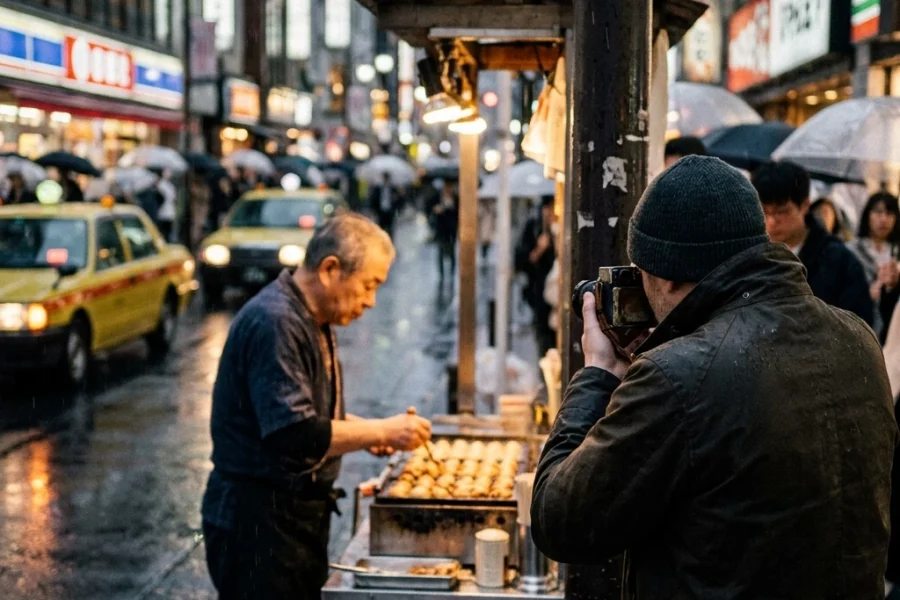
12. Photographing People Photographing
In the age of the smartphone, everyone is a photographer. Capturing someone else lost in the act of taking a photo is a great "meta" way to document modern life. They are usually so focused on their own screen that they won’t even notice you.
13. Focus on Hands or Feet
You don’t need a face to tell a story. A pair of worn-out boots waiting for a bus or hands clutching a paper bag can be just as expressive as a facial expression. These details often go unnoticed, making them perfect subjects for creative street work.
14. Shooting From the Hip
This is a classic technique where you take photos without looking through the viewfinder. It’s great for capturing truly spontaneous moments. It takes practice to "feel" your focal length, but once you get it, you’ll capture scenes that you would have missed if you had taken the time to compose properly. If you're worried about settings, make sure you've read our beginner's guide to mastering your camera so you can set it and forget it.
15. Abstract Urban Geometry
The city is full of shapes. Look for triangles, circles, and squares in the architecture. Sometimes, the subject doesn’t even have to be a "thing": it can just be the way two buildings overlap to create a perfect geometric form.
16. Rainy Day Drama
Most photographers head home when it rains. That’s a mistake. Rain brings umbrellas (great pops of color), reflections, and a mood that you can’t replicate in the sun. The "sadness" or "hustle" of a rainy city is a vibe that always plays well in a photo series.

17. Puddle Portals
While we said forget puddles earlier, they are still a staple for a reason. But instead of just shooting the reflection, try to flip the image in post-processing. It makes the puddle look like a portal to another dimension. Using Luminar to enhance the clarity of the water can make this effect even more jarring and beautiful.
18. Intentional Motion Blur
Not everything needs to be tack sharp. Use a slower shutter speed (around 1/15th or 1/30th of a second) and pan your camera with a moving subject. This creates a sense of speed and chaos that perfectly captures the energy of a busy city. If you aren't sure how to do this, go back to the basics of how to use manual mode without getting overwhelmed.
19. Minimalist Negative Space
Find a massive, blank wall and wait for a single person to walk past. The vast amount of "nothing" (negative space) makes the subject feel small and isolated. It’s a very modern, clean look that stands out in a world of cluttered images.
20. Commuter Chronicles
The subway, the bus, or the train station. People in transit are in a weird "liminal" space. They are often lost in thought, making for some of the most honest and raw candid moments you will ever find.
21. Storefront Frames
Use the windows of a shop to "frame" what’s happening inside. This creates a natural border for your subject and adds context to the environment. It’s a great way to practice your compositional skills.

22. Shadow Subjects
Sometimes the shadow is more interesting than the person casting it. Look for long, dramatic shadows during the "golden hour" and make the shadow the primary subject of your frame. It creates a graphic, almost noir-like feel.
23. High Contrast Black & White
Street photography and Black & White go together like peanut butter and jelly. Removing color forces the viewer to look at the light and the shadows. When you’re editing, push those blacks deep and the whites bright for a punchy, classic look.
24. Public Transport Life
There is something uniquely human about a packed bus or a lonely train car at night. The lighting is often weird and fluorescent, which gives your photos a gritty, cinematic quality.
25. AI-Enhanced Street Scenes
We live in 2026, and AI is part of the game. Whether it’s using AI to upscale a crop or using Luminar to relight a scene where you missed the exposure, don’t be afraid to use technology to finish your vision. Just remember that the soul of the photo still comes from you standing on that street corner.
Choosing the Right Gear
You don't need a $10,000 setup to do this. In fact, many street photographers prefer smaller, more discreet setups. If you're looking to upgrade, you should check out our comparison on how to choose the best mirrorless cameras for your 2026 kit. A smaller camera means you're less intimidating, which is the secret sauce to getting those candid shots.
Wrapping It Up
Street photography is about patience and observation. It’s about being present in the world instead of just passing through it. These 25 ideas are just a starting point. The real magic happens when you take these concepts and blend them together to find your own unique voice.
If you’re worried about making mistakes, don't be. Everyone does. Even the pros are constantly fixing 7 mistakes you’re making with manual mode. The only way to get better is to get out there, shut your aperture, and start shooting.
For more inspiration and the latest gear news, keep an eye on our photography news to see how the industry is evolving. Now, grab your camera and hit the pavement!