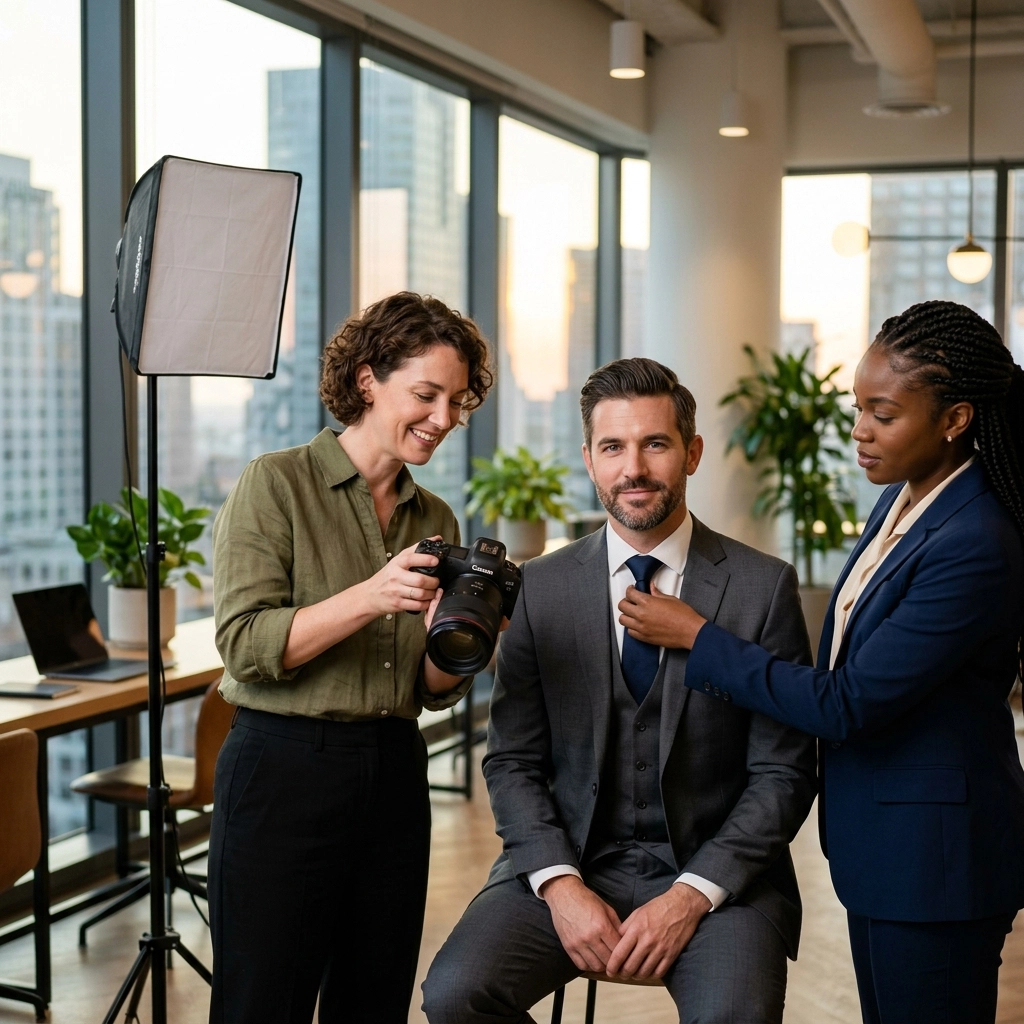
Let’s be real for a second: your LinkedIn profile photo from that one wedding five years ago where you cropped out your cousin’s shoulder isn’t doing you any favors. In the modern business world, your headshot is your digital handshake. It’s the first thing a recruiter, a potential partner, or a high-value client sees before they even read your name.
If you look nervous, outdated, or, heaven forbid, blurry, you’re losing money. It’s that simple.
Creating a high-impact image doesn't happen by accident. It requires a mix of psychology, wardrobe strategy, and technical know-how. Whether you’re an executive at a Fortune 500 or a freelancer building your empire, this guide is going to walk you through the professional corporate headshot tips you actually need to look like the boss you are.
Why Your Headshot is Your Most Important Marketing Asset
Think about the last time you Googled someone before a meeting. You went straight to the "Images" tab or their LinkedIn profile, right? Humans are hardwired to judge faces in milliseconds. A professional headshot tells the world you’re competent, approachable, and that you actually care about your details.
If you’re just starting out in photography and want to understand the mechanics of the camera before your big shoot, check out our Photography 101 guide. But if you're here to master the art of the corporate portrait, let's dive into the specifics.

Alt-text: A professional executive standing in a modern office, showcasing a confident and approachable posture for a corporate headshot.
How to Prepare for a Headshot Session: The Wardrobe
The most common question I get is, "What do I wear?" The answer isn't "a suit." The answer is "whatever makes you look like the most successful version of yourself."
1. Stick to Solid Colors
Patterns are the enemy of a good headshot. That tiny houndstooth or thin pinstripe might look great in person, but on a digital screen, it can create a "moiré effect", that weird shimmering vibration that hurts the eyes. Stick to solid, mid-to-dark tones. Blues, greys, and deep greens are universally flattering.
2. The Contrast Rule
If you’re shooting against a white background, don't wear a white shirt unless you have a dark blazer over it. You don't want to look like a floating head. Aim for a high-contrast look. A crisp light shirt under a navy jacket is a timeless classic for a reason. For more ideas on how to avoid basic errors, read up on 7 mistakes you’re making with your corporate headshot.
3. Texture is Your Friend
While patterns are bad, textures are great. A wool blazer, a silk tie, or a knit sweater adds depth to the photo without distracting from your face.
4. Fit Matters Most
Camera lenses have a funny way of making loose clothing look like a tent. Ensure your clothes are tailored and ironed. If your collar is drooping or your sleeves are bunching at the shoulders, it’ll show.
Mastering the Posing: How to Not Look Awkward
Most people feel like a deer in headlights the moment a lens is pointed at them. It’s okay. Even CEOs get "camera-paralysis." The trick to great professional corporate headshot tips isn't about being a model; it's about micro-adjustments.
The "Turtle" Technique
This feels ridiculous but looks incredible. Push your forehead toward the camera and tip your chin down slightly. This elongates the neck and sharpens the jawline. It eliminates the dreaded "double chin" that happens when we naturally pull our heads back in a defensive posture.
The 45-Degree Angle
Never stand perfectly square to the camera. It makes you look wider and more aggressive. Turn your body about 45 degrees away from the lens, then turn your head back to look directly at the camera. This slims the profile and creates a more dynamic, engaging shape.
The Squinch
Coined by famous headshot photographer Peter Hurley, the "squinch" is a slight narrowing of the eyes. Not a squint, you’re not trying to see a distant sign. You’re narrowing the lower eyelids specifically. This conveys confidence and "knowingness." Wide eyes convey fear. Narrowed eyes convey competence.

Alt-text: Close-up of a professional woman using the squinch technique to convey confidence in a corporate portrait.
Grooming and Makeup: The "Office Plus" Look
The goal of headshot makeup isn't to look like you're going to a gala; it's to look like you had a really great night's sleep and just crushed a morning workout.
- Makeup: Stick to matte finishes. Shiny skin looks like sweaty skin under studio lights. Avoid heavy "glam" looks. Focus on evening out the skin tone and defining the eyes. If you’re looking for more technical skills in natural lighting, check out our Portrait Photography Techniques 101.
- Hair: Don't get a haircut the day before your shoot. Give it 3-5 days to "settle." Use a little bit of product to tame flyaways, as studio strobes will catch every single stray hair like a fiber optic cable.
- Shaving: For men, if you’re going clean-shaven, do it a few hours before the shoot to avoid redness but keep the "shadow" away. If you have a beard, trim it neatly.
The Technical Side: Best Lighting for Executive Portraits
If you’re the one behind the camera, or you’re choosing a photographer, you need to know about lighting. Bad lighting can age someone ten years in a single click.
Softness is Key
Hard light creates deep shadows in wrinkles and under the eyes. For corporate work, you want a large light source, think big softboxes or umbrellas. This fills in those "character lines" and makes the skin look healthy.
Catchlights
A headshot without catchlights (the little white spark of light in the eyes) looks "dead." Ensure your main light is positioned so it reflects in the pupils. It brings the person to life.
For those looking to level up their editing game after the shoot, I highly recommend using Luminar. Its AI-powered tools for skin enhancement and eye brightening save hours of manual retouching while keeping the subject looking natural. You can learn more about these digital shortcuts in our guide to AI photography news.

Alt-text: A behind-the-scenes shot of a professional headshot setup with large softbox lighting and a high-end mirrorless camera.
Choosing Your Background
The background should support your brand, not compete with it.
- The Classic Grey/White: Perfect for LinkedIn and company "About Us" pages. It’s clean, modern, and easy to cut out if you need to place the photo on a different graphic.
- The "Environmental" Shot: Shooting in a modern office, a library, or an urban setting. This tells a story about your industry. A tech founder might want a blurred-out office background, while an architect might want something with structural elements.
- The Bokeh Look: Using a wide aperture (like f/2.8) to blur the background into a creamy wash of color. This keeps all the focus on the face while providing a high-end, cinematic feel. If you’re struggling with manual settings, our tutorial on how to master manual mode will get you up to speed.
The Mental Game: Confidence is a Choice
The best professional corporate headshot tips have nothing to do with cameras and everything to do with what's happening between your ears. If you feel like a fraud, you’ll look like one.
Before your shoot, take five minutes to breathe. Remind yourself why you’re good at what you do. When you’re in front of the lens, don't think about the camera. Think about a client you just helped or a project you just nailed. That genuine spark of pride will show up in your eyes.
If you’re looking for a truly world-class experience to handle all of this for you, you absolutely have to check out Perfect Corporate Headshots. They specialize in making the process painless and the results viral-worthy.

Alt-text: A diverse group of business professionals in a line, showing off various styles of professional headshots from creative to corporate.
Common Mistakes to Avoid
Even the pros mess up sometimes. Avoid these traps:
- Over-retouching: Don't turn yourself into a plastic mannequin. People need to recognize you when you walk into the room. Use Luminar to remove a temporary blemish, but keep your permanent features.
- Wacky Angles: Avoid the "high angle" look that was popular on social media ten years ago. It makes you look small and submissive. Keep the camera at eye level or slightly below for a more authoritative feel.
- The "Hand on Chin" Pose: Unless you’re a philosopher from the 1800s, skip it. It usually looks forced and dated.
For a deeper dive into common pitfalls, check out our article on 7 mistakes you're making with manual mode, which can directly affect your portrait quality.
Post-Processing and the AI Revolution
In 2026, we can't talk about headshots without talking about AI. AI-powered mirrorless tech is changing how we track eyes and focus in real-time. But more importantly, it's changing how we edit.
Using tools that understand human anatomy allows for faster turnarounds without losing the "soul" of the photo. If you’re curious why everyone is jumping on this trend, read why everyone is talking about AI-powered mirrorless tech.
Just remember, even with the best AI, a bad original photo is a bad photo. You still need the lighting, the pose, and the expression to be perfect.
Final Checklist Before You Step In Front of the Lens
- Hydrate: Drink plenty of water 24 hours before. It plumps the skin and clears the eyes.
- Iron: Check your clothes under bright light for wrinkles.
- Mirror Work: Practice your "turtle" and "squinch" in the bathroom mirror. Yes, you’ll feel silly. Yes, it works.
- Vision: Know what you want to communicate. Trustworthy? Disruptive? Steady?
- Tools: If you’re shooting this yourself, make sure you have the best mirrorless camera for 2026.
Your headshot is an investment, not an expense. When you do it right, it opens doors. When you do it wrong, it keeps them closed. Stop settling for "good enough" and start aiming for "unforgettable."
If you’re hungry for more technical training to master your gear, head over to Shut Your Aperture’s Learning Portal for in-depth tutorials that will take you from amateur to pro.
Alt-text: A split screen showing a "Before" unposed photo and an "After" professional corporate headshot using the tips from this guide.
Building a brand is hard work, but your face shouldn't be the thing holding you back. Follow these professional corporate headshot tips, get yourself in front of a quality lens, and show the world you mean business. Whether you're hitting the streets for some creative urban photography or staying in the studio, the principles of a great portrait remain the same: connection, light, and a little bit of confidence.