Updated October 2026
Beautiful light does not rescue a lazy photograph. You can stand in front of a ridiculous sunset, point an expensive camera at it, and still come home with a flat sky, a muddy foreground, and a frame that says nothing.
Golden-hour landscape photography gets better when you stop chasing orange clouds and start making decisions. Where is the light coming from? What deserves attention? Which highlights matter? Should the water look still, or should the waves have teeth? Those choices make the photograph. The sunset is your opportunity, not your composition.
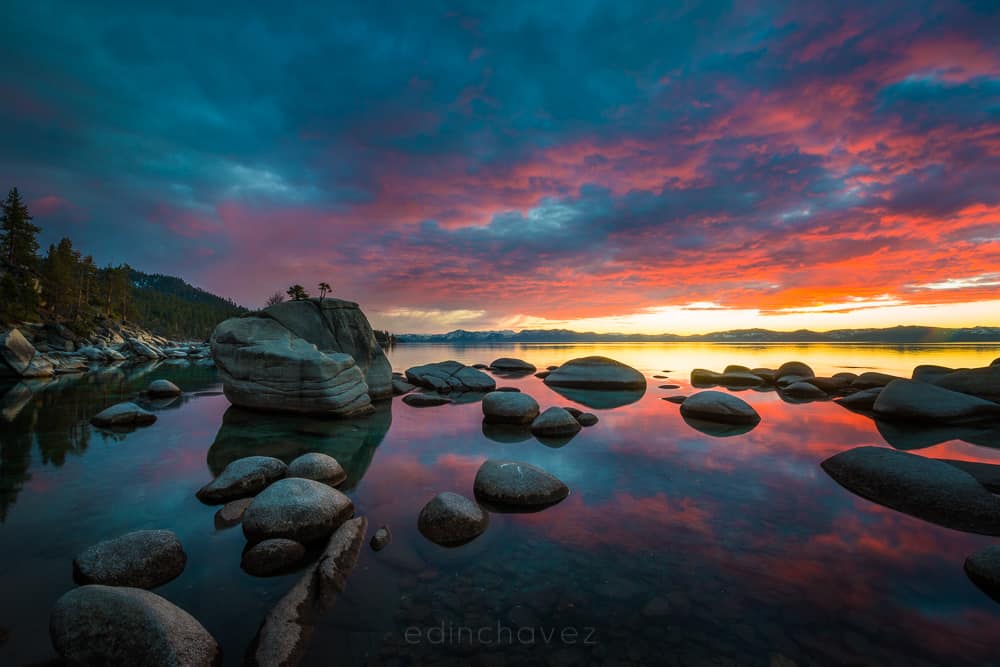
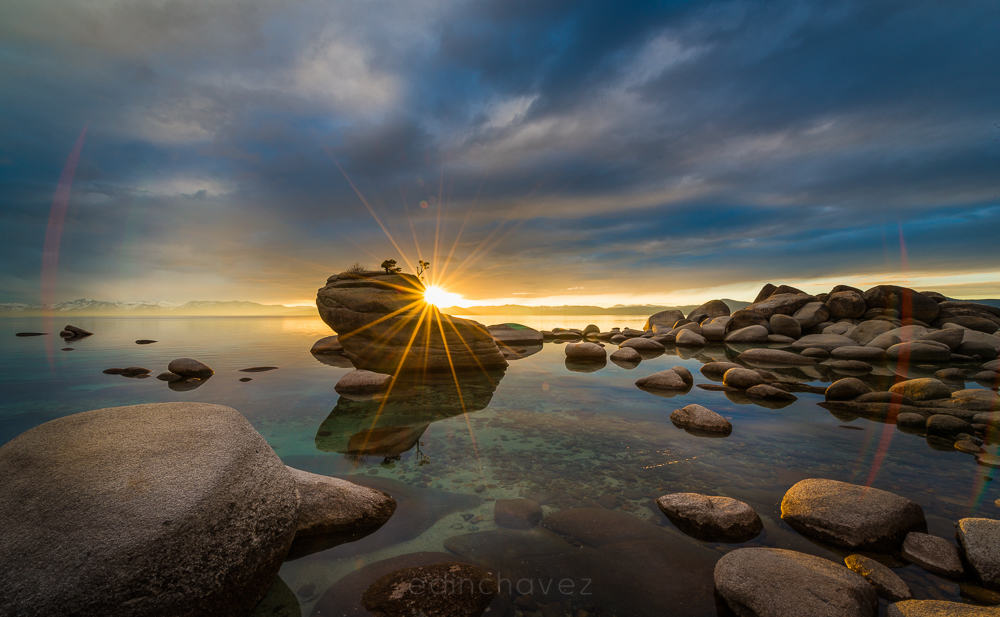
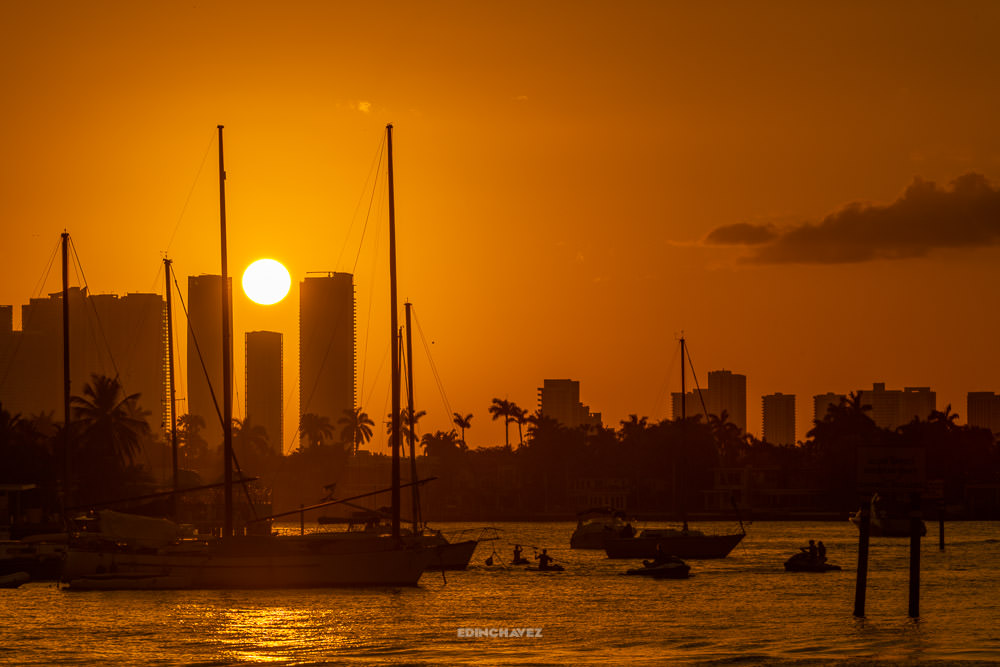
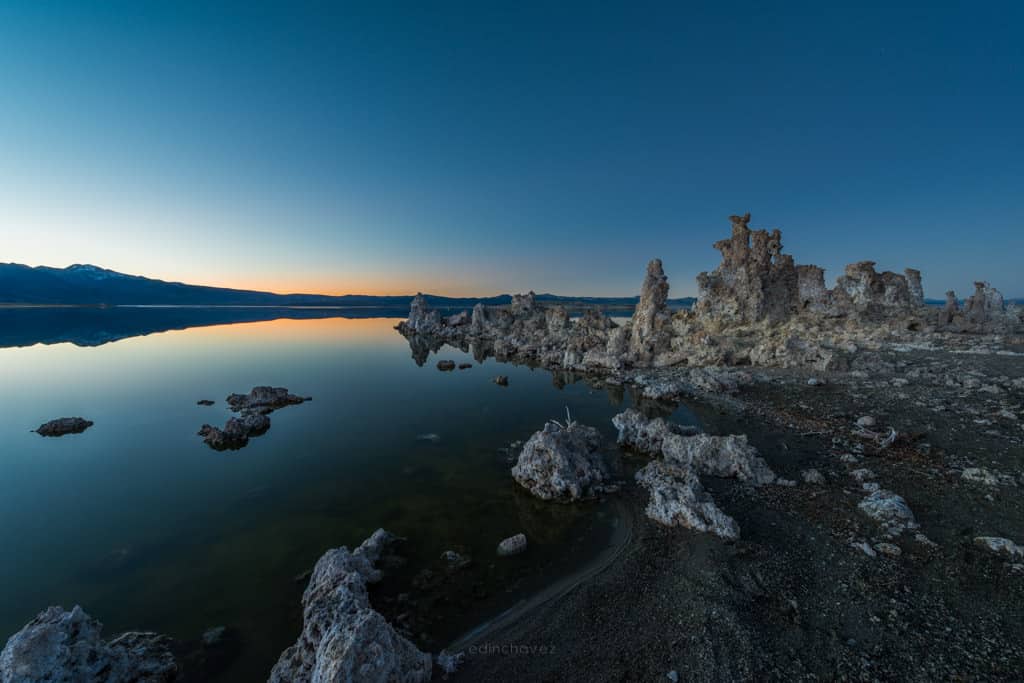
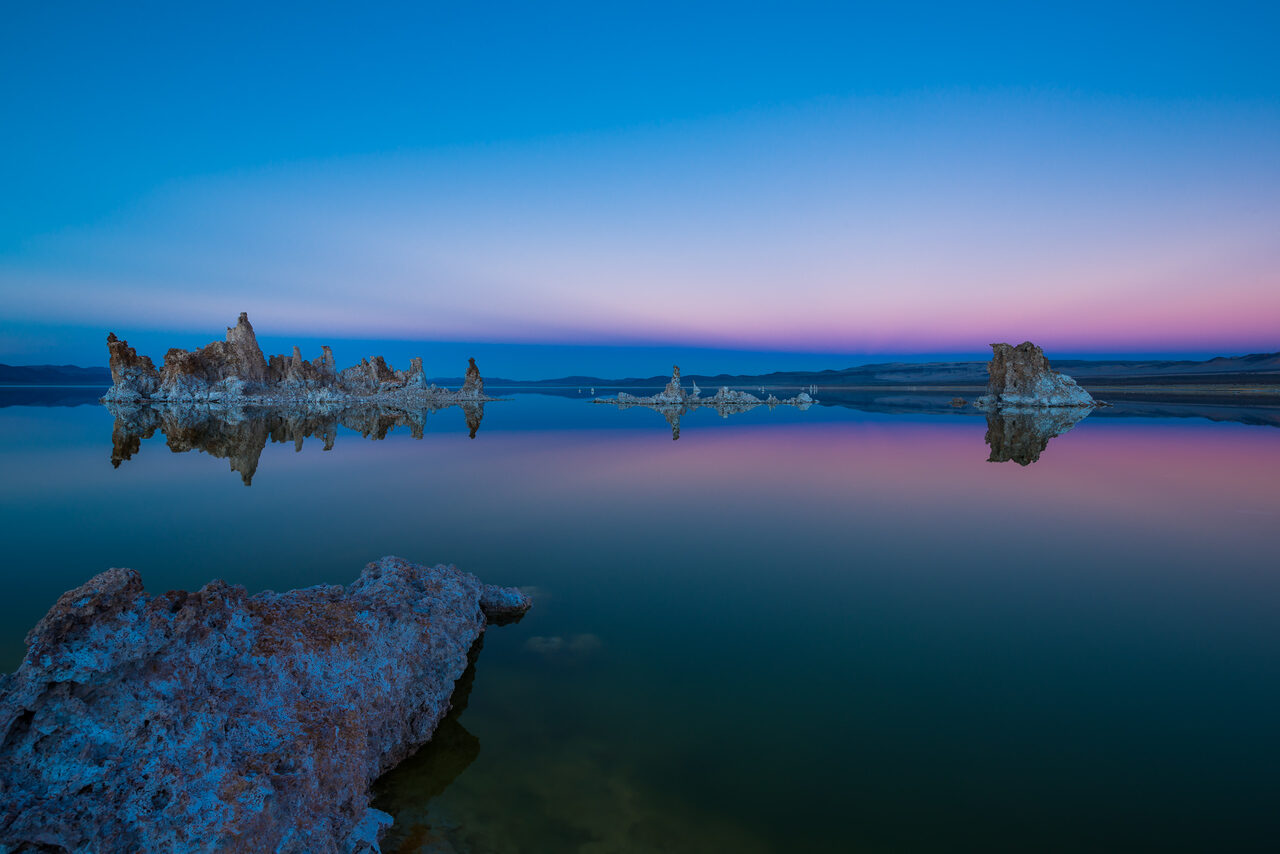
This guide breaks down seven mistakes that waste that opportunity, with a field fix for each one. The photographs are real work by Edin Chavez from Lake Tahoe, Mono Lake, and Miami. They illustrate light, framing, reflections, and silhouettes, not before-and-after edits or a claim that one set of camera settings produced every image.
 Save
Save1. Arriving when the color starts instead of arriving ready
If the sky is already glowing while you are digging for a tripod plate, you are late. The problem is not missing one minute of light. It is making every creative decision under pressure. You pick the first convenient patch of ground, accept a branch cutting through the subject, and spend the best moment arguing with the camera.
Scout your composition before the light becomes interesting. Find a main subject, then identify the foreground, middle distance, and background. Look for edges that need cleaning up: a half-cut rock, a bright sign, a stray fence post. Decide where your tripod can stand safely without stepping onto fragile ground or blocking other people.
Check sunrise or sunset time for your actual location and date, then look at the direction of the sun. A sunset behind the mountain is different from a sunset beside it. A ridge can cut off direct light before the published sunset time, so a clock alone does not tell you when your subject will enter shadow. Treat a planning app as a starting point and the landscape in front of you as the final check.
Golden hour is not a guaranteed sixty-minute appointment. Its useful length changes with latitude, season, weather, and local terrain. Adorama’s planning guide makes that distinction clearly. Plan enough margin to set up, check your frame, and watch the scene rather than betting everything on one timestamp.
The field fix: choose one strong composition and one nearby alternative before the color arrives. Make a test exposure, check focus, and have your return route sorted. Bring a light if you expect to leave after dark. If the weather turns unsafe, the photograph can wait.
2. Photographing the sky and forgetting the landscape
A bright orange sky is a mood. It is not automatically a subject. Without an anchor, the viewer looks at the color for a second and leaves. Give that sky something worth lighting: a rock formation, a line of trees, a shoreline, a ridge, or a clean reflection.
Start by asking what the frame is about. At Bonsai Rock, the rock and its small trees give the eye a place to land. The surrounding stones can lead toward it, but they need separation. Move a few inches and watch whether two rocks merge into one shape or whether a clean strip of water appears between them. Small position changes can do more than a new lens.
Do not let a wide-angle lens make all the decisions. It can turn a powerful distant mountain into a tiny bump above a huge empty foreground. A tighter frame may give the landscape more weight. B&H’s landscape-lens guide explains why wide, standard, and telephoto focal lengths all have a place; there is no rule that a landscape must be photographed as wide as possible.
Watch the direction of light, too. Side light can reveal texture in stone and create layers. Backlight can give you strong outlines or a silhouette. Front light can make the scene clear and descriptive. Digital Photography School describes these as different creative options, not a ranking where one always wins.
When the sun is in your frame, check for flare instead of assuming every glowing streak improves the picture. A sunstar can work when it supports the subject. A large washed-out patch can also steal all the attention. Shift your position, shade the lens when possible without putting a hand in the frame, and compare the result.
The field fix: make one photograph with more foreground, one tighter photograph, and one with the horizon moved away from the center. Choose the version that gives the subject the clearest job. For a wider grounding in framing and field decisions, read the landscape photography guide.
 Save
Save3. Trusting the bright screen instead of checking the exposure
The rear screen is useful for composition. It can fool you about exposure, especially when its brightness is high or the ambient light is changing. A photograph that looks punchy outdoors can reveal clipped cloud detail or noisy shadows on a larger display.
Use the histogram and highlight warnings as evidence, then decide what you want to protect. A histogram is a map of brightness distribution, not a score. A low-key silhouette can legitimately lean left. A bright scene can lean right. The question is whether important information is being lost, not whether the graph looks tidy.
Pay particular attention to colorful sky near the sun. A broad white patch where you wanted cloud texture is a different problem from a tiny bright sun disc. Check the individual color channels if your camera offers them. Kristen Ryan’s bracketing guide specifically recommends looking at both the overall histogram and the channels when checking an exposure series.
Shoot RAW when you want editing flexibility. It gives you more room to adjust color and tone than a finished JPEG, but it does not make the sensor unlimited. If the important sky is clipped beyond recovery, pulling the Highlights slider down cannot rebuild the missing detail. Capture it properly or make another exposure while the light is there.
You also do not have to open every shadow. The Miami photograph in this guide uses dark boats and buildings as shapes against warm light. That is a silhouette, not a failed attempt to show every window and rope. Decide whether the foreground needs detail or whether its outline is the point.
The field fix: review a test frame, check the sky and its color channels, and adjust exposure deliberately. In aperture priority, exposure compensation lets you influence the camera’s choice. In manual mode, change the setting that does not undermine your creative goal. A darker preview may be correct if it keeps the information you need.
 Save
Save4. Forcing one exposure to do a job it cannot do
Sometimes the sky and foreground are too far apart in brightness for the single photograph you want. You expose for the clouds and the ground becomes a dark mass. You expose for the ground and the sky loses its detail. This is where a bracket can help, but only when you capture it with a plan.
Keep the composition and focus consistent. For a static scene, keep aperture and ISO consistent as well, varying shutter speed across the series. That avoids changing depth of field between photographs. Use your camera’s auto-exposure bracketing or make the changes manually, checking the actual results rather than trusting a preset spacing.
A practical starting exercise is three exposures: one for the sky, one between, and one for the darker foreground. The spacing depends on the scene. Check whether the darker frame protects the highlights you care about and whether the brighter frame contains useful shadow information. Three files that all miss the same information are not a successful bracket.
A tripod helps keep the frames aligned. Moving leaves, boats, people, and waves can still change between frames, so inspect the merge for ghosts or broken edges. If the movement becomes ugly, use a stronger single exposure or blend more selectively instead of insisting on HDR because you shot the files.
Kristen Ryan’s guide explains why capturing several exposures does not mean you must use every one of them. Adobe’s golden-hour guidance also describes blending exposures to handle a bright sky and darker foreground. Both support a simple goal: collect the information you need, then build a believable photograph.
A graduated neutral-density filter is another option where the shape of the horizon suits it. But a straight dark transition across mountains or trees can darken those subjects along with the sky. Choose the method that fits the scene, not the method that sounds more professional.
The field fix: bracket when a test frame shows a real tonal problem, then check the files before leaving. Keep the natural difference between light and shadow in the final image. HDR should not turn evening into flat midday.
5. Letting slow shutter speed make the decision for you
The light drops, the shutter gets slower, and suddenly the foreground grass looks smeared. A tripod can keep the camera steady. It cannot stop the subject moving.
Separate camera movement from subject movement. If everything is soft, check support, focus, and your release technique. If the rocks are sharp but the leaves are blurred, the shutter speed may be too slow for the movement you want to freeze. Zoom into the photograph and inspect the actual problem.
There is no universal golden-hour setting. For a still landscape on a tripod, a moderate aperture such as f/8 can be a useful starting point, with a low ISO and whatever shutter speed produces the chosen exposure. If nearby foreground detail matters, you may need a different aperture or a different focus plan. Those are starting decisions, not a promise of front-to-back sharpness.
For windblown trees or an active shoreline, choose how much movement you want. A faster shutter can preserve a wave’s shape. A longer exposure can smooth the water and simplify a reflection. If you need a faster shutter, raising ISO may be a better trade than accepting unwanted blur. Noise and movement are different problems, and only one of them can ruin the shape you wanted to record.
Do not close the aperture as far as it will go simply because you want everything sharp. Diffraction can reduce fine detail at very small apertures. Check the result at your intended viewing size. If a close foreground and distant background cannot both look sharp in one frame, change the composition or investigate focus stacking for a sufficiently still scene.
Set the tripod carefully, lock the head, and make sure the feet are secure. Wind, unstable sand, and a loose plate do not care how much the tripod cost. A Benro MeFOTO RoadTrip Pro aluminum tripod is one travel-support option to compare, not a claim that it is the gear used for these photographs.
The field fix: decide whether movement should be sharp or smooth before you set shutter speed. Take a test, zoom in, and correct the cause. Our shutter-speed guide explains that creative choice in more detail.
 Save
Save6. Treating warmth as a license to turn everything orange
The light is warm. That does not mean the water, shadows, clouds, and stone should all become the same shade of orange. The contrast between warm light and cooler areas often gives the photograph its depth.
RAW capture lets you revisit white balance during editing. Set a useful preview in the field, then judge the finished photograph as a whole. Compare the highlights, shadow colors, and any neutral elements. A warmer setting may strengthen the feeling, but pushing it too far can remove the color relationships that made the scene interesting.
Start your edit with exposure and white balance before reaching for heavy saturation. Bring the brightest useful detail into range. Lift only the shadows that need it. Leave some dark areas dark. Then work locally so the viewer’s attention goes where you intended.
A reflected sunset is a good test. The reflection should feel connected to the sky, while still allowing the water and shoreline to have their own character. If every part of the photograph screams at the same volume, lower the intensity and rebuild the hierarchy.
Look for halos around rock edges and ridgelines after strong masking or HDR work. Look for crunchy texture after too much clarity. Look for strange color patches in a smooth sky. Step back from the screen, then inspect at full size. A dramatic photograph can still have a quiet transition.
The field fix: make a restrained version of the edit before the dramatic version. Compare them after a break. Keep the version that makes the light feel convincing, not the version with the largest slider values.
7. Packing up when the sun disappears
The direct golden light and the twilight that follows are different opportunities. The mistake is assuming the session is over because the sun has dropped below the horizon.
Color can remain in the sky, reflections can become simpler, and the scene may settle into cooler tones. Mono Lake’s blue-hour photographs show that change in mood clearly. They are twilight examples, not illustrations of warm direct sunlight. Labeling that difference matters: you cannot learn to recognize light if every attractive photograph gets called golden hour.
As the light changes, revisit the exposure and focus. A setting that worked ten minutes earlier may no longer suit the scene. Watch for longer shutter times and subject movement. Try a cleaner frame if the sky becomes simpler, or a silhouette if the foreground no longer needs detail.
Do not wait blindly for color that may never arrive. Watch the actual clouds and horizon. Stay only while conditions and your route remain safe. A calm photograph is not worth a dangerous climb back in darkness.
The field fix: make a second plan for twilight before sunset. Know which composition would still work without direct light, and keep enough energy and battery to photograph it. Sometimes the quieter frame is the keeper.
 Save
SaveA golden-hour field checklist you can actually use
- Before the light: pick a subject, clean up the edges, check the sun’s direction, and choose a safe position.
- At the first test frame: check focus, the important highlights, and whether the subject’s movement matches your shutter speed.
- When contrast is too high: decide between a silhouette, a bracket, a filter, or a different composition.
- When color peaks: keep working the strong frame instead of running after every new cloud.
- After sunset: reassess the exposure and look for a twilight composition rather than calling the same light golden hour.
- During the edit: protect color relationships, watch edges, and keep some shadows.
Go make the photograph. Get the subject right, protect the useful information, and let the light do its part. You do not need a bag full of new equipment to start improving those decisions.
Golden-hour landscape photography Q&A
When is golden hour for landscape photography?
Golden hour is the warm, low-angle light around sunrise and sunset. Its useful duration varies with latitude, season, weather, and terrain, so check your location and watch the actual light rather than assuming it lasts sixty minutes.
What camera settings should I use for golden-hour landscapes?
For a still scene on a tripod, a moderate aperture such as f/8 and a low ISO can be a starting point. Set shutter speed for the chosen exposure, then change it when subject movement or your depth-of-field needs demand a different result. There is no universal setting.
Should I shoot RAW at golden hour?
RAW gives you more flexibility to adjust tone and white balance than a finished JPEG. It does not restore important detail that was clipped beyond recovery, so check the exposure in the field.
Do I need a tripod for golden-hour photography?
A tripod is useful for slow shutter speeds and consistent brackets. It steadies the camera, not moving subjects. If you need to freeze leaves, boats, or waves, choose a faster shutter speed and adjust the other exposure settings as needed.
When should I bracket a landscape exposure?
Bracket when the important sky and foreground cannot both be recorded well in one exposure. Keep the frame and focus consistent, check that the series contains the detail you need, and inspect the merge for movement artifacts.
Is blue hour the same as golden hour?
No. Golden hour has warm, low-angle sunlight around sunrise and sunset. Blue hour is a cooler twilight opportunity before sunrise or after sunset. Recheck exposure and movement as the light changes.
Keep building your landscape skills
For a structured next step, explore the Landscape Photography Course at Shut Your Aperture Academy. Its course page covers light, composition, exposure, scouting, and Lightroom editing. The page asks you to sign in or create an account to get started; check the Academy for current access options.
If golden hour is your main interest, read our full guide, Golden Hour Photography: How to Capture Perfect Light, for planning, light direction and exposure.
Recommended gear for golden-hour landscapes
Start with the camera and lens you already own. These are topic-matched options to compare, not a record of gear used for the photographs above.
- Benro MeFOTO RoadTrip Pro aluminum tripod, Pacific Blue: a travel-support option for slow exposures and brackets. Check your setup’s weight and stability in the actual conditions.
- Nikon NIKKOR Z 24-70mm f/4 S lens: a standard zoom for Nikon Z-mount cameras. It is not a universal camera fit; check your mount before buying.
- Nikon Circular Polarizer II, 72mm: an optional filter for a lens with a matching 72mm thread. Turn it while watching the reflection; removing all reflection may work against the photograph.
Affiliate disclosure: this article contains B&H affiliate links. If you buy through them, Shut Your Aperture may earn a commission at no extra cost to you. The recommendations are not claims of hands-on testing.
Technique references: Adobe’s golden-hour guide, Adorama’s planning guide, Kristen Ryan on bracketing, Digital Photography School on landscape technique, and B&H on landscape lenses. Checked October 2026. Photographs: Edin Chavez.