To turn these ideas into a fast, repeatable edit, our Lightroom presets library gives you a head start you can build on.
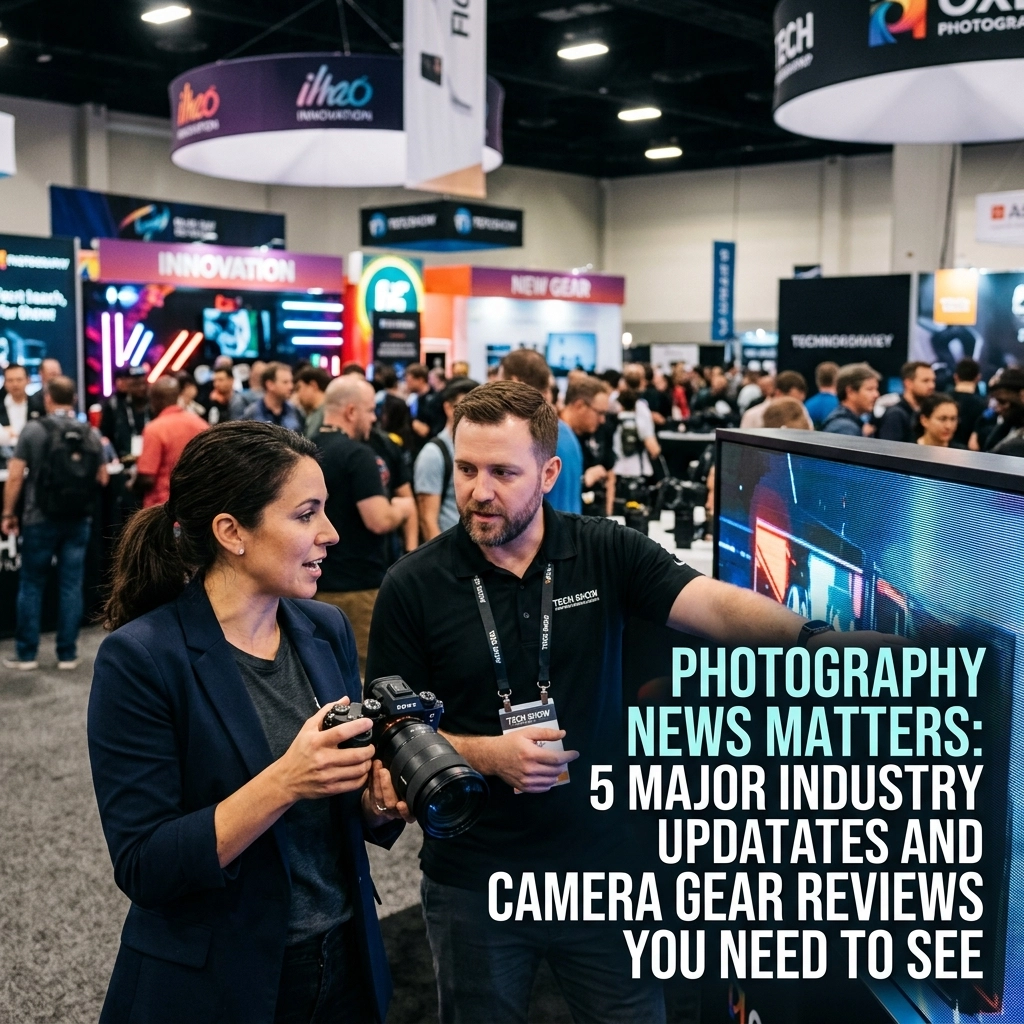
If you feel like you’re constantly running a race just to keep your camera bag and your skill set relevant, you aren’t alone. It’s Friday, May 8, 2026, and the photography world is moving faster than a shutter at 1/8000th of a second. If you blink, you miss a firmware update that changes how your autofocus works or a new AI tool that makes your three-hour editing session look like a waste of time.
Staying informed isn't just for gear nerds who like reading spec sheets in the dark. It’s a business necessity. Whether you’re a weekend warrior shooting golden hour landscapes or a seasoned pro shooting high-stakes corporate events, knowing where the industry is headed keeps you from becoming a dinosaur.
Today, we’re breaking down the five biggest shifts happening in our world right now and looking at the gear that is actually worth your hard-earned cash.
1. AI Integration: From Gimmick to Essential Workflow
Remember back in 2023 when AI in photography was mostly just for making weird six-fingered people in portraits? Those days are long gone. By mid-2026, AI has become the backbone of the professional workflow. We aren't just talking about "auto-enhance" buttons anymore. We’re talking about tools that understand context, depth, and lighting better than most human assistants.
The biggest news in the software world continues to be how Luminar has pushed the boundaries of generative editing. Photographers are now using these tools to handle the heavy lifting of skin retouching, object removal, and even sky replacement with a level of photorealism that is indistinguishable from a "real" shot.
The industry update here is simple: if you aren't integrating these tools, you are losing money. Your competitors are delivering galleries in 24 hours while you’re still clicking a healing brush on stray hairs. For a deep dive into what’s possible right now, check out our guide on AI photo editing tools and techniques for 2026.
 Save
Save
2. The Real Estate "Rich Media" Explosion
If you’ve been sticking to just "stills" for your real estate clients, you’re leaving about 60% of your potential revenue on the table. The data for early 2026 is clear: professional photography is the bare minimum. Properties with high-end stills sell 50% faster, but the real growth is in aerials and 3D tours.
Aerial drone imagery is no longer an "add-on" for luxury listings; it’s expected for a suburban three-bedroom. Listings featuring drone work sell 68% faster. We’re also seeing a massive spike in 3D tours, which have jumped significantly in market share over the last year.
But here is the kicker: video inquiries are up over 400%, yet only about 40% of real estate photographers are offering high-quality walkthroughs. If you want to dominate your local market, you need to master the art of the "Rich Media" package. If you’re struggling with how to frame these shots, you might want to revisit some basics like landscape composition which translates surprisingly well to architectural work.
3. Event Photography is the King of 2026
While everyone was worried that AI-generated imagery would kill the photography industry, event photography stood its ground and grew. You can’t AI-generate a CEO giving a keynote or the genuine tear on a groom’s face, at least not in a way that matters.
Currently, event photography makes up nearly a third of all professional photography services globally. The market has ballooned to over $50 billion. Why? Because after years of digital fatigue, brands and families are craving "real" moments.
The update here for you is the shift toward "Real-Time Delivery." Clients no longer want to wait two weeks for their conference photos. They want them while the event is still trending on social media. This has led to a surge in cameras with integrated 5G and auto-upload capabilities, allowing editors to work on the files while the photographer is still on the floor.
4. The Aesthetic Shift: Authenticity and "Retro" Vibes
We’ve reached "peak digital." Everything is so sharp, so clear, and so perfect that it’s starting to look boring. Because of this, the biggest aesthetic trend of 2026 is a return to imperfection. We’re seeing a massive resurgence in film-emulation, high grain, and inclusive, candid portraiture.
Brands are moving away from the "plastic" look of heavily retouched models. They want diversity. They want authenticity. They want images that look like a human being took them, not a computer. This means "errors" like lens flare, motion blur, and slightly missed focus are being used intentionally to create an emotional connection.
If you’re looking to master this look without actually buying a vintage Leica and expensive film, learning the right editing moves is key. You can see how the pros are doing it in our breakdown of how to choose photo editing tutorials.
5. Mobile vs. Mirrorless: The Gap Closes (Again)
Every year we say, "The phone is catching up," and every year the mirrorless cameras take a giant leap forward. In 2026, the gap is narrower than ever, but the roles have defined themselves more clearly.
The latest smartphones are now legitimate professional tools for social media managers and even some commercial creators. With multi-lens arrays and computational raw files that have 16 stops of dynamic range, the "it’s just a phone" argument is dead. However, for those of us shooting for print or high-end clients, the newest mirrorless flagships from Sony, Canon, and Nikon are pushing into 100-megapixel territory with AI-driven autofocus that can track a bird's eye through a forest of trees.
The news here isn't that one is killing the other; it’s that they are finally working together. Most pros in 2026 are using their "big" cameras for the main assets and their "small" cameras (the phone) for the behind-the-scenes and immediate social clips. It’s a hybrid world now.
Camera Gear Reviews: What’s Actually Worth the Hype?
It’s easy to get distracted by the shiny new thing. But let’s look at the gear that’s actually making a difference in the field right now.
The Mirrorless Powerhouse: Sony A7R VI (The 2026 Standard)
While we can't stop talking about it, the A7R VI has set a new bar. It’s not just the resolution; it’s the dedicated AI processing chip. It predicts movement before it happens. If you’re a landscape photographer, the multi-shot stitch mode is now handheld-capable, which is a total game-changer for those long hikes where you don’t want to lug a tripod.
The Lens of the Year: The 24-70mm f/2.0
Yes, you read that right. The "Holy Trinity" of lenses got a massive upgrade recently with the introduction of f/2.0 zooms that don't weigh as much as a bowling ball. For event photographers, this lens has basically replaced the need for two separate bodies with primes. It’s sharp, it’s fast, and it’s the only lens many pros are keeping in their bag.
Lighting: Portable LED "Sun" Panels
Strobes aren't dead, but high-output, battery-powered LEDs are taking over. We’re seeing panels the size of an iPad that can overpower the sun for a portrait session. The ability to see your lighting in real-time (WYSIWYG) has made the learning curve for off-camera flash almost non-existent.
How to Stay Relevant in a Fast Market
If you’re feeling overwhelmed by all these updates, the best thing you can do is keep your head down and keep learning. The gear is just a tool, but the knowledge is the asset. We’ve been putting a lot of work into the Shut Your Aperture Academy to help people navigate these specific changes.
Whether it's mastering the new AI tools in Luminar or learning how to fly a drone for that high-paying real estate gig, education is the only way to ensure you’re the one getting hired.
Keeping Up With the Daily Grind
Photography news moves so fast that a weekly update sometimes feels like an ancient history lesson. If you want to stay on top of things without spending four hours a day on forums, we’ve got you covered. We digest the noise so you can focus on shooting.
For the "too busy to read" crowd, check out our daily breakdown of evening photography news or our morning strategy guide.
Final Thoughts on the State of the Industry
The "death of photography" has been predicted about a thousand times since the first daguerreotype. Yet, here we are in 2026, and the industry is larger and more vibrant than it’s ever been. The tools are changing, the aesthetics are shifting, and the business models are evolving, but the core remains the same: people want to see things. They want to remember things. They want to be moved by an image.
Don’t get bogged down in the "gear vs. gear" wars you see on social media. Use the tech to make your life easier, but keep your eye on the composition, the light, and the story. If you can do that, you’ll be just fine, no matter what the news cycle throws at us next week.
For more deep dives into specific niches, check out some of our other resources over at PhotoGuides.org or see some of the latest high-end fine art work at EdinFineArt.com. If you want to read more about the business side of things from the CEO's perspective, jump over to blog.edinchavez.com.
The industry is yours for the taking: now go get out there and shoot something incredible.