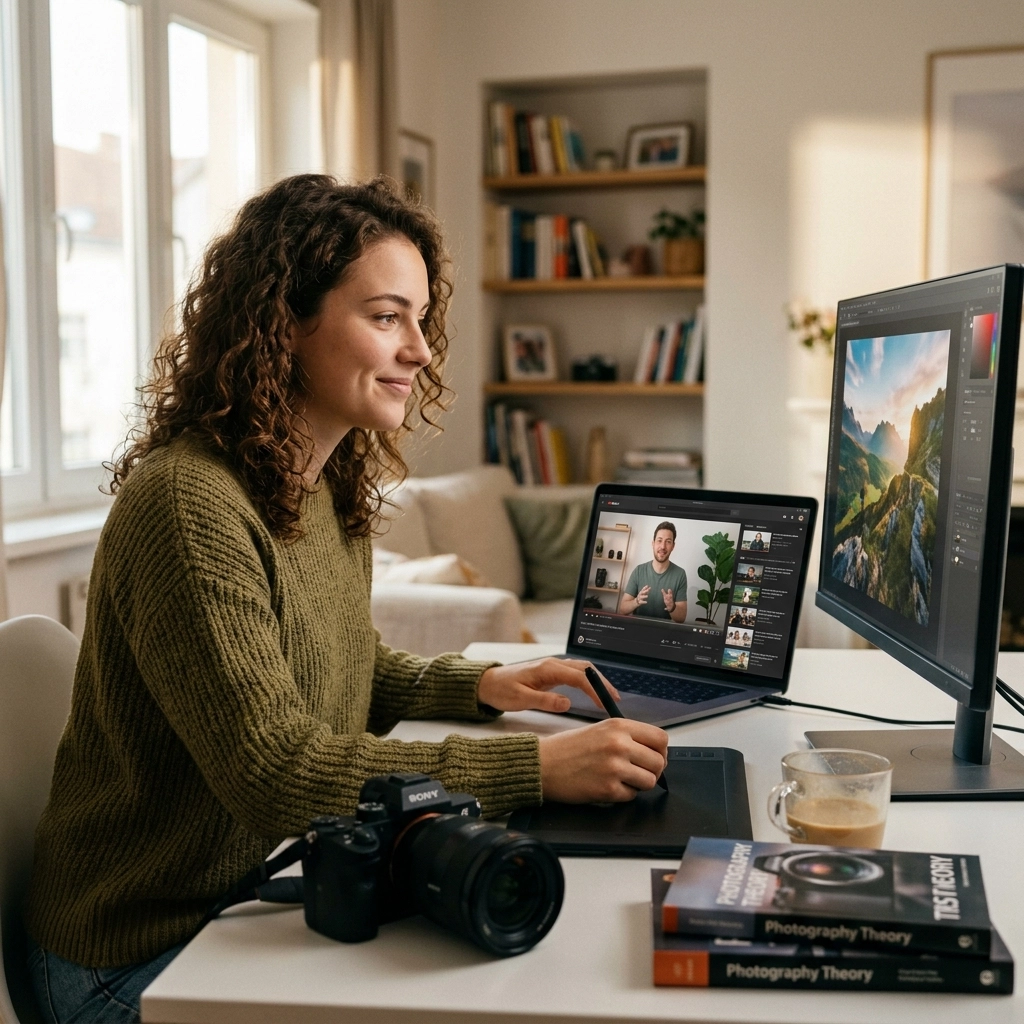
Let’s be real: photography has changed a lot lately. It’s Thursday, May 14, 2026, and the way we take pictures isn’t what it was even two years ago. We’ve got AI-integrated sensors, mirrorless tech that basically sees in the dark, and more "how-to" videos than anyone has time to watch. But here’s the thing: having a $5,000 camera doesn't make you a photographer any more than owning a fancy stove makes you a Michelin-star chef.
If you’re here, you’re probably tired of "winging it." You’re tired of blurry shots, blown-out skies, and that sinking feeling when your photos don't look like what you saw with your eyes. That’s where Shut Your Aperture comes in. We’ve built the number one photography school online to cut through the noise and give you the actual skills you need to dominate the digital art space.
In this guide, we’re going to walk through the essential building blocks of our photography tutorials. From mastering the basics to advanced lighting and editing, this is your roadmap to success.
Why Photography Tutorials Still Matter in the AI Era
You might think, "Why should I learn the hard stuff when my phone does it for me?" Because AI can't feel. It can't understand the emotion of a split-second look or the way light hits a mountain peak at 5:00 AM.
To stand out in 2026, you need to be better than the algorithm. You need to understand the "why" behind the "how." Our goal at Shut Your Aperture is to move you beyond the "Auto" button. We want you to have total creative control, whether you’re shooting on a smartphone or a Canon EOS R5 vs Sony A7R V.
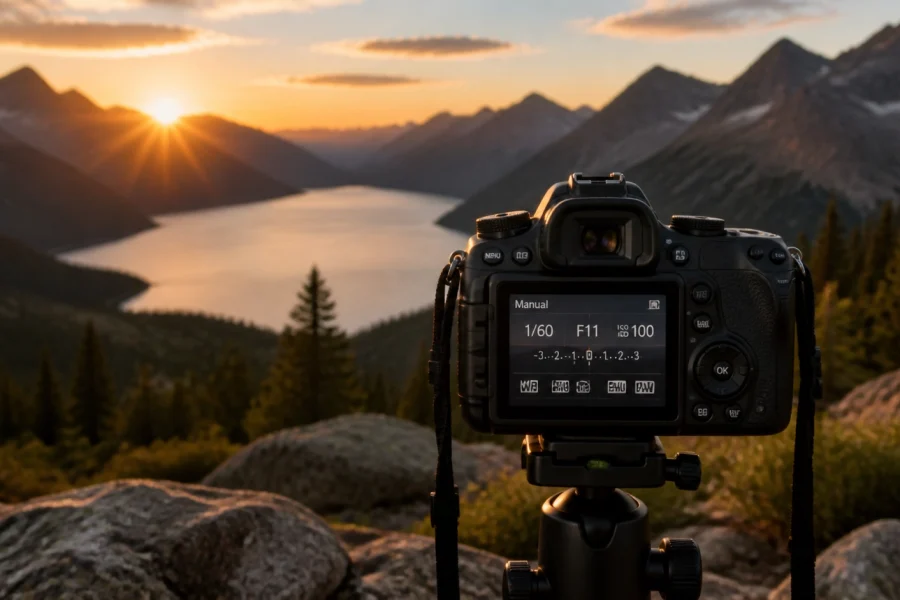
The Foundation: How to Use Manual Mode Camera Settings
This is the hurdle that stops most beginners in their tracks. It’s the "Manual Mode" boogeyman. But honestly? It’s just three numbers working together. Once you get these down, the world is your oyster.
1. Aperture (The "A" in your settings)
Aperture controls the opening of your lens. Think of it like the pupil of your eye.
- Low f-number (like f/1.8): Wide opening, lets in tons of light, gives you that blurry background (bokeh).
- High f-number (like f/11): Small opening, keeps everything from the foreground to the background sharp.
2. Shutter Speed
This is how long your camera sensor is exposed to light.
- Fast speed (1/1000s): Freezes action. Perfect for sports or hyperactive dogs.
- Slow speed (1/10s or longer): Blurs motion. This is how you get those silky-smooth waterfall photos.
3. ISO
ISO is your camera's sensitivity to light.
- Low ISO (100): Crisp, clean images. Use this when it's bright outside.
- High ISO (3200+): Allows you to shoot in the dark, but it adds "grain" or "noise."
When you learn how to use manual mode camera settings, you’re finally the one making the decisions, not the computer inside the box.

SEO Alt Text: A close-up of a professional photographer’s hands adjusting the manual dial on a modern mirrorless camera during a golden hour outdoor shoot.
Composition: Telling a Story Without Words
A technically perfect photo can still be boring. If your subject is just sitting in the middle of the frame like a DMV photo, you’re missing the point. Our photography tutorials dive deep into composition because it’s the difference between a snapshot and art.
- The Rule of Thirds: Imagine a grid on your screen. Place your subject where the lines intersect. It’s a classic for a reason.
- Leading Lines: Use roads, fences, or even shadows to lead the viewer’s eye right to your subject.
- Negative Space: Sometimes what you leave out is more important than what you put in.
If you’re using specific gear, like the Fujifilm X100VI for landscape photography, you’ll find that composition becomes even more critical when you're working with a fixed focal length.
Advanced Lighting: Painting with Photons
Light is everything. You can have the best composition in the world, but if the light is flat and grey, the photo will die on the vine.
In our advanced modules, we teach you how to see light.
- Golden Hour: That magical hour after sunrise and before sunset.
- Blue Hour: The moody, cool light just before the sun comes up.
- Artificial Light: Using strobes and speedlights to create drama in a studio.
If you're doing commercial work, check out our OM System OM-1 Mark II settings for product photography to see how we manipulate light in small spaces. For even more pro-level gear insights, you can always visit proshoot.io or see what Edin is up to at blog.edinchavez.com.

SEO Alt Text: A high-contrast portrait of a woman lit by a single dramatic light source in a dark studio setting, showcasing professional lighting techniques.
Post-Processing: Where the Magic Happens
The "out of camera" purists are mostly lying to themselves. Every great photo you’ve ever loved was edited. Back in the day, it was done in a darkroom with chemicals; today, we use software.
At Shut Your Aperture, we are huge fans of using Luminar to speed up the workflow. The AI tools in Luminar allow you to replace skies, enhance skin, and fix lighting in seconds rather than hours.
Editing isn't about "fixing" a bad photo: it’s about polishing a good one. It’s about making the colors pop and ensuring the viewer sees exactly what you felt when you pressed the shutter.
Gear Talk: Choosing the Right Tool for the Job
We get asked all the time: "Which camera should I buy?"
The truth is, the best camera is the one you have with you. But, if you’re looking to level up, the 2026 market is wild.
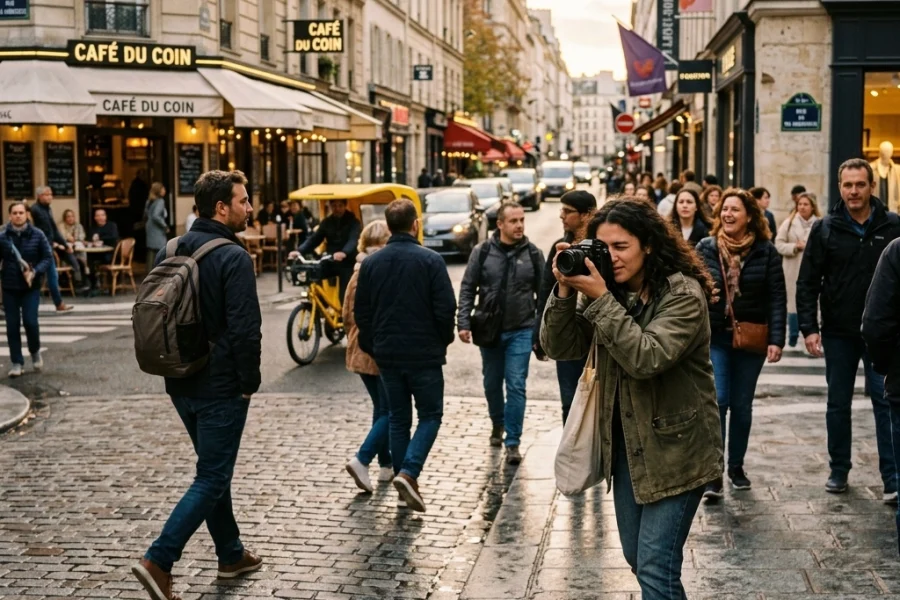
- For Street Photography: We recommend looking into the Nikon Z8 settings for street photography. It’s fast, discrete, and the autofocus is basically telepathic.
- For All-Around Excellence: The battle between the Sony A7 IV vs Canon EOS R6 Mark II is still raging, and honestly, you can't go wrong with either.
Regardless of the gear, our photography tutorials at the online school are designed to be gear-agnostic. The principles of light and shadow don't care what brand name is on your strap.

SEO Alt Text: An organized flat lay of modern photography gear including a mirrorless camera, several lenses, a tripod, and a laptop showing photo editing software.
Why Shut Your Aperture is the #1 Photography School
There are a million "influencers" teaching photography. Most of them are just trying to sell you a preset pack. We’re different.
- Practicality: We don't just talk about theory. We show you how to apply it in the real world.
- Community: When you join our school, you’re not just watching videos. You’re joining a group of like-minded creators.
- Up-to-Date Content: We don't leave old videos up to rot. If a new firmware update drops for the Nikon Z8, we update our guides.
- Simplification: We take complex topics: like hyperfocal distance or frequency separation: and explain them like we’re grabbing a beer.
If you want to know more about the industry's future, read up on the 2026 camera shift. It’s changing fast, and we’re here to make sure you don’t get left behind.
Master Your Craft: Step-by-Step Learning
If you’re just starting, don't try to learn everything at once. You’ll burn out. Follow this path:
- Week 1: Learn your camera's buttons. Seriously. Read the manual.
- Week 2: Master the exposure triangle. Shoot only in Manual mode for seven days.
- Week 3: Focus on composition. Leave the camera on one lens and walk around.
- Week 4: Start editing. Download Luminar and see what those RAW files can actually do.
For more inspiration and deep dives into specific niches, head over to PhotoGuides.org. They have some killer resources that complement what we do here.

SEO Alt Text: A group of aspiring photographers on a guided photo walk in a vibrant city, learning composition and lighting from an instructor.
Success in the New Era of Digital Art
Photography isn't just about taking pictures anymore; it’s about creating digital art. With the rise of hybrid shooting and AI assistance, the bar has been raised. You can either be intimidated by it, or you can use it as a tool to propel your work further than ever before.
Our photography tutorials cover the intersection of traditional technique and modern tech. We teach you how to use the AI features in your camera to get the shot, and then how to use the AI in your software to perfect it. It’s not cheating; it’s evolving.

SEO Alt Text: A stunning landscape photo of a mountain range at sunrise, edited to perfection with vibrant colors and sharp details.
Final Thoughts
You have a vision. You see the world in a way that nobody else does. The only thing standing between you and the photos you want to create is a little bit of knowledge and a lot of practice.
Stop scrolling through Instagram feeling jealous of other people’s work. Start putting in the time to learn the craft. Whether you want to shoot professional portraits, epic landscapes, or just better photos of your family, we’ve got the tools to get you there.
Ready to take the leap? Join us at the Shut Your Aperture Online School and let’s start shooting. Your best work is still ahead of you. Check out Edin's personal work at blog.edinchavez.com to see what's possible when you master these steps.
The shutter is open. What are you going to capture?