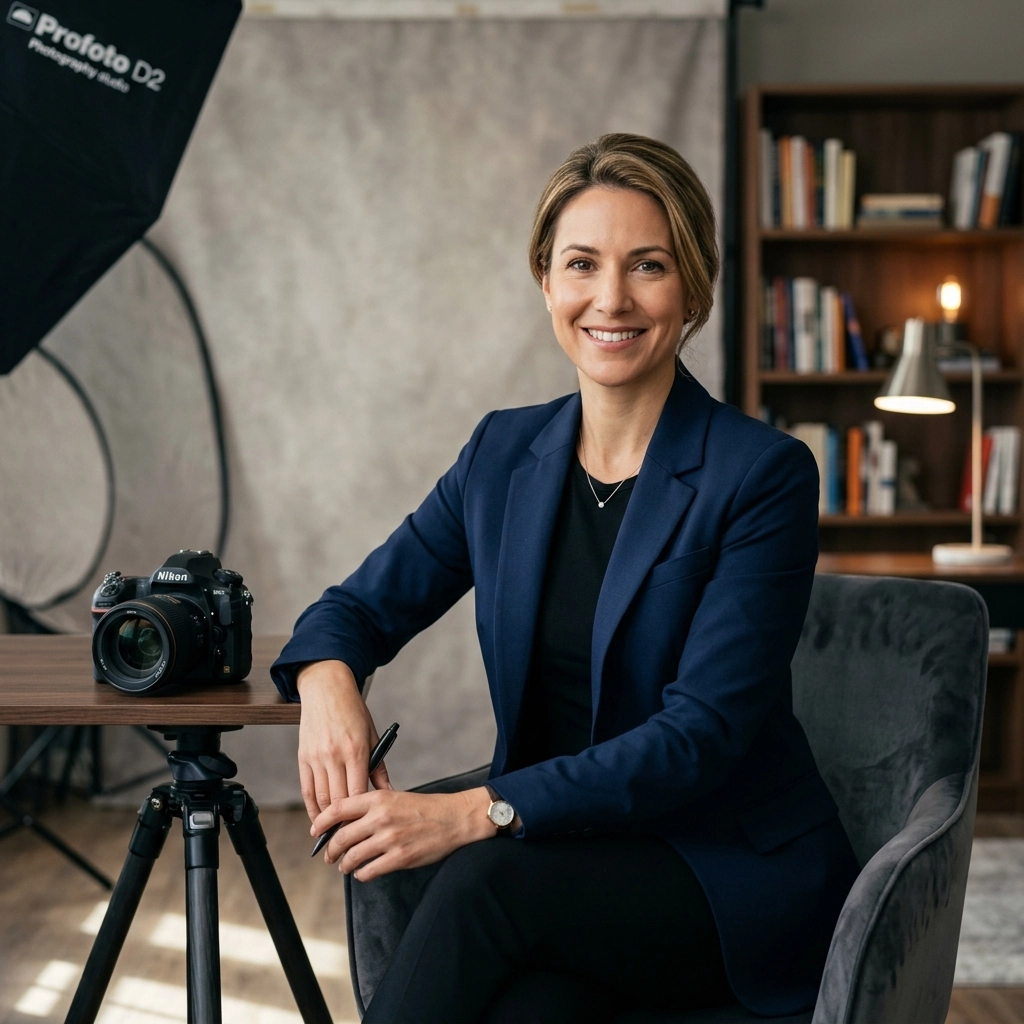
You walk into a high-end photography studio, and the air is thick with the scent of expensive coffee and ego. You pay a small fortune, sit on a stool, and ten minutes later, you have a photo that makes you look like a CEO from the future. You think it was the $50,000 Hasselblad camera or the fancy Profoto lights.
Spoiler alert: It wasn’t.
While gear matters: and we love gear here at Shut Your Aperture: the real magic lies in the posing. There are "secrets" to body language that high-end studios use to make anyone look like a million bucks. These aren't magic tricks; they are calculated, anatomical adjustments that trick the camera into seeing strength, confidence, and approachability.
If you are looking for professional corporate headshot tips, you’ve come to the right place. We’re going to strip away the mystery and give you the actual blueprint used by the pros.
The Foundation: Why Posing is 90% of the Game
In the world of executive portraits, the camera is a flat, two-dimensional lie. It takes a three-dimensional human and squashes them onto a screen or a piece of paper. This process adds "visual weight" and can make even the most fit person look awkward or stiff.
High-end studios don’t just "take" your picture; they "construct" it. They understand that every inch you move your chin or every degree you rotate your shoulders changes the narrative of the photo. Are you a leader? Are you a listener? Are you a shark or a saint? It’s all in the pose.
If you want to master these techniques for your own photography or to prepare for your next shoot, check out our photography tutorials at our online school.
1. The "Turtle" (The Chin-Forward Maneuver)
This is the holy grail of headshot posing. If you do nothing else, do this. In real life, if you stick your chin out toward someone, you look like you’re looking for a fight. On camera, it’s the only way to define the jawline.
When you stand naturally, your neck creates a bit of a "blur" between your face and your body. This often results in the dreaded "double chin," even on very thin people. To fix this, you need to bring your head forward, literally move your forehead toward the lens: and then drop your chin slightly.
It feels incredibly awkward. You will feel like a turtle peeking out of its shell. But in the final image, the jawline becomes sharp, the skin under the chin tightens, and you look ten pounds lighter and infinitely more confident.

Alt text: A side-by-side comparison of a professional corporate headshot showing the "turtle" neck technique vs. a natural standing posture.
2. The 45-Degree Rule: Say Goodbye to the "Mugshot"
One of the biggest mistakes people make when learning how to prepare for a headshot session is standing "square" to the camera. Unless you are being booked into the local county jail, don’t do this.
Facing the camera head-on makes you look as wide as possible. It’s a flat, uninteresting angle. Instead, rotate your body about 45 degrees away from the lens. This slims the profile and adds depth to the image.
Once your body is angled, you turn your head back toward the camera. This creates a "dynamic tension" in the neck and shoulders that looks far more interesting than a static, front-facing pose. It conveys a sense of movement and energy: exactly what you want for a high-impact professional profile.
3. Weight Distribution: The "Back Leg" Secret
Even though most headshots are cropped from the chest up, what you do with your legs matters. If you stand with your weight distributed evenly on both feet, you look like a statue.
The secret? Put all your weight on your back leg (the one furthest from the camera). This naturally causes your body to angle and your hips to shift, which creates a more pleasing, organic line through your torso. It forces your front shoulder to drop slightly, preventing that "stiff-necked" look that ruins so many corporate portraits.
4. The "Squinch": Energy Through the Eyes
"Smile with your eyes!"
We’ve all heard it, but nobody knows what it actually means. In the studio, we call it the "Squinch." Most people, when they get in front of a camera, open their eyes wide because they are nervous. This makes them look like a deer in headlights.
Confidence comes from the lower eyelids. If you slightly lift your lower eyelids: just a tiny bit: you transform from "scared" to "focused." It’s a subtle move. If you overdo it, you look like you’re squinting in the sun. If you get it right, you look like you’re about to close a billion-dollar deal.
5. The "75% Smile" and Mouth Breathing
The "say cheese" smile is the enemy of the professional headshot. It’s fake, it creates deep wrinkles around the eyes, and it often looks forced.
Instead, aim for what we call the "75% smile." It’s a pleasant, approachable expression that doesn't involve showing every tooth in your head. A great trick to keep the mouth looking natural is to breathe through it. Keep your lips slightly parted: just enough for a sliver of air: to relax the jaw muscles.
If you find yourself getting "frozen face" (we’ve all been there), stop, look away, shake out your shoulders, and exhale deeply. Then, look back at the camera and think of someone you actually like. For more tips on the gear and settings used to capture these expressions, check out the latest photography news on our blog.

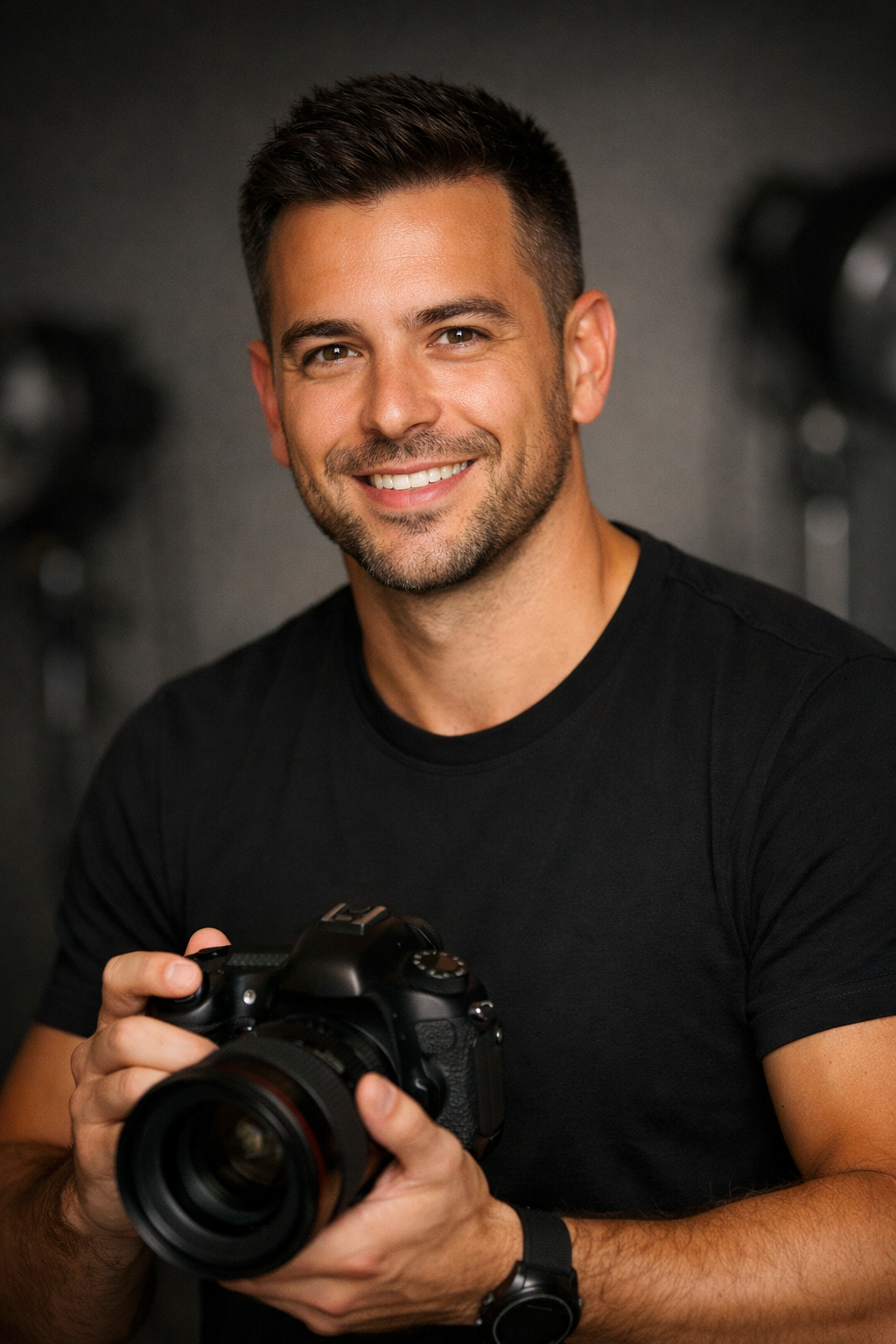
Alt text: Close-up of a professional male headshot showing the "squinch" eye technique and a relaxed, natural smile.
6. Shoulder Positioning: The "High-Low" Technique
Symmetry is boring. If your shoulders are perfectly level, the photo looks like a passport office mistake. High-end photographers always look for a "high-low" relationship with the shoulders.
By leaning slightly toward the camera or shifting your weight, one shoulder will naturally sit lower than the other. This creates a diagonal line in the frame, which is much more visually appealing than a horizontal one. It adds a sense of approachability. A person with perfectly square, high shoulders looks defensive. A person with relaxed, angled shoulders looks like they’re ready to have a conversation.
7. The Lean-In: Building Connection
Want to know the secret to looking "engaged"? Lean in.
Physically leaning your upper body an inch or two toward the camera lens creates an immediate sense of intimacy and connection with the viewer. It’s a subtle psychological cue. When we like someone or are interested in what they’re saying, we lean toward them. When we’re bored or threatened, we lean away.
High-end studios use this to make executives look like people you want to work with, rather than people you’re afraid of.
8. Hand Placement (Even if They’re Not in the Frame)
"What do I do with my hands?" is the most common question in any photo shoot. Even if the camera only sees your head and shoulders, your hands dictate the tension in your arms.
If you clench your fists, your forearms and biceps will bulge and look tense. If you shove your hands deep into your pockets, you’ll hunch your shoulders. The pro tip? Gently rest your hands on your thighs or hook a thumb into a pocket. This keeps the arms relaxed and away from the body, which prevents "arm-mush": that thing where your arms press against your torso and look twice as wide as they actually are.
If you're a photographer looking to edit these shots to perfection, using a tool like Luminar can help you refine skin tones and enhance that "engagement" without making the subject look plastic.

Alt text: A professional corporate woman posing with her body at a 45-degree angle, demonstrating perfect hand placement and a slight lean toward the camera.
9. Understanding the "Good Side"
We are all asymmetrical. One eye is usually slightly larger, one ear might be lower, and the nose rarely points perfectly straight. Most people have a "good side," and high-end studios spend the first five minutes of a session figuring out which one it is.
Generally, you want to photograph the side of the face that shows more of the person’s character. A quick trick: Look at your parting. Usually, the side with the hair part is the side you want to feature.
10. The Psychology of Clothing and Posing
How you pose is often dictated by what you wear. If you are in a stiff, structured suit, your poses need to be more "architectural" and strong. If you are in a soft sweater or a casual button-down, the poses should be more fluid and relaxed.
When thinking about best lighting for executive portraits, remember that dark clothing absorbs light and hides "pitting" or shadows under the arms, while light clothing reflects it back onto the face.
If you want to dive deeper into the technical side of how cameras see these poses, check out our guide on 2026 mirrorless cameras. The resolution on modern sensors is so high that these posing "secrets" are more important than ever: there is nowhere for a bad pose to hide!
Putting it All Together: The Session Flow
A high-end headshot session is a dance. It’s not about hitting one "perfect" pose and staying there. It’s about micro-adjustments.
- Start with the body: Angle 45 degrees, weight on the back leg.
- Adjust the shoulders: One down, one slightly up, leaning in.
- Position the head: Bring the forehead toward the lens (The Turtle).
- Engage the face: Squinch the eyes, breathe through the mouth.
- Refine the expression: Think of a win, a joke, or a client you just helped.
If you’re doing this yourself, don't be afraid to take 100 photos to get one great one. Even the pros do it. For more hands-on help, visit learn.shutyouraperture.com to master your craft.
Why "Perfect" is the Enemy of "Good"
The biggest secret high-end studios won't tell you? They throw away the "perfect" shots.
The shots where every hair is in place and the pose is technically flawless often look "dead." The shots that actually get used are the ones with a little bit of "mess." A slight tilt that wasn't planned, a genuine laugh that broke the "Turtle" pose, or a look of intense focus that happened between shots.
The poses we discussed are the structure. They are the skeleton of a good photo. But the soul comes from you being comfortable enough to let your personality peek through the structure.

Alt text: A group of diverse corporate professionals showing off various high-end headshot poses in a modern office setting.
Mastering the Craft
Whether you are a photographer looking to up your game or an executive wanting to look your best, mastering these posing secrets is the fastest way to see results. You don't need a million-dollar studio; you just need to understand how the human body interacts with a lens.
For more inspiration on fine art and professional imagery, you can always check out Edin Fine Art or read more personal insights on Edin’s blog. And if you're looking for even more technical breakdowns, PhotoGuides.org is a killer resource for deep dives.
Next time you see a high-end headshot, look closer. You'll see the angled shoulders. You'll see the "turtle" neck. You'll see the "squinch." And now, you know exactly how they did it.
If you want to stay ahead of the curve and see how these techniques integrate with the latest gear, don't forget to stay updated with industry news. Posing might be an ancient art, but the way we capture it is always changing.
Stop hiding behind the "I'm not photogenic" excuse. Nobody is naturally photogenic: they are just well-posed. Go out there and use these secrets to own your image.