There is something visceral about standing on the edge of a canyon or watching the sun dip below the horizon of a glass-calm lake. Landscape photography is more than just a hobby; it’s a lifestyle that demands you get out of bed at 4:00 AM, hike through mud, and occasionally get rained on: all for that one perfect frame.
In 2026, the technology in our bags has changed, but the soul of a great landscape image remains the same. Whether you’re shooting with the latest mirrorless powerhouse or your trusty smartphone, capturing the "Great Outdoors" requires a mix of technical precision and creative soul.
At Shut Your Aperture, we believe photography should be simple to understand but powerful in execution. This guide is your roadmap to mastering the land. Let’s dive in.
The Landscape Photographer's Toolkit: Gear That Matters
We live in an era where gear is better than ever. If you’ve checked out the ultimate guide to 2026 mirrorless cameras, you know that sensors today handle dynamic range in ways we only dreamed of a decade ago. But what do you actually need to pack?
1. The Camera Body
While you can take a great landscape photo with anything, a camera with a high-resolution sensor and weather sealing is the gold standard. You want those megapixels to capture every tiny leaf and rock texture. In the current market, cameras like the Nikon Z8 or the Sony A7R series dominate. If you’re a street photographer trying your hand at the wild, you might even find that your Nikon Z8 settings for street photography give you a good baseline for speed, though you’ll need to slow down for the mountains.
2. The Glass (Lenses)
- Wide-Angle (14mm to 35mm): The bread and butter. These lenses allow you to capture the vastness of a scene and get close to foreground elements to create a sense of scale.
- Telephoto (70mm to 200mm+): Beginners often overlook these. A telephoto lens allows you to compress the landscape, making distant mountains look massive and picking out patterns in the trees that a wide-angle would miss.
- Prime vs. Zoom: There’s a constant debate about this. While some argue are prime lenses dead?, for landscapes, a high-quality zoom lens is often more practical when you’re standing on a cliff and can’t "zoom with your feet."
3. The Essential Accessories
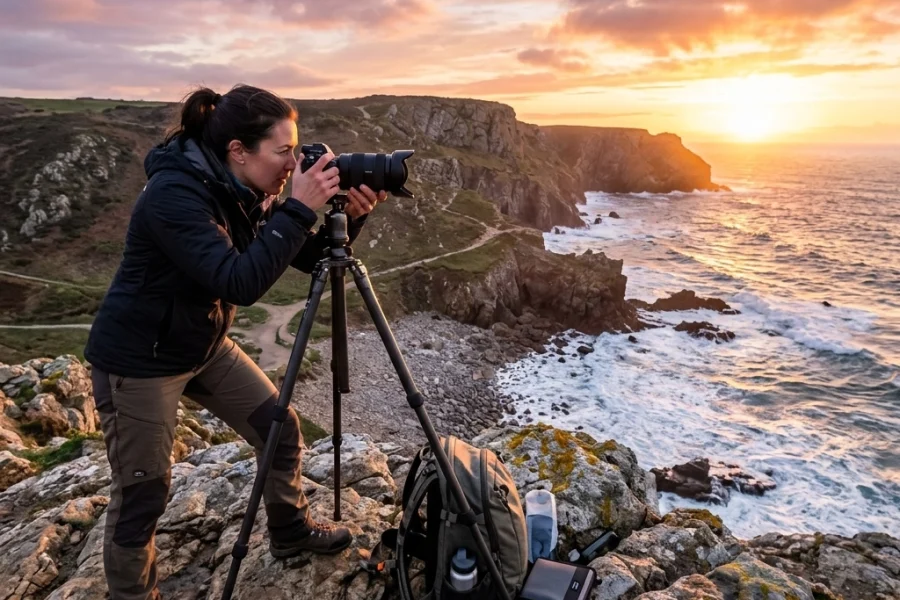
Don't skimp here. A sturdy tripod is non-negotiable. If your camera moves even a fraction of a millimeter during a long exposure, the shot is ruined. You also need a Circular Polarizer (to cut glare and make clouds pop) and Neutral Density (ND) filters for those silky-smooth waterfalls.

Mastering the Exposure Triangle in the Wild
In landscape photography, we usually want everything sharp from the pebble at our feet to the mountain five miles away. This requires a specific approach to your settings.
Aperture: The Sweet Spot
Most lenses are sharpest between f/8 and f/11. While your lens might go to f/22, avoid it if you can. Pushing the aperture too small causes "diffraction," which actually makes your image softer. If you’re using specific gear like the Fujifilm X100VI for landscape photography, you'll want to find that lens's specific sweet spot early on.
ISO: Keep it Clean
Keep your ISO as low as possible (usually ISO 100 or 64). Landscapes are all about detail and dynamic range. Higher ISOs introduce noise, which eats away at the fine textures of nature. Since we’re usually on a tripod, we don't care if the shutter speed is slow.
Shutter Speed: The Creative Tool
Shutter speed is where the magic happens.
- Fast Shutter (1/1000s): Freezes crashing waves or blowing grass.
- Slow Shutter (1/2s to 30s): Turns a chaotic ocean into a misty dream or makes a waterfall look like silk.
Composition: How to Tell a Story with a Mountain
A beautiful mountain is just a mountain until you compose it properly. You need to guide the viewer’s eye through the frame.
1. The Rule of Thirds (and When to Break It)
Imagine your frame is divided into a 3×3 grid. Placing your horizon on the top or bottom third line: rather than dead center: instantly makes the photo feel more professional. However, if you’re shooting a perfect reflection in a lake, throw the rule out the window and center that horizon for perfect symmetry.
2. Leading Lines
Look for paths, rivers, or even fallen logs that point toward your main subject. Leading lines act like a visual "Enter Here" sign for the viewer.
3. Foreground Interest
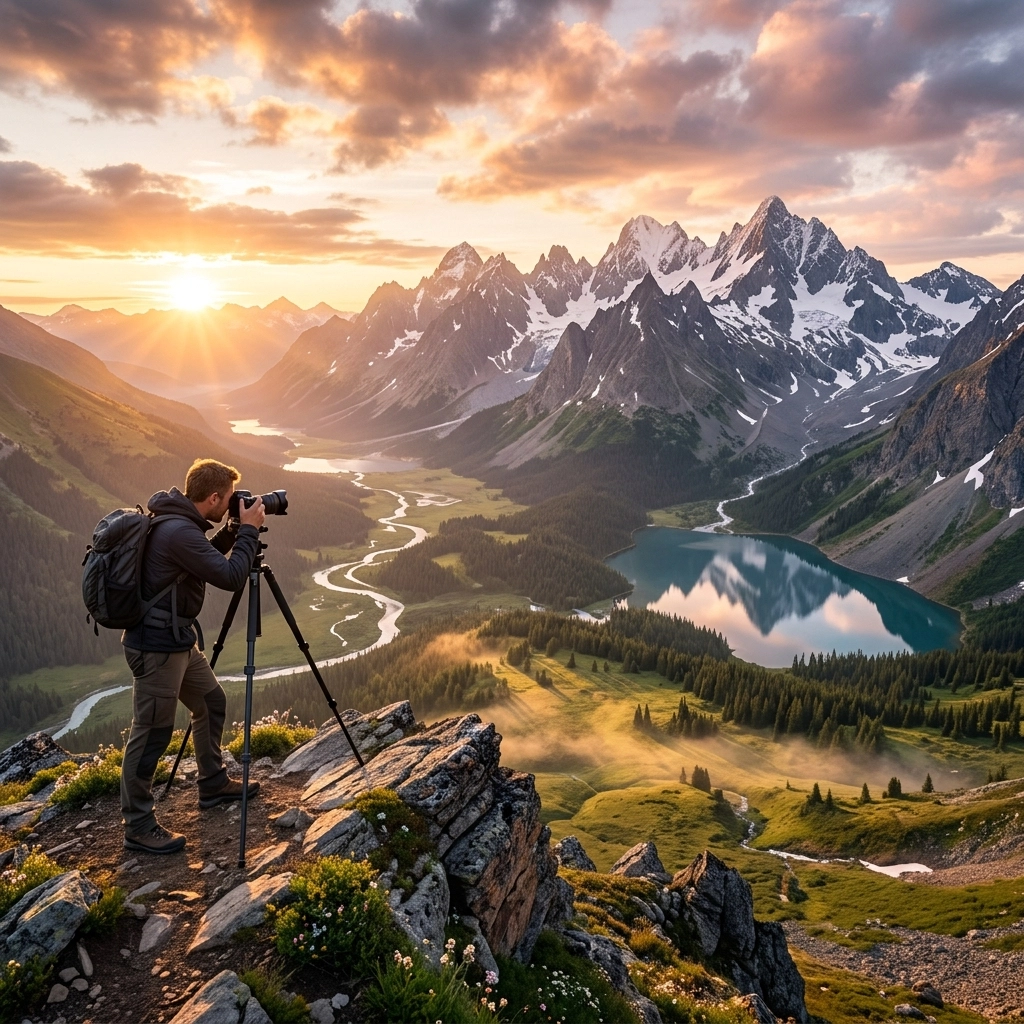
This is the secret sauce. Don't just stand there and take a photo of the sunset. Find a unique rock, a patch of wildflowers, or a crack in the mud to put in the bottom of your frame. It creates a 3D effect that pulls people into the scene. For more deep dives on these techniques, check out PhotoGuides.org.

The Secret Ingredient: Lighting and Planning
You can have the best gear and the best composition, but if the light is flat and grey, the photo will be boring.
The Golden Hour
The hour after sunrise and the hour before sunset is when the sun is low, casting long shadows and a warm, golden glow. This light adds depth and "shape" to the landscape.
The Blue Hour
Don’t pack up as soon as the sun disappears! The 20-40 minutes after sunset provides a cool, blue, ethereal light that is perfect for cityscapes or mountain peaks.
Weather Planning
I always tell people: "Bad weather makes for great photos." A clear blue sky is actually the most boring thing a landscape photographer can see. We want storms, dramatic clouds, and fog. Use apps like PhotoPills or Clear Outside to track the sun’s position and cloud cover. If you want to see how the pros handle these conditions, Edin’s work at Edin Fine Art shows exactly how light transforms a scene.
Advanced Techniques for 2026
As sensors evolve, so do our techniques. Sometimes, one single exposure isn't enough to capture what our eyes see.
1. Bracketing (HDR)
High Dynamic Range doesn't mean those "crunchy," over-processed photos from 2010. Modern bracketing involves taking three or five shots at different exposures and blending them naturally to keep detail in both the bright sky and the dark shadows.
2. Focus Stacking
If you have a flower six inches from your lens and a mountain miles away, even f/11 won't keep both perfectly sharp. Focus stacking involves taking several shots, moving the focus point slightly in each, and merging them in post-processing. This is a game-changer for high-end landscape work.
3. Panoramas
Don't let your sensor limit your vision. If the scene is too wide for your 14mm lens, shoot a series of vertical images and stitch them together. You’ll end up with a massive, high-resolution file that you can print as large as a wall.

Post-Processing: Bringing the Raw File to Life
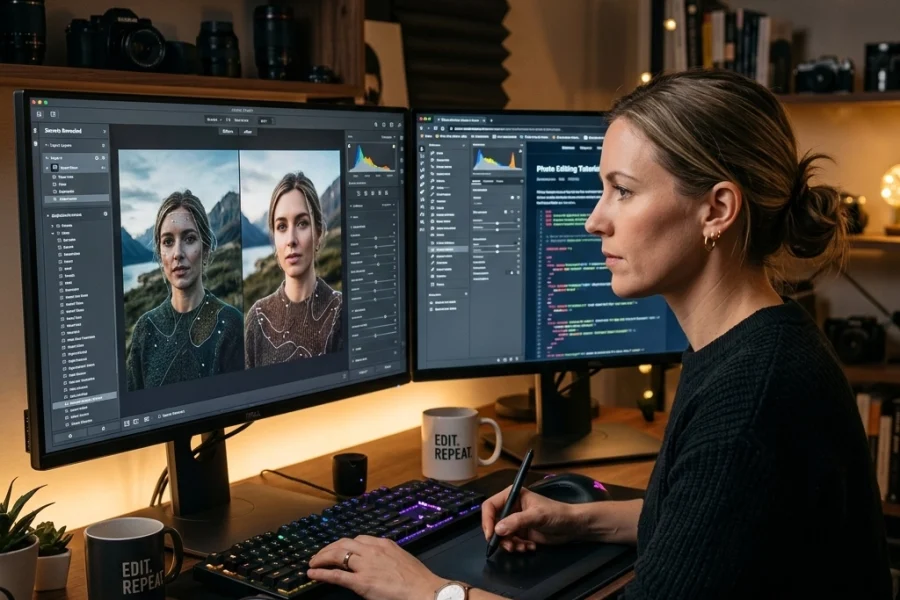
Taking the photo is only 50% of the job. A RAW file is flat and dull by design; it's a digital negative waiting for your input.
When you start editing, focus on:
- White Balance: Does the scene feel cold or warm? Adjust it to match the mood you felt when you were there.
- Local Adjustments: Use masks to brighten the foreground or darken the sky.
- Color Grading: This is where you create your "style."
One of the most powerful tools for landscape photographers today is Luminar. Its AI-driven tools for sky replacement (when the weather doesn't cooperate) and atmosphere enhancement are incredibly intuitive. It’s a great way to speed up your workflow without losing the "organic" feel of the outdoors.
If you’re feeling overwhelmed by the technical side of editing, we’ve got your back. Head over to our online photography school where we break down these workflows step-by-step.
The Ethics of Landscape Photography
In 2026, our natural spaces are more crowded than ever. As photographers, we have a responsibility to the land.
- Leave No Trace: Stay on the trails. Don't trample the wildflowers just for a "unique" angle.
- Don't Geotag Sensitive Locations: If you find a hidden gem, consider keeping the exact GPS coordinates to yourself. "Social media trampling" is a real thing, and we want these places to remain beautiful for the next generation of shooters.
- Be Authentic: While AI tools are powerful, be honest about your work. There’s a big difference between enhancing a sunset and creating a fake one.
Staying Ahead of the Curve
The industry moves fast. From new AI firmware updates to sensor breakthroughs, staying informed is half the battle. We've seen how the latest photography news will change the way you buy camera gear forever. If you aren't keeping up, you’re missing out on tools that could make your life easier in the field.
Understanding how to integrate the latest industry news with your photography practice ensures you aren't fighting your gear, but rather using it to its full potential.

Final Thoughts: Just Get Out There
Landscape photography is a marathon, not a sprint. You will have mornings where you wake up at 3:00 AM, drive two hours, and get nothing but a grey wall of fog. That’s part of the game. The "Ultimate Guide" can give you the settings and the gear list, but it can't give you the "eye." That only comes from being in the field, making mistakes, and finally hitting that moment where the light, the land, and your vision align perfectly.
If you need more inspiration or want to see more of the technical side of things, our ultimate guide to photography tutorials is a great place to continue your journey.
Stop reading, grab your tripod, and go find a horizon.
Recommended Reading
- For deep dives into gear reviews and travel stories, visit blog.edinchavez.com.
- To learn more about the history of landscape techniques, check out PhotoGuides.org.
- Want to see how these shots look when printed on high-end gallery acrylic? Visit Edin Fine Art.
Note: We are constantly updating our content to reflect the latest tech. Stay tuned for more guides on how to master your craft in 2026 and beyond.