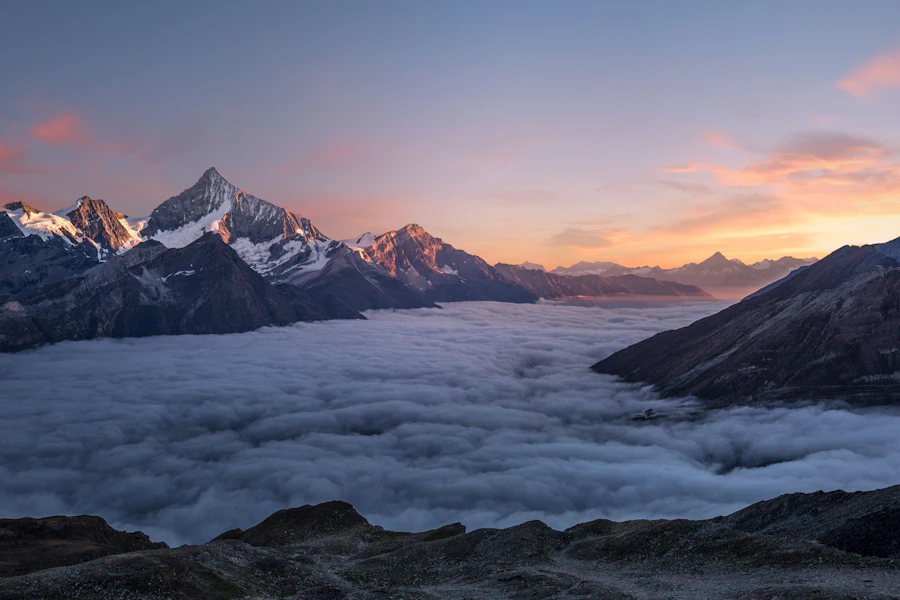
We’ve all been there. You hike three miles uphill in the dark, your legs are burning, your lungs are screaming, and you finally reach that "perfect" overlook just as the sun starts to peek over the horizon. You whip out your camera, fire off a few dozen shots, and head home thinking you’ve just captured the next National Geographic cover.
Then you get home. You load the photos onto your computer, and… they’re "meh." The colors are flat. The mountains look like tiny pebbles. The sky is a giant white blob of nothingness. It’s frustrating, right?
Landscape photography seems easy on paper, nature does the hard work, and you just press a button. But the truth is, there’s a massive gap between taking a snapshot of a pretty place and creating a photograph that actually makes people stop scrolling. Most of the time, the difference comes down to a handful of common mistakes that almost every photographer makes when they’re starting out (and even some pros when they get lazy).
If you want to stop taking "okay" photos and start creating gallery-worthy art, you need to fix these seven mistakes. Let’s dive in.
1. The "High Noon" Curse: Shooting in Bad Light
This is the number one killer of great landscapes. Beginners often think that a bright, sunny day is the best time for photos. After all, plenty of light means fast shutter speeds and low noise, right? Technically, yes. Artistically, absolutely not.
When the sun is high in the sky, the light is harsh, direct, and incredibly blue. It creates deep, ugly shadows and washes out all the beautiful textures of the landscape. Your mountains will look flat, your forests will look messy, and your sky will likely be a blown-out mess.

The Fix: Become a creature of the dawn and dusk. You’ve probably heard of "Golden Hour", that magical window of time just after sunrise and just before sunset. The light is warmer, softer, and hits the landscape at an angle, creating long shadows that reveal texture and depth.
Don't pack up the second the sun goes down, either. Stick around for "Blue Hour." This happens when the sun is below the horizon but the sky is still glowing with deep blues and purples. It’s a fantastic time for moody landscapes and cityscapes. If you want to learn more about timing your shots perfectly, check out our photography tutorials where we break down light and weather planning in depth.
2. The Wide-Angle Abyss: No Clear Subject
One of the biggest misconceptions in landscape photography is that you must use a wide-angle lens for everything. You see a massive mountain range and think, "I need to fit it all in!" So you slap on a 14mm lens and fire away.
The result? The mountains look like tiny bumps in the distance, and the bottom 60% of your photo is just a patch of uninteresting grass or dirt. When everything is in the frame, nothing is the subject. Without a clear focal point, the viewer’s eye wanders around the image with nowhere to land.
The Fix: Before you even take your camera out of the bag, ask yourself: What is this photo actually about? Is it about that specific jagged peak? Is it about the way the river curves?
If your subject looks too small, zoom in. Don’t be afraid to use a telephoto lens (like a 70-200mm) for landscapes. Telephoto lenses compress the scene, making distant mountains look massive and imposing. If you do stick with a wide-angle lens, make sure you have something in the foreground to lead the eye toward the subject. If you are still hunting for the right gear to solve this, read our guide on the best camera for landscape photography in 2026 to see which lenses pair best with today's sensors.
3. Ignoring the Foreground
If you want your photos to feel "immersive," you need depth. A common mistake is focusing only on the background (the sunset, the mountain, the ocean) and ignoring what’s right in front of your feet. Without a strong foreground, a landscape photo feels two-dimensional, like a flat postcard rather than a window into a real place.

The Fix: Use the "Near-Far" technique. Find something interesting to put in the lower third of your frame. It could be a patch of wildflowers, a uniquely shaped rock, or even patterns in the sand.
Get low. Seriously, get your tripod as close to the ground as possible. This exaggerates the size of your foreground elements and creates a powerful sense of scale. It pulls the viewer into the scene and leads their eyes from the bottom of the photo all the way to the horizon. For more on composition techniques, PhotoGuides.org has some killer articles on the rule of thirds and leading lines that are worth a read.
4. The Crooked Horizon and Messy Edges
There is nothing that screams "amateur" louder than a crooked horizon. It’s a small detail, but it’s incredibly jarring to the human brain. If the ocean looks like it’s about to drain out of the left side of your photo, you’ve failed.
Similarly, "edge tension" is a real problem. This happens when you have distracting elements, like a stray tree branch, a piece of trash, or a person's shoulder, just barely poking into the edge of your frame. It pulls the viewer’s attention away from the main subject and makes the photo feel cluttered.
The Fix: Most modern cameras have a built-in electronic level. Turn it on and use it. If your camera doesn’t have one, use the grid lines on your screen to align the horizon.
Before you click the shutter, do a "four-corner check." Scan the edges of your viewfinder. If there’s a distracting branch in the corner, move your camera slightly to crop it out. It’s much easier to fix this in the field than it is to try and clone it out later in Photoshop. If you’re looking for more tips on cleaning up your compositions, Edin’s blog often covers the philosophy of "less is more" in art.
5. Relying on Your Hands (and Getting Soft Shots)
You might think your hands are steady, but when you’re shooting at sunset or sunrise, they aren’t steady enough. As the light fades, your camera needs to keep the shutter open longer to get a good exposure. Even the tiniest vibration, including the vibration caused by you pressing the shutter button, will result in a blurry, "soft" image.
If you want those tack-sharp landscapes where you can see every needle on a pine tree, you cannot hold the camera.

The Fix: Use a tripod. No excuses. A solid tripod is the most important piece of gear a landscape photographer can own. It allows you to use low ISOs (for better image quality) and small apertures (for deep depth of field) without worrying about shutter speed.
But don't stop there. Even on a tripod, the act of pressing the button can shake the camera. Use a 2-second timer or a remote shutter release to ensure the camera is perfectly still when the shutter fires. We actually have an entire breakdown on the importance of tripods in landscape photography that explains why certain materials and heads make a world of difference for your sharpness.
6. Trusting the LCD Screen (Blown Highlights)
Your camera’s LCD screen is a liar. It’s designed to make your photos look bright and punchy, even if they aren't. Many photographers look at their screen, see a bright sky, and think, "Looks good!" only to get home and realize the sky is "blown out", meaning it’s pure white with zero detail. You can’t fix a blown-out sky in post-processing; that data is gone forever.
The Fix: Learn to read the histogram. The histogram is a little graph that shows you the distribution of light in your image. If the graph is touching the far right side, you’re losing highlight detail. If it’s touching the far left, you’re losing shadow detail.
Aim to "Expose to the Right" (ETTR) without touching the edge. If the scene has too much contrast (like a dark cave looking out at a bright sunset), use exposure bracketing. Take three or five shots at different brightness levels and blend them later. This ensures you have detail in both the brightest clouds and the darkest shadows. For high-end fine art prints where every pixel counts, this technique is non-negotiable, just ask the folks over at Edin Fine Art.
7. Over-Processing (The "Crunchy" Look)
Editing is a vital part of the process, but it’s easy to go overboard. We’ve all seen those "shouty" landscapes on Instagram where the saturation is turned up to 100, the "clarity" slider is abused, and the halos around the mountains are glowing like a nuclear blast.
When you over-process, you lose the soul of the place. It stops looking like a photograph and starts looking like a video game render.

The Fix: Be subtle. Your goal should be to enhance what was already there, not to create a neon fantasy world. Use professional tools that give you refined control over your edits. I personally love using Luminar for my workflow. It has some incredible AI-driven tools that can help you enhance a sky or add a subtle "Orton effect" without making the whole thing look fake.
The key is to take breaks. Spend ten minutes editing, then walk away from your computer for half an hour. When you come back with "fresh eyes," you’ll often realize you went a little too heavy on the contrast. Toggle that "before/after" button constantly to make sure you haven't strayed too far from reality.
Ready to Level Up?
Landscape photography is a journey, not a destination. You’re going to make mistakes, heck, I still make them sometimes. But by being mindful of your light, your composition, and your technical settings, you’ll find that your "hit rate" goes up significantly.
Stop settling for snapshots. Get a tripod, wake up early, and start paying attention to the little details that separate the pros from the hobbyists. If you want a more structured way to improve your skills, head over to the Shut Your Aperture Academy and check out our full range of courses. We cover everything from the basics of exposure to advanced post-processing techniques that will make your work stand out in any gallery.
Now, grab your gear, check your batteries, and get out there. The light is waiting.