Look, I get it. Walking into a camera shop: or even just scrolling through a gear website: in 2026 feels like you’ve stepped onto the set of a sci-fi movie. We’ve got cameras that track eyes through walls, sensors that basically see in the dark, and AI that edits your photos before you’ve even had a chance to look at the screen. It’s wild.
But if you’re just trying to find the best mirrorless cameras to actually take some decent photos, all that tech can feel like a massive distraction. Whether you are looking for photography for beginners or you’re a seasoned pro wanting the latest photography news, choosing a camera is a big investment. You don’t want to drop three grand on a piece of gear that doesn’t fit how you shoot.
In this guide, I’m going to break down how to choose the right body for your kit this year. No jargon-heavy fluff, just the facts on what matters right now.
The State of Cameras in 2026
We’ve officially hit the point where "bad" cameras don't really exist anymore. Even the entry-level models are lightyears ahead of the pro DSLRs we were using a decade ago. But 2026 has brought some specific shifts. AI integration is the big one. Almost every major release this year features deep learning processors that handle everything from subject recognition to internal noise reduction.
If you’re curious about how this tech is changing the game, you should check out why everyone is talking about AI-powered mirrorless tech. It’s not just marketing talk anymore; it actually helps you nail the shot.
1. Full-Frame vs. APS-C: Does Size Still Matter?
This is usually the first question people ask when looking at camera gear reviews.
Full-Frame cameras (like the Nikon Z8 or the Sony a7R V) have larger sensors. This generally means better performance in low light and a shallower depth of field (that blurry background everyone loves). If you’re into portrait photography techniques or high-end commercial work, full-frame is usually the gold standard.
APS-C cameras (like the Fujifilm X-T5 or the Canon R10) use smaller sensors. The upside? The cameras and lenses are much smaller and cheaper. For landscape photography tips, APS-C is actually fantastic because you can carry a lighter kit on long hikes.
In 2026, the gap is closing. Modern APS-C sensors are so good that unless you’re printing billboard-sized photos or shooting in a coal mine at midnight, you might not even notice the difference.

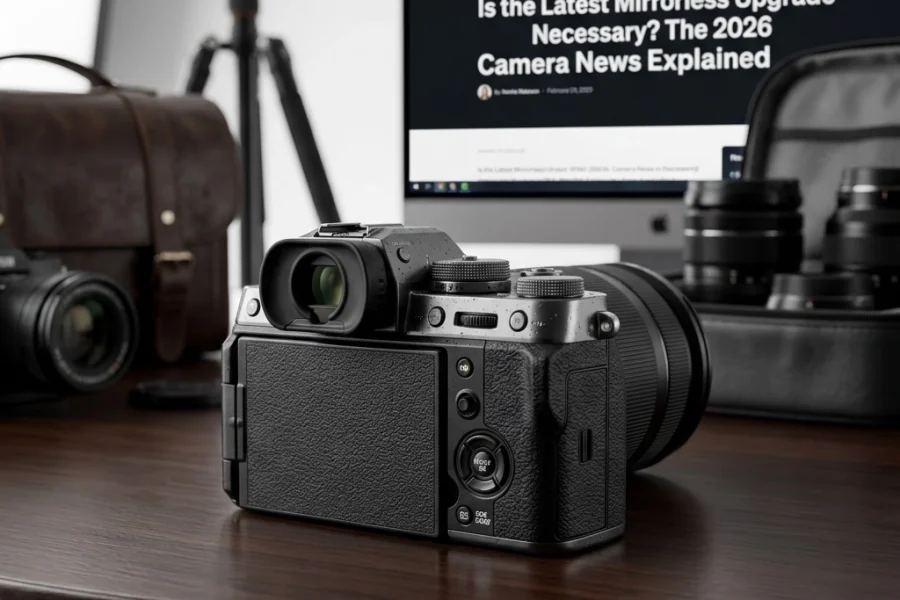
Alt text: A side-by-side comparison of a compact APS-C mirrorless camera and a larger full-frame professional mirrorless camera sitting on a photographer's desk.
Top Picks for 2026: The Comparison
Let’s get into the nitty-gritty. Based on our latest testing and the current photography news, here are the heavy hitters you should be looking at.
The All-Rounder King: Nikon Z8
The Nikon Z8 continues to dominate the "best overall" category. It’s basically a mini-Z9 without the bulk. It handles everything from fast-action sports to high-resolution landscapes. If you want one camera that does it all and you have the budget, this is it. It’s rugged, fast, and the autofocus is nearly psychic.
The High-End Beast: Canon EOS R5 Mark II
Canon fans, this is your holy grail. The R5 Mark II is a powerhouse for resolution. If you’re doing professional headshots, you’ll appreciate the detail. Just make sure you know how to fix common corporate headshot mistakes before you start charging clients.
The Travel Favorite: Fujifilm X-T5
Fujifilm has a cult following for a reason. The X-T5 looks like a vintage film camera but performs like a modern beast. It’s arguably the best APS-C camera on the market. It’s perfect for street photography ideas because it’s discrete and looks cool. Plus, the color science means you spend less time on photo editing tutorials and more time shooting.
The Value Choice: Canon EOS R6 Mark II
You don’t need to spend $5,000 to get a great full-frame camera. The R6 Mark II is the "sweet spot." It’s fast enough for wildlife and has incredible low-light performance. For many, this is the best bang-for-your-buck camera in 2026.
Choosing Based on What You Shoot
Not all cameras are created equal. Depending on your niche, you might value different features.
For Landscapes and Nature
When you’re out in the elements, you need resolution and weather sealing. You want a sensor that can capture the dynamic range of a sunset without blowing out the highlights. If you’re just starting, I highly recommend reading the ultimate guide to landscape photography.
Pro tip: Even with a great camera, landscape shots often need a little help in post-processing. Tools like Luminar are great for enhancing skies and adding that extra "pop" to your outdoor shots.
For Street and Lifestyle
For street photography, you want something small. A giant camera with a massive lens screams "I’m a photographer!" and usually kills the candid vibe. This is where cameras like the Fujifilm X100VI or the Sony a7CR shine. If you go with the Fuji, check out these X100VI settings for landscape and street to get the most out of it.
For Beginners
If you’re just starting out, don’t buy the most expensive camera. Buy something that makes you want to go out and shoot. The Canon R10 or the Nikon Z5 are great entry points. Your biggest hurdle won't be the gear: it'll be learning the settings. Mastering photography for beginners starts with understanding light, not just megapixels.

Alt text: A beginner photographer holding a mirrorless camera, looking at the back screen while standing in a park with soft morning light.
The Manual Mode Hurdle
One of the biggest mistakes new photographers make is buying a $2,000 mirrorless camera and keeping it on "Auto" mode forever. It’s like buying a Ferrari and never taking it out of first gear.
If you want to actually get better, you have to learn how to use manual mode camera settings. It sounds scary, but it’s really just a balance of three things: Aperture, Shutter Speed, and ISO. Once you get it, the creative possibilities are endless. If you're feeling overwhelmed, we have a great 5-step guide to mastering manual mode that breaks it down simply.
You can also find more in-depth photography tutorials on our learning platform. Trust me, once you stop fearing your camera, your photos will improve 10x overnight.
What to Look for in Camera Gear Reviews
When you’re reading reviews in 2026, don’t just look at the score at the bottom. Pay attention to these factors:
- In-Body Image Stabilization (IBIS): This is huge. It allows you to shoot at slower shutter speeds without a tripod and still get sharp shots.
- Autofocus Subject Tracking: Does it recognize birds? Cars? People? Cats? Modern mirrorless cameras are incredible at this.
- Video Capabilities: Even if you think you’re "just a photographer," you’ll probably want to shoot some 4K video at some point. Look for cameras that don't overheat after 10 minutes.
- Lens Ecosystem: A camera is only as good as the glass you put in front of it. Sony currently has the widest range of third-party lenses (like Sigma and Tamron), which can save you a lot of money.

Alt text: An ultra-realistic close-up of a high-end mirrorless camera lens, showing the glass elements and internal aperture blades.
The Role of AI in Your Workflow
In 2026, the "camera" is only half the story. The way we process images has changed. AI is now built into the editing process as much as the shooting process. If you’re worried about AI taking over, don’t be: think of it as a super-powered assistant.
However, there are pitfalls. Many people are making mistakes with AI photo editing that make their photos look fake or "plastic." The goal is to use tech like Luminar to save time on tedious tasks so you can focus on the art.
To stay updated on the latest shifts, keep an eye on photography news. It moves fast!
Comparison Table: Best Mirrorless Cameras 2026
| Camera Model | Sensor Size | Best For | Key Feature |
|---|---|---|---|
| Nikon Z8 | Full-Frame | Everything | 45.7MP, 8K Video, Fast AF |
| Canon R5 II | Full-Frame | Pros / Portraits | High Resolution, Eye-Control AF |
| Sony a9 III | Full-Frame | Sports / Wildlife | Global Shutter (No Distortion) |
| Fujifilm X-T5 | APS-C | Travel / Street | Compact, Film Simulations |
| Panasonic S1II | Full-Frame | Hybrid / Video | Best-in-class Stabilization |
| Canon R10 | APS-C | Beginners | Lightweight, Great Price |
How to Actually Make a Choice
Still confused? Don’t worry. Here is a simple framework to help you decide:
- Define Your Budget: Be honest. Remember to save money for at least one good lens. A $1,000 camera with a $1,000 lens will almost always beat a $2,000 camera with a cheap kit lens.
- Identify Your Subject: If you shoot your kids' soccer games, you need speed. If you shoot mountain ranges at dawn, you need weather sealing and dynamic range.
- Go to a Shop: Seriously. Hold the camera. How does it feel in your hand? Are the menus confusing? If you hate using the camera, you’ll leave it at home.
- Check the Lens Prices: Some brands have much cheaper lenses than others. Before you buy a body, look at the price of a standard 24-70mm or a 50mm prime for that system.
If you’re still feeling like a total newbie, it’s worth going back to basics with a photography 101 guide. It helps to have the foundation solid before you start worrying about whether you need a stacked sensor or not.

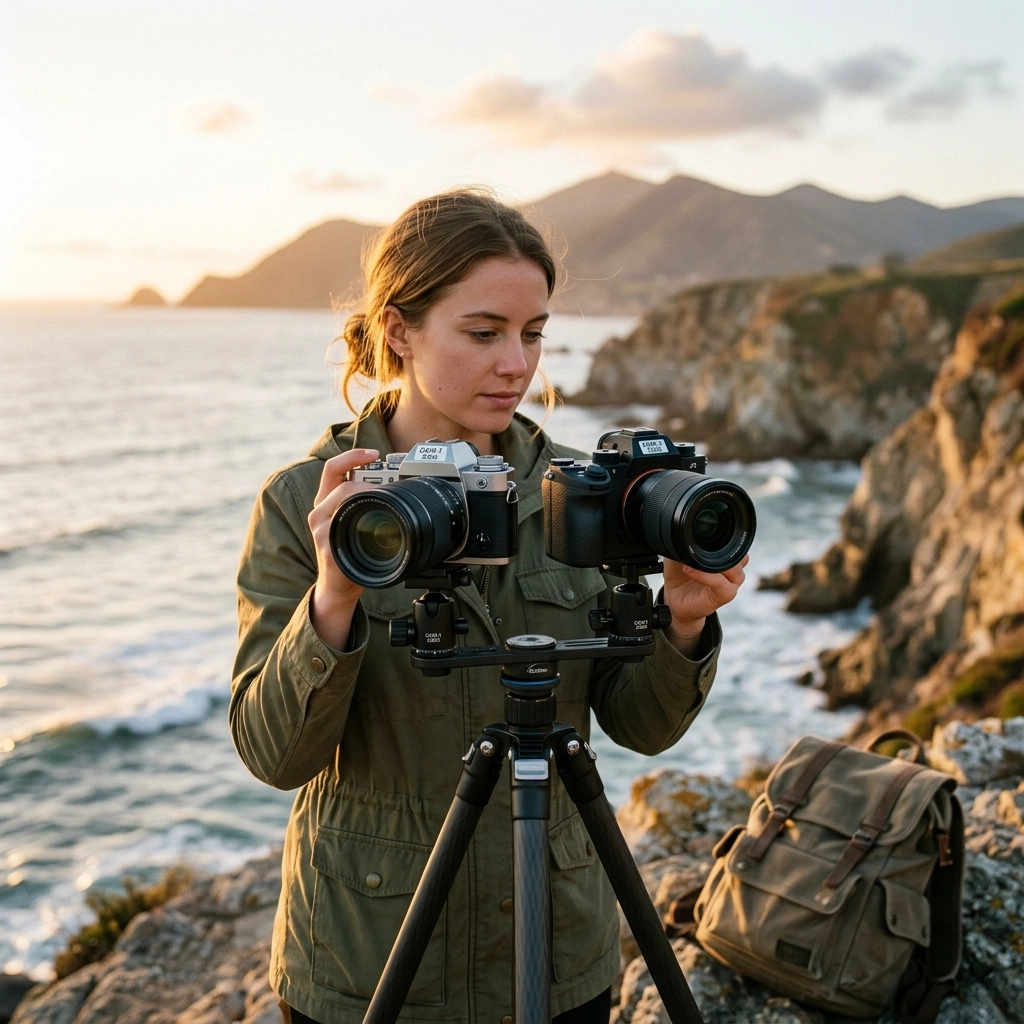
Alt text: A photographer standing in a futuristic camera store in 2026, comparing two different mirrorless cameras while digital displays show specs behind them.
Why Photography News Matters
You might wonder why you should care about the latest photography news. It’s not just for gear nerds. Knowing when a new model is about to drop can save you hundreds of dollars on the "older" version. In 2026, the second-hand market for 2024 and 2025 cameras is incredible.
For more updates, you can always check out blog.edinchavez.com or PhotoGuides.org for deep dives into the industry. Keeping a pulse on what’s happening ensures you aren't buying dead-end tech.
Portrait Photography and the Right Gear
If your goal is to take stunning photos of people, the camera body is secondary to the lens and the light. However, having a camera with reliable Eye-AF (Auto Focus) is a game changer. It allows you to focus on interacting with your subject rather than fighting with focus points.
When you’re ready to level up your people shots, check out some portrait photography techniques. Even the best mirrorless camera in the world can't fix bad lighting or a stiff pose. If you need some high-end inspiration, take a look at the galleries over at www.edinfineart.com. Seeing what’s possible with pro-level gear and vision can help you decide what's worth the investment.
Final Thoughts on 2026 Gear
Choosing the best mirrorless cameras shouldn't feel like a chore. It’s the start of a new creative chapter. Whether you’re interested in street photography ideas, landscape photography tips, or you're just looking for a solid how to choose the best mirrorless camera guide, the most important thing is to get out there and shoot.
The tech in 2026 is amazing, but it’s still just a tool. A brush doesn't paint the picture, and a camera doesn't take the photo: you do. Pick a system that feels right, learn how to use it, and stop worrying about the specs.
If you get stuck, we’ve got plenty of photo editing tutorials and guides to help you through the process. Now, quit reading and go take some pictures!

Alt text: A photographer’s backpack open on the ground, filled with mirrorless camera gear, lenses, and accessories, set against a backdrop of a vast canyon.