Choosing a camera used to be simple. You picked a brand, grabbed a DSLR, and started clicking. But it’s 2026, and the game has changed. Mirrorless technology isn't just "the future" anymore, it’s the standard. If you’re looking for professional results, the mirror is officially dead, and the electronic viewfinder is king.
But here’s the problem: there are too many options. Do you go for the megapixels of a Sony, the color science of a Canon, or the rugged reliability of a Nikon? Whether you are diving into photography for beginners or you’re a seasoned pro looking to upgrade, picking the right tool is the difference between a "good" shot and a "wow" shot.
In this guide, we’re breaking down the best mirrorless cameras on the market, comparing the heavy hitters, and helping you figure out which one belongs in your gear bag.
The Mirrorless Revolution: Why It Matters Now
If you’ve been following photography news, you know that manufacturers have stopped pouring money into DSLRs. The mirrorless system allows for faster autofocus, silent shooting, and a "what you see is what you get" preview in the viewfinder.
When we talk about camera gear reviews, we focus on how these tools make your life easier. For professional results, you need a camera that stays out of your way and lets you focus on the art.
Top Professional Contenders Compared
Let’s look at the titans of the industry. These cameras are designed for people who make a living with their eyes.
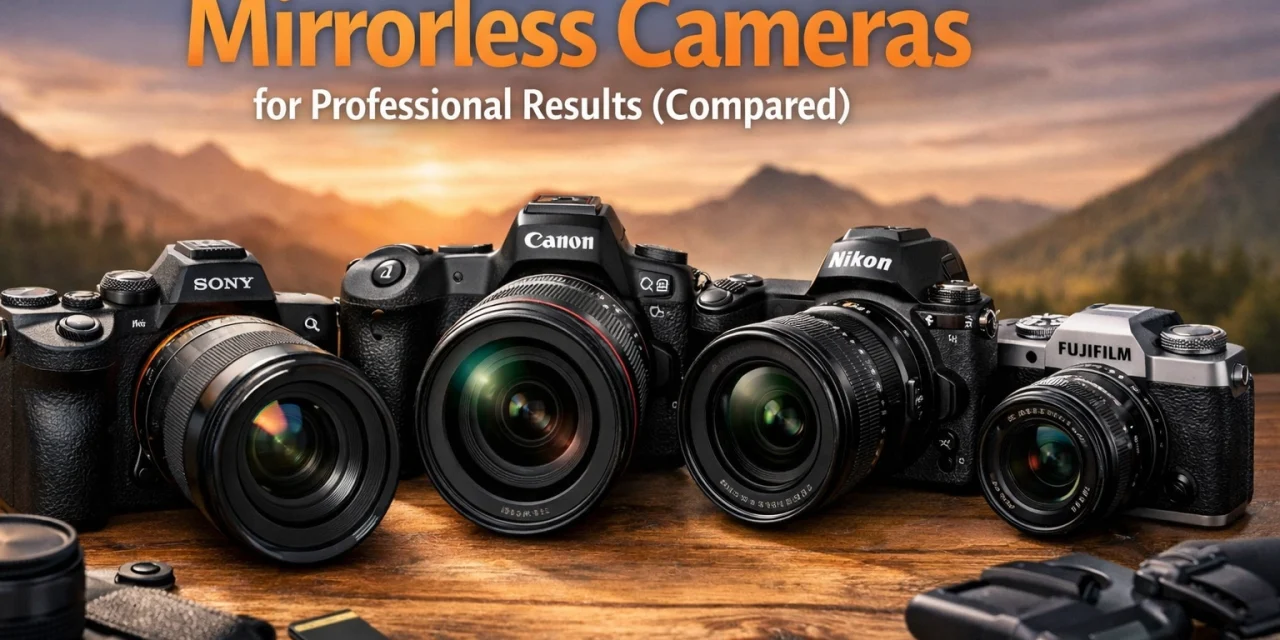
1. Canon EOS R5 Mark II: The Hybrid King
The R5 Mark II is arguably the most versatile camera ever made. With a 45-megapixel sensor and the ability to shoot 8K video, it’s a beast for both stills and cinema.
- Best For: Wedding photographers, commercial shooters, and hybrid creators.
- The Pro Edge: The Dual Pixel Intelligence AF is scary good. It tracks eyes even when the subject is wearing glasses or looking away.
- Learn More: Check out how to choose the best mirrorless camera for 2026 for a deeper dive into the Canon ecosystem.
2. Nikon Z9: The Speed Demon
Nikon took a huge gamble with the Z9 by removing the mechanical shutter entirely. It paid off. This camera is built like a tank and can shoot 20 frames per second at full resolution with a buffer that basically never ends.
- Best For: Sports, wildlife, and photojournalism.
- The Pro Edge: If you need a camera that can survive a sandstorm or a downpour while capturing 1,000 shots in a row, this is it. It sets the gold standard for landscape photography tips when you’re out in the wild.
3. Sony A7R V: The Detail Monster
Sony’s "R" series has always been about resolution. With 61 megapixels, the A7R V is a landscape and studio photographer’s dream.
- Best For: Portrait photography techniques, fine art, and high-end advertising.
- The Pro Edge: The dedicated AI processing unit for autofocus. It doesn't just recognize humans; it recognizes insects, planes, and trains with precision.
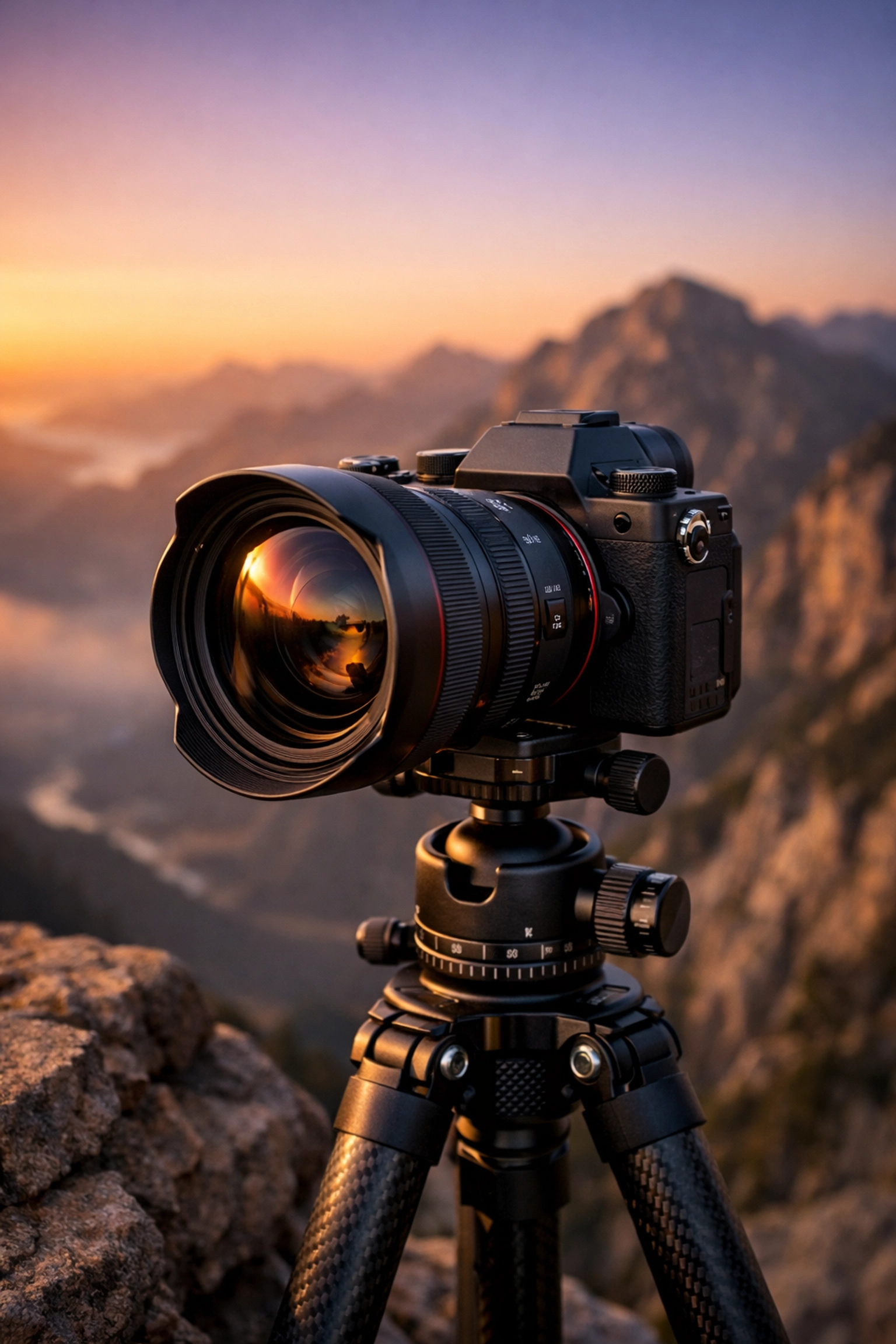
SEO Alt Text: A high-end Sony mirrorless camera mounted on a professional tripod overlooking a mountain landscape during sunset, illustrating best mirrorless cameras for landscape work.
What to Look for When Choosing Your Setup
When you’re reading through camera gear reviews, it’s easy to get lost in the specs. Here is what actually matters for "professional results."
Sensor Size: Full-Frame vs. The World
For pros, full-frame is the benchmark. It offers better low-light performance and a shallower depth of field. While APS-C cameras like the ones from Fujifilm are great, if you want the ultimate image quality for edinfineart.com, full-frame is the way to go.
Autofocus Reliability
Modern AF systems use deep learning. When you’re practicing portrait photography techniques, you don't want to worry about missing focus on the eye. Look for "Eye-AF" and "Subject Tracking."
Ecosystem and Lenses
A camera body is only as good as the glass you put in front of it. Canon’s RF lenses and Sony’s G-Master line are incredible but expensive. Before you buy a body, check out the lens prices at proshoot.io.
Specialized Use Cases
Landscape Photography
For the explorers, you need dynamic range. You want a sensor that can handle the brightest highlights and the darkest shadows. Cameras like the Sony A7R V or the Nikon Z7 II are favorites here. Don't forget to study lessons in landscape photography from Peter Lik to see how high-end gear translates to gallery-worthy art.
Street Photography
For street photography ideas, you want something small and inconspicuous. A massive Nikon Z9 might be too "loud" for the streets. This is where more compact full-frame options or high-end crop sensors shine.
Real Estate Photography
If you’re moving into the commercial world, is photography essential for real estate marketing? Absolutely. You’ll need a camera with excellent bracketed exposure capabilities and wide-angle lens support. Professional results in this field often depend on elevate your real estate with aerial photography and high-quality mirrorless interiors.
The Role of Post-Processing
Even the best mirrorless camera in the world won't give you "professional" results straight out of the box if you don't know how to edit. Raw files from these high-end sensors are designed to be pushed and pulled.
If you’re looking for photo editing tutorials, the first thing you should master is color grading. Tools like Luminar have revolutionized how we process images. With AI-assisted editing, you can enhance skies, skin tones, and lighting in seconds, which used to take hours in Photoshop. Using Luminar is a great way to bridge the gap between a raw capture and a finished piece of art.
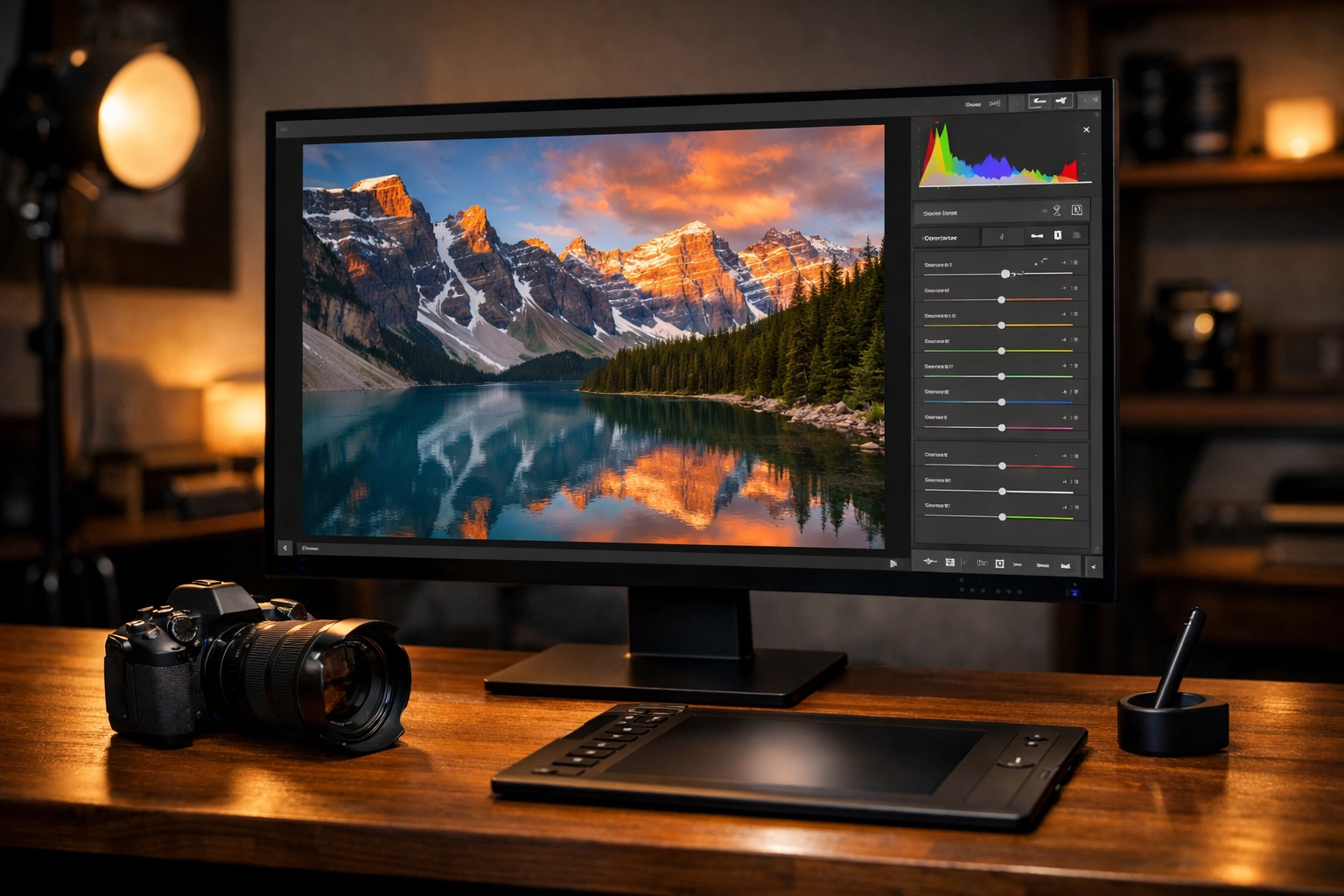
SEO Alt Text: A photographer editing a high-resolution mirrorless photo on a dual-monitor setup using AI-powered software, showcasing photo editing tutorials and professional workflow.
From Beginner to Pro: The Learning Curve
If you are just starting, don't let the tech intimidate you. Every pro started by figuring out how to use manual mode camera. Mirrorless cameras actually make learning manual mode easier because you can see the exposure change in real-time in your viewfinder.
Check out some photography tutorials to understand the exposure triangle, aperture, shutter speed, and ISO. Once you master these, the camera becomes an extension of your hand.
Is It Worth the Investment?
The question we get asked most at Shut Your Aperture is: "Do I really need a $4,000 camera?"
The honest answer? No, not to learn. But to compete at a professional level where clients expect 45MP files and flawless autofocus in a dark ballroom? Yes. Better gear doesn't make you a better artist, but it does raise the "ceiling" of what you can technically achieve.
Final Comparisons: Which One Should You Buy?
To make it simple, let’s break it down by your primary focus:
- The All-Rounder: Get the Canon R6 Mark II. It’s more affordable than the R5 but shares the same incredible autofocus system. Perfect for someone moving from photography for beginners to paid gigs.
- The High-Res Specialist: Go for the Sony A7R V. If your work is going to be printed big or used in luxury real estate (see ethereal imagery elevate your real estate listings), you need those pixels.
- The Video First Creator: Look at the Panasonic Lumix S1IIE. Its thermal management and video features are built for filmmakers first, photographers second.
- The Landscape Professional: The Nikon Z9 or Z8. The colors and the ruggedness are unmatched for outdoor work. If you're inspired by techniques behind Peter Lik’s landscape photography, these are the tools that can handle those environments.
Conclusion
Choosing the best mirrorless camera isn't about finding the "best" specs on paper: it's about finding the tool that fits your workflow. Do you like the grip? Is the menu system intuitive to you? Can you afford the lenses?
Take your time. Rent a body for a weekend from a place like proshoot.io before you drop thousands of dollars. Read the photography news. And once you have that new piece of tech in your hands, get out there and shoot.
Whether you're capturing luxury dining or the rugged peaks of the Sierras, the right mirrorless camera is just the beginning of your professional journey.
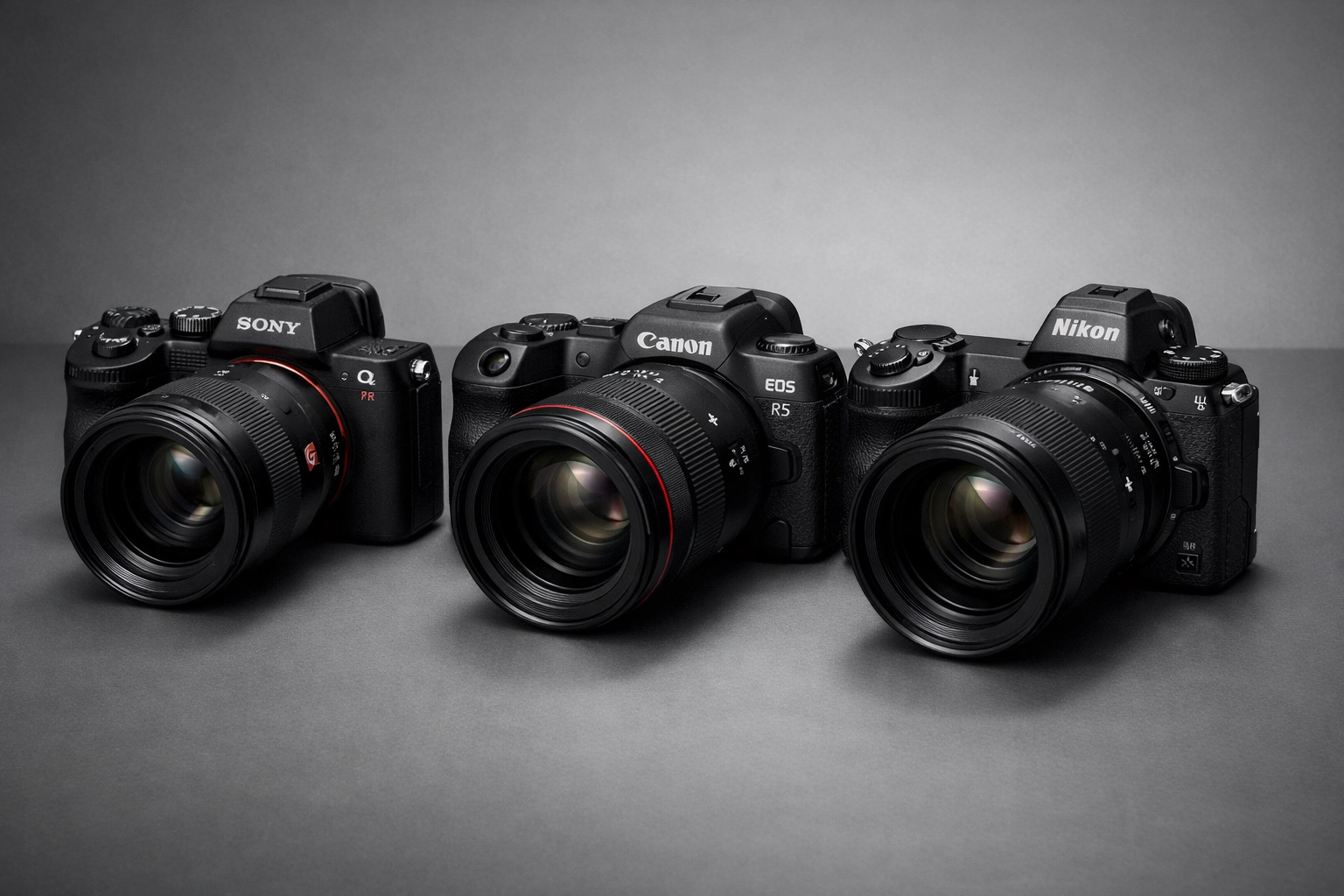
SEO Alt Text: A comparison layout showing three major mirrorless camera bodies from Canon, Sony, and Nikon on a clean white background, ideal for camera gear reviews.
Remember, the best camera is the one you actually use. So pick a system, master how to use manual mode camera, and start creating art that matters. If you need more inspiration, head over to edinfineart.com to see what’s possible when you combine the right gear with the right vision.