Best Photography Spots in Bangkok: 12 Locations With GPS

Tours & experiences disclosure: This guide includes affiliate links to Viator, the world’s largest tour and experiences marketplace. If you book through these links, ShutYourAperture may earn a small commission at no extra cost to you.

Bangkok photography guide hero imageSave

Skip the planning. Get the Bangkok PDF. All locations, GPS coordinates, golden-hour times, gear tips. Instant download.

Bangkok, Thailand is one of the most photogenic cities in the world. If you have a camera and the patience to show up before dawn, Bangkok will give you images that last a career — but only if you know where and when to point it.

This is the definitive field guide to the 12 best photography spots in Bangkok, with GPS coordinates you can drop straight into Google Maps, exact camera settings tuned to Bangkok’s unique light, precise timing for every location, and the access notes nobody else bothers to document. It mirrors the intel inside our Bangkok Ultimate Photographer’s Guide ($47 PDF) — a downloadable field guide with full-page hero images, GPS maps, seasonal tables, a city safety briefing, and a complete photographer’s packing list. Get the guide →

Planning multi-city travel? See also: U.S. cities photography hub and the National Parks Photography Guides.

Bangkok Ultimate Photographer’s Guide — $47
12 GPS-mapped locations · Exact camera settings · Multi-season shooting calendar · Free annual updates

Download the PDF guide →

Quick jump to the 12 spots

  1. Wat Arun — Temple of Dawn
  2. Grand Palace + Wat Phra Kaew
  3. Wat Pho — Reclining Buddha Temple
  4. Wat Saket — Golden Mount
  5. Chao Phraya River — Sunset Cruise and Riverfront
  6. Chinatown — Yaowarat Road Night Photography
  7. MahaNakhon SkyWalk
  8. Lebua State Tower — Sky Bar
  9. Damnoen Saduak Floating Market
  10. Erawan Shrine — Ratchaprasong Intersection
  11. Lumpini Park — Dawn and Golden Hour
  12. Asiatique The Riverfront — Night Photography

A look inside the Bangkok Photographer’s Guide

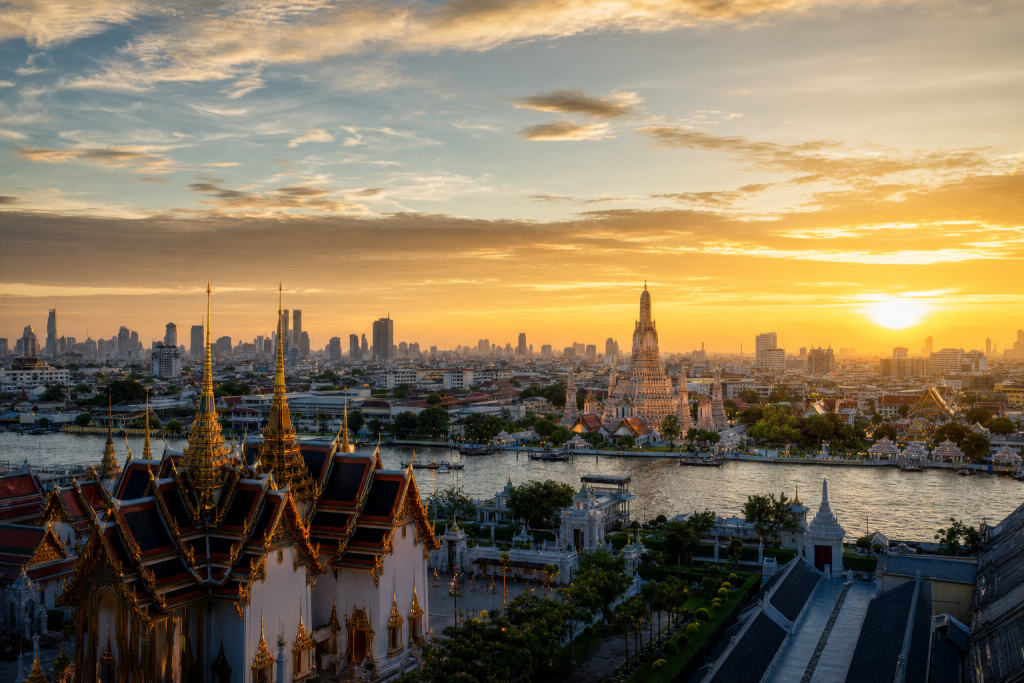
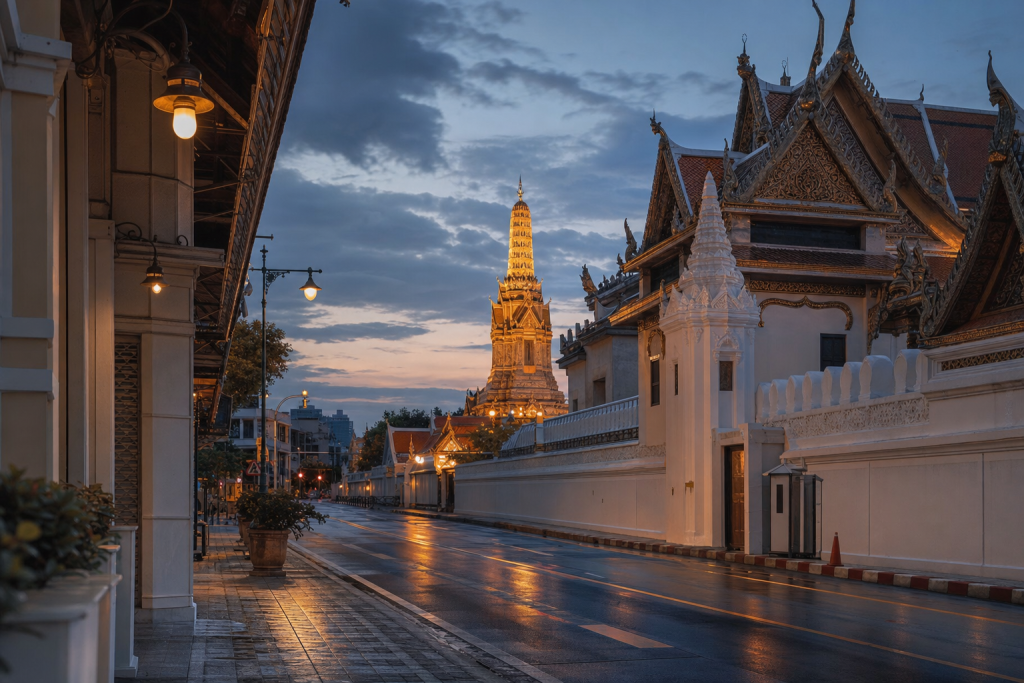
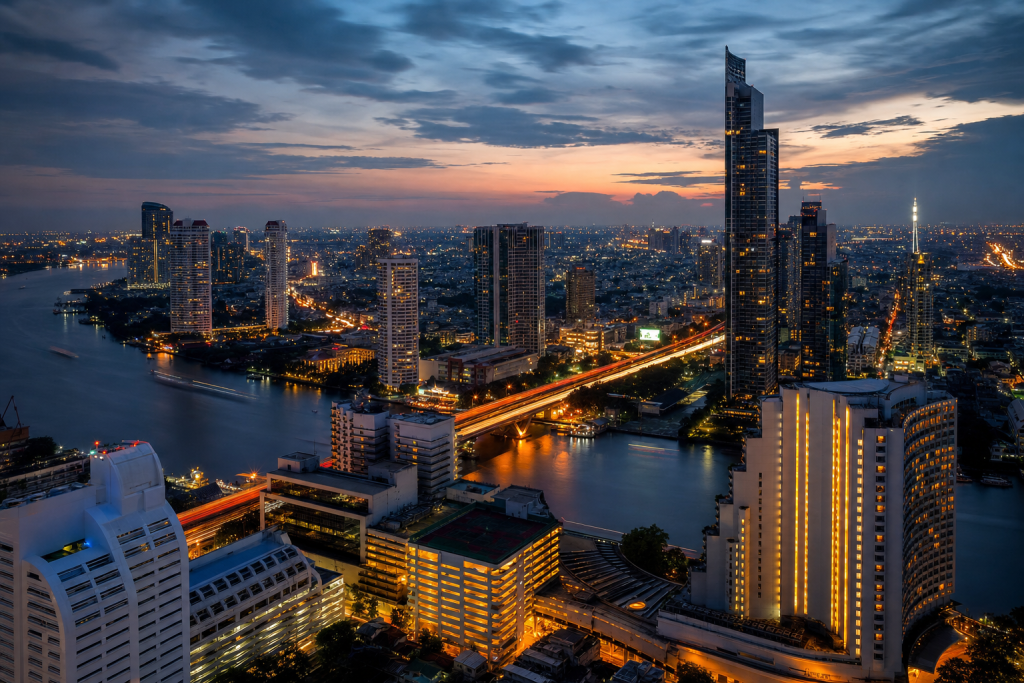
Here are three of the actual shots you’ll find inside the PDF — cinematic full-page references for the exact spots, lenses, and lighting conditions documented in the guide. The full guide includes 12 locations, each with a hero image, GPS map, settings table, and a five-shot list.

Wat Arun — Temple of Dawn — from the Bangkok Photographer's GuideSave
Wat Arun — Temple of Dawn — sample reference photo from the Bangkok Photographer’s Guide PDF

Before you shoot Bangkok: the essentials

  • Free public access: Erawan Shrine (free, open 6 AM–10 PM), Lumpini Park (free, 5 AM–9 PM), Chinatown/Yaowarat streets (free 24 hrs), Khao San Road (free 24 hrs), Asiatique The Riverfront (free entry, 5 PM–midnight), Chao Phraya riverbanks and public piers (free). Paid attractions: Wat Arun 200 THB, Wat Pho 300 THB, Grand Palace + Wat Phra Kaew 500 THB, Wat Saket Golden Mount 100 THB, MahaNakhon SkyWalk from 880 THB, Damnoen Saduak boat tour 1,500 THB/boat or 800 THB/person.
  • Commercial permits: Personal and tourist photography in all public spaces, streets, and temples (exterior) is unrestricted. Commercial shoots in public areas generally require coordination with Bangkok Metropolitan Administration (BMA). Photography inside temple chapels (bots/ubosots) is often prohibited or restricted — no photography of the Emerald Buddha inside Wat Phra Kaew, and flash photography is banned universally in sacred spaces. Drone flights in Bangkok require CAA Thailand permits and are prohibited over the Old City, Grand Palace, and most central tourist areas without prior special clearance from the Civil Aviation Authority of Thailand (CAAT). Tripods are not allowed at Lebua Sky Bar.
  • Best photography seasons: November–February (cool dry season: clear skies, lower humidity, best light quality, peak festivals including Loy Krathong in November) and July–August (occasional dramatic storm clouds over temples create moody skies, fewer Western tourists)
  • Blue hour notes: Bangkok sits at 13.75°N — very close to the equator. The sun arc is steep and near-overhead, meaning sunrises and sunsets are rapid (golden hour lasts only 15–25 minutes, shorter than in temperate cities). Blue hour after sunset typically lasts 20–30 minutes. Sunset times range from approximately 5:50 PM (November–January) to 7:00 PM (May–June). The Chao Phraya River reflects the cobalt blue-hour sky beautifully, making riverside spots like Wat Arun’s east bank and Asiatique especially rewarding during this brief window.
  • Drone policy: Drone laws vary widely by country and city — many capital and tourist zones are no-fly. Verify the local civil aviation authority’s current rules before launching.
  • Local resource: Official visitor information

The full-resolution version of every map below — plus seasonal calendars, gear notes per location, sun-angle diagrams, and a complete photographer’s packing checklist — is inside the Bangkok Photographer’s Guide PDF ($47).

1. Wat Arun — Temple of Dawn

Wat Arun is Bangkok’s most photographically dramatic temple and one of Southeast Asia’s most iconic structures. The 82-meter Khmer-style central prang (tower) is entirely encrusted with colorful Chinese porcelain fragments and seashells donated by local people during its 19th-century restoration — a texture-rich surface that transforms in every light. Unlike Bangkok’s gold-roofed temples, Wat Arun’s silhouette and west-facing river position make it the city’s definitive sunset landmark. The reflection of the illuminated prang shimmering in the Chao Phraya at blue hour is one of Asia’s most celebrated long-exposure compositions.

  • GPS: 13.7437, 100.4888
  • Elevation: 10 ft
  • Best time of day: Sunrise (8–9 AM) from inside the temple grounds when low eastern light illuminates the porcelain-encrusted prang and the grounds are near-empty; and sunset from the east bank of the Chao Phraya River (Tha Tien Pier area or riverside bar terraces) 30–60 minutes before sunset when the 82-meter central spire glows gold against the orange sky
  • Sun direction: Wat Arun faces east across the Chao Phraya River. From inside the temple (west bank), morning sun rises directly behind the photographer and front-lights the central prang from the east from ~6:30 AM — ideal for revealing the intricate Chinese porcelain tilework in detail. By midday, the sun passes overhead and flattens the spire’s texture. At sunset, the sun descends to the west-southwest (azimuth ~260–270°) and backlights the temple spectacularly when viewed from the east bank — the prang silhouettes against an orange-pink sky perfectly framed by the river. From the east bank, the temple faces the camera with the sun setting behind and to the right, casting warm side-rim light on the prang’s west face.
  • Access: 158 Thanon Wang Doem, Bangkok Yai, Bangkok 10600. No direct BTS/MRT to temple — take BTS Silom Line to Saphan Taksin (S6), Exit 2, walk 5 min to Sathorn/Central Pier, board Chao Phraya Express Boat (orange flag, 15 THB) to Tha Tien Pier (N8), then 5 THB cross-river ferry to Wat Arun entrance. Alternatively, MRT Blue Line to Itsaraphap Station, Exit 2, walk ~1 km along Wang Derm Road. Entry fee: 200 THB adults, free for children. Open daily 8:00 AM–6:00 PM. Dress code: shoulders and knees covered (sarongs available at entrance for ~20 THB deposit). Tripods permitted on grounds. For east-bank sunset views: Tha Tien riverfront area is free and public; The Deck restaurant and Eagle Nest Bar charge food/drink minimum.
  • Difficulty: easy
  • Recommended settings: Sunrise Golden Prang Detail: f/8, 1/500 sec, ISO 100, 50–100mm telephoto to compress porcelain texture on the central prang surface  ·  East Bank Sunset Silhouette: f/11, 1/250 sec, ISO 100, 70–200mm from Tha Tien east bank to isolate prang against orange sky  ·  Blue Hour Long Exposure Reflection: f/11, 8–15 sec, ISO 100, 24mm, tripod on east bank pier or wooden dock for river reflection  ·  Illuminated Night Temple: f/2.8, 1/60 sec, ISO 1600, 35mm handheld from the ferry or riverside dock after floodlights activate at dusk

Shots to chase:

  • Long-exposure composition from Tha Tien Pier area at blue hour: the illuminated central prang reflected in the Chao Phraya with longboat wake streaks across the foreground
  • Telephoto compression (200mm) from the east bank at sunset capturing the prang glowing orange-gold against a saturated sky with the ornamental porcelain tilework visible
  • Wide-angle interior shot looking up the steep steps of the central prang at golden hour — the rows of demon and monkey guardian statues lining the stairways create dramatic leading lines
  • Cross-river ferry crossing at blue hour with the lit temple filling the frame across the dark water — shoot during the 3-minute crossing for a moving-water reflection effect
  • Pre-dawn shot from inside the temple grounds with the empty forecourt reflecting the first pink light in puddle water after overnight rain, the prang rising vertically in the background

Pro tip: The most crowd-free access is the ferry from Tha Tien at exactly 8:00 AM when the temple opens — arrive by 7:45 AM and be first on the boat. For sunset photography from the east bank, The Deck restaurant at Arun Residence (directly opposite the temple) has an unrestricted river-level terrace with tripod-friendly low railings; no mandatory purchase during non-dinner hours, but ordering a drink is courteous. The floodlights activate approximately 30 minutes after sunset — plan a 2-hour session from 60 minutes before sunset through 30 minutes after. In the November–February dry season, the river is lower, revealing more of the temple’s stone base.

Common mistake to avoid: Shooting Wat Arun only from inside the temple grounds (west bank) and missing the far superior sunset compositions available from the east bank opposite. Arriving at 10–11 AM when tour buses peak and the overhead sun kills all porcelain texture. Using a wide lens below 24mm from the east bank distorts the spire into a pointed wedge — 50–135mm gives the most natural and impressive prang proportions. Forgetting that the temple closes at 6 PM sharp: plan the entry for interior shots in the morning and position on the east bank from 4 PM onward for sunset.

2. Grand Palace + Wat Phra Kaew

The Grand Palace complex is the most concentrated display of Thai royal craftsmanship on earth — within its 218,000 m² walled compound, Wat Phra Kaew’s gilded prangs, mosaic-encrusted chedis, murals of the Ramayana epic, and the mythical demon-and-monkey guardian statues create an almost impossibly rich photographic environment. The Chakri Maha Prasat Throne Hall’s unique hybrid European-Thai spires are unlike any architecture elsewhere. As the spiritual and ceremonial heart of Thailand for over 240 years, the complex carries a ceremonial gravitas that elevates every photograph.

  • GPS: 13.7502, 100.4921
  • Elevation: 10 ft
  • Best time of day: 8:30–10:00 AM on a weekday — arrive at opening to beat tour buses; morning light from the east illuminates the gilded chedis and mirrored mosaic spires of Wat Phra Kaew from the front, revealing the extraordinary decorative detail
  • Sun direction: The Grand Palace complex faces south toward the Chao Phraya River, with Wat Phra Kaew (Temple of the Emerald Buddha) in the northeast section. The main ceremonial axis runs roughly north-south. In the morning, the sun rises to the east-northeast and side-lights the gilded prangs and mosaic chedis from the east — warm, directional, and ideal for bringing out the golden reflective surfaces. By late morning (~10:30 AM onward), the sun is nearly overhead and shadows shorten dramatically, flattening the complex’s rich architectural relief. Afternoon light from the west illuminates the western pavilions (Dusit Maha Prasat) and Chakri Throne Hall facade.
  • Access: Na Phra Lan Road, Phra Nakhon, Bangkok 10200. No BTS/MRT station at the gate — best route: BTS Silom Line to Saphan Taksin (S6), Exit 2, Sathorn Pier → orange-flag boat (15 THB) to Tha Chang Pier (N9), 5-min walk to Grand Palace main gate. Alternatively MRT Blue Line to Sanam Chai Station (BS12), Exit 1, 10–15 min walk. Entry fee: 500 THB adults (includes Grand Palace, Wat Phra Kaew, Queen Sirikit Museum of Textiles). Open daily 8:30 AM–3:30 PM (ticket sales close at 3:00 PM); complex closes ~4:30 PM. Dress code strictly enforced: no shorts, sleeveless tops, or open-toed shoes — sarong/trouser loan available at gate. Photography: exterior of all buildings and courtyards permitted; NO photography inside Wat Phra Kaew chapel (Emerald Buddha) whatsoever.
  • Difficulty: moderate
  • Recommended settings: Golden Hour Gilded Spires: f/8, 1/500 sec, ISO 100, 35–70mm to capture full-height gilded chedis against blue morning sky  ·  Mosaic Detail Telephoto: f/8, 1/400 sec, ISO 200, 100–200mm to isolate mirrored glass mosaic detail on temple rooflines  ·  Overcast Diffuse Color: f/5.6, 1/250 sec, ISO 400, 24mm — overcast days reveal the full color palette of tile mosaics without specular glare  ·  Guardian Demon Statues: f/4, 1/500 sec, ISO 100, 50mm, low angle looking up at the yaksha (giant demon) statues flanking temple entrances

Shots to chase:

  • Wide-angle composition from the inner courtyard of Wat Phra Kaew showing the four gilded chedis of the Phra Si Rattana Chedi cluster against a deep blue sky with the golden Phra Mondop library at center
  • Telephoto compression from the north side of the complex showing the layered rooflines of the bot (ordination hall) with its green, orange, and red glazed tiles stacked in receding planes
  • Low-angle shot at the feet of the 12 yaksha (demon guardian) statues at the entrance gates, their jeweled crowns and fierce expressions filling the frame against gold background walls
  • Panoramic shot from the terrace walk inside the complex looking across the entire Wat Phra Kaew complex with the city skyline faintly visible beyond the white outer walls
  • Detail shot of the Ramayana mural corridor (cloister surrounding Wat Phra Kaew): use a 35–50mm lens at f/2.8 to capture the luminous painted scenes in the dim arcade light without flash

Pro tip: Arrive no later than 8:15 AM to queue before the gate opens at 8:30 AM and reach the inner Wat Phra Kaew courtyard before the first tour buses arrive at ~9:30 AM. The long Ramayana mural cloister that surrounds the temple perimeter is shaded and dramatically lit from the arcade openings — a 35mm lens at f/2.8 works beautifully here without flash. The Dusit Maha Prasat Throne Hall (funeral hall) near the exit has a stunning white-spired roof best photographed from the southeast in morning light. For crowd-free compositions, walk to the western and northern sections of the complex — most tour groups cluster near the Emerald Buddha hall entrance.

Common mistake to avoid: Going after 10 AM when tour group density makes crowd-free exterior shots almost impossible. Wearing inappropriate clothing and wasting 20–30 minutes at the gate borrowing required coverings — dress correctly from the start. Attempting to photograph inside the Emerald Buddha chapel: this is strictly prohibited and security will intervene immediately. Underestimating the complex size and running out of time — allocate a minimum 2.5 hours.

3. Wat Pho — Reclining Buddha Temple

The Reclining Buddha (Phra Buddhasaiyas) is one of the largest and most visually overwhelming Buddhist sculptures in the world — 46 meters long and 15 meters high, entirely covered in gold leaf, reclining in the final position before entering Nirvana. The 108 bronze bowls lining the wall behind the statue (each representing a mark of the Buddha) create a hypnotic compositional element unique to this hall. Beyond the famous statue, Wat Pho’s compound contains 91 smaller chedis, traditional Thai massage school, and some of the oldest religious art in Bangkok (predating the Rattanakosin period).

  • GPS: 13.7465, 100.4927
  • Elevation: 10 ft
  • Best time of day: 8:00–9:00 AM at opening, or 3:30–5:30 PM in late afternoon — these windows offer the softest light inside the Reclining Buddha hall and the fewest visitors; midday heat and peak bus arrivals (10 AM–2 PM) should be avoided
  • Sun direction: Wat Pho’s main compound is enclosed by high walls and shaded trees, making direct sunlight management less critical than at open-air temples. The Reclining Buddha hall (Viharn Phra Non) runs east-west with the Buddha’s head to the north; clerestory windows along the upper walls allow directional shafts of light to enter in early morning from the east side. The large chedis (stupas) in the courtyard receive their best directional light in the morning from the east-northeast. Afternoon light from the west illuminates the exterior facades of the western hall group most dramatically.
  • Access: 2 Sanamchai Road, Phra Nakhon, Bangkok 10200. Located 500m south of the Grand Palace; walk 10 min from Grand Palace entrance gate. From BTS: Saphan Taksin (S6) + orange boat to Tha Tien Pier (N8), then 400m walk. MRT Blue Line to Sanam Chai Station (BS12), Exit 1, 5-min walk. Entry fee: 300 THB adults; children under 120 cm free. Open daily 8:00 AM–7:30 PM (last entry 7:00 PM). Dress code: shoulders and knees covered; sarong loan at entrance. Photography permitted in all areas including Reclining Buddha hall; no flash. Tripods technically not restricted but impractical in the hall due to crowds.
  • Difficulty: easy
  • Recommended settings: Reclining Buddha Wide Hall: f/4, 1/60 sec, ISO 1600, 16–24mm ultrawide for the full 46m length from the feet end of the hall (no flash)  ·  Mother Of Pearl Feet Detail: f/5.6, 1/200 sec, ISO 400, 50–100mm telephoto on the soles of the feet showing 108 auspicious symbols inlaid in mother-of-pearl  ·  108 Bronze Bowls: f/8, 1/125 sec, ISO 800, 50mm — compose with bowls receding into background for depth with gold Buddha behind  ·  Courtyard Chedis Morning: f/8, 1/500 sec, ISO 100, 24–35mm capturing the four main colored chedis (blue, green, orange, yellow) in morning sidelight

Shots to chase:

  • Ultra-wide lens from the feet of the Reclining Buddha looking along the full 46-meter golden body toward the serene face at the north end — use f/4 at ISO 1600 with no flash to capture the ambient hall lighting
  • Close-up of the mother-of-pearl-inlaid soles of the feet showing the 108 auspicious symbols arranged in concentric circles — one of the most intricate decorative surfaces in Thai art
  • The 108 ceremonial bronze bowls lining the rear wall of the hall in perspective recession, with the shimmering gold statue filling the left half of the frame
  • Exterior wide shot of the four main giant chedis in the northwest courtyard at golden hour — the cobalt blue chedi contrasts with the orange and green ones in a vivid color composition unique to Thai art
  • Detail of the mythological creature murals painted on the window shutters and walls of the covered galleries — 35mm f/2.8 in ambient arcade light reveals centuries-old painting without flash

Pro tip: Stand at the far southern end of the Reclining Buddha hall (at the feet) with a 16–20mm lens to capture the entire 46-meter body in one frame — most visitors crowd near the face/entrance. Visit the covered cloister surrounding the bot (ordination hall) where 394 seated Buddha images in alcoves provide an atmospheric repeating-elements composition. The northeastern section of the complex near the Thai massage school is least visited and contains some of the oldest trees and chedis on the grounds. Time the 108 bowls shot for when a group of devotees passes coins down the row — the sound and motion add life to the composition.

Common mistake to avoid: Using flash anywhere inside the temple buildings — strictly prohibited and will produce terrible results from specular reflections on the gold surfaces anyway. Shooting the Reclining Buddha only from the entranceway near the head: walking the full 46-meter length to the feet end reveals the most dramatic full-body composition. Visiting at midday when the covered hall becomes very hot and crowded, degrading both the experience and the ability to compose without pedestrians in frame.

4. Wat Saket — Golden Mount

Wat Saket’s artificial Golden Mount (Phu Khao Thong) is Bangkok’s only significant elevated natural-feeling viewpoint in the historic Old City — it was the tallest man-made structure in Bangkok for much of the 19th century. The spiral brick path winding around the hill, lined with temple bells, incense urns, and bodhi trees, creates a contemplative photographic journey before reaching the summit. The 360-degree view from the top is unobstructed and uniquely frames the juxtaposition of Bangkok’s ancient temple skyline (Grand Palace, Wat Phra Kaew, Wat Arun) against the modern Silom business district in a single frame.

  • GPS: 13.753, 100.5064
  • Elevation: 256 ft
  • Best time of day: Sunrise (7–8:30 AM) for near-empty summit with golden light over the Old City temples, or the hour before sunset (4:30–6 PM) when the gilded chedi glows warm amber and city views extend in every direction; the temple stays open until 7 PM allowing blue-hour capture
  • Sun direction: The Golden Mount summit at approximately 78 meters offers a 360-degree panoramic view of Bangkok. To the west-northwest lies Wat Phra Kaew’s gilded towers and the Grand Palace compound (~1.2 km). To the southwest, Wat Arun’s spire rises above the Chao Phraya River (~2 km). To the south and east, the modern Bangkok skyline including MahaNakhon and Silom towers is visible on clear days. At sunrise, the sun rises to the east-northeast, illuminating the western temples in warm light. At sunset, the sun descends to the west-southwest, directly toward the Chao Phraya River and Wat Arun, with the Old City’s temples bathed in golden light directly in front of the camera.
  • Access: 344 Thanon Chakkraphatdi Phong, Ban Bat, Pom Prap Sattru Phai, Bangkok 10100. Nearest BTS: no direct connection — take MRT Blue Line to Sam Yot Station, then 15-min walk east; or BTS to any Sukhumvit/Silom station then taxi (~80–120 THB). Alternatively, Khlong Saen Saep boat to Phan Fa Lilat Pier (~10 THB), then 5-min walk. Entry: 100 THB for foreigners to access the chedi at top of the Golden Mount (temple grounds entry free). Open daily 7:00 AM–7:00 PM.
  • Difficulty: moderate
  • Recommended settings: Panoramic Old City Golden Hour: f/8, 1/500 sec, ISO 100, 24–35mm wide for the full 360-degree panorama at golden hour  ·  Telephoto Wat Arun Distant: f/8, 1/400 sec, ISO 100, 200–400mm telephoto to isolate Wat Arun’s prang or Grand Palace spires from the summit  ·  Spiral Path Leading Lines: f/5.6, 1/250 sec, ISO 200, 24mm wide looking up the spiral brick stairway with temple bells and trees framing the path  ·  Sunset Chedi Glow: f/8, 1/200 sec, ISO 100, 50mm to capture the gilded chedi spire glowing warm amber in the last 20 minutes of sunlight

Shots to chase:

  • Wide panoramic view from the summit at golden hour looking west toward Wat Arun and the Chao Phraya River, with the Old City’s temple rooflines in the foreground and the modern skyline rising beyond
  • Telephoto (200–400mm) shot from the summit isolating the Grand Palace’s Phra Si Rattana Chedi (gold stupa) or Wat Phra Kaew towers shimmering in afternoon heat haze
  • Spiral stairway ascending shot: low angle with a wide lens looking up the curving brick path with hanging temple bells creating a compelling foreground as a pilgrim ascends in silhouette
  • The golden chedi spire against deep blue sky at sunrise framed with the bodhi tree’s hanging roots and prayer flags in the foreground at the summit terrace
  • Blue-hour city panorama from the summit with the modern Silom/Bangrak towers illuminated to the south while the ancient temple silhouettes remain dark against the cobalt sky — a uniquely Bangkok juxtaposition

Pro tip: Arrive at 7:00 AM when the temple opens for a near-empty summit — the spiral path and summit terrace are typically crowd-free until ~9:30 AM on weekdays. The temple bell spiral path (~300 steps) becomes crowded in both directions; ascending via the left-hand path and descending right keeps flow smooth. The northern terrace of the summit faces directly toward the Grand Palace complex (~1.2 km) — set up here with a 200mm+ lens for telephoto compression shots of Wat Phra Kaew spires bathed in morning light. During the annual Loy Krathong and Golden Mount Festival (October–November), thousands of candles are lit on the hillside path — a unique night photography opportunity.

Common mistake to avoid: Visiting at midday when the exposed spiral path bakes in direct sun and Bangkok’s haze reduces visibility to just a few kilometers. Not bringing a telephoto lens — the summit views are most dramatically composed with 100–400mm compression of distant temples, not with a wide lens. Underestimating the physical effort: the path to the summit involves ~300 steps in Bangkok heat — start early, bring water, and wear closed shoes.

Want this in your pocket on the street?
The full-resolution version of every spot above — with full-page hero photography, GPS maps with gold location pins, sun direction diagrams, multi-season tables, and a complete safety + packing checklist — is inside the Bangkok Ultimate Photographer’s Guide PDF ($47). Print it, save it offline, take it on the walk. Get the guide →

5. Chao Phraya River — Sunset Cruise and Riverfront

Chao Phraya River — Sunset Cruise and Riverfront Bangkok photography sampleSave
Chao Phraya River — Sunset Cruise and Riverfront — cinematic reference from the Bangkok Photographer’s Guide PDF

The Chao Phraya (River of Kings) is Bangkok’s original urban artery, and photographing from its surface or banks at sunset compresses 240 years of Bangkok’s history into a single frame. The river places Wat Arun, Wat Pho, the Grand Palace complex, the Rama VIII Bridge, and the modern Silom skyline in one sweeping panorama. From a cruise boat, the constantly changing angle and the play of reflected light on the river surface provides infinite compositional variety. Bangkok’s riverside temples are especially stunning after dark when floodlit, reflecting shimmering gold and white light in the dark water.

  • GPS: 13.7244, 100.5142
  • Elevation: 5 ft
  • Best time of day: 5:00–6:30 PM — board a cruise or position on the Sathorn Pier area for the golden hour transition: the sun sets to the west-southwest illuminating Wat Arun on the west bank from behind the camera while the river surface catches the orange and pink sky reflections; blue hour (6:30–7:00 PM) extends the shooting window as the riverside temples and bridges illuminate
  • Sun direction: The Chao Phraya River runs roughly north-south through Bangkok’s historic center, bending south-southwest through the Silom/Sathorn area. The river’s orientation means that shooting northward from Sathorn Pier places the sunset sky and Wat Arun’s illuminated prang directly ahead at golden hour. From mid-river on a cruise, the west bank’s Wat Arun and Wat Kalayanamit are front-lit by the setting sun while the east bank’s Grand Palace area (Wat Phra Kaew golden towers) catches warm sidelight. The Rama VIII Bridge, viewed from north of Sathorn, frames a cable-stayed silhouette against the golden sky beautifully.
  • Access: Sathorn Pier (Central Pier) is the main hub: take BTS Silom Line to Saphan Taksin Station (S6), Exit 2, walk 3 min to pier. Chao Phraya Express Boat day pass: 150–200 THB (unlimited hop-on/hop-off between all major piers from Nonthaburi to Wat Rajsingkorn). Private sunset dinner cruise operators depart from Sathorn Pier and ICONSIAM from 5 PM; prices range from 500–2,500 THB depending on operator. Free viewing positions: Sathorn Pier jetty area (public, free), Suan Luang Rama 8 Park under Rama VIII Bridge (public, free). The riverfront promenade at ICONSIAM mall (Charoen Nakhon Pier) offers a free elevated boardwalk.
  • Difficulty: easy
  • Recommended settings: Sunset Riverscape Wide: f/8, 1/500 sec, ISO 100, 24mm from a stable pier or stationary deck position for the full panoramic golden-hour composition  ·  Moving Boat Telephoto: f/5.6, 1/1000 sec, ISO 400, 100–200mm to freeze motion and isolate individual temple spires against the sky from a moving vessel  ·  Blue Hour Long Exposure Pier: f/11, 8–20 sec, ISO 100, 24mm, tripod on pier for river reflections with boat-wake streaks across the water surface  ·  Night River Reflected Lights: f/2.8, 1/30 sec, ISO 1600, 35mm handheld from boat deck to capture illuminated riverside buildings and temples reflected in black water

Shots to chase:

  • Long-exposure blue-hour composition from Sathorn Pier with Wat Arun’s illuminated prang and the Taksin Bridge arch framing the glowing western sky and its reflection in the river
  • Telephoto shot from a cruise boat at golden hour compressing the Grand Palace’s gilded spires, Wat Pho’s chedis, and Wat Arun’s prang into a layered panorama of Thai sacred architecture
  • Rama VIII Bridge cable stay silhouette at sunset: position under Suan Luang Rama 8 Park and shoot up through the cables against the orange-pink sky with the bridge deck as a strong horizontal
  • On a night cruise: handheld slow-pan shot (1/15 sec) following a lit longtail boat streaking past the floodlit west bank temples, blurring the boat into a streak of light
  • Pre-dawn shot from Tha Tien Pier looking south toward the Taksin Bridge with the dawn sky reflected in the river and Wat Arun silhouetted in the first available light before the gates open

Pro tip: The free-to-ride Chao Phraya Tourist Boat (150–200 THB day pass, hop-on/hop-off) provides multiple vantage angles over 90 minutes, ideal for scouting locations before committing to a fixed pier position. The most stable shooting platform is from any pier jetty rather than a moving boat — Tha Tien Pier (N8) and Maharaj Pier (N9) offer excellent unobstructed river views and allow tripod use. For the most photographically rewarding cruise experience, book an upper-deck table; lower decks are obstructed by life-preserver rails. November–January offers the clearest conditions with riverside mist sometimes appearing at pre-dawn, creating an ethereal low-fog effect.

Common mistake to avoid: Booking a closed-cabin dinner cruise that obstructs the view behind tinted windows — always confirm an open-air upper deck. Photographing from a moving longboat without sufficient shutter speed (minimum 1/1000 sec in rough water or the horizon will blur). Arriving only for the sunset proper (6 PM) and leaving before blue hour — the 20–30 minutes after the sun disappears, when the temples illuminate against the cobalt sky, is often the most dramatic shooting window.

6. Chinatown — Yaowarat Road Night Photography

Bangkok’s Chinatown is one of the world’s great street photography environments — a 1.5-kilometer corridor of gold shops, seafood restaurants, incense suppliers, and street food stalls that has operated continuously since the 1780s. At night, Yaowarat Road transforms into a tunnel of red and gold neon signs in Chinese and Thai script, with the heat from hundreds of woks and grill stations adding organic ambient light to the scene. The density of human activity, the range of faces, the food steam, and the overlapping sign illuminations create an almost overwhelming photographic richness found nowhere else in Bangkok.

  • GPS: 13.7413, 100.5097
  • Elevation: 8 ft
  • Best time of day: 7:00–11:00 PM — after the neon signs and street food stalls fully illuminate (from ~6:30 PM); peak activity and best light balance occurs between 8–10 PM when vendor grills add warm practical light to the neon-saturated street scene
  • Sun direction: Yaowarat Road runs east-northeast to west-southwest. At sunset (~6 PM), the western end of the road receives warm directional light briefly before the artificial neon takes over. For night photography, light direction is irrelevant — the challenge is managing the high-contrast mix of bright neon signs, warm incandescent cooking fires, and deep shadows. The road bends slightly east of center, allowing a straight-line telephoto compression shot from the western end looking east-northeast that captures 200+ meters of illuminated signs receding to a vanishing point.
  • Access: Yaowarat Road, Samphanthawong, Bangkok 10100. Take MRT Blue Line to Hua Lamphong Station (BL28), Exit 1, then 5-min walk north to the start of Yaowarat Road. Alternatively, MRT Blue Line to Sam Yot Station (BL27), walk 10 min southwest. No BTS serves Chinatown directly. Tuk-tuk or Grab from BTS Saphan Taksin (~80 THB). The road and all side streets are free public space with no entry fee. Parking is extremely limited — public transport strongly recommended.
  • Difficulty: easy
  • Recommended settings: Neon Street Wide Angle: f/2.8, 1/60 sec, ISO 1600, 24mm wide, handheld — capture the full neon tunnel effect looking down Yaowarat Road  ·  Panning Tuk Tuk Motion: f/8, 1/20 sec, ISO 400, 50mm — follow-pan a passing tuk-tuk to blur background signs while subject is sharp  ·  Telephoto Sign Compression: f/5.6, 1/125 sec, ISO 800, 135–200mm from western end of road looking east for sign compression and perspective collapse  ·  Street Food Vendor Portrait: f/2.8, 1/125 sec, ISO 1600, 50mm prime — use wok-fire as natural key light for compelling vendor portraits at close range

Shots to chase:

  • Telephoto compression (135–200mm) from the western end of Yaowarat Road looking east-northeast: the overlapping neon signs in red, gold, and white compress into a dense tunnel of light with the street activity below
  • Panning shot (1/20 sec) following a tuk-tuk or motorbike taxi through the Yaowarat/Charoen Krung intersection, blurring the sign-studded background while keeping the vehicle sharp
  • Street food portrait: position yourself at a crab or dim sum stall and use the blue gas-flame and orange wok-glow as natural side lighting for a tight 50mm portrait of the vendor at work
  • Incense offerings at the Leng Buai Ia Shrine (a Chinese temple midway down Yaowarat Road): the golden glow of hundreds of red candles against dark temple interior creates an intimate contemplative contrast with the street chaos outside
  • Wide-angle shot from a side street (soi) intersection looking onto the main Yaowarat Road: use the alley’s dark walls as a natural frame for the illuminated main street scene beyond, with pedestrian silhouettes passing through

Pro tip: The single best composition on Yaowarat Road is from the raised median near the Odeon Circle arch (the decorative Chinese arch at the Yaowarat/Charoen Krung intersection) — from here, a 24mm lens captures the arch as a frame and the neon-lit street receding behind it with crowds below. Arrive early (6 PM) to explore the side streets (especially Soi Texas, named for its infamous seafood restaurants) before committing to the main road. A 35mm f/1.8 or 50mm f/1.8 prime is ideal for handheld work in the mixed low-light conditions — the fast aperture handles the light extremes without needing a tripod. Tripods are practically impossible on the crowded main street but work well in quieter side alleys.

Common mistake to avoid: Visiting on a Tuesday — many restaurants and gold shops are closed and the street is 40% less active. Using a slow kit lens (f/5.6) and getting blurry, noisy results — bring a fast prime. Shooting only the neon signs from a distance and missing the exceptional intimate street portrait and food photography opportunities available at arm’s length. Leaving before 9 PM — the atmosphere intensifies as the evening progresses and fewer tour-group visitors are present after 8:30 PM.

7. MahaNakhon SkyWalk

MahaNakhon is Thailand’s tallest observation deck (314 meters, 78th floor) and the only high-altitude photography platform in Bangkok with an open outdoor deck plus a glass-floor section. The building’s distinctive stepped pixelated façade design makes MahaNakhon itself an architectural photography subject from street level. From the top, the view encompasses the full 360-degree Bangkok skyline: the Chao Phraya River winding south, the entire historic temple district to the northwest, the Sathorn business corridor directly below, and the vast flat sprawl of Bangkok extending to the horizon in every direction — unlike most observation decks which face a single direction.

  • GPS: 13.7222, 100.527
  • Elevation: 1,030 ft
  • Best time of day: 5:00–7:00 PM — arrive 60–90 minutes before sunset to secure a position on the 78th-floor outdoor deck; the sun sets to the west-southwest at approximately 6–6:30 PM (seasonal variation), illuminating the Chao Phraya River bend and the historic temple district in warm gold; stay through blue hour (30 min after sunset) for the city light panorama
  • Sun direction: At 314 meters, MahaNakhon provides an unobstructed 360-degree view of Bangkok. Looking north-northwest from the summit, the Chao Phraya River and the Grand Palace/Wat Phra Kaew complex are visible approximately 3 km away. Wat Arun’s prang is visible to the northwest (~3.5 km). The sunset at Bangkok’s latitude (13.75°N) occurs at azimuth ~280° (almost due west) in the November–February dry season and ~300° (northwest) in May–June. The massive Silom and Sathorn business towers immediately surround the building, making mid-ground city-texture compositions ideal. Looking east, the sunrise illuminates Sukhumvit’s towers and the Bangkok horizon.
  • Access: 114 Narathiwas Road, Silom, Bangrak, Bangkok 10500. Take BTS Silom Line to Chong Nonsi Station (S5), Exit 3, then 2–5 min walk straight ahead. Tickets: Standard (indoor 74th floor + outdoor 78th floor glass tray): 880 THB/adult; SkyRide experience add-on: +250 THB; premium packages with rooftop bar drink: 1,050 THB. Buy online for small discount. Open daily 10:00 AM–7:00 PM (last admission 6:30 PM). Tripods and drones NOT permitted; cameras and smartphones welcome. Smart-casual dress preferred.
  • Difficulty: easy
  • Recommended settings: Sunset Panorama Wide: f/11, 1/250 sec, ISO 100, 24mm — the clean outdoor deck allows wide compositions without glass reflections  ·  Blue Hour City Lights: f/8, 1/15–1/60 sec, ISO 800, 35mm — brace against the railing or use a bean bag; tripods not permitted  ·  Telephoto Temple Compression: f/8, 1/400 sec, ISO 200, 200mm to isolate Grand Palace spires or Wat Arun prang from the northwest sector  ·  Glass Floor Downward: f/8, 1/250 sec, ISO 400, 24mm — look straight down through the glass tray at 314 meters for a vertigo-inducing downward city shot

Shots to chase:

  • Wide 24mm panoramic exposure at golden hour from the outdoor 78th floor showing the Chao Phraya River sweeping in from the northwest, the Grand Palace’s gilded towers visible in the distance, and Silom’s tower cluster immediately below
  • Telephoto compression (200mm) looking northwest toward the old city: stacking Wat Arun’s prang, the Grand Palace compound, and Sanam Luang park into a single layered frame of Bangkok’s historical and modern coexistence
  • Glass floor downward shot: lie or crouch on the glass panel and shoot directly downward through the 314-meter drop to the streets below — a vertiginous abstract geometry of Bangkok’s street grid and rooftops
  • Blue-hour 360-degree multi-frame panorama stitch: set the camera on continuous exposure mode and walk around the full deck perimeter for a composite that captures every cardinal direction as the city lights come on
  • MahaNakhon building exterior from street level (Narathiwas Road): use a 24–35mm lens from the pavement looking up to capture the distinctive pixelated stepped facade — best at dawn or dusk when the sky adds color contrast

Pro tip: Book tickets online at least one day in advance — the 78th floor outdoor deck has a capacity limit and can sell out for the sunset window. Arrive at the ticket counter at least 15 minutes before your preferred entry time. The outdoor glass tray at 314m involves standing/lying on transparent glass panels — the experience and shots are dramatically better on a clear low-humidity day (November–February). Bring a wide strap or wrist strap for all lenses — wind speeds at 300m+ can be significant. The bar on the summit level (accessible with the premium ticket) has low railings that allow resting a camera on the edge as a makeshift support, partially compensating for the no-tripod rule.

Common mistake to avoid: Arriving in the last 30 minutes before the 6:30 PM last-entry cutoff — by then the outdoor deck is crowded and sunset may already be fading. Attempting tripod use (prohibited and enforced). Using only a wide lens and missing the compressed telephoto compositions of the historic Old City visible 3–5 km away. Coming on an overcast or rainy day when visibility drops to less than 1 km, reducing the entire experience to a grey haze.

8. Lebua State Tower — Sky Bar

Lebua Sky Bar is arguably the world’s most cinematically famous rooftop bar, featured in The Hangover Part II (2011) and embedded in Bangkok’s popular cultural consciousness globally. The 63rd-floor open-air circular platform with no walls or glass barriers provides an unobstructed 270-degree Bangkok skyline panorama. The bar’s dramatic curved staircase, the gold circular dome, and the glowing cocktail bottles backlit against the dark city skyline create a uniquely designed photography environment. The Chao Phraya River below adds a reflective dark ribbon that grounds the composition.

  • GPS: 13.7213, 100.5142
  • Elevation: 820 ft
  • Best time of day: 5:30–7:00 PM — arrive shortly after the 5 PM opening to secure a position at the open-air circular bar before the sunset crowd arrives; the sun sets over the Chao Phraya River directly to the west at this location, and the open-air circular design of the bar allows 270-degree views from the 63rd floor
  • Sun direction: Lebua State Tower (63rd floor, ~247m) sits on Silom Road adjacent to the Chao Phraya River bend. Looking west from the Sky Bar, the Chao Phraya River is visible sweeping below toward its estuary. The sunset azimuth at Bangkok (~280° in dry season) aligns almost directly over the river — producing a sun-over-river shot when conditions are clear. Looking north-northwest, the historic temple district is visible 3 km away. The bar’s circular platform (not fully enclosed) provides a 270-degree field of view facing north, west, and south.
  • Access: 1055 Si Lom Road, Silom, Bang Rak, Bangkok 10500. Nearest BTS: Saphan Taksin Station (S6), 10-min walk north along Charoen Krung Road. Alternatively, taxi or Grab from BTS Chong Nonsi (~70 THB). No MRT direct. Sky Bar operates daily 5:00 PM–1:00 AM. No cover charge, but minimum drink spend applies — cocktails cost 600–800 THB each. Dress code strictly enforced: men require long pants (no shorts), collared shirt, closed-toe shoes; women smart casual. Tripods strictly prohibited. Photography permitted from the designated photo zone area only — standing elsewhere for extended photography not permitted by staff.
  • Difficulty: easy
  • Recommended settings: Golden Hour Skyline Handheld: f/2.8, 1/250 sec, ISO 400, 35mm — no tripods allowed; fast prime lens essential for handheld sharpness  ·  Blue Hour City Lights: f/2.8, 1/30 sec, ISO 1600, 35mm — brace arms on the railing for camera stabilization  ·  Cocktail With Skyline Bokeh: f/1.8–2.8, 1/125 sec, ISO 400, 50–85mm — focus on cocktail in foreground, blur city lights behind into bokeh circles  ·  Staircase Architecture: f/4, 1/60 sec, ISO 800, 24mm — the bar’s curved golden staircase with city backdrop is an iconic compositional element

Shots to chase:

  • Handheld wide shot (24–35mm) from the railing edge facing west-southwest at golden hour: the Chao Phraya River catching the orange sky below, Silom’s tower cluster to the left, and the open horizon to the west
  • Bokeh cocktail shot: focus tightly on a signature Hangovertini or Lebua cocktail in the foreground with the glittering Bangkok city lights dissolving into circular bokeh behind at f/1.8–2.2
  • The iconic curved staircase shot from below looking up: the golden circular steps create a geometric architectural composition with the open sky (or city lights) visible above — the most recognizable single image from this venue
  • Telephoto (85–135mm) looking north toward the Chao Phraya River and the illuminated Wat Arun visible ~4 km away, using the railing as a low foreground stabilizer
  • Blue-hour portrait with city-light background: use a second person as a human scale element at the railing while the photographer shoots from slightly inside the bar space using the city glow as environmental backlighting

Pro tip: Arrive immediately at 5:00 PM opening on a weekday to get the best position before the 6:00 PM rush. The designated photography area at the top of the famous staircase allows pausing for shots — staff will allow a brief moment but will ask you to move if you linger. Communicate clearly and politely. For the sharpest handheld shots in the low-light conditions (no tripods), use IBIS if available, brace both elbows on the bar/railing edge, and shoot burst mode at 1/30–1/60 sec. The cocktail minimum is real — budget 600–800 THB per cocktail. Bring a fast prime (35mm or 50mm f/1.8 minimum) as zoom lenses at f/5.6 will struggle in these light conditions.

Common mistake to avoid: Arriving after 6:30 PM on a weekend when queues at the lobby and elevator can exceed 45 minutes. Attempting to set up a tripod — staff will immediately ask you to remove it and this creates unnecessary friction. Wearing the wrong footwear (sandals, sneakers without socks, or open-toe shoes for men) and being turned away at the elevator lobby — the dress code enforcement is strict. Spending the entire 2 hours at Sky Bar only: combine with Sirocco restaurant terrace (same floor, accessible) for additional compositions.

Want this in your pocket on the street?
The full-resolution version of every spot above — with full-page hero photography, GPS maps with gold location pins, sun direction diagrams, multi-season tables, and a complete safety + packing checklist — is inside the Bangkok Ultimate Photographer’s Guide PDF ($47). Print it, save it offline, take it on the walk. Get the guide →

9. Damnoen Saduak Floating Market

Damnoen Saduak Floating Market Bangkok photography sampleSave
Damnoen Saduak Floating Market — cinematic reference from the Bangkok Photographer’s Guide PDF

Damnoen Saduak is one of the last operating traditional Thai floating markets where vendors sell from wooden canoe-style boats (ruea khanab) laden with tropical fruits, vegetables, cooked food, and flowers — a mode of commerce that defined Thai canal-town life for centuries. The narrow waterways lined with stilt wooden shops, the vendors in wide-brim bamboo hats paddling through the mist, and the photogenic chaos of cooking boats dispensing pad thai and boat noodles create one of Southeast Asia’s most visually distinctive photography environments. While tourist-oriented, the primary vendor activity remains authentic.

  • GPS: 13.5205, 99.9602
  • Elevation: 6 ft
  • Best time of day: 6:30–9:00 AM — arrive before sunrise when the soft low-angle morning light filters through canal-side trees, vendor boats are most numerous, cooking fires add warm practical light, and the market has not yet filled with group tours; activity diminishes significantly after 10:30 AM
  • Sun direction: The floating market’s main canal (Klong Damnoen Saduak) runs roughly east-west. At sunrise (~6:00 AM), the sun rises to the east and sends low-angle light directly down the east-west canal axis, creating beautifully illuminated side-lighting on vendors paddling toward the camera. By 9 AM, the sun rises enough to create dappled patterns through the overhanging trees on the canal banks. The buildings and wooden stilt shops that line the canal banks provide natural shade pockets, creating high-contrast alternating light/shadow zones that work best with fast lenses capable of handling extreme contrast.
  • Access: Damnoen Saduak District, Ratchaburi Province 70130. Located 100 km (62 miles) southwest of Bangkok — a day trip requiring 1.5–2 hours each way. Options: (1) Organized tour from Bangkok (most practical): 300–600 THB/person, round-trip transport included, departs ~6 AM; (2) Public bus: BTS to Bang Wa Station, taxi to Bangkok Southern Bus Terminal (Sai Tai Mai), bus #78 to Damnoen Saduak (50–70 THB, ~2 hrs), then taxi to market (30 THB). Boat hire at the market: 800–1,500 THB per boat for a 1-hour canal tour (negotiate before boarding). Entry to the market area: approximately 1,500 THB per group of up to 6 for the canal boat experience. Market open daily from 6:00 AM; best activity 7–10 AM.
  • Difficulty: moderate
  • Recommended settings: Canal Golden Hour Vendor: f/4, 1/500 sec, ISO 400, 50–85mm to freeze paddle motion while isolating a vendor against the blurred canal background  ·  Wide Market Scene: f/8, 1/250 sec, ISO 200, 24–35mm from a canal bridge for the full scene of boats, stalls, and signage  ·  Portrait Vendor Sidelight: f/2.8, 1/500 sec, ISO 400, 85mm — morning sidelight on a vendor face with wide-brimmed bamboo hat creates natural soft lighting  ·  Colorful Produce Boat: f/5.6, 1/400 sec, ISO 200, 50mm to capture the vivid colors of tropical fruit arrangements in a paddled boat from water level or a low bridge

Shots to chase:

  • Classic wide shot from the Ton Khem bridge looking down the main canal at the peak of morning activity (~8 AM): dozens of fruit-laden boats converging, colorful umbrellas and bamboo hats, steam from cooking boats rising in the warm air
  • Tight portrait (85–135mm) of a vendor in a wide-brimmed bamboo hat paddling a boat loaded with tropical flowers, using morning sidelight to illuminate her face against the dark canal water background
  • Low canal-level shot from your hired boat: frame a cooking vendor’s boat directly ahead with the wok-fire glow and food steam visible while she paddles toward you — shoot at 1/500 sec to freeze all elements
  • Abstract colorful close-up: from arm’s length, fill the frame with a vendor boat’s produce arrangement — red dragon fruit, yellow mangoes, green coconuts, and purple mangosteen arranged in traditional woven baskets
  • Canal-reflection shot at 6:30 AM before most boats arrive: position on a quiet side canal and shoot the mirror-like reflection of wooden stilt houses and vegetation in the still water with the first pink dawn light

Pro tip: Hire your own private longtail boat immediately upon arrival before the central market dock becomes congested — the driver will take you through the smaller side canals where authentic vendor activity and photographic intimacy are far superior to the main tourist channel. Bring 1,000 THB in small bills for boat hire, tipping food vendors you photograph, and purchasing produce. A 70–200mm telephoto on a monopod (not tripod) is the optimal setup from a boat — it allows reach without bulk and is more stable than a handheld wide lens on moving water. The months of November–January provide the clearest light; June–September mornings bring mist and dramatic cloud formations over the canals.

Common mistake to avoid: Arriving after 9 AM when tour buses have filled the main channel and the primary vendor activity has peaked — the market effectively closes for photography after 10:30 AM. Attempting to shoot from the public walkway along the bank rather than hiring a boat — the most compelling compositions require water-level perspective only accessible from a boat. Not negotiating the boat hire price before boarding — agree on duration (minimum 1 hour) and price upfront in writing or calculator-shown numbers.

10. Erawan Shrine — Ratchaprasong Intersection

The Erawan Shrine is Bangkok’s most emotionally charged photography environment — a sacred Hindu-influenced shrine to Phra Phrom (Brahma) that sits at the heart of Bangkok’s most intense commercial intersection, creating an extraordinary juxtaposition of devotion and consumerism. The shrine is perpetually attended by devotees who believe the four-faced golden Brahma grants wishes; traditional Thai classical dancers in full costume perform around the statue continuously, creating dynamic human elements unique to this location. The golden statue with its flower garlands, incense smoke, and offerings against the glass-and-steel backdrop of the surrounding towers is quintessentially Bangkok.

  • GPS: 13.7437, 100.5409
  • Elevation: 12 ft
  • Best time of day: 6:00–8:00 AM on a weekday — the shrine is open from 6 AM when early-morning devotees perform elaborate offerings and traditional Thai classical dance performances begin, creating the most authentic and crowd-free photography; or after 7:00 PM when the neon light from surrounding CentralWorld shopping mall and the Grand Hyatt creates dramatic night mixed-light conditions around the golden shrine
  • Sun direction: The Erawan Shrine sits at the busy Ratchaprasong intersection, surrounded by the Grand Hyatt Erawan Hotel (north), CentralWorld mall (southeast), and Gaysorn Village (southwest). The shrine itself faces northeast. Morning sun (rising east-northeast) creates harsh directional light on the shrine from ~7 AM that can be managed with a circular polarizer to control glare on the golden Brahma statue. Midday creates flat overhead light that removes dimension from the statue. The best documentary light is at dawn (before direct sun) when soft blue-hour transitional light creates even illumination. At night, the warm floodlights illuminating the gilded Brahma statue contrast dramatically with the blue-purple ambient light from the surrounding mall facades.
  • Access: 494 Ratchadamri Road, Ratchaprasong Intersection, Pathum Wan, Bangkok 10330. Take BTS Sukhumvit Line to Chitlom Station (E1), use the covered elevated walkway (Skywalk) to reach the shrine — visible directly from the station, 3-min walk. Also walkable from BTS Siam Station (5 min). Free admission (donations welcome). Open daily 6:00 AM–10:00 PM. Photography welcome; be respectful of worshippers in active prayer — do not photograph individuals at close range without permission during prayers. No dress code, but modest clothing is appreciated.
  • Difficulty: easy
  • Recommended settings: Dawn Shrine Devotees: f/4, 1/250 sec, ISO 800, 50mm — capture devotees at prayer with the golden statue in the background using available dawn light before direct sun  ·  Classical Dance Performance: f/2.8, 1/500 sec, ISO 800, 85mm — freeze dancer motion while creating subject-background separation from the busy shrine environment  ·  Night Neon Vs Gold: f/2.8, 1/60 sec, ISO 1600, 35mm — expose for the warm golden statue with surrounding neon mall lights creating colorful environmental bokeh  ·  Wide Environmental Context: f/8, 1/500 sec, ISO 100, 16–24mm to show the shrine in full context of the surrounding commercial towers and elevated BTS track above

Shots to chase:

  • Pre-dawn wide shot (16–24mm) showing the illuminated golden Brahma statue in the foreground with the Grand Hyatt tower rising behind and the empty Ratchadamri Road intersection as leading lines before traffic begins
  • Classical dancer telephoto portrait (85–135mm) during the daily performances: focus on the dancer’s face and hand mudras with the golden statue and incense smoke visible but defocused in the background
  • Incense and flower offering composition: horizontal close-up of fresh marigold garlands and burning incense sticks arranged around the base of the statue at ground level, using the warm golden color palette as a compositional anchor
  • High-angle view from the Chitlom BTS Skywalk elevated walkway looking down at the shrine below, surrounded by the intersection’s traffic, mall facades, and the human flow of worshippers — an environmental establishing shot
  • Night long-exposure (f/11, 15–30 sec, ISO 100, tripod from shrine perimeter railing): car light trails from the Ratchaprasong intersection ring the static illuminated shrine, contrasting urban motion with spiritual stillness

Pro tip: The elevated BTS pedestrian Skywalk between Chitlom station and the shrine offers a 6-meter elevation above street level that provides a unique overhead angle of the shrine and its surrounding intersection — a perspective most photographers miss by staying at ground level. Classical dance performances occur when devotees commission them (ongoing throughout the day); arrive by 6:30 AM when the first dancers begin. A circular polarizer reduces glare from the golden statue’s surface and deepens the sky. The shrine is compact — multiple compositions require only a change of position within a 15-meter radius.

Common mistake to avoid: Photographing worshippers from directly in front while they are in active prayer — this is intrusive and culturally inappropriate; approach from the side and use a longer focal length. Shooting at high noon when the overhead tropical sun creates harsh shadows that hollow out the golden statue’s face. Spending only 10–15 minutes and missing the best combinations — the dynamic of incense smoke, dancer movements, devotee interactions, and background mall activity requires patient timing of 45–60 minutes to capture well.

11. Lumpini Park — Dawn and Golden Hour

Lumpini Park is the only significant green space in central Bangkok — a 57.6-hectare oasis entirely surrounded by the Silom, Sathorn, and Wireless Road business and embassy districts. The juxtaposition of traditional Thai culture (tai chi, paddle boat rentals, outdoor exercise machines) with the surrounding glass towers creates Bangkok’s most accessible portrait of urban-natural contrast. The park’s resident population of large water monitor lizards (up to 2 meters in length) roaming the lakeshores creates an unexpected wildlife photography subject entirely unique to a central-city park in Asia. At dawn, the lake surface mirrors the surrounding towers and sky perfectly before wind and boats disturb it.

  • GPS: 13.7307, 100.5418
  • Elevation: 8 ft
  • Best time of day: 5:30–7:30 AM — the park opens at 5 AM and the pre-dawn to golden-hour window is when elderly Thais practice tai chi, rowers exercise on the lake, monitor lizards patrol the banks, and the Silom/Sathorn skyscraper backdrop reflects pink dawn light; the park is essentially deserted by Western tourists at this hour
  • Sun direction: Lumpini Park (57.6 hectares) has an elongated north-south layout. The central lake occupies the middle section. At sunrise, the sun rises to the east-northeast, and the Silom tower cluster on the park’s east-southeast boundary catches the first warm light and is reflected in the lake’s still surface from the western bank. At sunset, the sun descends to the west-southwest, backlighting the figures of joggers and tai chi practitioners on the western lawns while the Wireless Road towers to the north catch side light. The best reflection shots require approaching from the western lake bank looking east at sunrise.
  • Access: Lumphini, Pathum Wan, Bangkok 10330. Multiple entrances: main gate on Rama IV Road (south), Ratchadamri Road entrance (west), Wireless Road entrance (north). By BTS: Silom Line to Sala Daeng Station (S2), then 5-min walk northeast to main south gate; or BTS Sukhumvit Line to Ploen Chit Station (E2), then 10-min walk south. MRT Blue Line to Lumpini Station (BL26), Exit 2, park entrance adjacent. Free admission. Open daily 5:00 AM–9:00 PM. No restrictions on photography.
  • Difficulty: easy
  • Recommended settings: Lake Reflection Dawn: f/11, 1/15 sec, ISO 100, 24mm, tripod — still water before 6 AM mirrors the Silom towers in a perfect doubling composition  ·  Tai Chi Silhouette: f/8, 1/500 sec, ISO 100, 200mm — telephoto from the western bank to isolate a tai chi practitioner silhouette against the golden reflected sunrise sky on the lake  ·  Monitor Lizard Wildlife: f/5.6, 1/500 sec, ISO 400, 200–400mm — minimum safe photography distance of 3–4 meters; fast shutter needed for animal motion  ·  Rower Motion Blur: f/11, 2–5 sec, ISO 100, 50mm, tripod at lake edge — long exposure blurs rower motion while keeping the tower reflections sharp

Shots to chase:

  • Pre-dawn reflection shot from the western lake bank: the Silom/Sathorn glass towers perfectly doubled in the glassy lake surface with silhouetted palms framing the composition on both sides, shot at f/11 on a tripod
  • Tai chi group silhouette at sunrise: position west of a tai chi group with the sunrise sky and lake directly behind them, expose for the bright background to render them as pure black silhouettes in traditional postures
  • Wildlife shot: a 1.5–2 meter water monitor lizard at the water’s edge, naturally illuminated by morning sidelight, with the urban tower backdrop visible but defocused — Bangkok’s most unlikely wildlife-urban juxtaposition
  • Swan pedal boat on the lake at golden hour: 200mm telephoto from the bank compresses the golden water surface and creates a clean isolation of the white swan boat with its rider against the warm-toned reflection
  • Environmental portrait: 85mm shot of an elderly Thai woman in exercise clothes performing qigong on the empty dawn lawn with the surrounding skyscrapers as an environmental backdrop — documenting Bangkok’s urban-traditional daily rhythm

Pro tip: The northwest corner of the lake (near the Wireless Road entrance) is the optimal position at sunrise — you face southeast toward the Silom towers, the sun rises behind you to your left, and the lake surface faces the golden sky creating a mirror reflection. Lumpini’s monitor lizards are most active from 6–9 AM when they sun themselves on the lake banks and grass verges — treat them as you would any wildlife (no feeding, 3-meter minimum distance, telephoto lens). The park is at its most photogenic in the dry season (November–February) when haze is minimal and the sky can be an intense blue by 7 AM. Thursday evenings feature free outdoor concerts at the central bandstand.

Common mistake to avoid: Arriving after 8:30 AM when the unique dawn photography atmosphere is replaced by joggers, food vendors, and typical daytime park activity. Not bringing a telephoto for the wildlife and tai chi silhouette shots — 200mm is the practical minimum for both subjects. Shooting the towers-reflected-in-lake composition without a tripod: at the required small apertures (f/11) and pre-dawn light levels, handheld shutter speeds will be 1/4–1/15 sec, guaranteeing blur.

12. Asiatique The Riverfront — Night Photography

Asiatique occupies the site of the former East Asiatic Company warehouses, and the restored colonial-era red-brick warehouse architecture creates a romantically atmospheric backdrop unique among Bangkok’s modern night markets. The 60-meter LED-outlined Ferris wheel sits directly on the Chao Phraya riverbank, and at night its reflection in the dark river creates one of Bangkok’s most immediately recognizable and photographable night views. The market’s colonial warehouse aesthetic, riverside promenade, river boats, and evening performances combine to offer a photographic experience that no other Bangkok venue replicates.

  • GPS: 13.7017, 100.5119
  • Elevation: 8 ft
  • Best time of day: 5:30–8:00 PM — arrive just before sunset to photograph the Asiatique Sky Ferris wheel and riverfront in transitional golden and blue-hour light; from 6:30 PM onward the full night market illuminates and the 60-meter Ferris wheel’s LED outline reflects in the Chao Phraya River
  • Sun direction: Asiatique sits on the east bank of the Chao Phraya River at a southward bend, facing west across the river. At sunset, the sun descends to the west-southwest and sets directly over the opposite river bank — creating a warm reflective surface on the Chao Phraya directly in front of the market and casting long shadows eastward across the Asiatique grounds. The Ferris wheel faces west, making the pre-sunset golden-hour window (5:30–6:15 PM) optimal for front-lighting the wheel against the colored sky, while the post-sunset blue-hour window (6:30–7:00 PM) provides the classic illuminated wheel-against-cobalt-sky composition.
  • Access: 2194 Charoen Krung Road, Wat Phraya Krai, Bang Kho Laem, Bangkok 10120. Take BTS Silom Line to Saphan Taksin Station (S6), Exit 2, then board the free Asiatique shuttle boat from Sathorn Pier — departs every 15–20 min, 15-min scenic river trip. Alternatively, taxi or Grab (~80–120 THB from BTS). Entry to Asiatique grounds: free. Asiatique Sky Ferris wheel tickets: 300–400 THB adults, 150–200 THB children (purchase at wheel base). Open daily 5:00 PM–midnight.
  • Difficulty: easy
  • Recommended settings: Ferris Wheel Blue Hour: f/11, 10–20 sec, ISO 100, 24mm, tripod on the river promenade for a long-exposure Ferris wheel streak with river reflection below  ·  Wheel Golden Hour Sharp: f/8, 1/250 sec, ISO 200, 50mm — sharp Ferris wheel against the golden pre-sunset sky with shuttle boat wake in the foreground  ·  Warehouse District Night: f/2.8, 1/60 sec, ISO 1600, 35mm — handheld through the brick warehouse alleys for ambient street-lit night photography with bokeh market stall lights  ·  Riverside Promenade Long Exposure: f/11, 15–30 sec, ISO 100, 24mm, tripod on the wooden river pier — captures Chao Phraya boat light trails and Ferris wheel reflection simultaneously

Shots to chase:

  • Long-exposure blue-hour composition from the main river promenade: the LED-outlined Ferris wheel reflected in the Chao Phraya surface below, with the opposite bank’s trees and lights forming a horizon line, and a passing shuttle boat adding a light streak
  • Wide shot from inside the market looking through the brick colonial warehouse colonnade archways toward the Ferris wheel beyond — the arches frame the wheel in a series of diminishing rectangular frames
  • At golden hour from the free shuttle boat approaching the Asiatique pier: telephoto shot (85mm) of the Ferris wheel against the orange sunset sky with the colonial warehouse facade beside it and the river surface reflecting the colors
  • Night market alley composition through the Factory District: handheld 35mm f/2.8, shooting down a lantern-lit warehouse passageway with food stalls and shoppers creating layers of warm ambient light receding to a vanishing point
  • Ferris wheel long-exposure from directly below: position the camera at the base of the wheel facing up and shoot a 20-second exposure to capture the full circular LED trail against the dark night sky — an abstract geometric composition

Pro tip: The best single tripod position at Asiatique is on the main wooden river pier/promenade directly in front of the Ferris wheel — arrive by 5:30 PM before evening crowds. Set up facing west (toward the sunset and the river) to get both the Ferris wheel and its river reflection in a single frame. The free shuttle boat from Sathorn Pier is itself a photography opportunity — the 15-minute river journey passes multiple illuminated riverside temples and the Bangkok skyline. The Joe Louis Puppet Theater (ticketed) at Asiatique features traditional Thai puppet performances that are exceptional for performing-arts photography in low ambient light.

Common mistake to avoid: Arriving before 5 PM when the market is not yet operating and the Ferris wheel lights are off. Using a tripod in the crowded market walkways — only practical on the river promenade and designated open areas. Not taking the free shuttle boat to and from Sathorn Pier — the river journey itself is a photography opportunity that most visitors skip by taking a taxi. Shooting only the Ferris wheel and missing the brick warehouse district and riverside promenade which offer more distinctive architectural compositions.

When to photograph Bangkok: a year-round breakdown

Bangkok is photogenic every month of the year — but the conditions differ radically by season. Here is what to expect:

November–February (cool dry season: clear skies, lower humidity, best light quality, peak festivals including Loy Krathong in November) and July–August (occasional dramatic storm clouds over temples create moody skies, fewer Western tourists)

Photographer safety in Bangkok: read this

City photography has its own risks: gear visibility, neighborhood timing, traffic, weather. Read the briefing before you go.

  • Gear visibility: Use a discreet bag with no obvious camera branding. Keep a body strapped under a jacket on transit.
  • Neighborhood timing: Pre-dawn and post-sunset shoots reward early scouting. Cross-reference each location with current local guidance and choose well-lit transit routes.
  • Situational awareness: Headphones out. One eye in the viewfinder, one on the street.
  • Traffic: Bridges, medians, and bike lanes are not setup zones. Shoot from sidewalks and pedestrian areas only.
  • Weather: Summer storms move quickly; winter cold drains batteries. Layer up, keep gear dry, watch for ice on cobblestones at blue hour.

The complete safety briefing is inside the Bangkok Photographer’s Guide PDF.

Take this guide into the city

This post is the complete field reference. The Bangkok Ultimate Photographer’s Guide PDF is the field-deployable version: full-page resolution hero photography, GPS maps with gold pins for every location, multi-season shooting calendars, gear notes per location, sun-angle diagrams, the full city safety briefing, and a print-ready editorial layout in Framehaus black and gold. Save it offline. Print it. Take it on the walk.

Bangkok Ultimate Photographer’s Guide
Downloadable PDF · 12 GPS-mapped locations · Multi-season calendar · City safety briefing · Packing checklist

Get the Bangkok guide — $47

Combo Deal

Get the Bangkok Guide + Preset Pack

Photograph it. Edit it. Done.

$66
$54
Save $12
PDF Guide Every spot, GPS, golden hour
Preset Pack 20 Lightroom presets
Book your tours & experiences in Bangkok

All links go to Viator (a TripAdvisor company), the world’s largest marketplace for guided experiences. Tagged as affiliate per FTC.

Take Bangkok home in your pocket.

Every shot location, every angle, every time of day worth shooting. Printable PDF + GPS-tagged map.

Instant download. Works on phone, tablet, and printed.

Continue reading

← Back to International Cities Photography Guides

Related guides nearby

Three more photography guides within striking distance — perfect for combining into one trip.

Browse all 78 guides → · Open the map