Let’s be real: picking up a camera for the first time feels a lot like sitting in the cockpit of a 747. You’ve got buttons, dials, and menus that look like they were written in a language from another galaxy. You want to take that epic sunset photo or a sharp portrait of your dog, but instead, you end up with a blurry, dark mess that looks nothing like what you saw through the viewfinder.
We’ve all been there. Even the pros you see on Instagram started exactly where you are, confused, frustrated, and probably shooting on "Auto" mode.
At Shut Your Aperture, we decided enough was enough. We built our daily online school to strip away the gatekeeping and the overly technical jargon. We want to give you photography tutorials that actually make sense. Whether you are holding a brand new mirrorless camera or an old DSLR you found in the attic, this guide is your roadmap to mastering the craft.
Why Most Photography Tutorials Fail You
Most tutorials you find on the web fall into two categories: they are either too shallow (“just press the button!”) or so technical they require a physics degree to understand. You don’t need to know the refractive index of glass elements to take a great photo. You need to know how to control light.
Our approach at the Shut Your Aperture online school is different. We focus on practical, hands-on learning. We believe that if you understand the "why" behind a setting, the "how" becomes second nature.
Before we dive into the deep end, if you are serious about leveling up, you should definitely check out our full curriculum at https://learn.shutyouraperture.com/. It’s where we get into the nitty-gritty every single day.

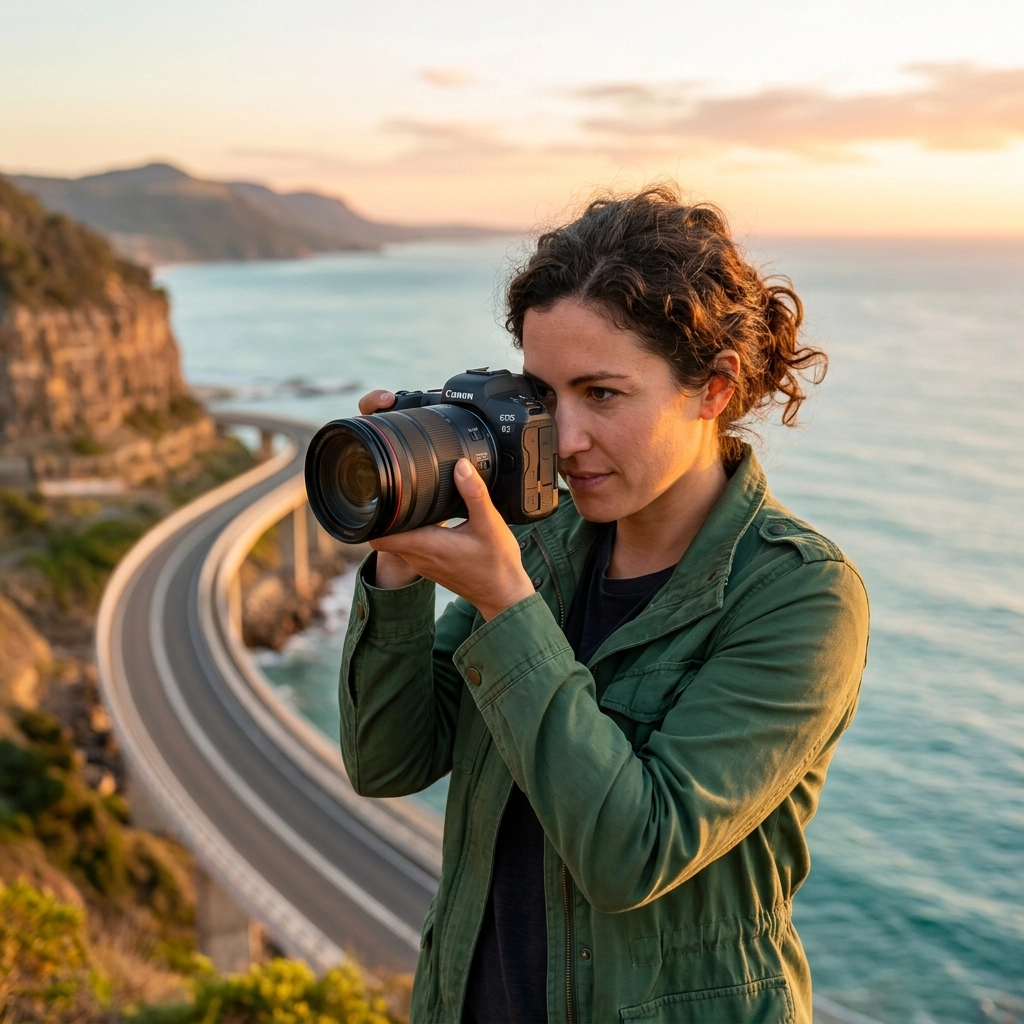
Alt Text: A close-up shot of a photographer adjusting the dials on a modern mirrorless camera during a golden hour street session.
Mastering the Basics: How to Use Manual Mode Camera
If there is one milestone that separates a "person with a camera" from a "photographer," it’s learning how to use manual mode camera.
Auto mode is like a self-driving car. It’ll get you from A to B, but it won’t take the scenic route, and it certainly won’t let you drift around corners. Manual mode gives you the keys. It allows you to tell the camera exactly what you want the final image to look like.
To master manual mode, you have to master the Exposure Triangle: Aperture, Shutter Speed, and ISO.
1. Aperture (The F-Stop)
Think of aperture as the pupil of your eye. It’s the opening in the lens that lets light in.
- Low F-numbers (like f/1.8 or f/2.8): Wide opening. Lots of light. This creates that beautiful "bokeh" or blurry background we all love. It’s perfect for portraits or low-light situations.
- High F-numbers (like f/11 or f/16): Narrow opening. Less light. This keeps everything from the foreground to the background in sharp focus. This is the go-to for landscape photography.
If you’re using specific gear like the Fujifilm X100VI for landscape photography, understanding how to balance your aperture is the difference between a flat photo and a masterpiece.
2. Shutter Speed
This is how long the "curtain" stays open to let light hit the sensor.
- Fast Shutter Speed (1/1000s and up): Freezes motion. Perfect for sports, birds, or kids who won’t sit still.
- Slow Shutter Speed (1/30s or several seconds): Blurs motion. This is how you get those silky smooth waterfalls or light trails from cars at night.
3. ISO
ISO is your camera's sensitivity to light.
- Low ISO (100-400): Use this in bright daylight. It produces the cleanest, highest-quality images.
- High ISO (3200+): Use this when it’s dark. It helps you see in the shadows, but it adds "noise" or grain to your photo.
The secret to how to use manual mode camera effectively isn't just knowing what these do, it’s knowing how to trade one for the other. If you want a fast shutter speed to freeze a soccer player, you might need to open your aperture wider or bump up your ISO to make up for the lost light.

Alt Text: An educational infographic showing the exposure triangle: Aperture, Shutter Speed, and ISO settings for different lighting conditions.
Choosing the Right Gear for 2026
You don't need the most expensive gear to take great photos, but let’s be honest: having the right tool for the job makes life a lot easier. The industry is moving fast. If you’re still rocking a heavy DSLR, you might want to look at The Ultimate Guide to 2026 Mirrorless Cameras.
Mirrorless systems have changed the game with real-time exposure previews and eye-autofocus that feels like cheating. For example, if you are into street photography, looking at Nikon Z8 settings for street photography can give you a massive head start.
Keep an eye on the latest trends, too. The way we buy gear is shifting, and staying informed is part of the job. You can read more about why the latest photography news changes everything to ensure you aren't wasting money on outdated tech.
Beyond the Settings: Composition and Vision
Once you stop fighting your camera settings, you can start focusing on what actually matters: the story. A perfectly exposed boring photo is still a boring photo.
Our photography tutorials at Shut Your Aperture emphasize "The Eye" over "The Gear." Here are a few composition tips to get you started:
- The Rule of Thirds: Imagine a tic-tac-toe grid over your frame. Place your subject on the intersections rather than dead center. It creates tension and interest.
- Leading Lines: Use roads, fences, or even shadows to lead the viewer's eye toward your subject.
- Negative Space: Don't be afraid of "emptiness." Sometimes what you leave out is more important than what you put in.
- Perspective: Stop shooting everything from eye level. Get low. Climb something. Change the way the world looks.
For more deep dives into professional composition, I always recommend checking out PhotoGuides.org. They have some of the most consistent and detailed breakdowns of classical composition applied to modern digital photography.

Alt Text: A wide landscape photograph of a winding road in the mountains using leading lines to guide the viewer toward a peak.
Lighting: The Photographer's True Language
Photography literally means "writing with light." If you don't understand light, you're just guessing. In our daily school, we cover everything from the "Golden Hour" to complex studio lighting setups.
- Natural Light: It’s free, but it’s temperamental. Learning to find "open shade" or how to use a window as a giant softbox is a fundamental skill.
- Artificial Light: Don't be scared of flash. Using a speedlight or an off-camera strobe allows you to create your own sun. This is where you gain total control over your environment.
If you’re looking for inspiration on how to use light in fine art contexts, Edin’s personal work at www.edinfineart.com is a masterclass in mood and atmosphere. Seeing how a pro handles light will change how you look at a simple lamp in your living room.
Post-Processing: Developing Your Digital Negative
Taking the photo is only 50% of the process. The other 50% happens in the digital darkroom. Some people think editing is "cheating," but even the greats like Ansel Adams spent hours dodging and burning in the darkroom.
In 2026, AI has made editing faster and more creative than ever. We are huge fans of Luminar for its intuitive, AI-driven tools that can enhance a sky or retouch a portrait in seconds without looking "fake." It allows you to spend less time behind a computer and more time behind the lens.
In our photography tutorials, we teach you how to maintain a natural look while making your images "pop." We focus on:
- White Balance: Getting those colors true to life.
- Contrast and Tone: Making sure your blacks are deep and your highlights aren't blown out.
- Color Grading: Creating a "look" or a "vibe" that makes your work recognizable.
Staying Inspired and Consistent
The biggest reason people quit photography isn't that they aren't "talented." It’s that they lose momentum. Learning is a marathon, not a sprint.
That’s why Shut Your Aperture isn’t just a blog, it’s a daily online school. We provide constant updates, challenges, and new techniques to keep you shooting. You can also follow blog.edinchavez.com for more behind-the-scenes looks at what it’s like to be a working professional in this industry.
For those looking to take their business to the next level or streamline their professional workflow, checking out resources like proshoot.io can help bridge the gap between hobbyist and professional.
Practice Makes Perfect (No, Seriously)
You can read every tutorial on this site, but if you don't pick up your camera, nothing will change. Here is a challenge for you:
- Set your camera to Manual Mode.
- Go outside for 30 minutes.
- Take 50 photos.
- Don't look at the screen until you get home.
You’ll probably mess up 45 of them. But those 5 mistakes you made? Those are your best teachers. You’ll see exactly why a photo was too bright or why the motion was blurry. That’s how the gear becomes an extension of your arm.

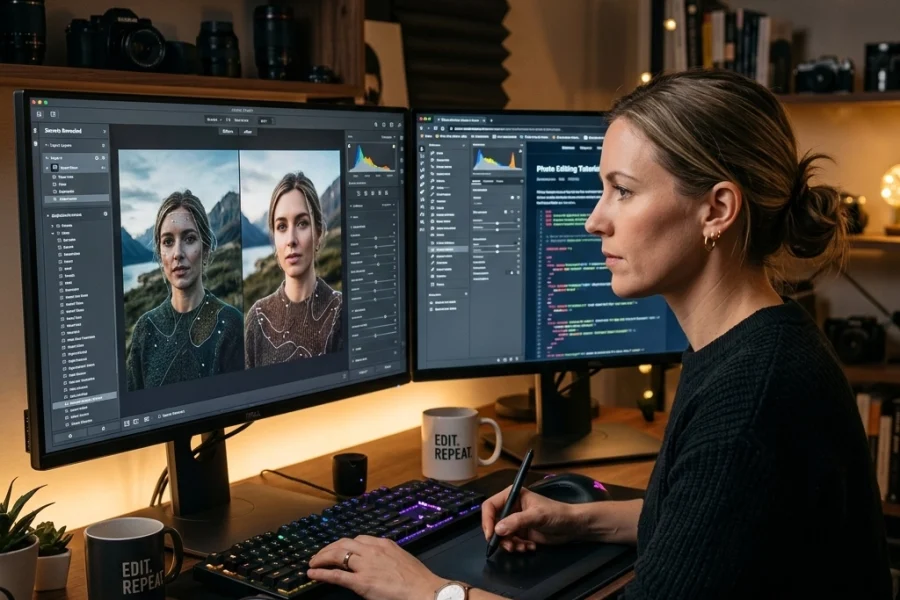
Alt Text: A photographer sitting at a desk with two monitors, editing a stunning architectural photo in a modern software interface.
How to Integrate with Our Community
We want Shut Your Aperture to be the number one photography school online, but we can't do that without you. Our community is built on feedback and shared growth.
When you dive into our photography tutorials, you aren't just reading text; you are joining a movement of creators who are tired of the "gatekeeper" mentality. We share settings, we share failures, and we celebrate wins.
Whether you are trying to figure out how to stay ahead by integrating industry news or you're wondering if prime lenses are actually dead, we’ve got the answers.
The Road Ahead
Photography is one of the few hobbies that stays with you for life. It changes the way you see the world. You start noticing the way light hits a coffee cup or the symmetry in a city alleyway. It makes life more beautiful because you are constantly looking for beauty to capture.
Don't let the technical side intimidate you. Manual mode is just a tool. The camera is just a box. You are the one who makes the art.
Ready to start your journey? Head over to https://learn.shutyouraperture.com/ and let’s get to work. We have a whole world to capture, and we’re going to help you do it one frame at a time.

Alt Text: An atmospheric shot of a diverse group of photographers on a photo walk in a vibrant city, sharing tips and looking at their camera screens.
Quick Checklist for Your Next Shoot:
- Battery charged? (Check it twice).
- Memory card in the camera? (We’ve all forgotten this one).
- ISO set for the lighting?
- Manual mode engaged?
- Mindset: Are you looking for a "shot" or are you looking for a story?
Keep shooting, keep failing, and most importantly, shut your aperture and open your eyes. We'll see you in class.