

In 2026, your face is your logo. Whether you like it or not, people are judging your professional capabilities based on a tiny circular thumbnail on LinkedIn before they even read your name. If your current profile picture is a cropped shot from your cousin’s wedding or a blurry selfie taken in your car, we need to talk.
Welcome to the world of professional corporate headshots. It’s more than just a photo; it’s a strategic asset. At Shut Your Aperture, we’ve seen how a high-quality portrait can open doors, and we’ve also seen how a bad one can slam them shut. This guide is designed to take you from "camera-shy" to "corner-office ready" with the best professional corporate headshot tips in the industry.
Why a Professional Headshot Actually Matters
We live in a digital-first economy. Your "digital handshake" happens long before you meet a client or an employer in person. A study by LinkedIn showed that profiles with professional photos get up to 21 times more views and 9 times more connection requests.
But it’s not just about being seen; it’s about being trusted. A professional corporate headshot conveys authority, approachability, and attention to detail. If you can’t be bothered to invest in a quality photo of yourself, why should a client trust you with their million-dollar project?
If you're looking to see how the pros do it, check out the portfolio over at Perfect Corporate Headshots, where the focus is strictly on making you look like the best version of yourself.
How to Prepare for a Headshot Session
Success in photography happens 80% before the shutter clicks. If you show up unprepared, it shows in the final product. Here is how to prepare for a headshot session like a seasoned executive.
1. The Night Before
Get some sleep. Seriously. No amount of editing in Luminar can fully hide the "I stayed up till 3 AM binge-watching Netflix" eyes. Hydrate well to keep your skin looking plump and healthy. Avoid heavy salt or alcohol the night before, as these can lead to puffiness.
2. Skin and Hair
Don't try a brand-new haircut the morning of your shoot. Get your hair cut or colored about a week in advance so it has time to "settle." For men, if you’re going for the clean-shaven look, shave a few hours before the shoot to avoid that "just-scraped" redness. For women, keep makeup natural. The goal is to look like you on your best day, not like you're heading to a gala.
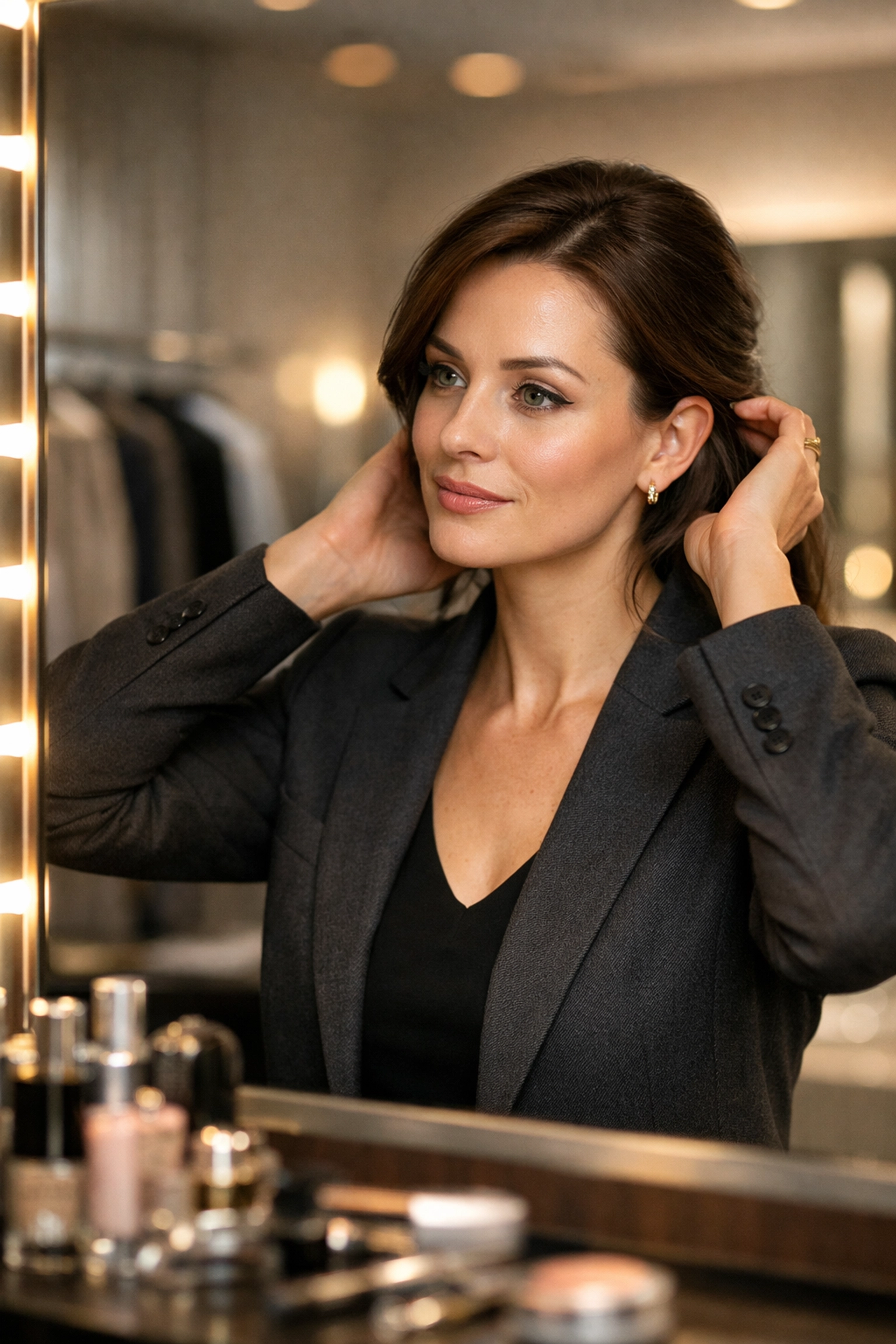
Alt Text: A professional woman preparing for her corporate headshot by checking her hair and simple makeup in a mirror.
What to Wear: The Executive Wardrobe
"What do I wear?" is the most common question we get. The rule of thumb is simple: dress for the job you want, or the job you have on its most important day.
Solid Colors are Your Best Friend
Avoid busy patterns, pinstripes, or loud checks. These can create a "moiré effect" (a weird wavy pattern) on digital screens. Stick to solid mid-tones. Navy blue, charcoal gray, and deep greens are universally flattering. Avoid stark white as your primary color unless it's under a blazer, as it can wash you out under studio lights.
Texture and Layers
Layers add depth. A well-fitted blazer or a textured cardigan can make a photo feel more "expensive." If you’re a photographer trying to capture these details, you might want to brush up on your gear; check out our guide on how to choose the best mirrorless cameras to ensure you're capturing every fiber of that wool suit.
Fit is Everything
If your clothes are too big, you’ll look sloppy. If they’re too tight, you’ll look uncomfortable. Make sure everything is pressed and lint-free. If you're unsure about an outfit, bring three options to the studio and let the photographer help you choose. You can also find great inspiration on PhotoGuides.org for classic professional styles.
Best Lighting for Executive Portraits
Lighting can make a 25-year-old look 40 or a 50-year-old look 35. When we talk about the best lighting for executive portraits, we’re looking for "soft" and "directional."
The Three-Point Setup
Most professional studios use a variation of the three-point lighting setup:
- Key Light: The main source that illuminates your face.
- Fill Light: A softer light that fills in the shadows created by the key light.
- Backlight (Hair Light): A light placed behind you to create a subtle glow around your shoulders and hair, separating you from the background.
If you’re attempting a DIY headshot, find a large window with indirect sunlight. Direct sun is too harsh and creates "raccoon eyes" (deep shadows under the eyes). For those wanting to master the technical side of lighting, understanding manual mode 101 is a must.
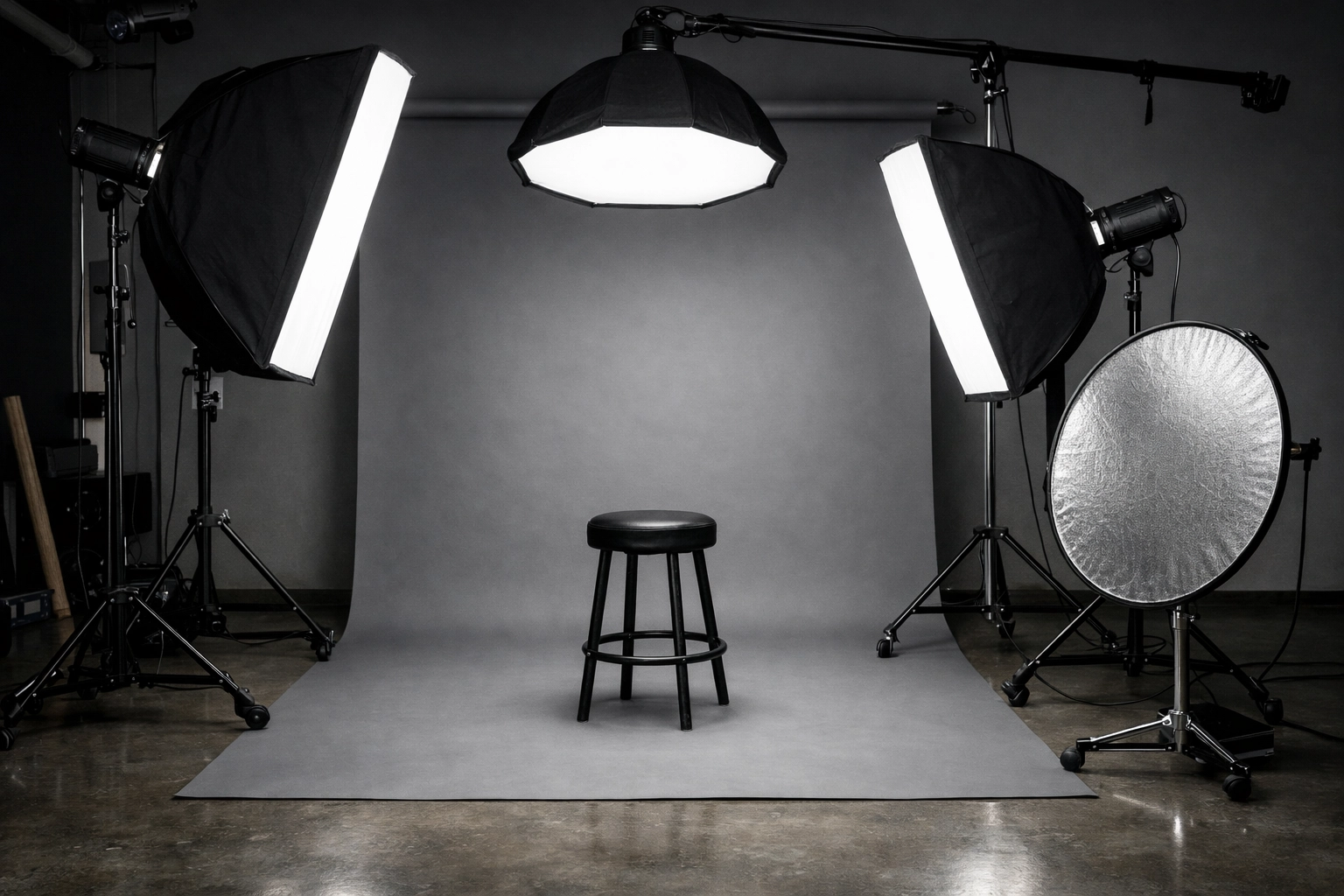
Alt Text: A studio setup showing the best lighting for executive portraits with softboxes and a neutral background.
Posing Like a Pro: Don't Be a Statue
The biggest fear people have is looking stiff. Here are a few professional corporate headshot tips for posing that work every time:
- The Turtle: Lean your head slightly forward and down toward the camera. It feels weird, but it defines your jawline and eliminates the "double chin" effect.
- Angle the Body: Don't stand flat toward the camera. Turn your shoulders about 30 to 45 degrees away and then turn your head back toward the lens. This creates a slimmer, more dynamic profile.
- The Weight Shift: Put your weight on your back foot. This naturally relaxes your posture.
- The "Smize": Use your eyes to smile, not just your mouth. Think of something that actually makes you happy right before the shutter clicks.
For more advanced posing techniques, Edin’s personal blog at blog.edinchavez.com has some great insights into working with subjects to get authentic expressions.
Choosing the Right Background
Should you go for the classic "corporate gray," a modern white, or an environmental "office" shot?
- Classic White/Gray: These are the gold standard for LinkedIn and company websites. They are clean, non-distracting, and make it easy to crop the photo for various uses.
- Environmental (Outdoor or Office): These work great for entrepreneurs or creatives. They tell a story about where you work. However, make sure the background is blurred (bokeh) so the focus remains on you.
- Color Pop: Some modern brands are using bold colored backgrounds to stand out. Only do this if it aligns with your company’s branding.
If you need a professional environment but don't have an office, booking a session at www.edinstudios.com can provide that high-end look you’re after.
Post-Processing: The Finishing Touches
Every professional headshot undergoes some level of retouching. The goal isn't to turn you into a plastic version of yourself; it’s to remove temporary distractions.
A professional editor will:
- Remove stray hairs that are catching the light.
- Tame temporary blemishes or skin redness.
- Brighten the eyes and subtly whiten teeth.
- Adjust the color balance and exposure.
Software like Luminar uses AI to make these adjustments naturally, ensuring you still look like you, just on your best hair day ever. If you're doing your own editing, don't go overboard. If people don't recognize you when you walk into the room, your headshot has failed.
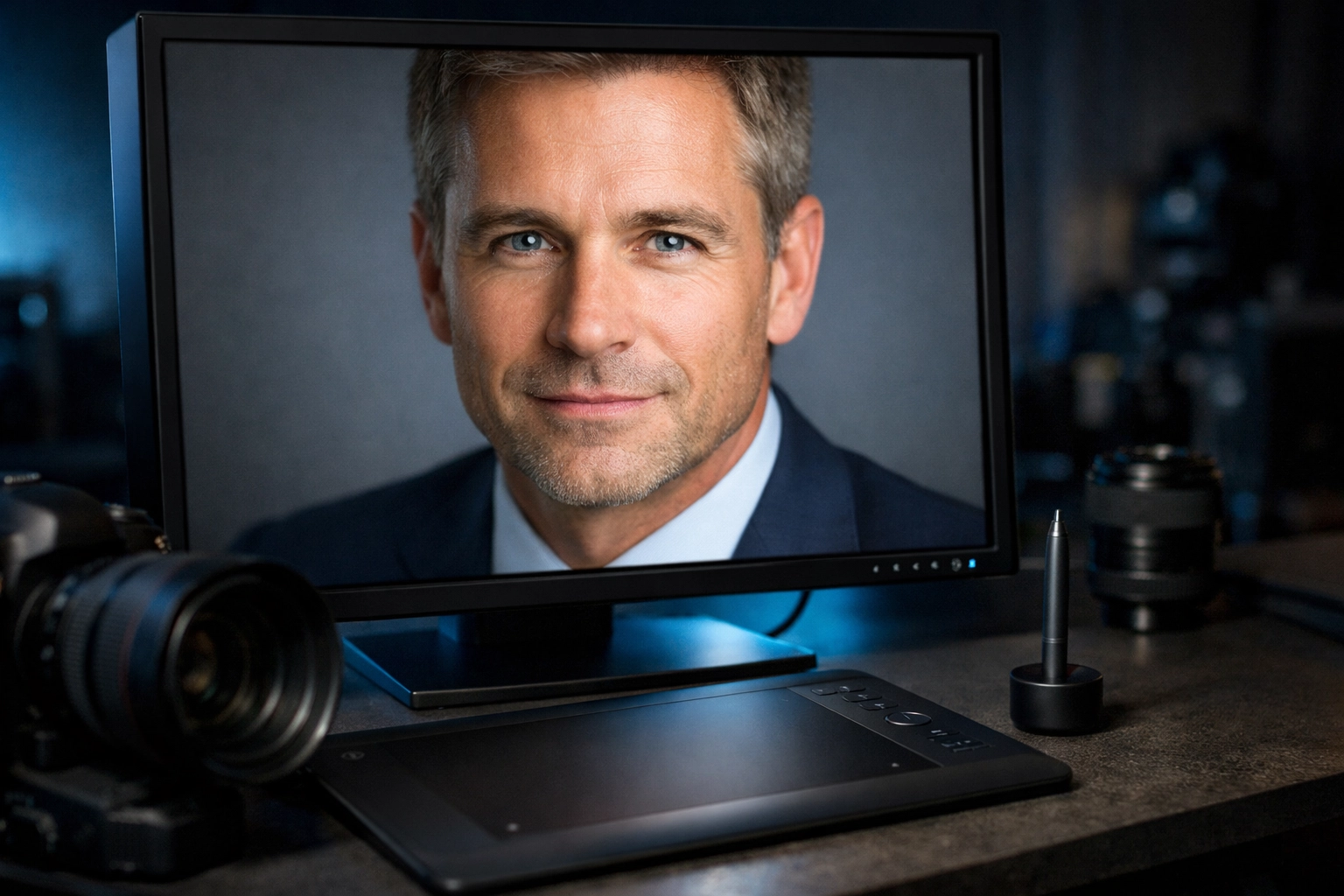
Alt Text: A side-by-side comparison of a raw headshot vs. a professionally edited corporate portrait showing subtle improvements.
DIY vs. Professional: Is it Worth the Investment?
Can you take a headshot with an iPhone 15 or 16? Technically, yes. The cameras are incredible now. However, a camera is just a tool. A professional photographer understands focal length (which prevents your nose from looking bigger than it is), lighting, and: most importantly: how to coach you into a natural pose.
If you are a high-level executive or someone looking to break into the C-suite, the ROI on a $300-$700 professional session is massive. It’s the difference between looking like a "hobbyist" and a "specialist." For high-end commercial work, www.proshoot.io is a great resource to see what top-tier production looks like.
For those determined to do it themselves, make sure your equipment is in top shape. Check our camera maintenance guide before you start. Dust on the sensor is the last thing you want to deal with in post-production.
The Psychological Impact of Your Headshot
There is a concept in psychology called the "Halo Effect." It’s a cognitive bias where our overall impression of a person influences how we feel and think about their character. If your headshot looks professional, people will subconsciously assume you are competent, organized, and successful.
On the flip side, a poor headshot can create a negative "halo." If the photo is dark and moody, you might come across as unapproachable. If it’s too casual, you might seem like you don't take your work seriously.
When you look at the work on www.edinfineart.com, you can see how light and composition are used to evoke specific emotions. The same principles apply to your face.
Technical Specs for Your Digital Assets
Once you have your perfect shot, you need to save it correctly.
- LinkedIn: 400 x 400 pixels is the minimum, but upload a higher resolution (like 1080 x 1080) so it stays sharp on Retina displays.
- Website Bios: Usually require a vertical 2:3 or 4:5 aspect ratio.
- File Format: Use PNG for the highest quality or a high-quality JPEG for faster loading times.
Always keep a "master" high-resolution file and create smaller "web-ready" versions as needed. If you're managing a lot of these assets, you might find our sitemap index helpful for seeing how we organize our own massive library of photography content.

Alt Text: An executive man smiling confidently in a high-quality professional corporate headshot with a blurred office background.
Conclusion: Take the Leap
Your professional corporate headshot is an investment in your future. It’s one of the few things in your marketing toolkit that works for you 24/7. Whether someone is looking at your LinkedIn profile at 2 AM or checking your company "About Us" page before a big pitch, your headshot is there, telling your story.
Don't settle for "good enough." Use these professional corporate headshot tips to prepare, find a photographer who understands the best lighting for executive portraits, and walk into your next session with confidence.
If you're interested in more photography tips, from videography to gear reviews, stay tuned to Shut Your Aperture. We’re here to help you master the art of the image, one click at a time. Whether you're learning about videography or just trying to figure out your first camera, we've got you covered.
Remember, the best time to update your headshot was yesterday. The second best time is today. Go get 'em!
Categories: News, PHOTO SERIES, TUTORIALS, TRAVEL
Tags: News, PHOTO SERIES, TUTORIALS, TRAVEL




