Let’s be honest: landscape photography looks a lot easier than it actually is. You see a stunning sunset, you point your camera, you click, and… it looks like a blurry, dark mess that resembles a potato more than a masterpiece. We’ve all been there.
The gap between what your eyes see and what your camera captures is wide, but it’s not insurmountable. The secret isn't necessarily a $10,000 lens or a plane ticket to Iceland, though those don't hurt. The real secret is consistency. Specifically, consuming photography tutorials daily.
At Shut Your Aperture, we believe that becoming a pro isn't about one "aha!" moment; it's about a thousand tiny ones. By engaging with daily learning, you’re not just memorizing buttons; you’re training your brain to see the world differently. Here is why making daily tutorials a part of your routine will completely overhaul your landscape game.
The Power of the Daily Grind
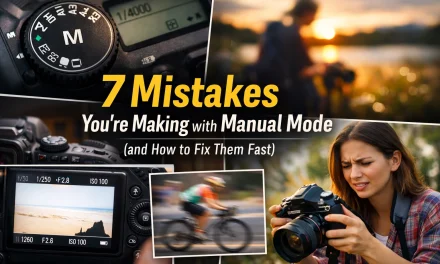
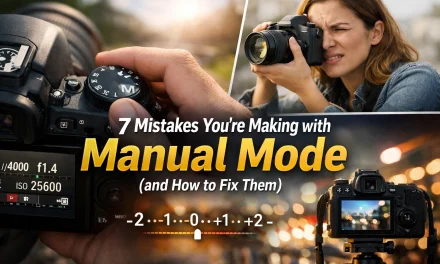
Most people pick up their camera once a month, head to a local park, and get frustrated when they can’t remember how to use manual mode camera settings. Photography is a muscle. If you don't flex it, it atrophies.
When you commit to daily photography tutorials, you’re engaging in "micro-learning." Even if you only spend 10 minutes a day watching a video on focus stacking or reading a blog post about the exposure triangle, you’re keeping those concepts fresh. Research shows that a daily photo habit progressively improves your skills by developing your personal style and improving your eye for composition. You start seeing potential shots everywhere, in the way the light hits your coffee mug or the symmetry of a city street.
By the time you actually get out into the wilderness, your camera feels like an extension of your arm rather than a confusing piece of heavy plastic. You won't be fumbling with menus while the light is disappearing; you'll be shooting.

Mastering the Technical: How to Use Manual Mode Camera
If you’re still shooting on "Auto" (the green square of shame), you’re letting a computer make the creative decisions for you. Landscapes demand control. You need to decide how much of the scene is in focus and how the water should look, silky or frozen.
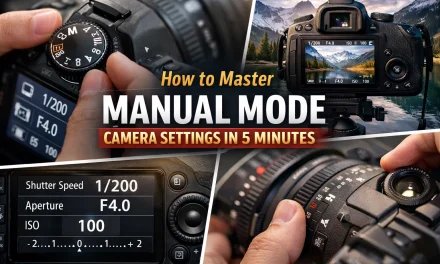
Learning how to use manual mode camera settings is the first major hurdle for every beginner. Daily tutorials break this down into digestible bites:
- Aperture: This controls your depth of field. For landscapes, you usually want a high f-stop (like f/11 or f/16) to keep everything from the foreground flowers to the distant mountains sharp.
- Shutter Speed: Want that misty waterfall look? You need a slow shutter speed. Want to freeze a bird in mid-air? You need a fast one.
- ISO: Keep this as low as possible (usually ISO 100) to avoid "noise" or grain in your beautiful sky.
When you study these elements daily, they become second nature. You stop thinking about numbers and start thinking about the look of the image. For more technical deep dives, check out the resources at PhotoGuides.org or see how the pros do it at proshoot.io.
Seeing the Light (Before It Disappears)
Landscape photography is 10% hiking and 90% waiting for light. But you have to know what kind of light you’re waiting for. Daily tutorials teach you to recognize the nuances of the "Golden Hour" and the "Blue Hour."
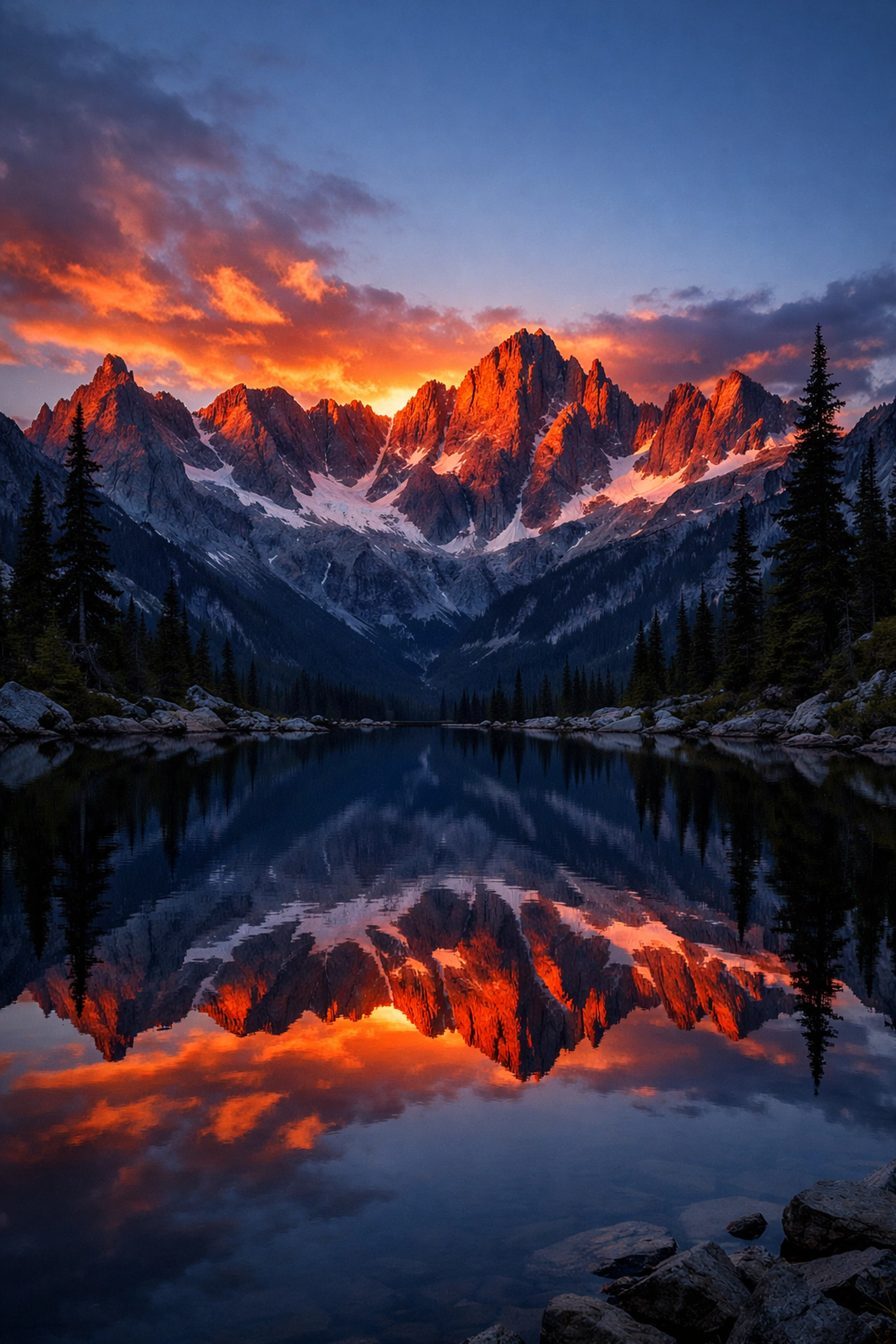
SEO Alt Text: A breathtaking landscape photo of a mountain range during the golden hour, showing soft light hitting the peaks and long shadows in the valley.
But what happens when the light is "bad"? Beginners stay home. Pros know how to use harsh midday sun to create high-contrast black and white images. If you’ve spent time reading our ultimate guide to black and white wedding photography, you’ll know that light quality matters more than light quantity. Daily tutorials show you how to adapt to any weather condition, from fog to storms, turning "bad" days into unique portfolio pieces.
Composition: Beyond the Rule of Thirds
A lot of people think composition is just putting the horizon line on the top third of the frame. While that’s a start, it’s only the beginning. Daily learning introduces you to advanced concepts like:
- Leading Lines: Using a path or a river to pull the viewer's eye into the frame.
- Foreground Interest: Placing a rock or a flower close to the lens to create a sense of scale.
- Framing: Using trees or arches to "frame" your main subject.
We’ve covered these in detail in our post on essential photography composition tips. When you study these techniques every day, you begin to see "lines" and "frames" in nature without even trying. You move from "taking" a photo to "constructing" an image.

The Post-Processing Revolution
Let’s talk about the elephant in the room: editing. In the film days, the magic happened in the darkroom. Today, it happens on your computer. If you aren't editing your landscapes, you’re only finishing half the job.
The camera sensor captures a lot of data, but it often looks flat straight out of the box. Daily photography tutorials on editing can teach you how to bring back the colors you actually saw. Whether you are mastering Lightroom or looking for more intuitive tools, the right software makes a world of difference.
We highly recommend using Luminar for landscape photographers. Its AI-powered tools, like "Sky Replacement" and "Accent AI," can turn a dull gray sky into a dramatic sunset in seconds. Learning these tools daily ensures you aren't overwhelmed by sliders and buttons when you have a memory card full of potential hits. For even more inspiration, head over to blog.edinchavez.com to see how post-processing transforms raw files into art.
Gear: It Matters, But Not Why You Think
You don't need the most expensive gear to be a great landscape photographer, but you do need to know how to use what you have. Daily tutorials often focus on maximizing entry-level gear.
For instance, did you know you can take incredible landscapes with a mobile phone? Our guide on mastering mobile photo tricks proves that the best camera is the one you have with you. However, as you grow, you'll want to learn about tripods, ND filters (which are like sunglasses for your lens), and wide-angle lenses.
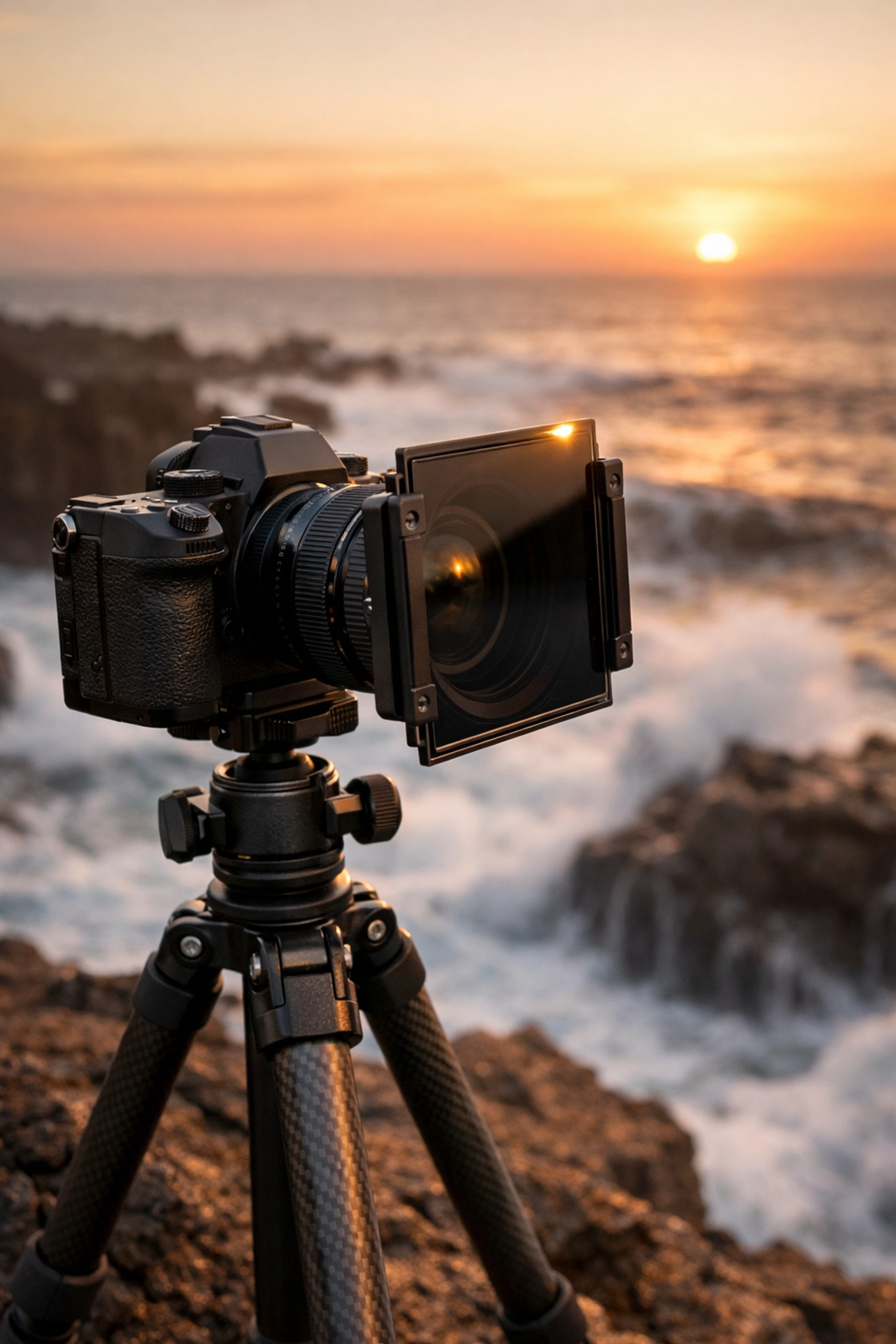
SEO Alt Text: A professional landscape photography setup featuring a camera on a sturdy tripod with a square filter system attached to the lens, overlooking a coastal sunset.
Learning about gear daily helps you make smart investments. Instead of buying everything at once, you’ll learn that a sturdy tripod is often more important than a new camera body. You can find gear reviews and recommendations over at edinstudios.com.
Why Shut Your Aperture is Your New Home
There are a million places to learn photography, but most of them are either too technical (boring!) or too shallow (useless). Shut Your Aperture is designed to be the number one photography school online by keeping things simple, casual, and effective.
We don’t just want you to know what a "f-stop" is; we want you to know how to use it to make people say "Wow!" when they see your work. Our tutorials cover everything from mastering the beautiful bokeh effect to unleashing creativity through framing.
Landscape photography is a journey of a thousand miles, and it starts with a single tutorial. By making learning a daily habit, you’re investing in your vision. You’re training your brain to see beauty in the mundane and your hands to master the complex machinery of your camera.
Training Your Eye to See What Others Miss
Beyond the settings and the gear, the most significant change you’ll notice from daily tutorials is your "vision." Most people walk past a beautiful patch of moss or a unique cloud formation without a second thought. As a photographer, those are your subjects.
When you immerse yourself in the world of photography daily, you begin to understand the "why" behind great images. You start to analyze the work of others: not to copy them, but to understand their logic. Why did they choose that angle? Why is the foreground blurred? Why does the light look so soft?
This analytical way of thinking is what separates a hobbyist from a professional. If you want to see how this vision applies to other niches, check out our piece on emotive portraits in travel photography. The principles of light and emotion are universal, whether you're shooting a mountain or a face.
Final Thoughts on the Daily Tutorial Habit
The world is a beautiful place, and as a landscape photographer, it’s your job to prove it. Don’t let a lack of knowledge stand in your way. Whether you're learning how to use manual mode camera or diving deep into AI-powered editing with Luminar, every bit of daily effort counts.
Check out our post-sitemap for a massive list of topics to get your daily learning habit started. From destination wedding photography to sports photography tips, we have something for every interest.
Shut Your Aperture is here to guide you. Now, get out there, find your light, and remember: the best time to learn was yesterday. The second best time is right now. Go grab your camera and let's get to work!