Let’s be real for a second: the world of photography moves fast. One day you’re figuring out how to turn your camera on, and the next, everyone is talking about AI-driven editing and mirrorless autofocus that can track a hummingbird’s eye from fifty yards away. It’s a lot to keep up with.
That’s exactly why photography tutorials have shifted from being a "once-in-a-while" activity to a daily ritual for serious creators. At Shut Your Aperture, we’ve seen a massive surge in photographers who are ditching the traditional, slow-paced classroom model for a more dynamic, daily learning habit. Why? Because photography is a muscle. If you don’t flex it every day, it gets weak.
Whether you’re a hobbyist or looking to turn pro, staying consistent with your education is the single best way to ensure your work doesn't just sit in a folder on your hard drive, but actually gets noticed.
The Shift Toward Daily Learning
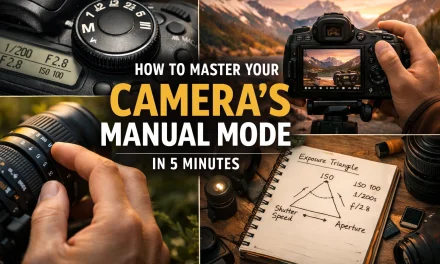
In the past, you might have bought a 400-page manual or signed up for a weekend workshop. While those have their place, the modern photographer thrives on micro-learning. Taking just 15 to 20 minutes a day to dive into a specific topic: like how to master your camera's manual mode in 5 minutes: creates a compound effect that leads to massive growth.
Research shows that consistent practice is the most effective way to improve. You don't need to spend eight hours a day shooting. Even a short walk during your lunch break to practice one specific skill can deliver meaningful progress. This "daily tutorial" mindset keeps your creative juices flowing and ensures you're always ready when that perfect shot presents itself.
Mastering the Basics: How to Use Manual Mode Camera
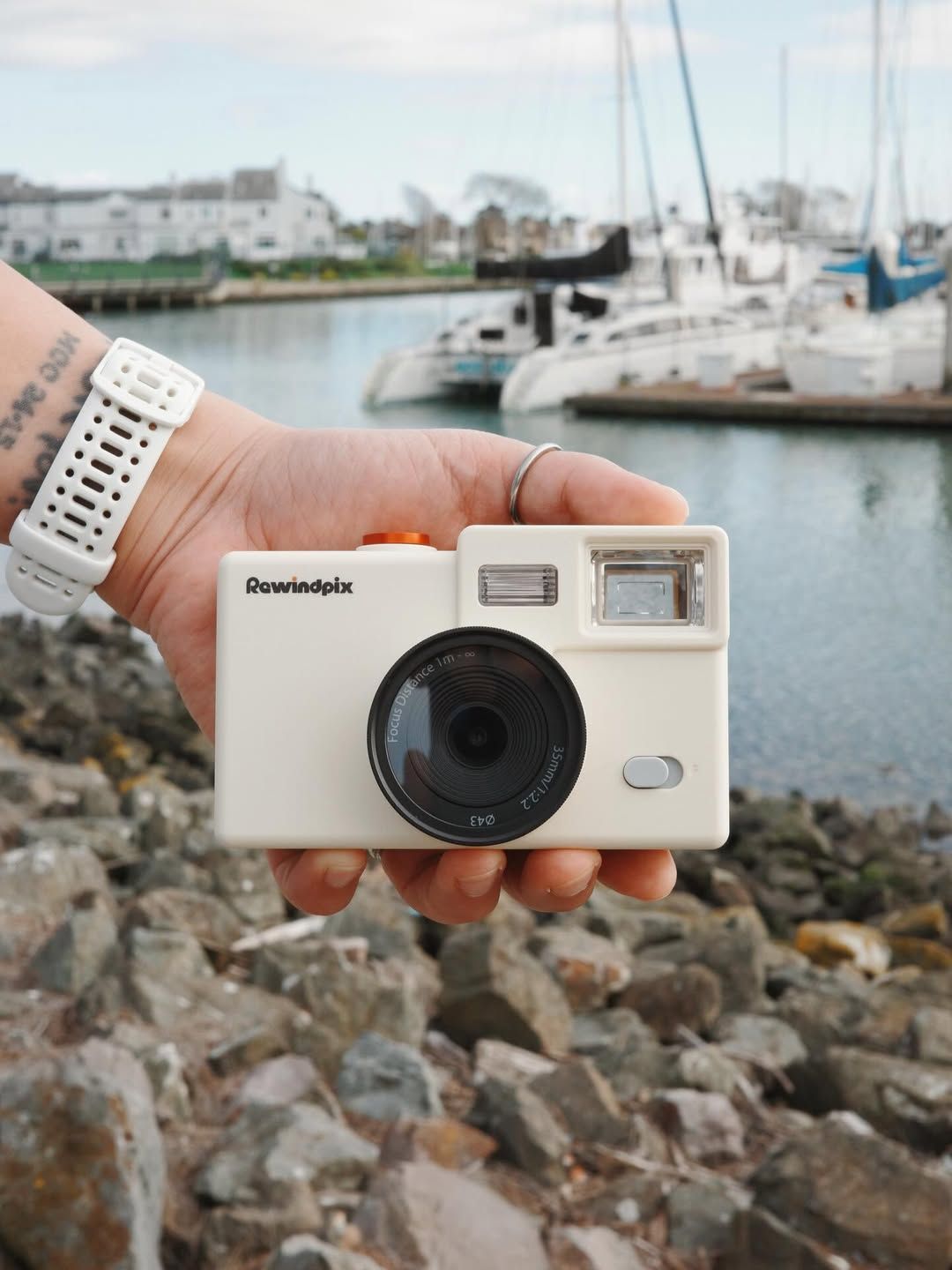
If you want to move from "taking pictures" to "making art," you have to get out of the green 'Auto' box. This is where most beginners get stuck, and it’s a primary focus of our photography tutorials. Learning how to use manual mode camera settings is like learning to drive a stick shift: it gives you total control over the vehicle.
The Exposure Triangle
When you go manual, you’re juggling three main balls: Aperture, Shutter Speed, and ISO.
- Aperture (The F-Stop): This controls how much light enters the lens and, more importantly, your depth of field. Want that blurry background (bokeh) for a portrait? Go for a low number like f/1.8.
- Shutter Speed: This is how long your sensor is exposed to light. Fast speeds freeze action; slow speeds create that silky water effect in landscapes.
- ISO: This is your camera’s sensitivity to light. Lower is cleaner; higher lets you shoot in the dark but adds "noise" or grain.
Once you master these, the world opens up. You stop fighting your camera and start telling it what to do. For a deeper dive into these fundamentals, check out more Mastering Photography tips over on our main site.
Why Lighting is Your Most Important Skill
You can have a $50,000 camera, but if your lighting is trash, your photo is trash. It’s that simple. Daily tutorials often focus on lighting because it changes constantly. Understanding the role of luminosity in real estate photography is just as important as knowing how to light a model in a studio.
Luminosity isn't just about brightness; it's about the quality and direction of light. It’s what creates depth and makes an image feel three-dimensional. When you study lighting daily, you start to see it everywhere: the way it hits the buildings on your commute or how it filters through the trees.
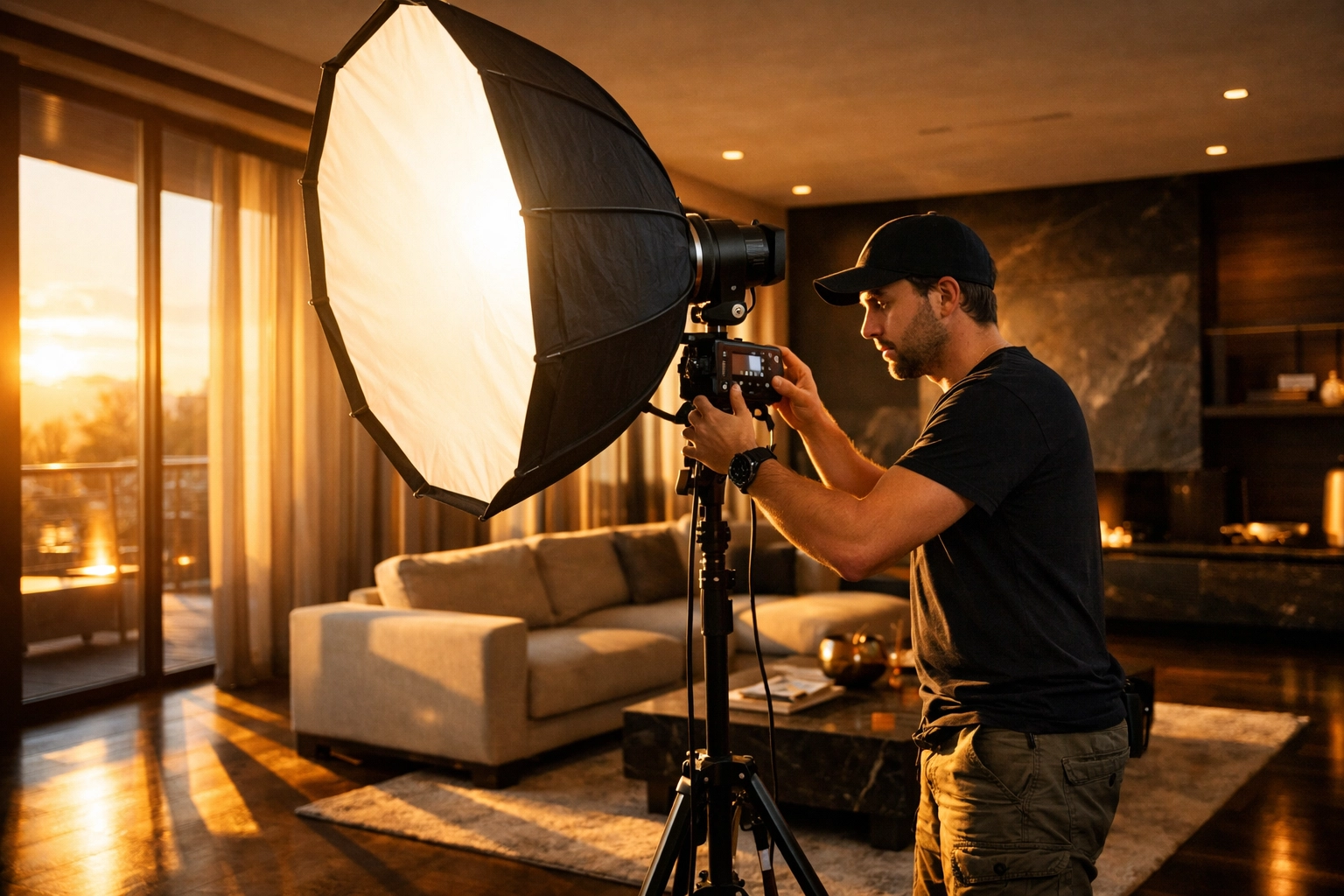
SEO Alt Text: A professional photographer setting up off-camera flash equipment to capture a dramatic architectural interior during the golden hour.
Developing a Signature Style Through Daily Inspiration
Why are people obsessed with Peter Lik? It’s not just because he sells photos for millions of dollars. It’s because he has a distinct, recognizable style. We’ve spent a lot of time analyzing his work, from his creative process to the techniques behind his landscape photography.
By engaging with photography tutorials that dissect the greats, you learn to see the "why" behind the "how." You begin to understand how shot composition's impact on buyer attraction applies to more than just real estate: it applies to how anyone views an image. You learn to manipulate vistas and perspectives to guide the viewer’s eye exactly where you want it to go.
The Role of Post-Processing
A RAW file is like a raw steak: it’s full of potential, but you probably shouldn't serve it yet. Editing is where you bring your vision to life. This is also where a lot of photographers get overwhelmed.
If you want to speed up your workflow without sacrificing quality, we highly recommend using Luminar. It’s an incredibly powerful tool that uses AI to handle the tedious stuff, letting you focus on the creative side of things. Whether you're working on ethereal imagery for real estate listings or gritty street shots, having a solid editing routine is vital.
For pro-level editing tips and resources, proshoot.io is another fantastic place to sharpen your skills.
Specialized Niches: From Real Estate to Luxury Dining
One of the coolest things about the Shut Your Aperture community is the diversity of our interests. Photography isn't just one thing. One day you might be interested in aerial photography for real estate, and the next you might be curious about how cinematic techniques can transform property showcases.
We even dive into the lifestyle side of things, like exploring luxury dining in the world's most exclusive restaurants, because being a well-rounded photographer means having a well-rounded life. The more you see, the better you shoot.
Mental Health and the Creative Spark
Here’s something people don’t talk about enough: photography is good for your brain. Engaging with daily photography tutorials gives you a sense of purpose and a creative outlet that reduces stress. It boosts dopamine and encourages problem-solving.
When you’re out there trying to figure out how to use manual mode camera settings in a tricky lighting situation, you’re not thinking about your emails or your mortgage. You’re in the zone. That "flow state" is incredibly therapeutic.
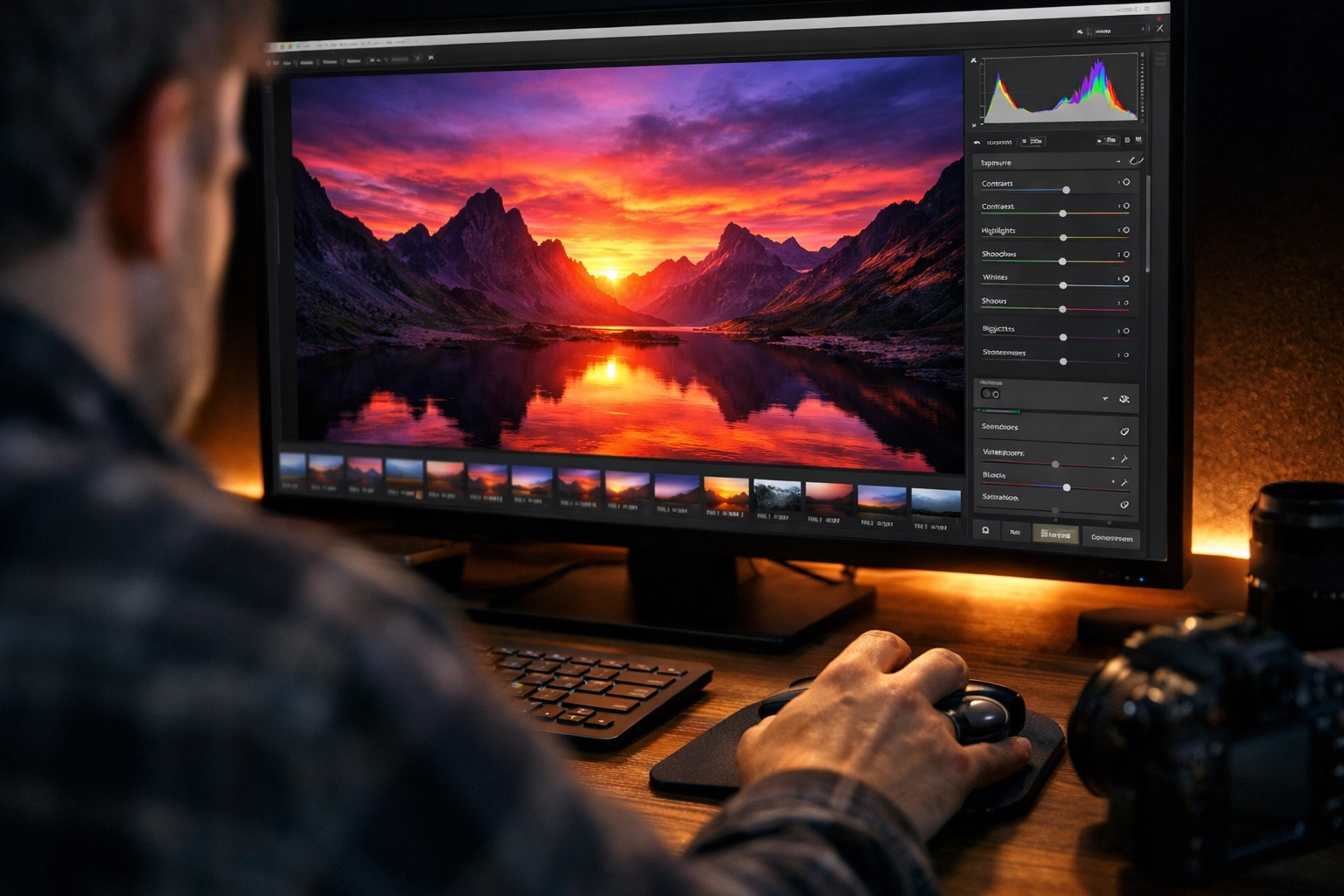
SEO Alt Text: A digital artist's workspace featuring a high-resolution monitor displaying a vibrant landscape photo being edited in professional software.
Why Shut Your Aperture is the Number One Photography School Online
There are a lot of places to learn photography, but we like to do things differently. We don’t believe in overly poetic, "lofty" explanations that leave you more confused than when you started. Our founder, Edin Chavez, built this brand on the idea that photography should be accessible, fun, and simple.
We focus on practical, real-world advice. We want to know why everyone is talking about today's photography news and how it affects you. Whether it's the latest impact of Peter Lik on photography trends or a breakdown of distinctive elements of real estate photography, we keep it grounded.
Our goal is to be the ultimate resource for photographers who actually want to get out there and shoot. We also encourage you to check out PhotoGuides.org for even more technical breakdowns and community support.
Building Your Daily Habit
So, how do you start? It’s simpler than you think.
- Set a Timer: Dedicate 15 minutes a day to a tutorial.
- Pick One Topic: Don't try to learn everything at once. Today, focus on Aperture. Tomorrow, Shutter Speed.
- Shoot Every Day: Even if it’s just your cat or your coffee mug. Use those manual settings.
- Join the Community: Follow our updates and stay in the loop with what’s happening in the industry.
If you’re looking for more inspiration, Edin’s personal work at blog.edinchavez.com and his fine art collections at edinfineart.com are great places to see these principles in action. For those looking for commercial-grade production, edinstudios.com shows what happens when you take these daily lessons and turn them into a high-end career.
Photography is a journey, not a destination. By making photography tutorials a part of your daily life, you’re ensuring that your journey is one of constant improvement and endless creativity. So, grab your camera, take it out of 'Auto,' and let’s see what you can create today. Whether you’re shooting Peter Lik's favorite locations for adventure or just your own backyard, the world is waiting for your perspective.