Let’s be real for a second: street photography is exhausting. You wake up early, grab your camera, hit the pavement, and within twenty minutes, you realize you’re taking the same photos you took last Tuesday. And the Tuesday before that. You’re looking for "the moment," but all you see are people looking at their phones and gray concrete.
We’ve all been there. It’s called the creative plateau, and it’s where most photographers hang up their straps. But the truth is, the street is always changing; your eyes are just stuck in a routine. If you want to stop taking boring snapshots and start making art, you need to change the game.
I’ve put together 25 street photography ideas that will kick your brain out of its comfort zone. Some are technical, some are conceptual, and all of them are designed to make you look at the world a little differently. Whether you’re just starting out with your first camera or you’re a seasoned pro, these will help you see the "unseen."
1. The "Single Color" Scavenger Hunt
Pick a color before you leave the house. Let’s say yellow. For the next two hours, you aren’t allowed to photograph anything that doesn’t have yellow as the dominant force. This forces your brain to stop looking for "interesting people" and start looking for visual triggers. You’ll find yourself noticing a yellow taxi, a discarded banana peel, and a woman’s raincoat all connecting in a way you would have ignored otherwise.
2. Shooting the Backs of Heads
Most beginners are terrified of people getting angry if they take their photo. So, lean into it. Photograph people from behind. It sounds weird, but it adds a layer of mystery. Where are they going? What does the back of that weathered leather jacket say about the guy wearing it? It’s a great way to practice mastering manual mode without the social anxiety of a confrontation.
3. Reflections in Unexpected Places
Forget puddles for a minute. Look at the side of a polished bus, a shop window reflecting the sky, or even the chrome bumper of a vintage car. Reflections create a layered, multi-dimensional look that makes the viewer work to understand the image. If you’re using modern gear like a Sony A7R V, you can capture incredible detail in these mirrored surfaces.
4. Silhouette Storytelling
Find a strong light source: a sunset hitting the end of a street or a bright neon sign: and expose for the highlights. This turns your subjects into pitch-black shapes. It strips away the person’s identity and leaves only their gesture. A person walking with a cane or a couple holding hands becomes a graphic icon. Check out some portrait techniques to see how light plays with form.
5. Go for Pure Forms
Forget what the object is. Look for circles, triangles, or hard diagonal lines. Maybe it’s the curve of a staircase combined with the shadow of a railing. When you stop seeing "things" and start seeing "shapes," your composition skills will skyrocket.

6. Shooting Through Glass
Whether it’s a steamed-up coffee shop window or a rainy bus window, shooting through glass adds texture. It makes the viewer feel like a voyeur, watching a world they aren’t quite part of. If you’re editing these later, tools like Luminar are great for enhancing the contrast and grit of glass textures.
7. Low Angle, High Impact
Get your camera on the ground. Seriously, put it on the pavement. Shooting from a worm’s-eye view makes pedestrians look like giants and the buildings look like they’re leaning in on the world. It’s a perspective we rarely see in real life, which is exactly why it works.
8. Night Neon
Don’t pack up when the sun goes down. In fact, that’s when the street gets interesting. Use the glow of neon signs as your key light. The colors are punchy, and the shadows are deep. If you're worried about noise, the latest AI-powered mirrorless tech handles high ISO like a dream.
9. Street Animals
Sometimes the most interesting "people" on the street aren't humans. A stray cat sitting on a dumpster or a dog waiting outside a bodega can tell a more poignant story about urban life than another photo of a guy in a suit.
10. Leading Lines in the Alley
Alleys are goldmines. The walls create natural leading lines that pull the viewer’s eye deep into the frame. Look for that one person walking at the very end of the alley to provide a sense of scale. It’s a classic technique often used in landscape photography, but it works just as well in the concrete jungle.

11. Direct Flash in Daylight
This is a bold move. Using a flash in the middle of a sunny day creates a harsh, high-contrast look that screams "art house." It’s a bit aggressive, but it freezes motion in a way that looks incredibly crisp. It’s a style popularized by legends like Bruce Gilden, and it’s worth a shot if you’re feeling brave.
12. The Street Portrait
Stop someone. Ask them if you can take their photo. It’s terrifying the first time, but it’s the fastest way to get a "hero" shot. Most people are actually flattered. If you need tips on how to handle people, checking out corporate headshot tips can actually give you some insight into posing and lighting strangers.
13. Photograph People Photographing
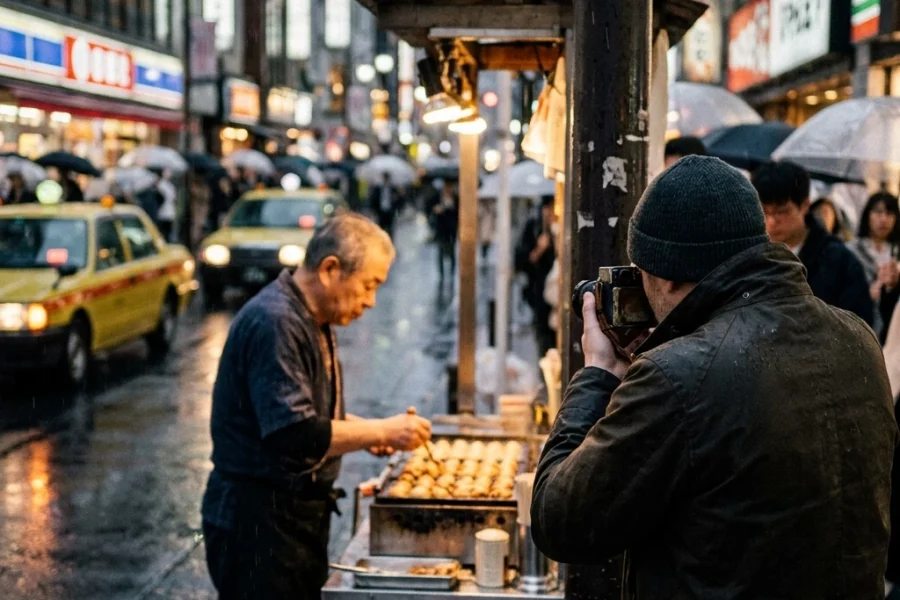
In the age of the smartphone, everyone is a photographer. Capturing someone else trying to get "the shot" is a great way to comment on modern culture. Plus, they’re usually so distracted they won't even notice you.
14. Photograph Pairs
Look for things that come in twos. Two old men on a bench, two matching trash cans, or two bikes locked together. There’s a natural symmetry in pairs that feels satisfying to the eye.
15. Single Out Hands or Feet
Sometimes the whole person is too much. Just a hand holding a cigarette or a pair of worn-out boots walking through a puddle can be more evocative than a full-body shot. It focuses the viewer's attention on a specific detail.

16. Shoot From the Hip
Don't look through the viewfinder. Just hold the camera at waist level and click. This is the ultimate "candid" technique. You’ll get a lot of junk, but you’ll also get some of the most honest, unposed shots of your life. For more technical help, check out our full camera guides.
17. Motion Blur
Slow down your shutter speed. Let the world turn into a blur while you keep the camera still. The contrast between the sharp, stationary buildings and the ghostly, blurred movement of the crowd creates a sense of the "hectic" city life. If you're struggling with this, make sure you aren't making these common manual mode mistakes.
18. The "Decisive Moment" – Reimagined
Find a great background: a cool piece of graffiti or an interesting shadow: and just wait. Don’t move. Eventually, the right person will walk into the frame. You’re not hunting; you’re fishing.
19. Vertical Panoramas
We usually think of panoramas as wide, horizontal shots. Try doing a vertical one of a narrow street with tall skyscrapers. It emphasizes the "canyon" feeling of the city.
20. Frame within a Frame
Use an archway, a doorway, or even the space between two parked cars to frame your subject. This adds depth to your image and naturally directs the eye to what’s important. It’s a trick used by the pros to make simple scenes look sophisticated.

21. High Contrast B&W
Street photography and Black & White go together like coffee and donuts. By stripping away color, you focus purely on light and shadow. Use Luminar to really crank the blacks and whites for that gritty, timeless look.
22. Focusing on Shoes
Shoes tell a story. Expensive loafers, muddy sneakers, or high heels in a subway grate: they all say something about the person's status and journey. Plus, nobody gets mad at you for taking a picture of their feet.
23. Shadows as the Subject
Sometimes the shadow is more interesting than the person casting it. Look for long shadows during the "Golden Hour." Try to frame the shot so the shadow is the main character and the person is just a secondary element at the edge of the frame.
24. Rain & Puddles
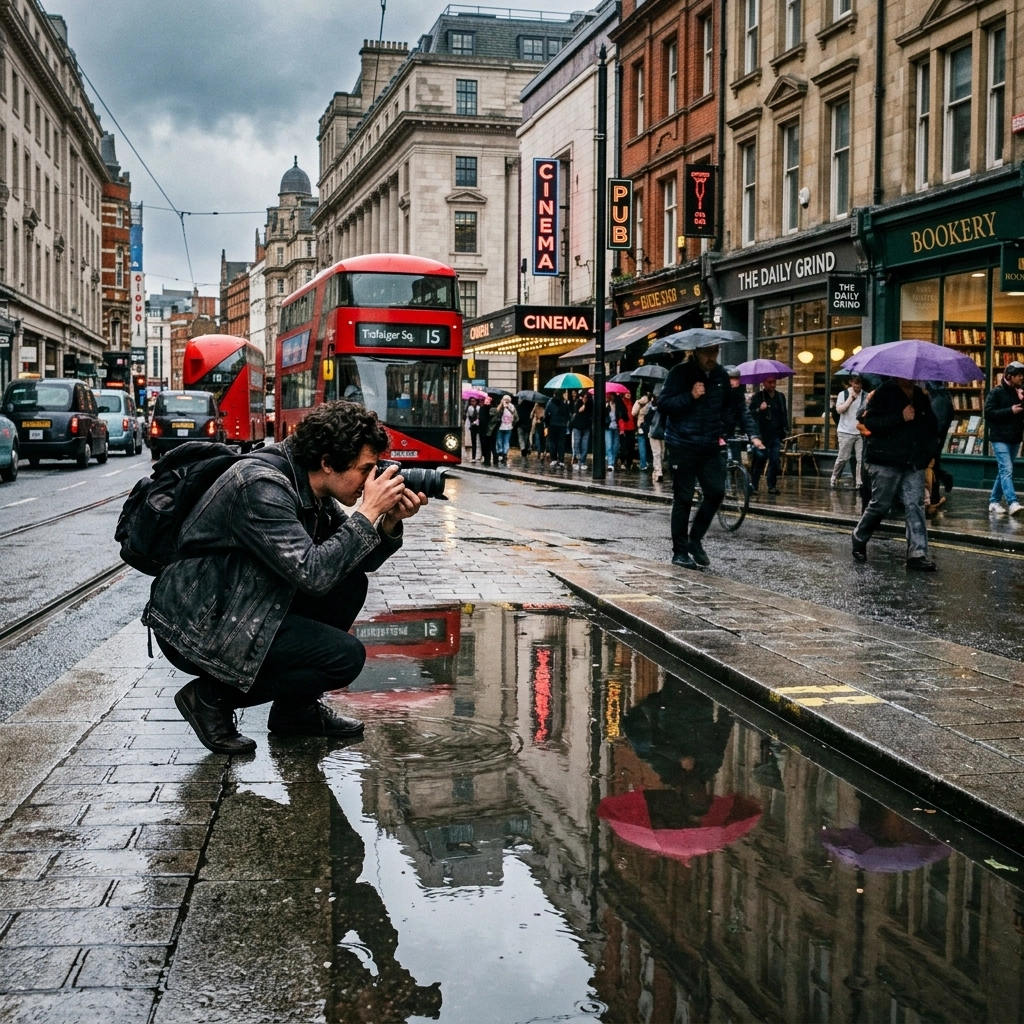
Rain is a street photographer’s best friend. It clears the crowds, creates amazing reflections, and adds a sense of drama. Don't be afraid to get your gear a little wet (though maybe check those mirrorless camera comparisons to see which ones have the best weather sealing).
25. The "Wait and See" Method
Pick one street corner and don't leave for 30 minutes. Most people walk three blocks and think they’ve seen it all. But if you sit still, you’ll start to see the patterns of the city. You’ll see the same delivery guy three times, the way the light moves across the bricks, and the small interactions that most people miss because they’re moving too fast.

Leveling Up Your Street Game
Street photography is about more than just a fancy camera. It's about patience and a little bit of guts. If you’re finding that your edits aren’t matching the vibe you felt on the street, you might be falling into some common traps. We’ve all made mistakes with AI editing or struggled to integrate AI into our workflow without it looking fake. The key is to use these tools to enhance your vision, not replace it.
If you want to dive deeper into the technical side of things, check out Shut Your Aperture or see some of Edin’s work over at blog.edinchavez.com and edinfineart.com.
The street is waiting. Grab your gear, pick one of these 25 ideas, and go see what you can find. Remember, the best shot you’ll ever take is the one you almost didn’t take because you thought it was "too simple." Don't overthink it: just shut your aperture and shoot.