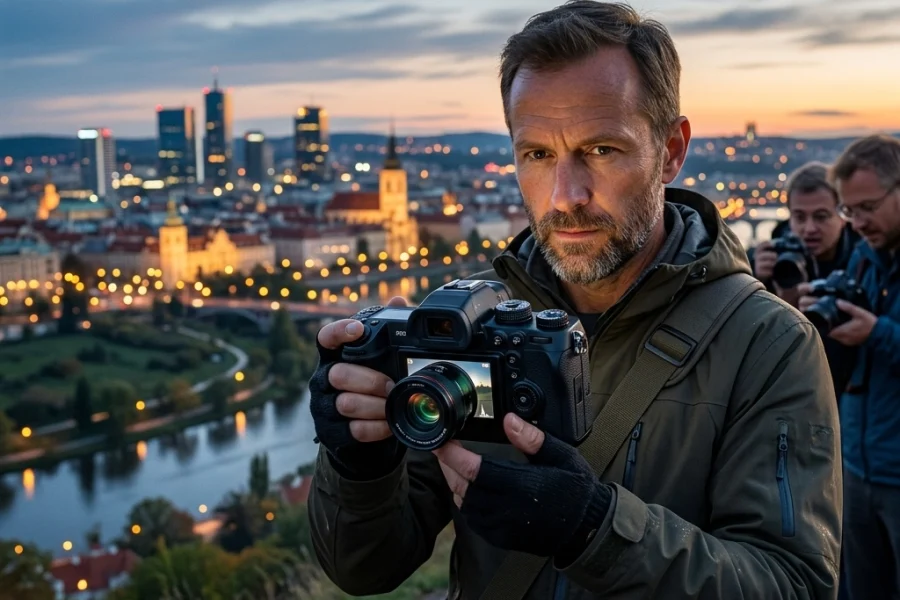

Let’s be real: street photography is intimidating. You’re out there in the wild, trying to capture "the moment" while people are rushing past, cars are honking, and you’re low-key worried someone is going to yell at you for pointing a lens their way. Most of us start by just walking around aimlessly, hoping a masterpiece falls into our laps. Spoiler alert: it rarely does.
To really master the urban jungle, you need a plan. You need to train your eyes to see what everyone else is ignoring. Whether you’re shooting with a high-end mirrorless setup or just getting started with Photography 101, these 25 creative ideas will help you break out of your comfort zone and start seeing the city in a whole new light.
1. The "Puddle Gram" (Mastering Reflections)
Rain isn't a reason to stay inside; it’s an invitation. When the clouds break, the city turns into a giant mirror. Find a deep puddle, get your camera as low as humanly possible (literally touching the water if you can), and use the reflection to create a perfectly symmetrical world. If you want to take your editing to the next level afterward, Luminar has some killer tools to enhance those reflections and make the colors pop.
2. The Bird’s Eye Perspective
Stop looking at eye level. Most street photography happens five feet off the ground, which is why so much of it looks the same. Head to a parking garage, a public balcony, or a pedestrian bridge. Looking straight down on a crosswalk turns the city into a graphic design project. People become shapes, and shadows become long, dramatic lines. This is a great way to practice the principles we talk about in our landscape photography tutorials.
3. Silhouette Hunting
Find a strong light source, like the sun setting between two skyscrapers, and expose for the highlights. When someone walks into that beam of light, they’ll become a sharp, black silhouette. It adds a layer of mystery and focuses the viewer on the person's posture and form rather than their face. If you’re struggling with the settings for this, check out our guide on how to master manual mode.
4. Urban Minimalism
The city is cluttered. Your job is to find the "nothing." Look for a single person standing against a massive, blank concrete wall, or a lone bird sitting on a power line against a clear blue sky. Minimalism is about what you leave out of the frame. It forces you to be intentional with your composition.

5. Night Owls and Neon
When the sun goes down, the vibe shifts. Instead of fearing the dark, embrace it. Crank your ISO and look for neon signs, street lamps, or even the glow of a phone screen. The high contrast between the deep shadows and the bright artificial light creates a cinematic, "Blade Runner" feel. This is where modern sensors really shine, especially if you’ve recently upgraded to AI-powered mirrorless tech.
6. Frame Within a Frame
Use the environment to box in your subject. This could be a doorway, a gap between two parked cars, or even the space between someone’s arm and their body. It creates a sense of depth and leads the viewer’s eye exactly where you want it to go. For more technical tips on how to direct the viewer’s eye, visit PhotoGuides.org.
7. Back Alleys and Hidden Paths
Forget the main tourist streets. The "soul" of a city usually hides in the back alleys where the delivery trucks park and the graffiti artists work. Look for textures, rusted pipes, peeling paint, and layers of old posters. These spots are also great for practicing natural light portraits because the narrow walls create beautiful, soft directional light.
8. Street Art & Context
Don’t just take a photo of a mural. That’s someone else’s art. Instead, wait for a person to walk by who interacts with the art in a funny or meaningful way. Maybe a businessman walks past a painting of a giant monster, or a child stands next to a set of painted wings. This adds a narrative to the shot that wouldn’t exist otherwise.
9. Looking Up (Fisheye Style)
Stand in the middle of a cluster of skyscrapers and shoot straight up. Using a wide-angle lens, or even a fisheye, creates a "tunnel" effect where the buildings seem to converge. It captures that feeling of being small in a massive urban jungle. If you're a Sony shooter, you can find similar composition tips in our Sony ZV-E10 II settings guide.
10. Motion Blur (The Ghost in the Machine)
The city is always moving, so why are all your photos frozen? Set your camera to a slightly slower shutter speed (try 1/15th or 1/30th of a second) and pan with a moving subject like a cyclist or a bus. The subject stays sharp(ish) while the background blurs into a streak of color. It conveys the frantic energy of city life perfectly.

11. Abandoned Urban Spaces
There is a strange beauty in the intersection of nature and concrete. Look for abandoned lots where weeds are growing through the cracks, or old buildings being reclaimed by ivy. It’s a bit of landscape photography mixed with street grit. These spots offer a quiet break from the hustle and bustle.
12. Rain and Umbrellas
Umbrellas are a street photographer’s best friend. They add pops of color, red, yellow, blue, to a grey, rainy day. They also provide interesting geometric shapes. Catching a crowd of people with umbrellas from a high vantage point looks like a sea of colorful mushrooms.
13. The Same Spot, Different Times
This is an exercise in patience. Pick one specific street corner and visit it at 8 AM, 2 PM, and 10 PM. You’ll be amazed at how the light changes and how the "cast of characters" shifts from commuters to tourists to late-night revelers. Documenting the rhythm of a single spot is a masterclass in observation.
14. Shooting Through Glass
Coffee shop windows, bus windows, or even glass office buildings. Shooting through glass adds layers of reflections and distortions that can make a photo feel more like a dream than a reality. It’s a great way to incorporate the secrets that experts use to add complexity to their work.
15. High Contrast (Chiaroscuro)
Look for areas of extreme light and extreme shadow. This often happens in subways or under bridges. By exposing for the bright spots, you can let the shadows fall completely to black. It creates a very dramatic, moody look that works exceptionally well for black and white photography.
16. Leading Lines in the Subway
The subway is a goldmine for leading lines. The tracks, the rows of seats, and the long hallways all lead the eye somewhere. Wait for a solitary figure at the end of a long tunnel to create a sense of isolation and scale. If you're looking to polish these skills, check out learn.shutyouraperture.com for more in-depth training.
17. Candid Eye Contact
This is the hardest one for most people. Sometimes, the subject catches you taking the photo. Instead of looking away awkwardly, embrace the eye contact. It creates a powerful connection between the subject and the viewer. Just remember to smile and be respectful; most people are cooler about it than you think.

18. Patterns and Repetition
The city is built on repetition. Rows of windows, stacks of crates, or a line of people waiting for the bus. Look for a pattern and then look for the "break" in that pattern. If everyone is walking left and one person is walking right, that’s your shot.
19. Texture and Decay
Zoom in. Street photography doesn't always have to be wide. Sometimes the story is in the texture of a rusted door handle, the grit on a subway wall, or the wrinkles on an old man's hand as he holds a newspaper. These details tell a story of time and use.
20. Color Popping (Complementary Colors)
Look for colors that clash or complement each other. A person in a bright yellow jacket standing against a deep blue wall is an instant win. Training your eyes to see color as a primary subject will completely change how you scout locations. You can even use Luminar to selectively enhance these colors during your post-processing.
21. Foreground Bokeh (Shooting Through Objects)
Put something between you and your subject, leaves, a fence, or even a glass of water. By using a wide aperture (like f/1.8 or f/2.8), the object in the foreground will blur out, creating a frame that adds depth and a "voyeuristic" feel to the shot. This is a classic portrait photography technique applied to the street.
22. Public Transit Stories
Buses and trains are microcosms of society. People are in their own worlds, reading, sleeping, or staring out the window. The lighting inside a train at night is often moody and directional. It’s one of the best places to capture raw, unposed human emotion.
23. The "Decisive Moment" 2.0
Henri Cartier-Bresson famously talked about the "decisive moment." In the modern urban jungle, this means anticipating where someone will be. Find a cool background, set your composition, and wait for the right person to walk into the frame. It’s like fishing; you have to be patient.
24. Street Portraits (The Power of Asking)
If you see someone with a fascinating look, don't just snap a sneaky photo. Go up and ask. "Hey, I'm a street photographer and I love your style. Can I take a quick portrait?" Most people are flattered. This is a great way to learn how to handle professional corporate headshots or simply get better at interacting with subjects.

25. Abstract Shadows
Sometimes the person isn't the subject at all: their shadow is. In the late afternoon, shadows stretch out and become distorted. A person walking across a plaza might cast a shadow that looks twenty feet long. Focus on the shadow and let the person be secondary. It’s a great way to play with form and shape.
Don't Overthink It
The biggest mistake you can make in street photography is getting stuck in your own head. You might be worried about making mistakes with manual mode or choosing the best mirrorless camera for 2026, but the truth is that the best camera is the one you actually use.
Street photography is a muscle. The more you do it, the more "lucky" shots you’ll find. Don't be afraid to fail, don't be afraid to look a little weird standing in the middle of a sidewalk, and most importantly, keep shooting.
If you’re looking to sharpen your skills even further, we have a ton of resources. Check out our photography tutorials or see some of the incredible fine art work over at EdinFineArt.com for more inspiration. Now, grab your gear and go get lost in the city. The urban jungle is waiting.