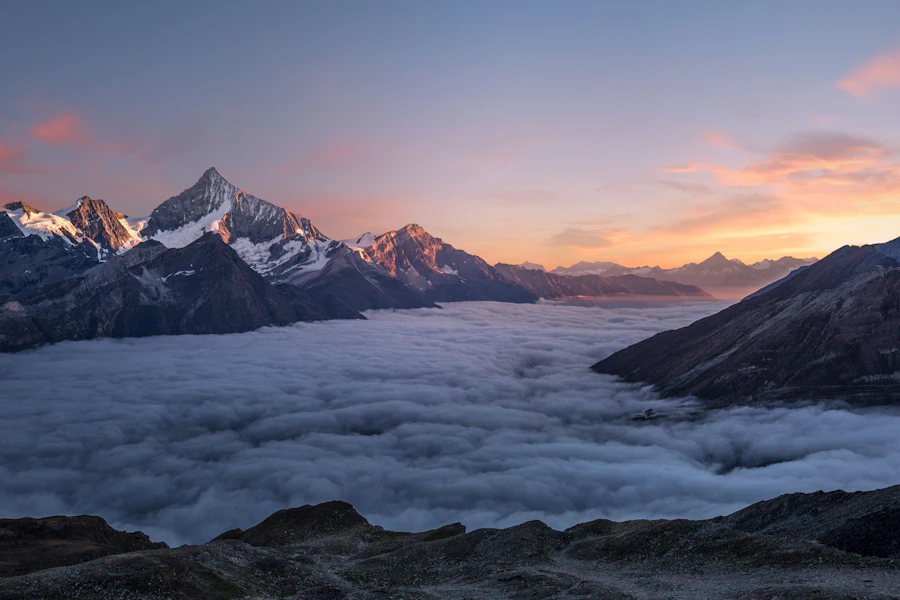

We’ve all been there. You’re standing on the edge of a cliff, the sun is dipping below the horizon, painting the sky in colors that don’t even have names yet, and you feel like a literal god of photography. You click the shutter, look at the LCD, and… meh. It looks like a postcard from a gas station in 1994.
What happened? The light was perfect. The gear was expensive. The mountain was definitely tall. The problem usually isn't your camera, it’s your composition. Landscape photography is the art of organizing chaos. Nature doesn't care about your frame; it just throws trees, rocks, and clouds everywhere. It’s your job to make sense of it.
I was chatting with Sonny, our Social Media Manager, about this the other day. He’s been seeing a ton of "pretty but boring" landscapes on our feed lately, and we decided it was time to do a deep dive. While Sonny is over on Instagram showing you the "before and afters," I’m here to break down the why behind the whoops.
If you want to stop taking snapshots and start making art, you need to stop making these seven common landscape composition mistakes. Let’s fix them right now.
1. The Dead-Center Horizon (The Symmetry Trap)
This is the most common mistake for beginners and even some intermediate shooters. You see a beautiful sky and a beautiful field, and you put the horizon line right across the middle.
Why it’s a mistake:
When the horizon is dead center, the viewer doesn't know what the subject is. Are we looking at the sky? Or the ground? It splits the image into two equal halves that compete for attention. Unless you have a perfect reflection in a dead-still lake (where symmetry is the actual subject), a centered horizon is usually just lazy.
How to fix it right now:
Use the Rule of Thirds. This isn't just a suggestion; it’s a foundational pillar.
- If the sky is epic: Put the horizon on the lower third line. Give that dramatic cloud formation or sunset two-thirds of the frame.
- If the foreground is incredible: Put the horizon on the upper third line. Let those rolling hills or crashing waves take center stage.
Decide what the "hero" of your shot is and give it the space it deserves. For more fundamental tips like this, check out our Photography 101 guide to get your basics dialed in.
2. The Floating Subject (Missing Foreground Interest)
You see a distant mountain peak. It’s glorious. You zoom in, or even worse, you shoot it wide, and the bottom half of your photo is just… nothing. A flat patch of grass, a blurry road, or just empty space.
Why it’s a mistake:
Without foreground interest, your image lacks depth. It looks two-dimensional. The viewer’s eye has nowhere to "land" before it journeys to the background. In the world of landscape photography, the foreground is your handshake, it’s how you introduce the viewer to the scene.

How to fix it right now:
Get low. No, lower than that. Put your tripod inches from the ground. Find a rock, a patch of flowers, or even a crack in the mud. By placing something interesting in the immediate foreground, you create a sense of scale and three-dimensionality. It pulls the viewer into the frame.
If you’re struggling to make these layers pop in post, I highly recommend using Luminar. Their AI-enhanced tools can help emphasize foreground textures without making the whole image look "crunchy."
3. The Tangent Trap (Border Patrol)
Have you ever looked at a photo and felt like something was just off, but you couldn't put your finger on it? Check the edges. Often, we’re so focused on the mountain in the middle that we don't notice a tree branch poking in from the side or the very tip of a rock being cut off at the bottom.
Why it’s a mistake:
These are called "tangents" or edge distractions. When an object just barely touches the edge of the frame, or is awkwardly cut off, it creates visual tension. It pulls the viewer’s eye away from the subject and toward the border of the photo. It makes the composition feel cramped and accidental rather than intentional.
How to fix it right now:
Do a "border patrol" before you click the shutter. Scan the four edges of your viewfinder.
- Is that branch adding a frame, or is it just a messy stick?
- Did you cut off the bottom of that boulder?
- Is there a random hiker’s elbow in the corner?
Either include the whole object or exclude it entirely. Don't let it "kiss" the edge. If you’ve already taken the shot and realized you have a distraction, you can often fix this with a clever crop or by using generative erase tools in Luminar.
4. The Scale Problem (How Big Is It?)
You’re standing in front of a canyon that is three miles deep. It’s massive. You take the photo, go home, and show your friends. They say, "Oh, that’s a nice ditch."
Why it’s a mistake:
Cameras are terrible at conveying scale on their own. Without a recognizable point of reference, the human brain has no way to process how large a landscape actually is. A 1,000-foot waterfall can look like a backyard fountain if there’s nothing to compare it to.

How to fix it right now:
Add a human element. Or a cow. Or a car. Something that we know the size of. Placing a person (even a tiny one) in a vast landscape instantly communicates the epic proportions of the scene. This is why you see so many "tiny person, big mountain" photos on PhotoGuides.org, it works.
If you want to learn how to perfectly place these elements for maximum impact, you should definitely dive into our Mastering Manual Mode course. Knowing your gear inside out allows you to focus 100% on these creative decisions.
5. Leading Lines to Nowhere
Leading lines are "Landscape 101." We find a road, a river, or a fence and we point it toward… well, we just point it.
Why it’s a mistake:
A leading line is a literal path for the viewer’s eye. If that path leads to a blank corner of the frame or out of the photo entirely, you’ve just led your viewer to a dead end. It’s frustrating for the brain. It’s like a story that builds up tension and then just stops without a conclusion.
How to fix it right now:
Make sure your lines lead somewhere. A river should lead the eye toward the mountain. A path should lead toward the sunset. A fallen log should point toward the subject.

If you find a great line but it’s pointing the wrong way, change your position. Move left, move right, or circle around the subject until the line and the "hero" align. Composition is often more about your feet than your lens.
6. The "Everything is a Subject" Clutter
Nature is messy. Sometimes we find a spot that has a river, AND a mountain, AND a forest, AND some cool rocks, AND a deer. We try to cram it all in.
Why it’s a mistake:
If everything is the subject, nothing is the subject. A cluttered photo is exhausting to look at. The viewer doesn't know where to start or where to end. It’s visual noise. Great photography is often about what you exclude from the frame, not what you include.
How to fix it right now:
Simplify. Ask yourself: "What is the one thing that made me stop the car?"
- If it’s the lone tree, zoom in on the tree.
- If it’s the texture of the sand, make that 80% of the shot.
Don't be afraid of "empty" space (we call it negative space). It gives your subject room to breathe. Sometimes a single tree in a field of snow is infinitely more powerful than a whole forest. For some incredible examples of minimalist landscapes, check out Edin Chavez’s Fine Art collection, he’s a master of finding the signal in the noise.

7. The Sky Dilemma (Boring Skies)
We’ve all done it. We go out at noon on a cloudless day, take a landscape photo, and the top half of the image is just a flat, bright, characterless blue (or worse, a blown-out white).
Why it’s a mistake:
A "bald" sky is a composition killer. It’s a huge chunk of your image that contributes nothing to the story. It’s boring, it’s distracting, and it usually messes up your exposure.
How to fix it right now:
If the sky is boring, hide it.
- Tilt your camera down and focus on the details of the earth.
- Use a longer focal length to crop the sky out entirely.
- Frame the shot using overhanging branches to "roof" the image.
Alternatively, if you have a shot you love but the sky is a disaster, you can use the Sky Replacement tool in Luminar. It’s a lifesaver for those once-in-a-lifetime trips where the weather just didn't cooperate. But remember, the goal is to get it right in the camera first!
Bonus: Vertical vs. Horizontal Indecision
Most people hold their camera horizontally for landscapes because, well, landscapes are wide, right? Not always.
Why it’s a mistake:
Limiting yourself to horizontal (landscape orientation) means you’re missing out on half the potential compositions. Vertical shots are great for emphasizing height (waterfalls, tall trees) or for creating powerful foreground-to-background transitions.
How to fix it right now:
Whenever you find a composition you like, try it both ways. Turn the camera 90 degrees. You’ll be surprised how often the vertical version is actually the stronger image. It’s also much better for sharing on social media: Sonny will thank you for the vertical content!
Putting it All Together
Composition isn't a set of laws that will get you arrested if you break them. They are tools. But you have to know how to use the tools before you can start "artfully" ignoring them.
Next time you’re out in the field, don't just "spray and pray." Slow down. Run through this checklist:
- Is my horizon level and off-center?
- Do I have something interesting in the foreground?
- Are the edges of my frame clean?
- Is the scale obvious?
- Where do my lines lead?
- Is the scene too cluttered?
- Is the sky adding or subtracting from the shot?
If you want to keep improving, I’ve got tons of deeper dives over on my personal blog where I talk about the philosophy of photography and the gear that helps me get the shot.
Photography is a journey, not a destination. You’re going to take a lot of bad photos before you start taking great ones. The key is to understand why they’re bad so you can do better next time.
If you found this helpful, head over to Shut Your Aperture’s learning portal for more in-depth tutorials that will take your skills from amateur to pro in no time. We’ve got everything from gear reviews to advanced editing techniques.
Go out there, get your boots muddy, and stop making these mistakes. Your portfolio (and your viewers) will thank you.