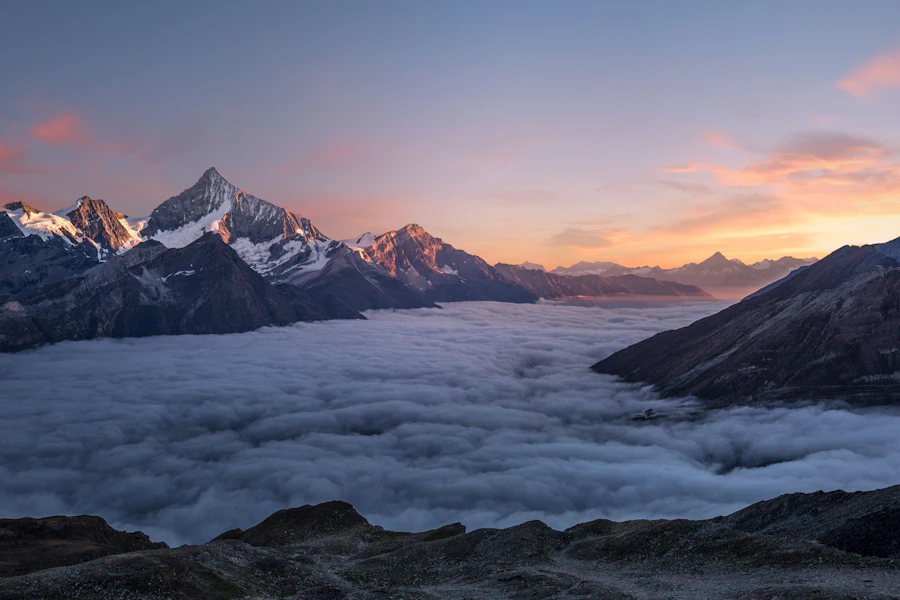

We’ve all been there. You wake up at 4:00 AM, stumble out of bed, drive two hours into the wilderness, and hike uphill in the dark just to catch that "perfect" sunrise. You get home, fire up your computer, and… your heart sinks. The colors are muddy, the mountains look like tiny pimples in the distance, and the whole image feels about as exciting as a wet cardboard box.
Don't worry, you aren’t a bad photographer. You’re likely just falling into some very common traps that plague almost everyone starting out. Landscape photography is a weird beast, it’s 10% pressing a button and 90% planning, patience, and technical precision. If you’re looking for photography for beginners, you’ve come to the right place.
Today, we’re going to break down the 7 most common mistakes people make in landscape photography and, more importantly, exactly how to fix them so you can start bringing home those epic, wall-worthy shots. Grab a coffee, and let's get into it.
1. The "Midday Sun" Trap: Why Your Light Sucks
The biggest mistake beginners make is thinking that a "pretty place" equals a "pretty photo" regardless of the time of day. You see a beautiful valley at 1:00 PM, the sun is high and bright, and you snap a photo. The result? Harsh shadows, blown-out highlights, and zero atmosphere.
How to Fix It:
In the world of landscape photography tips, light is king. You need to stop shooting when the sun is directly overhead. Instead, plan your shoots around the "Golden Hour" and the "Blue Hour."
- Golden Hour: This happens roughly an hour after sunrise and an hour before sunset. The light is soft, warm, and hits the landscape at an angle, creating long shadows that add depth and texture.
- Blue Hour: This is the period shortly before sunrise or after sunset. The sky turns a deep, moody blue, and the light is incredibly even. This is the perfect time for long exposures and capturing city lights or mountain silhouettes.
If you find yourself stuck with a boring sky or flat light from a midday shoot, don't delete the file just yet. Tools like Luminar have incredible sky replacement and AI lighting tools that can help salvage a shot when the weather doesn't cooperate. However, nothing beats getting the light right in the field.
2. The "Wide-Angle Everything" Syndrome
When you’re standing in front of something massive, like the Grand Canyon, your instinct is to grab your widest lens, zoom out to 16mm, and try to "fit it all in." The problem? When you fit "everything" in, you often end up with a photo of "nothing." Everything in the distance looks tiny, and you have a massive, empty foreground that does nothing for the viewer.

How to Fix It:
Focus on a subject. A great landscape photo needs a "hook." Instead of just shooting the whole mountain range, find a specific peak, a unique tree, or a winding river.
Also, don't be afraid to use a telephoto lens! Some of the best landscape photography tips involve using a 70-200mm lens to "compress" the scene. This makes distant mountains look huge and imposing, and it allows you to pick out patterns in the landscape that a wide-angle lens would miss. For more on gear, check out our guide on the best mirrorless cameras.
3. Ignoring the Foreground
This is the "middle-ground" mistake. Many photographers focus only on the distant subject (the mountain or the sunset) and forget that the bottom third of their frame exists. Without a strong foreground, your image lacks a sense of scale and depth. It feels like a 2D postcard rather than a 3D window into the world.
How to Fix It:
Get low and get close. If you find a beautiful lake, don't just stand at eye level. Crouch down so that some colorful rocks or a patch of wildflowers are right in front of your lens. These elements act as "stepping stones" for the viewer's eye, leading them from the front of the image all the way to the background.
This technique creates a sense of "immersion." You want the viewer to feel like they could step right into the photo. Using leading lines, like a path, a fence, or a stream, is another great way to guide the eye through the composition. If you're struggling with this, I highly recommend checking out the photography tutorials over at our academy for deep dives into composition.

4. The Lazy Horizon (and Boring Compositions)
There are two parts to this mistake. First, the literal crooked horizon. There is nothing that ruins a professional-looking shot faster than a sea that looks like it’s draining out of the left side of the frame. Second, the "bullseye" composition, putting the horizon or your subject exactly in the dead center of the frame every single time.
How to Fix It:
First, turn on the "grid" overlay in your camera’s viewfinder. This is a lifesaver for keeping things straight. If you still mess it up, you can fix it in post-processing, but you’ll lose some of your image edges when you crop to straighten it.
For composition, start with the "Rule of Thirds." Imagine your frame is divided into a 3×3 grid. Try placing your horizon on the top or bottom horizontal line, and your main subject on one of the intersections. It’s a simple trick, but it instantly makes your photos feel more balanced and professional. If you want to get more creative, look into street photography ideas for how to use geometry and framing in your landscapes.
5. Using the Wrong Aperture
A lot of beginners hear that they need "everything in focus" for a landscape, so they crank their aperture up to f/22. While this does give you a massive depth of field, it also introduces a sneaky problem called "diffraction." This actually makes your image less sharp. Conversely, shooting at f/2.8 might give you a blurry background when you actually wanted the mountains to be crisp.
How to Fix It:
Every lens has a "sweet spot," usually between f/8 and f/11. This is where the lens is at its sharpest and provides enough depth of field to keep most landscapes in focus from front to back.
If you have something very close in the foreground and a mountain very far away, you might need to learn "focus stacking." This is a more advanced technique where you take multiple shots at different focus points and blend them together. It’s one of those portrait photography techniques that translates surprisingly well to landscapes when you want hyper-real detail. You can find more info on this at PhotoGuides.org.
6. Staying in "Auto" Mode
Look, modern cameras are smart, but they aren't "epic sunset" smart. In Auto mode, your camera sees a bright sky and a dark foreground and tries to average them out, usually leaving you with a boring, grey mess. If you want to take control of your art, you have to learn how to use manual mode camera settings.

How to Fix It:
Learn the Exposure Triangle: Aperture, Shutter Speed, and ISO.
- Aperture: Controls depth of field (keep it around f/8 for landscapes).
- ISO: Controls light sensitivity (keep it as low as possible, usually ISO 100, for maximum quality).
- Shutter Speed: Controls how long the sensor is exposed. Since you’re using a tripod (you are using a tripod, right?), you can use slow shutter speeds to blur water or clouds.
Mastering manual mode allows you to "expose for the highlights," ensuring you don't lose the beautiful colors in the sky. If the foreground is too dark, you can bring those shadows back in post-processing. For a deep dive on this, check out our manual mode guide.
7. The "Over-Processed" Look
We’ve all seen them, those photos on Instagram where the grass is neon green, the sky is a radioactive purple, and there’s a weird glow around every tree. This usually happens when people get too excited with the "Saturation" and "Clarity" sliders.
How to Fix It:
Less is more. When you’re following photo editing tutorials, the goal should be to enhance the natural beauty that was already there, not to create a scene from an alien planet.
- Use Vibrance instead of Saturation: Vibrance is smarter; it boosts the less-saturated colors without overdoing the ones that are already bright.
- Watch the Contrast: Too much contrast destroys detail in the shadows.
- Step Away: My best tip? Finish your edit, then walk away for 10 minutes. When you come back with fresh eyes, you’ll usually realize you went a little too far and will end up dialing everything back by 20%.
If you want to see what professional-grade editing looks like, take a look at the galleries on Edin Fine Art. You'll notice that while the colors are rich, they still feel grounded in reality.

Bonus Tip: The Importance of a Good Tripod
I can’t stress this enough: if you are serious about landscapes, you need a tripod. It’s not just about avoiding camera shake; it’s about slowing down. When your camera is locked onto a tripod, you tend to be more intentional with your composition. You aren't just snapping; you're building an image.
Using a tripod also allows you to use the lowest ISO possible, which means no digital noise and the highest possible dynamic range. This is essential for those big prints you're going to make later. We actually have a whole post about the importance of tripods in landscape photography if you want to geek out on gear.
Wrapping Up
Landscape photography is a journey, both literally and figuratively. You’re going to make mistakes. You’re going to forget your memory card (at least once). You’re going to get rained on. But every time you fix one of these common errors, you’re one step closer to that "wow" shot.
Remember:
- Hunt the light, don't just hunt the location.
- Find a subject and give it a strong foreground.
- Master your gear so it doesn't get in the way of your creativity.
- Keep it natural in post-processing.
If you found these tips helpful and want to take your skills to the next level, come join us at Shut Your Aperture Academy. We have structured courses that take you from "What does this button do?" to "I just sold my first print."
Also, keep an eye on our photography news section for the latest gear releases and industry trends. Whether you're looking for camera gear reviews or just some inspiration, we've got you covered.
Now, stop reading this and go pack your bag. The sun is going to set soon, and you’ve got an epic shot to go find.