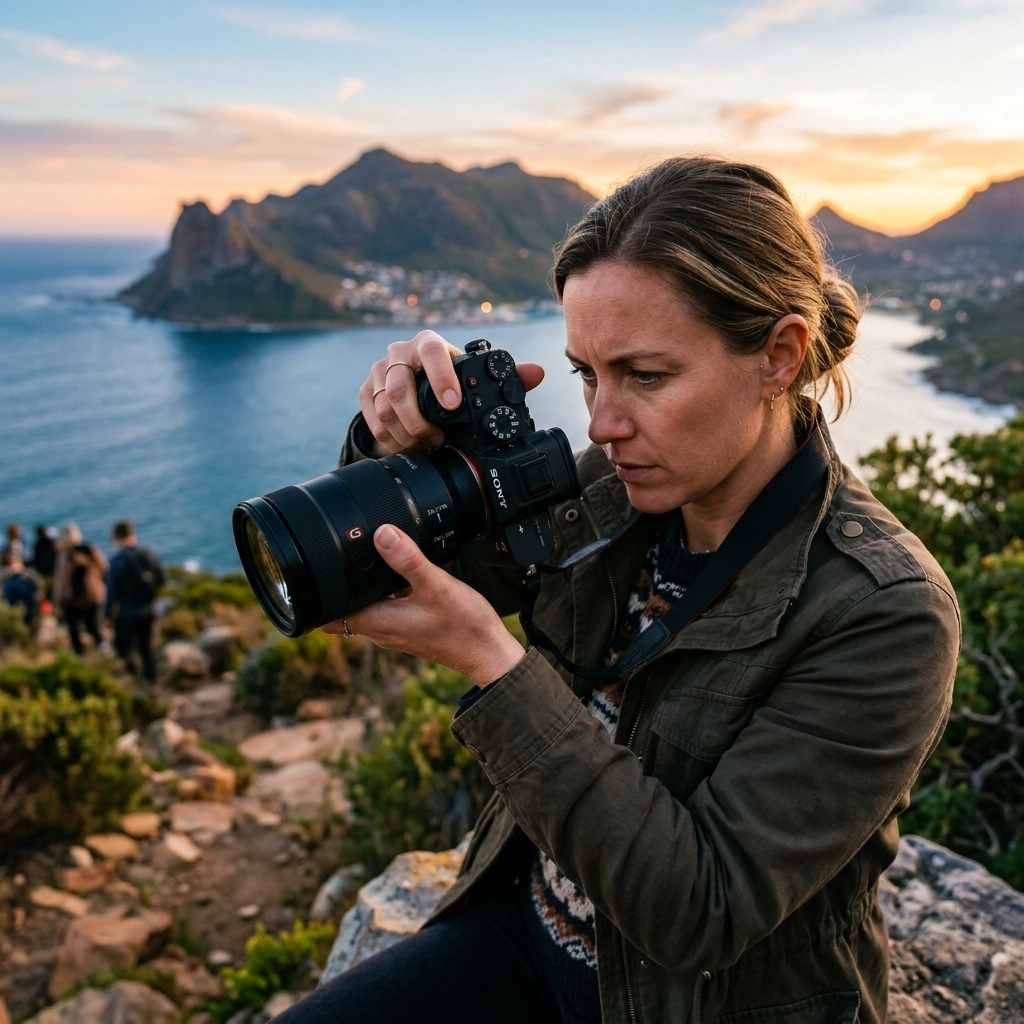
So, you finally worked up the courage to twist that dial to "M." You’re officially a "real" photographer, right? You’ve stepped away from the safety of Auto and Aperture Priority, ready to seize control of every single photon that enters your lens.
But then, it happens. Your photos come out pitch black. Or they’re so bright they look like a nuclear explosion. Or, worst of all, they’re blurry and you have no idea why because the little light meter told you everything was "perfect."
Manual mode is the ultimate tool for creative freedom, but it’s also a high-speed lane to frustration if you don’t know where the potholes are. Most photographers: even the ones who’ve been at it for a year: keep making the same tactical errors.
If you want to stop "guessing" and start "knowing," you need to fix these seven common mistakes. Let’s dive in and get your settings sorted.
1. You Trust the Light Meter Like It’s the Gospel
Here is the biggest secret in photography: your camera is actually kind of dumb. It doesn’t know you’re shooting a bride in a white dress or a black cat in a coal cellar. It only knows one thing: 18% gray.
When you look through your viewfinder and see that little scale with the "0" in the middle, your camera is trying to tell you how to make the entire scene average out to a neutral middle-gray.
The Mistake: You adjust your settings until the needle hits "0" and think your job is done.
Why This Fails: If you’re shooting a snowy landscape, your camera sees all that white and thinks, "Whoa, way too bright! Let’s dim this down to gray." The result? Dingy, blue-gray snow. If you’re shooting a dark, moody concert, the camera thinks, "Too dark! Let’s brighten this up," and suddenly your shadows are noisy and washed out.
How to Fix It Right Now:
Use the meter as a suggestion, not a law. You need to apply "mental exposure compensation."
- Bright scenes (snow, beaches, white walls): Your meter will try to underexpose. You actually need to push that needle toward the "+1" or "+2" mark to keep whites white.
- Dark scenes (black clothing, night shots): Your meter will try to overexpose. Keep the needle toward the "-1" or "-2" mark to keep blacks deep and rich.
Always check your Histogram. If the graph is smashed against the left side, you’re losing detail in the shadows. If it’s climbing the right wall, you’re blowing out your highlights. If you find your highlights are a bit flat in post, using a tool like Luminar can help recover that dynamic range, but it's always better to get it right in the camera first.
2. Your Shutter Speed Is Too Slow for Your Own Good
We’ve all been there. You’ve got your aperture set for that sweet bokeh, your ISO is low for maximum quality, and the meter says you’re good to go. You click the shutter, look at the LCD, and everything looks… soft.
The Mistake: You’re picking a shutter speed based on exposure needs rather than physical reality.
Why This Fails: Manual mode gives you total control, which means it gives you the "freedom" to pick a shutter speed that is physically impossible to hand-hold. If you’re shooting at 1/20s with a 100mm lens, your heartbeat alone is enough to blur that image. Even if your subject is perfectly still, you aren’t.
How to Fix It Right Now:
Memorize the Reciprocal Rule. As a baseline, your shutter speed should be at least 1 divided by your focal length.
- Shooting with a 50mm lens? Stay above 1/50s.
- Shooting with a 200mm lens? Stay above 1/200s.
However, if you are using high-resolution monsters like the Canon EOS R5, you actually need to go even faster because those extra megapixels show every tiny bit of shake. For moving subjects, forget the reciprocal rule and go for speed:
- Walking people: 1/250s minimum.
- Kids and pets: 1/500s or 1/1000s.
- Sports/Birds: 1/2000s.

3. You Treat ISO Like It’s Permanent
ISO is the "silent partner" of the exposure triangle. Beginners often set it to 100 because they heard "high ISO is bad," or they leave it at 1600 because they were shooting indoors earlier and forgot to change it when they stepped outside.
The Mistake: Forgetting to adjust your ISO as your environment changes.
Why This Fails: If you leave your ISO at 100 in a dark room, you’ll be forced to use a shutter speed so slow that everything blurs. If you leave it at 3200 in the bright sun, you’ll be forced to use an aperture so small (like f/22) that your image quality actually drops due to diffraction.
How to Fix It Right Now:
Think of ISO as your "lighting environment" setting.
- Sunlight: ISO 100–200.
- Overcast/Shade: ISO 400–800.
- Indoor/Evening: ISO 1600–6400.
If you’re struggling to keep up with changing light, here is the ultimate pro-hack: Manual Mode + Auto ISO. This is how many wedding and sports photographers work. You choose your Shutter Speed (to control motion) and your Aperture (to control depth of field), and you let the camera float the ISO to maintain the exposure. It’s the best of both worlds. For more on specific setups, check out our guide on OM System OM-1 Mark II settings for wildlife, where managing ISO is critical.
4. You’re Obsessed with "Correct" Exposure Instead of Creative Intent
There is no such thing as a "perfect" exposure: there is only the exposure that conveys the mood you want.
The Mistake: Prioritizing a centered light meter over the actual look of the photo.
Why This Fails: Photography is an art, not a math problem. If you’re shooting a silhouette of a person against a sunset, the "correct" exposure according to your camera will make the person look like a muddy gray mess and the sunset look white. That’s not what you want. You want the person to be black and the sunset to be vibrant.
How to Fix It Right Now:
Ask yourself: "What is the most important part of this frame?"
- If you want a moody, low-key portrait, intentionally underexpose. Let the shadows go dark.
- If you want a bright, airy landscape, push the exposure to the right.
Stop trying to make the meter happy and start trying to make your eyes happy. If you’re unsure how to balance these creative choices, diving into some comprehensive portrait techniques can help you understand when to break the rules.

5. You’re Picking the Wrong Aperture for the Scene
One of the coolest parts of Manual mode is controlling that background blur (bokeh). But many people get "bokeh-crazy" and leave their lens at its widest setting (like f/1.8 or f/2.8) for everything.
The Mistake: Choosing your aperture based only on how much light you need, or only on getting a blurry background, while ignoring the depth of field.
Why This Fails: If you’re shooting a group of five people and you use f/1.8, the person in the middle might be sharp, but the people slightly behind or in front of them will be a blurry mess. Conversely, if you’re shooting a landscape at f/22 to get "everything" in focus, you might actually be making the image softer because of a lens phenomenon called diffraction.
How to Fix It Right Now:
Match your f-stop to your subject, not just your light.
- Single Portrait: f/1.8 – f/2.8 is fine.
- Small Groups: f/4 – f/5.6.
- Large Groups: f/8.
- Landscapes: f/8 – f/11. (Avoid f/22 unless you absolutely need it for a long exposure).
If you’re hitting these common snags, you might also want to read up on 7 mistakes you’re making with landscape photography to see how aperture plays a massive role in sharp scenery.
6. You’re "Chasing the Meter" Instead of Locking It In
This is a classic beginner move. You’re in a room with consistent light. You take a photo, look at the meter, and it’s at 0. Then you move your camera slightly to the left, and because there’s a lamp in the corner of the frame, the meter jumps to +3. You panically change your settings to get back to 0. Then you move back, and now the meter says -3.
The Mistake: Adjusting your settings for every single frame based on what the meter sees.
Why This Fails: The light on your subject hasn’t changed, but the meter is reacting to the background. If you keep changing your settings, your subject’s face will be a different brightness in every single shot. This makes editing a nightmare.
How to Fix It Right Now:
When the light is consistent (like in a studio, a gym, or an overcast day), find the setting that makes your subject look good. Once you find it, leave it alone.
Don't touch the dials until the actual light hitting the subject changes. This is the superpower of Manual mode: consistency. You can take 100 photos and they will all have the exact same exposure, making batch editing in a program like Luminar a breeze.

7. You’re So Busy with Settings You Forget to Actually "See"
Manual mode requires a lot of "brain power" at first. You’re thinking about Shutter Speed, Aperture, ISO, the Meter, and the Histogram.
The Mistake: Focusing so much on the technicalities that you miss the composition, the focus, and the "moment."
Why This Fails: A technically perfect exposure of a boring, out-of-focus, poorly composed photo is still a bad photo. I’ve seen photographers miss a child’s first steps or a bride’s first tear because they were fumbling with a dial trying to get the meter to zero.
How to Fix It Right Now:
Practice until it’s muscle memory.
- Sit on your couch and practice changing your shutter speed and aperture without looking at the buttons.
- Before the action starts, dial in your "base" exposure.
- If the light is changing too fast (like street photography), don't be a hero. Switch to Aperture Priority or use Manual with Auto ISO.
The goal of Manual mode isn't to be a "purist": it's to get the shot you want. If you want to level up your skills even faster, you should check out the tutorials at learn.shutyouraperture.com.
Putting It All Together: The Manual Mode Workflow
Now that we’ve identified the mistakes, how do you actually shoot in Manual mode the right way? Here is a simple step-by-step workflow you can use for almost any situation.
Step 1: Set Your ISO Based on the Environment
Are you outside in the sun? Set it to 100. Are you in a dim restaurant? Start at 1600. This is your foundation.
Step 2: Choose Your Aperture Based on Creative Intent
Do you want a blurry background for a portrait? Go low (f/1.8). Do you want a sharp landscape? Go middle-ground (f/8).
Step 3: Set Your Minimum Shutter Speed
If you are hand-holding, make sure you are at least at 1/focal length. If you are shooting kids, aim for 1/500s.
Step 4: Check the Meter and Adjust
Now, look at the meter. Is it too dark? You have three choices:
- Slow down the shutter (if your subject isn't moving).
- Open the aperture (if you don't mind a thinner depth of field).
- Raise the ISO (if you don't mind a little bit of grain).
Step 5: Take a Test Shot and Check the Histogram
Don't trust the screen brightness: it's lying to you. Look at the histogram. If it looks good, stop touching the dials and start focusing on your subject.

Gear Matters (But Only a Little)
While these rules apply to every camera, some gear makes Manual mode easier. For example, if you're comparing the Sony a7 IV vs Canon EOS R6 Mark II, you'll notice both have incredible Electronic Viewfinders (EVF).
An EVF is a "cheat code" for Manual mode because it shows you exactly what the exposure will look like before you take the shot. If you are still using an older DSLR, you have to rely more on the meter and the histogram. If you’re looking for more gear-specific advice, you can find a lot of great info on PhotoGuides.org.
When Should You NOT Use Manual Mode?
Wait, what? A blog post about Manual mode telling you not to use it?
Exactly. Being a pro means knowing when to use the right tool. If you are at a wedding and the bride is moving from a dark church into the bright sun in about three seconds, you might not have time to spin three different dials. In that case, Aperture Priority is your best friend.
Don't let "Manual Mode Snobbery" ruin your photos. If the situation is changing faster than your fingers can move, use an semi-automatic mode. For more tips on how to handle fast-paced environments, our sports photography settings guide breaks down exactly when to automate.
Final Thoughts
Manual mode is not a destination; it’s a tool. The goal isn't to say "I shoot in Manual": the goal is to have such a command over your camera that it becomes an extension of your arm.
Avoid these seven mistakes, keep your eye on the histogram, and remember that you are the boss of the camera, not the other way around. If you want to keep diving into the world of photography news and tutorials, there's always something new to learn from this morning's photography updates.
Go out, grab your camera, and make some mistakes: just make sure they’re new ones! You can also find more inspiration over at blog.edinchavez.com or see the final results of master photography at www.edinfineart.com.
Now stop reading and go shoot. Your "M" dial is waiting.