By Edin Chavez | Updated October 2026
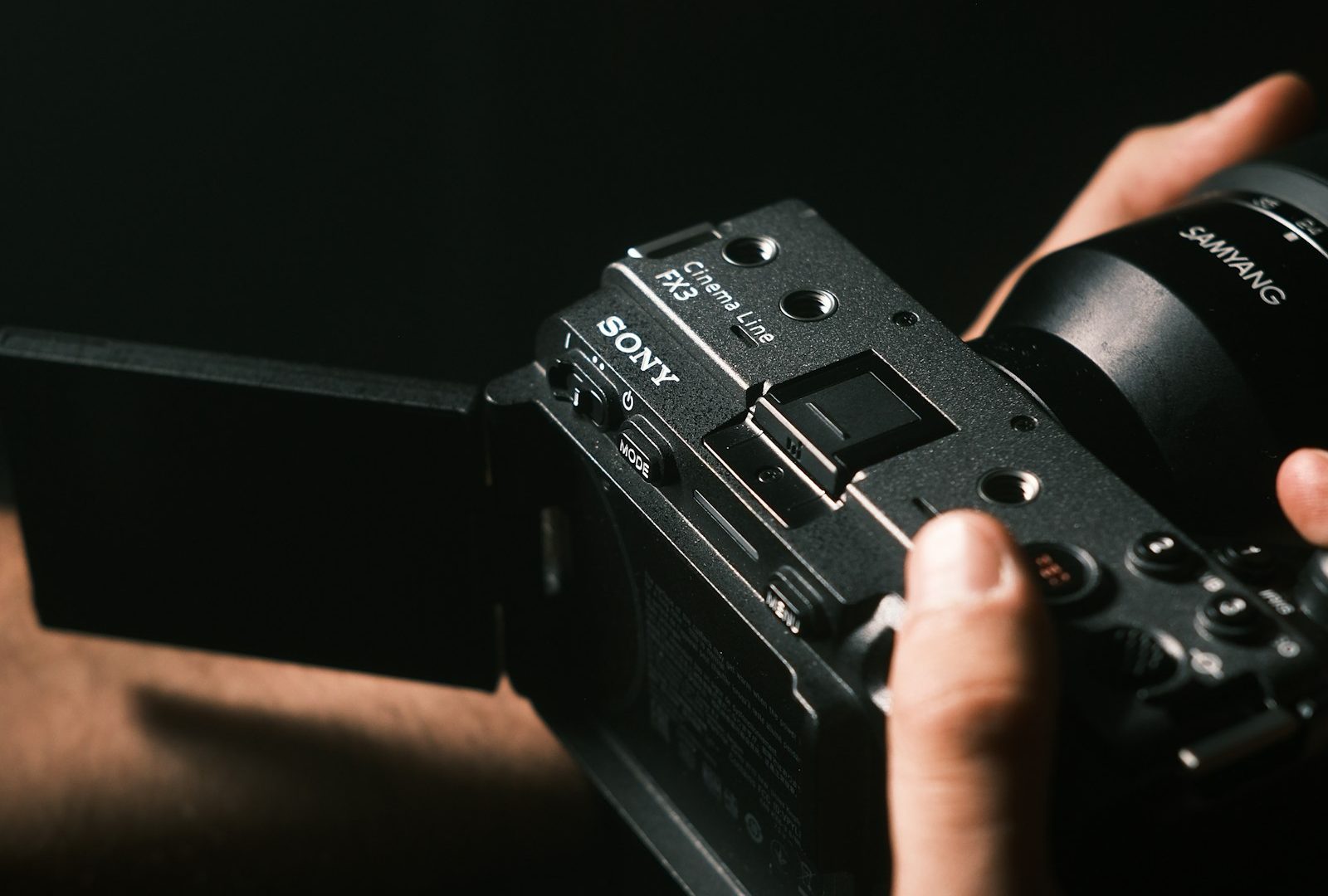
Hero photograph: a Sony FX3 Cinema Line camera in dark directional light, illustrating a video-focused mirrorless setup. It is not one of the ten camera models compared below.
The best mirrorless camera is the one that fits the photographs you make, the lenses you can carry, and the work you need to deliver. A sports photographer and a traveler can read the same launch announcement and come away with very different shopping lists. Both can be right.
This guide puts ten important camera developments into that context. It is a dated look at manufacturer announcements and established camera features, not a claim that every camera below launched this month. The milestones come from 2022 through 2025; the buying advice was reviewed in October 2026. We separate interchangeable-lens bodies from fixed-lens cameras, explain what the specifications change in practice, and give you a way to avoid spending money on capabilities you will rarely use.
These are specification-based comparisons, not a report of hands-on tests of every body. The photographs illustrate equipment or photographic situations; they are not a set of sample images captured with the cameras discussed. For a broader starting point, see the camera buyer guide.
Start with the assignment, not the announcement
Before comparing bodies, write down your three most common subjects and your biggest current limitation. If your problem is distant wildlife, lens reach and autofocus behavior deserve attention. If it is hauling equipment all day, the complete kit matters more than the body weight alone. If it is blurry people indoors, a faster shutter speed and suitable lens may matter more than stabilization.
Build a system budget that includes a useful lens, memory cards, a spare battery, and a way to back up files. A discounted flagship without the right lens is not necessarily a better purchase than a smaller body with an excellent everyday lens. Switching mounts can also make existing lenses, flashes, and accessories part of the cost. Check compatibility rather than assuming that a lens adapter preserves every function.
For most general photography, narrow the list to two or three systems before looking at tiny differences in resolution. Then handle the cameras if possible. The best autofocus specification does little for you if changing focus mode is awkward, the grip hurts, or the kit stays at home.
1. Sony Alpha 1 II: high resolution and fast capture in one body
Sony announced the Alpha 1 II on November 19, 2024. Its official announcement lists an approximately 50.1-megapixel stacked full-frame sensor and continuous shooting up to 30 frames per second with autofocus and exposure tracking under specified conditions. That combination is relevant to photographers who need detailed files and action capability in the same assignment.
The useful question is not whether 30 fps sounds impressive. It is whether your work contains short, unpredictable moments that ordinary bursts miss, and whether you can manage the resulting volume of files. A landscape photographed from a tripod does not become stronger because you captured thirty nearly identical frames in one second.
Sony also describes pre-capture, which can preserve frames before a full shutter press. Treat burst rates and pre-capture durations as conditional specifications. Lens choice, settings, temperature, and shooting conditions can affect operation. Read the Alpha 1 II announcement and its footnotes before planning a professional workflow around a headline number.
2. Canon EOS R5 Mark II: detail with a faster sensor platform
Canon launched the EOS R5 Mark II alongside the EOS R1 on July 17, 2024. The R5 Mark II announcement specifies a 45-megapixel back-illuminated stacked full-frame sensor. This is a different proposition from simply adding more megapixels: sensor readout and processing affect how a camera handles movement as well as the size of its files.
For a photographer making portraits, commercial work, events, and occasional action, the R5 Mark II belongs on a serious comparison list. That does not make it a universal recommendation. Ask whether you regularly crop heavily or produce demanding large prints, and whether the lenses you want are available in the RF system at a total cost you accept.
Video buyers should compare the exact recording mode they need, not just a maximum resolution. Resolution, frame rate, crop, media, and recording duration are separate questions. Canon’s launch announcement is a sound starting point, but a purchase decision should include the current manual and your intended mode.
3. Canon EOS R1: a different priority from the R5 Mark II
The same July 2024 announcement describes the EOS R1 with a 24.2-megapixel back-illuminated stacked full-frame sensor and still-image shooting up to 40 fps. Its target is professional sports, news, and related work. The lower pixel count compared with the R5 Mark II is not evidence that it is a lesser camera; it reflects a different balance of speed, file size, and assignment needs.
A photographer transmitting files from a sporting event may value rapid selection and delivery more than a huge file for a wall print. A photographer working on detailed commercial products may make the opposite choice. Compare the cameras against the output, deadline, and workflow that earn your income, rather than arranging them by model number.
If you are still learning exposure and timing, either body may be far beyond what you need. Put money into access to interesting subjects, lighting knowledge, and lenses before assuming a professional flagship is the shortest route to better photographs.
4. Nikon Z6III: a hybrid full-frame option with a partially stacked sensor
Nikon announced the Z6III on June 17, 2024. Its official release describes a 24.5-megapixel partially stacked CMOS sensor. That wording matters: partially stacked is not the same claim as fully stacked, and neither should be reduced to a promise that every electronic-shutter photograph will be free of distortion.
The Z6III is relevant to photographers who divide their time between stills and video and do not need the largest possible still-image files. The practical comparison includes viewfinder experience, autofocus controls, the lens system, and the video formats your editing software handles well.
When reading burst specifications, verify whether a quoted speed uses RAW or JPEG, what resolution remains, and how long the buffer lasts. A camera’s fastest headline mode may not be the mode you want for a paid job. Nikon’s Z6III release provides the starting specifications; match those to your actual deliverables.
 Save
Save5. Nikon Z50II: an APS-C route into the Z system
Nikon announced the Z50II on November 6, 2024, with a 20.9-megapixel APS-C/DX-format sensor. This is worth understanding alongside the full-frame announcements. A smaller sensor does not stop a photographer from producing thoughtful travel, family, or street work, and a compact kit can be easier to use every day.
Compare the body with the actual lens you will carry. A large full-frame lens mounted on a small body may erase much of the portability you hoped to gain. Also check whether your chosen focal lengths feel right on an APS-C camera, where the angle of view differs from the same focal length on full frame.
For a beginner, accessibility matters: a clear control layout, manageable files, and a lens suited to ordinary subjects can beat buying a more expensive body with no room left for the rest of the kit. Review Nikon’s Z50II announcement for the exact feature list rather than transferring assumptions from other Z bodies.
6. Fujifilm X100VI: a fixed-lens camera, not a lens-system replacement
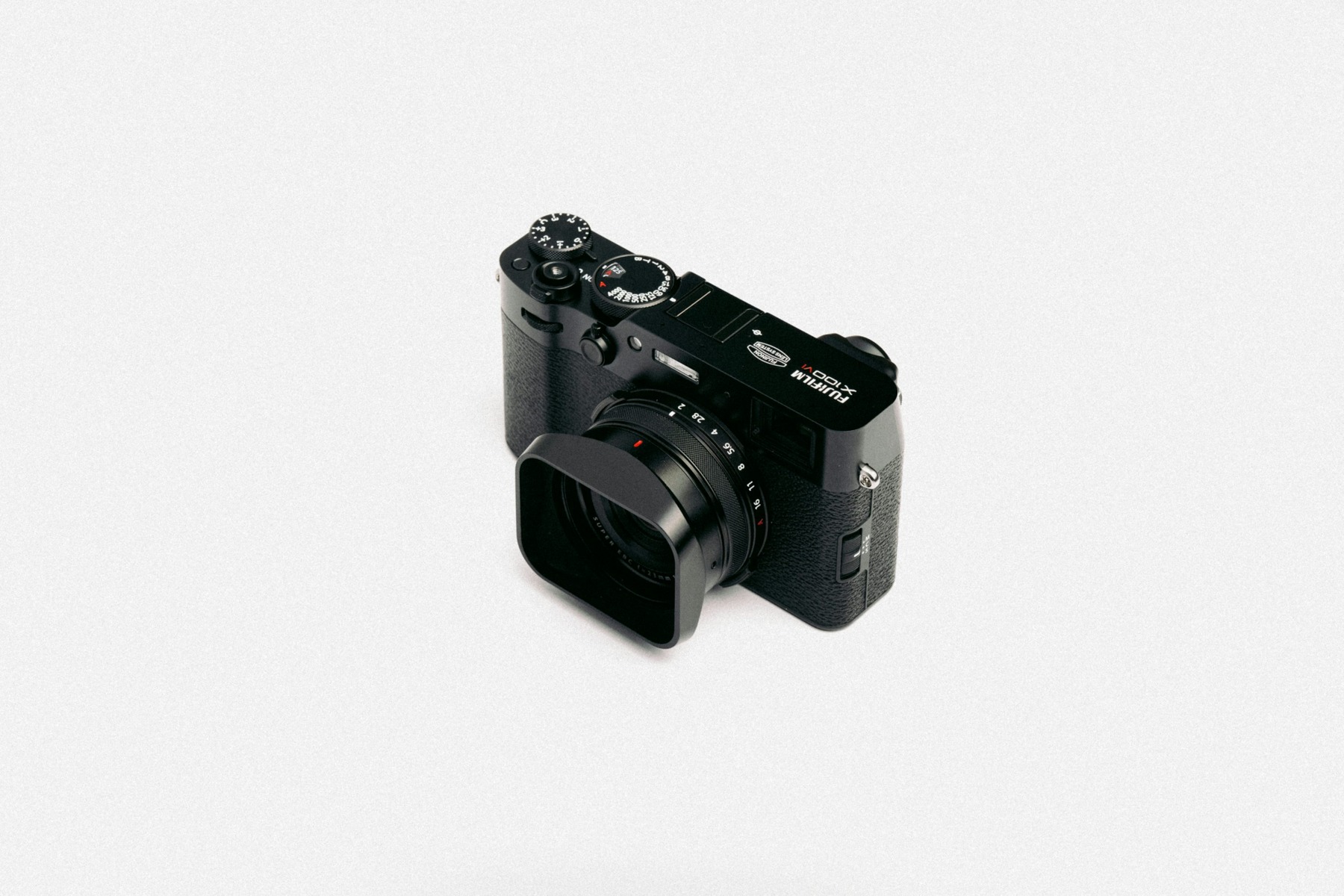
The X100VI combines a 40.2-megapixel APS-C sensor, in-body stabilization, and a fixed 23mm f/2 lens. The lens provides an angle of view equivalent to approximately 35mm on full frame. These details are confirmed on Fujifilm’s X100VI product page.
The fixed lens is the buying decision. You cannot treat this camera like an interchangeable-lens body and add a normal zoom or long wildlife lens later. Its appeal is a consistent everyday view and a compact photographic routine, particularly for people who already know they enjoy that perspective.
Do not buy it merely because it is popular. If you want wide architecture one minute and a distant bird the next, an interchangeable-lens kit may fit better. If you want one familiar camera for walking, travel, and environmental photographs, the deliberate limitation may be useful. Stabilization helps with camera movement; it does not freeze a moving pedestrian at a slow shutter speed.
 Save
Save7. Fujifilm X-T5: resolution in an interchangeable-lens APS-C system
The X-T5, introduced in 2022, uses Fujifilm’s 40.2-megapixel X-Trans CMOS 5 HR sensor and accepts X-mount lenses. It belongs in this guide as an established option, not as a new October 2026 release. Fujifilm’s X-T5 page lists its sensor, stabilization, controls, and shooting features.
For still photographers who want detailed files and interchangeable lenses without making full frame a requirement, it is a sensible system to compare. The important difference from the X100VI is flexibility: you can choose lenses for landscapes, portraits, close subjects, or distant action.
High resolution also makes technique more visible. Missed focus, camera movement, and an unsuitable shutter speed will not disappear because the sensor records more pixels. Build a useful lens kit first, learn your autofocus settings, and judge real output at the size you deliver. The bottom gear box links the exact black X-T5 body, not an unrelated camera or a bundled lens kit.
8. Panasonic LUMIX S1II: a 2025 full-frame hybrid development
Panasonic announced the LUMIX S1II and S1IIE on May 13, 2025. They are separate models, so do not merge their specifications. The S1II announcement emphasizes its partially stacked sensor platform and still/video features. Read the manufacturer release with the model names in view.
A hybrid photographer should compare the complete recording path: codec, frame rate, crop, memory card, battery use, and editing machine. A mode that looks excellent in a specification table may be inconvenient if your computer struggles to play or export the footage.
The broader lesson is that video needs can justify a different body from stills needs. The Sony FX3 shown in this article’s hero is an illustration of a video-focused camera, not a picture of the Panasonic or proof that it matches these stills-focused choices. Identify the actual model before drawing conclusions from a product photograph.
9. Fujifilm GFX100RF: large-format resolution with a fixed lens
Fujifilm announced the GFX100RF on March 20, 2025. The release describes a 102-megapixel large-format sensor and a fixed 35mm f/4 lens, which provides an angle of view equivalent to approximately 28mm on full frame. This camera is not an interchangeable-lens GFX body. Its lens and sensor should be evaluated together.
This is a specialized option for photographers who want a wide everyday view and very detailed files in a self-contained camera. It is not an obvious answer for distant sport, tight wildlife framing, or someone who needs to change focal lengths throughout an assignment.
Large files also affect cards, storage, backups, and editing time. Before shopping by megapixels, work out what your regular output demands. Fujifilm’s GFX100RF announcement states the fixed-lens design clearly; do not confuse it with a different GFX model’s lens compatibility.
10. Sony Alpha 9 III: global shutter changes the action conversation
Sony’s Alpha 9 III product page identifies its global-shutter full-frame sensor. A global shutter exposes the image across the sensor at the same time rather than recording rows at different times. That matters when comparing electronic-shutter distortion in fast movement.
It is a feature for a specific problem, not a guarantee of the best image quality for every subject. Sports photographers should evaluate it against their lenses, lighting, required file sizes, and delivery needs. Portrait and landscape photographers should ask whether its speed-focused design solves a limitation they actually face.
Read Sony’s Alpha 9 III specifications and footnotes. Maximum capture rates, flash behavior, and supported functions can have conditions. A disciplined comparison keeps those conditions attached to the feature instead of turning a launch headline into an unconditional promise.
 Save
SaveHow to turn the list into a buying decision
For travel and street photography: prioritize a kit you will carry, a focal length you understand, comfortable controls, and dependable batteries. Compare the X100VI’s fixed view against an X-T5 or another interchangeable-lens kit. The street photography guide helps you work on timing and observation before buying speed.
For landscape photography: consider lens choices, tripod use, file detail, and how often you print large. A high-resolution body may be useful, but accurate focus, wind, shutter technique, and light still matter. The Mono Lake illustration above is a reminder to choose the scene and moment first.
For sports and wildlife: investigate autofocus with your actual subjects, supported lenses, viewfinder behavior, burst format, and buffer recovery. Rent if possible and compare results in the lighting you normally face. Do not equate the largest advertised fps number with the best working camera.
For video and mixed work: start with the required recording mode and test the editing workflow. Add microphones, support, batteries, and storage to the budget. Still-image resolution alone will not tell you whether a camera suits a long interview or a moving documentary scene.
If an existing camera still meets your needs, upgrading the lens, learning light, or planning a stronger shoot can be the better investment. A useful camera comparison ends with a reason to buy or a reason to keep what you own. It should not create urgency simply because manufacturers announced something.
Before you order: a practical checklist
- Confirm the exact model and whether the listing is body-only or includes a lens.
- Check the lens mount and your existing equipment’s compatibility.
- Price the complete kit, including required cards and a spare battery.
- Read the current seller’s return and warranty terms; these vary by seller and region.
- Verify the recording modes or burst formats you intend to use.
- Plan file backups before the first important assignment.
- Check current firmware and support notes for the exact body, not a similar model.
Storage is part of that last step, especially with high-resolution files and heavy bursts. Our photo storage guide explains the difference between a gallery, sync, and backup. If you use a photography PDF as a field reference, choose one that matches the subject of your trip, then practice the techniques before you travel. No download substitutes for knowing your camera’s controls.
Mirrorless camera questions and answers
What is the best mirrorless camera for a beginner?
There is no single answer without a budget and subject. Favor a comfortable body, a useful lens, and room for cards, batteries, and learning. A modest APS-C system can be a better complete kit than a full-frame body that leaves no money for lenses.
Does mirrorless always mean interchangeable lenses?
No. The X100VI and GFX100RF are fixed-lens cameras discussed here. The X-T5 and the listed Sony, Canon, Nikon, and Panasonic bodies use interchangeable lenses. Decide whether you want a fixed perspective before comparing them as if they were equivalent systems.
Do I need full frame for professional photographs?
No sensor format makes a photograph professional by itself. Choose equipment that meets the required output, lighting conditions, and workflow. Lens choice, technique, subject access, and reliable delivery remain part of the result.
Will in-body stabilization stop motion blur?
It can reduce blur from camera movement, within its limits. It does not freeze a moving person, animal, or vehicle. Use a suitable shutter speed for the subject even when stabilization is enabled.
Is a stacked sensor the same as a global shutter?
No. Stacked describes sensor architecture; global shutter describes how exposure is captured across the sensor. Do not infer global-shutter behavior from the word stacked or partially stacked.
Should I buy the newest body or a better lens?
Identify the limitation first. If you lack the focal length or aperture your work requires, a lens may solve more than a body replacement. If your camera repeatedly misses the needed capture mode or focus performance, a body change may be justified. Test the specific problem rather than upgrading by age.
Are the launch prices still valid?
This guide does not quote current prices or stock. Announcement prices are historical, and seller listings can change. Check the exact model, configuration, warranty, and final total at the seller before purchasing.
Learn faster with a plan. The ShutYourAperture Academy has 22 photography courses, from the fundamentals of aperture, shutter and ISO to genre courses like landscape, portrait and street.
Gear worth comparing: Fujifilm X-T5 black body
FUJIFILM X-T5 Mirrorless Camera (Black), body only
An interchangeable-lens APS-C option for still photographers who want high-resolution files and a choice of X-mount lenses. It is not the fixed-lens X100VI shown above. A lens is a separate purchase with this body-only configuration. Compare the complete kit rather than buying on pixel count alone.
Check the black X-T5 body on Amazon | Compare the same black body at B&H
Affiliate disclosure: we may earn a commission from qualifying purchases through these links, at no extra cost to you. Prices, stock, seller terms, and bundles can change. Confirm the exact configuration at checkout.