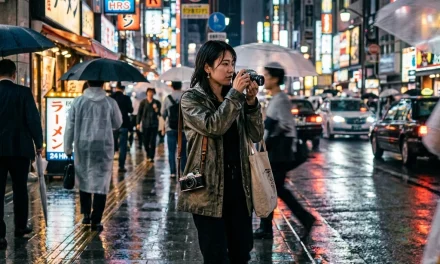
Let’s be honest: street photography can be intimidating. You’re out there in the wild, trying to capture "the moment" while people are walking fast, cars are honking, and you’re worried about looking like a creep with a camera. We’ve all been there. After a while, you might find yourself taking the same photos of people walking past colorful walls or sitting on park benches. It gets repetitive.
If you feel like your urban shots are hitting a plateau, it’s time to shake things up. Street photography isn't just about documenting what's happening; it’s about how you see what’s happening. At Shut Your Aperture, we believe the best shots come from shifting your perspective, literally and figuratively.
Whether you are a seasoned pro or just starting out, here are 25 creative street photography ideas to get you out of your comfort zone and back into the creative flow.
1. Shoot from the Hip
This is a classic stealth move. Instead of bringing the camera to your eye, keep it at waist level. This makes you much less conspicuous and allows you to capture people in their natural state. It takes some practice to get the framing right without looking at the screen, but the results are often more candid and raw. If you're struggling with the focus, try using a wide-angle lens and a narrow aperture to keep everything sharp.
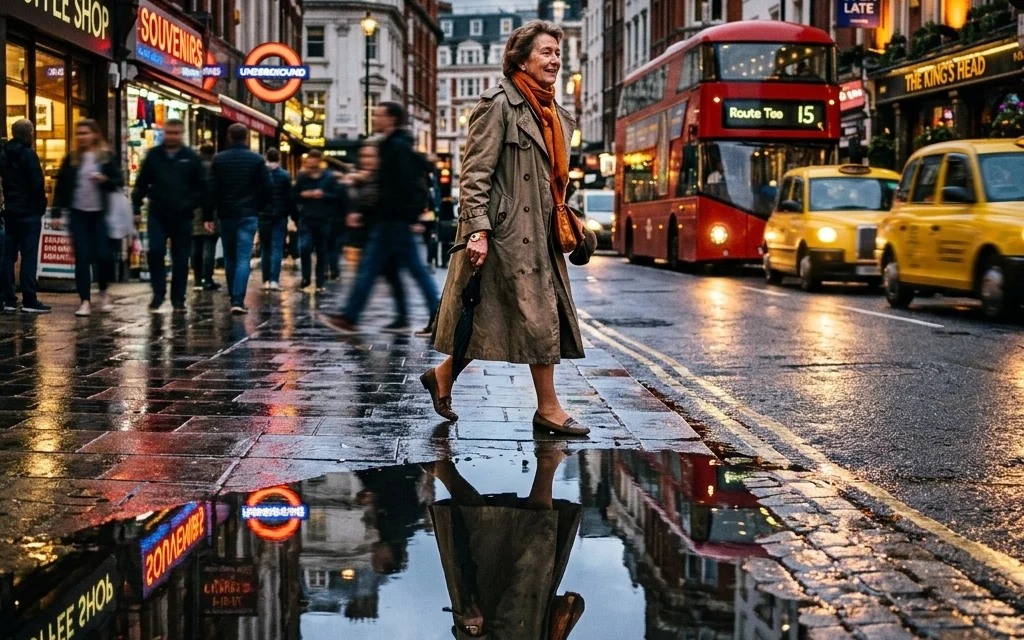
2. The "Puddle Mirror" Effect
Rainy days are actually a gift. Instead of staying inside, head out right after the storm. Look for puddles on the pavement and get your lens as close to the water as possible (without getting it wet!). This creates a perfect mirror image of the city streets, architecture, and people. It turns a grimy sidewalk into a work of art. For more tips on dealing with wet environments, check out our guide on water photography creative approaches.
3. Go on a "Color Walk"
Pick one specific color: let’s say red: and spend the next two hours only photographing things that are red. A red mailbox, a person in a red coat, a red stop sign. This forces your brain to stop looking for "subjects" and start looking for "elements." It’s an incredible way to train your eye to see details you’d normally ignore.
4. High-Contrast Shadows
Most photographers avoid the harsh midday sun because the shadows are too deep. In street photography, those shadows are your best friend. Look for "pockets" of light where the sun hits a small part of the street while the rest is in deep shadow. Wait for someone to walk through that beam of light. It creates a dramatic, cinematic look that feels like a classic film noir.
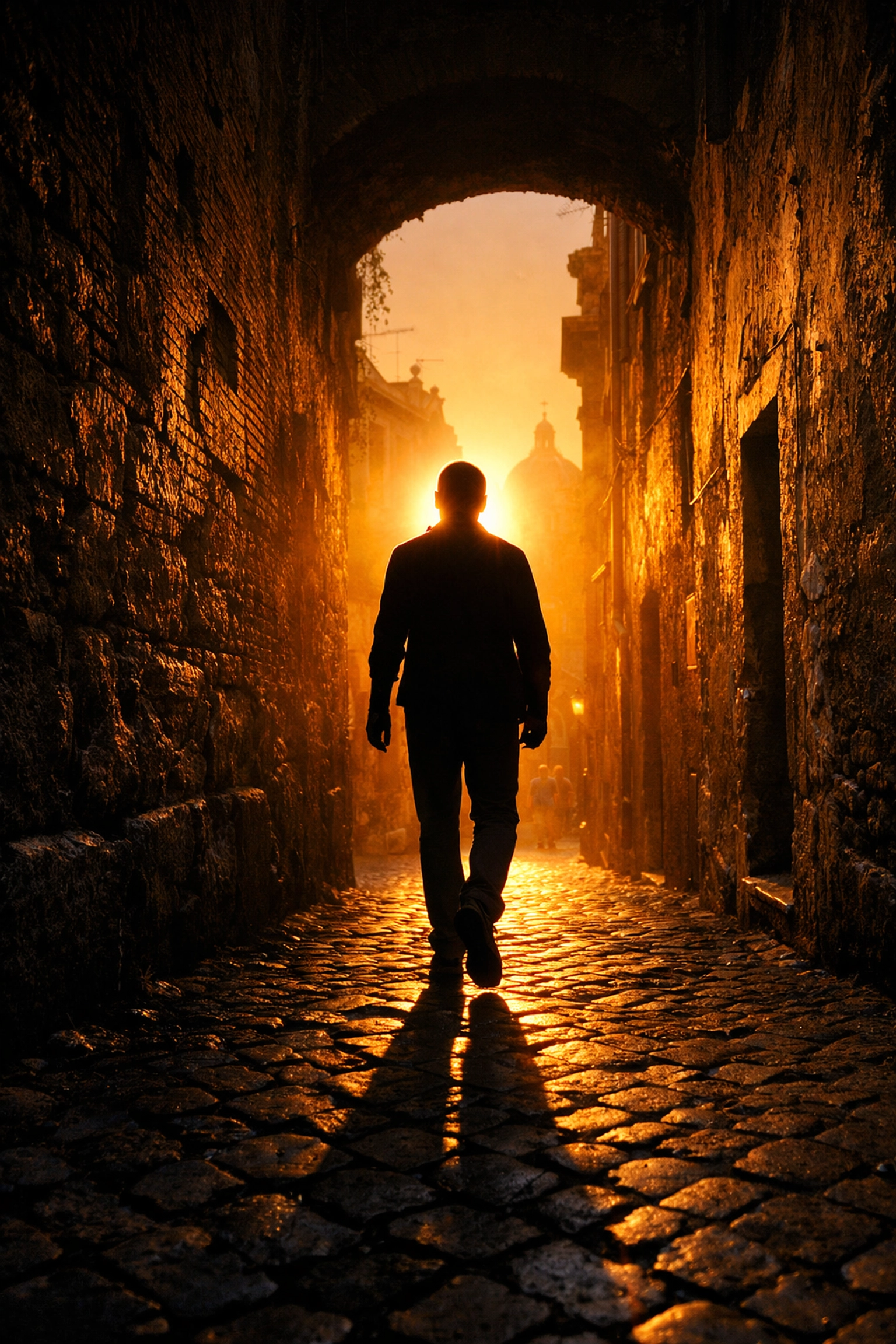
5. Master the Silhouette
Find a strong light source, like the setting sun at the end of a street or a bright shop window at night. Position yourself so the subject is between you and the light. Underexpose the shot so the person becomes a pure black shape against a bright background. This strips away the person’s identity and focuses entirely on their form and gesture. This technique is a staple for those looking to unlock secrets to enchanting urban photography.
6. Shoot Through Objects
Texture is everything. Try shooting through a fence, a window with raindrops on it, or even some foliage. This adds layers to your image and creates a sense of depth. It makes the viewer feel like they are peeking into a private moment. If you want to dive deeper into how textures can change your work, take a look at our post on using rare textures for tangible aesthetic photography.
7. Focus on Hands and Feet
You don’t always need a face to tell a story. Sometimes a pair of worn-out boots or someone nervously wringing their hands tells a much more compelling story than a portrait. It adds a layer of mystery and allows the viewer to imagine the rest of the person.
8. Nightlife and Neon
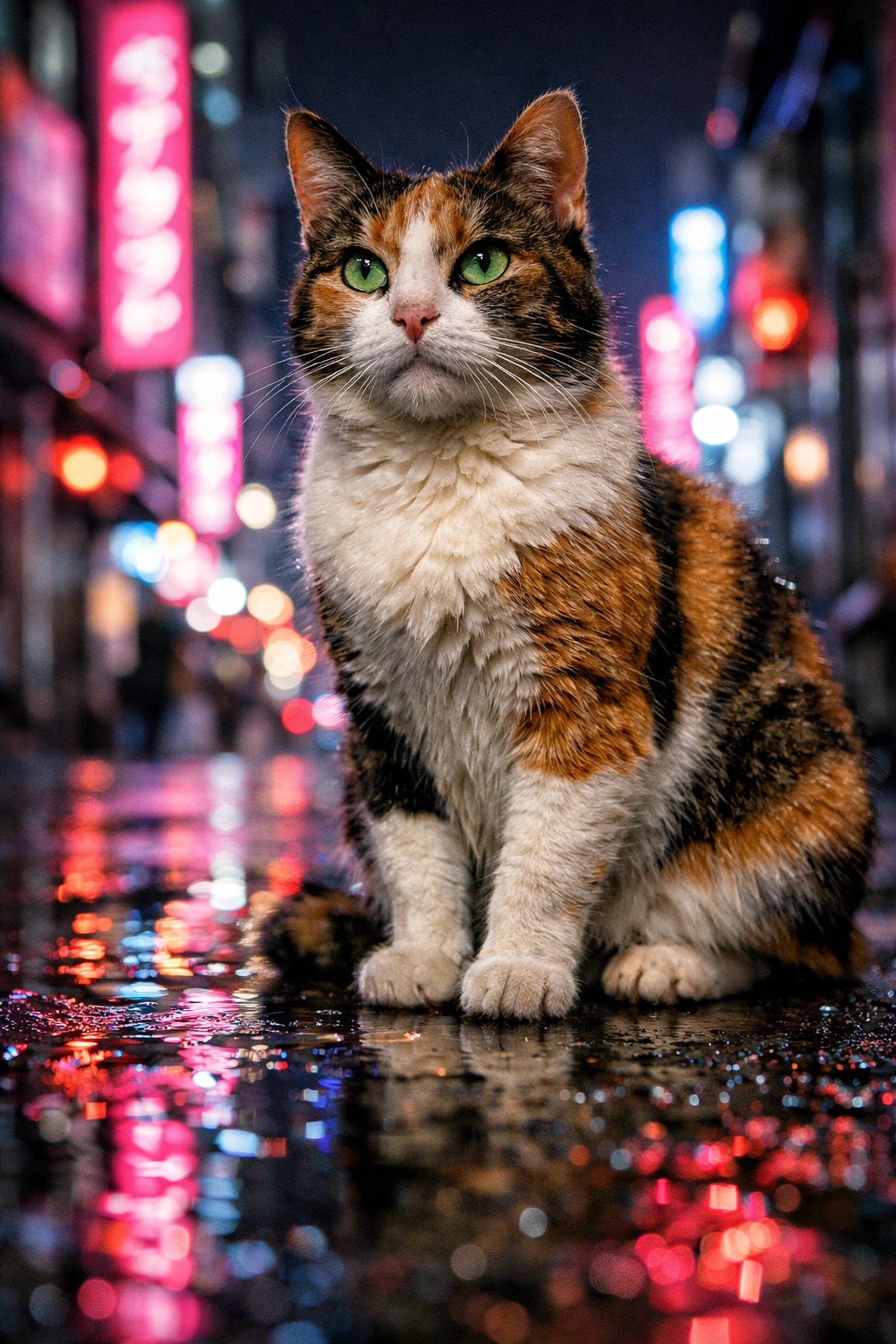
When the sun goes down, the city transforms. Neon signs, street lamps, and car headlights provide a whole new color palette. Use a fast prime lens (something with an f/1.8 or f/1.4 aperture) to capture the glow. If your shots look a bit flat, you can always use Luminar to enhance the glow and bring out those cyberpunk vibes during post-processing.
9. Abstract Geometry
Stop looking at buildings as buildings and start looking at them as triangles, squares, and lines. Find where two walls meet or how a shadow cuts a staircase in half. Abstract street photography is about stripping away the context and focusing on the beauty of the design. You can find more inspiration for this over at PhotoGuides.org.
10. The "Waiting" Game (Fishing)
Instead of walking around looking for shots, find a great background and wait. It could be a cool piece of graffiti, an interesting doorway, or a beam of light. Set up your frame, adjust your settings, and wait for the right person to walk into your "trap." This is often called "fishing," and it’s a great way to ensure your composition is perfect.
11. Motion Panning
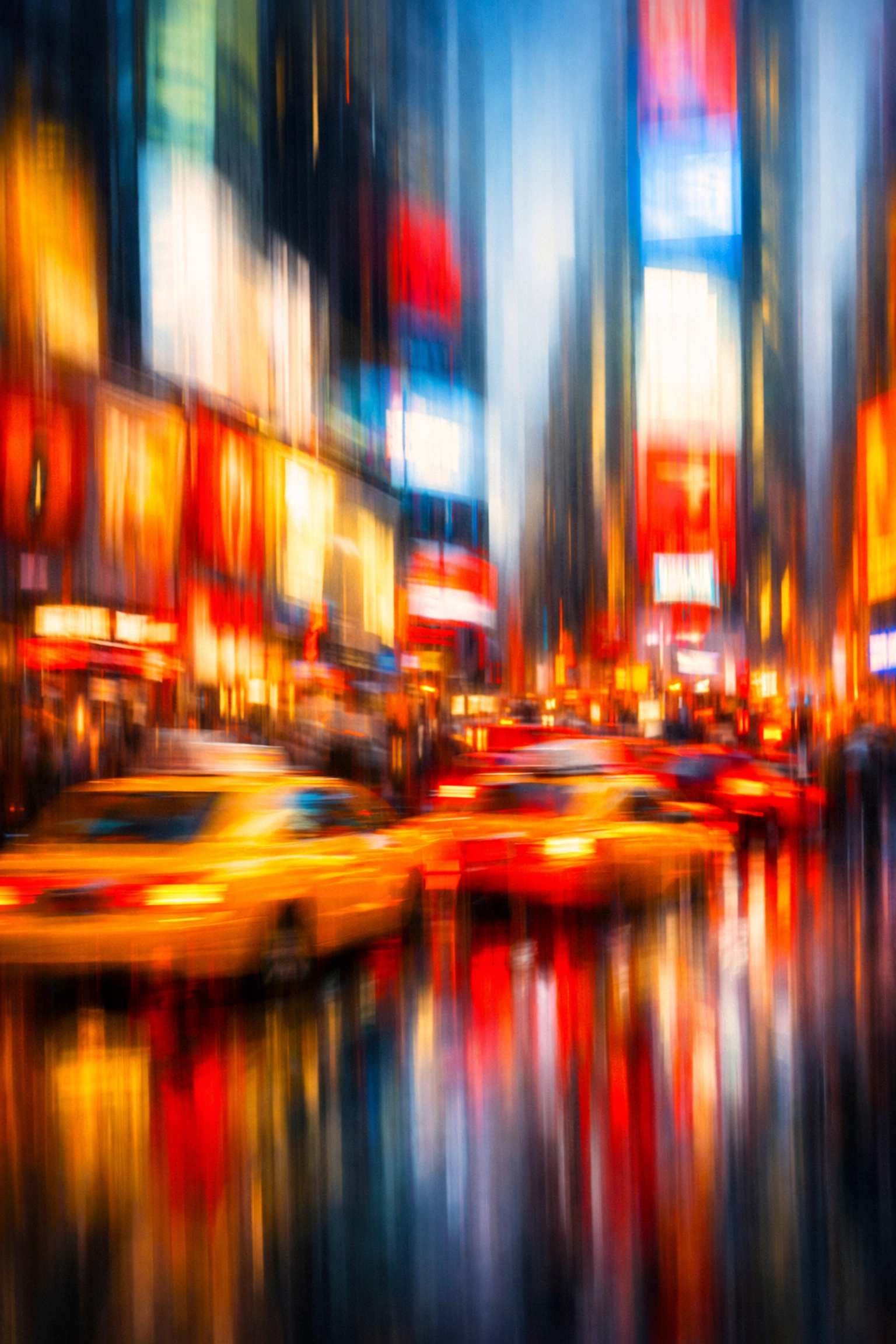
Want to show the energy of the city? Use a slower shutter speed (around 1/15th or 1/30th of a second) and follow a moving subject (like a cyclist or a car) with your camera as you take the shot. If you do it right, the subject will be relatively sharp, but the background will be a beautiful blur of motion. It takes a lot of practice, so don't get frustrated if the first fifty shots are garbage.
12. Reflections in Eyewear
This is a fun one. If you see someone wearing reflective sunglasses, try to capture what they are seeing. It’s like a "picture within a picture." Just be careful: if you're that close, they’ll definitely see you!
13. Public Transport Chronicles
Buses, subways, and trains are gold mines for street photography. People are often in their own world, lost in thought or staring out the window. The lighting is usually moody, and the reflections in the windows add a lot of visual interest. It’s a great place to practice water photography capturing beauty in motion if you’re looking through rain-slicked train windows.
14. Animals in the City
Street photography isn’t just for humans. Stray cats, dogs on leashes, and even pigeons can be great subjects. They often have more personality than the people walking by. Try getting down on their level: the "worm’s eye view": to make them look more heroic and central to the urban landscape.
15. The "Miniature World" Look
If you can get to a high vantage point, like a rooftop or a bridge, look straight down. At a certain height, the people and cars below start to look like tiny toys. You can enhance this effect in post-processing by using a tilt-shift filter to blur the top and bottom of the frame, making the center look like a miniature model.
16. Irony and Innuendo
Keep an eye out for visual jokes. Maybe someone is standing in front of a billboard that makes it look like they have wings, or a "No Smoking" sign is right next to someone lighting up. These ironic moments are the "holy grail" of street photography because they require a quick wit and a fast shutter finger.
17. Use Motion Blur for Ghostly Figures
If you're in a crowded area, put your camera on a tripod (or a steady ledge) and use a shutter speed of about 1 second. The static parts of the street will be sharp, but the crowd will turn into ghostly, transparent streaks. This is a powerful way to show the "hustle and bustle" of city life without focusing on any one individual.
18. Focus on Street Food
The sights, sounds, and especially the steam coming off a street food vendor’s cart are incredibly photogenic. The interaction between the vendor and the customer is a classic street scene that never gets old. Focus on the details: the sizzling food, the exchange of money, or the steam hitting the light.
19. Looking Up
We spend most of our time looking straight ahead or down at our phones. Try looking straight up. The way skyscrapers converge or how the sky is "framed" by buildings creates stunning geometric patterns. This is a great way to discover lesser-known vistas for enigmatic photos.
20. Shoot in Black and White Only
Set your camera’s "Creative Style" or "Film Simulation" to Monochrome. When you remove color, you are forced to focus on light, shadow, texture, and composition. It changes the way you see the world. Suddenly, a red car isn't a red car anymore; it’s a specific shade of gray with a certain highlight on the hood.
21. Glass and Distortion
Look for old windows with "wavy" glass or shop displays with multiple layers of glass. The distortions can create a surreal, painterly look that moves your photography away from reality and toward fine art. You can find some great examples of this style on blog.edinchavez.com.
22. Capture the Commute
There is a specific kind of "stare" people have during their morning commute. It’s a mix of boredom, exhaustion, and deep thought. Capturing this "human condition" is what street photography is all about. Head to the nearest train station during rush hour and just observe.
23. Silhouettes Against Shop Windows
At night, shop windows become giant light boxes. If someone walks between you and the window, you get a perfect silhouette. This is a great way to practice your timing and exposure settings. If you need help with your technical skills, ProShoot.io has some excellent tutorials.
24. Leading Lines in the Alleyways
Don't stick to the main streets. The back alleys often have the best leading lines: pipes, wires, narrow walls, and long shadows that lead the viewer's eye through the frame. These spots are often hidden gem locations for photographers who aren't afraid to explore.
25. Intentional Camera Movement (ICM)
This is for when you want to get really experimental. While the shutter is open (around 1/4 or 1/2 a second), move your camera vertically or horizontally. This turns the city into a series of abstract color streaks. It’s unpredictable and fun, and every shot is unique.
Editing Your Street Shots
Once you’ve gathered your shots, the work isn't done. Editing is where you refine your vision. For street photography, you often want to boost the contrast, recover details in the shadows, or perhaps add a bit of grain to give it that "film" look. I personally love using Luminar for this because its AI tools make it easy to enhance the atmosphere of a street scene without spending hours on manual masking.
Finding Your Voice
The most important thing to remember is that there are no "rules" in street photography: only tools. If you want to take blurry photos, take blurry photos. If you want to take photos of nothing but trash cans, go for it. The goal is to develop a style that is uniquely yours.
If you are looking for more places to shoot, check out our list of top spots for stunning nature imagery or explore some picturesque coastal escapes if you need a break from the concrete jungle.
Street photography is a marathon, not a sprint. You might go out for four hours and come back with absolutely nothing worth keeping. That’s normal. But then, on the fifth hour, everything clicks. The light hits perfectly, the subject walks into the frame, and you capture a moment that will never happen again. That’s the magic of the street.
Keep your battery charged, your lens cap off, and your eyes open. You never know what's waiting around the next corner. For more gear tips and studio setups, don't forget to visit EdinStudios.com and EdinFineArt.com to see how urban moments can be transformed into gallery-quality prints.