Let’s be real: street photography can feel a little "samey" after a while. You go out, you walk the same three blocks, you see someone on a bench, you take the shot, and you go home. It’s fine, but is it lighting your creative fire? Probably not.
If you’re feeling stuck in a rut, it’s not because your city is boring. It’s because you’re looking at it the same way every single time. Street photography isn't just about capturing people; it’s about capturing the energy of the urban environment.
Whether you’re a total beginner just starting your Photography 101 journey or a seasoned pro looking for a spark, these 25 creative ideas will help you see the world through a completely different lens. Let’s dive in.
1. The Single Color Scavenger Hunt
Most people try to capture everything at once. Don't do that. Instead, pick one specific color: let's say vibrant yellow: and tell yourself you are only allowed to take photos of things that feature that color. This forces your brain to scan the environment for specific details rather than general scenes. It’s a great way to simplify your composition and find hidden gems in plain sight.
2. Shooting the Backs of Heads
Faces are the default for street photography, but shooting people from behind adds a layer of mystery. It invites the viewer to wonder: Where are they going? What are they looking at? It removes the identity of the person and turns them into a universal symbol of the "traveler" or the "stranger." Plus, if you're shy about street photography, this is a great way to build confidence without the awkwardness of direct eye contact.
3. Reflections in Unexpected Places
Forget the classic puddle reflection for a second. Look at car hoods, polished storefront windows, or even the sunglasses of a passerby. Use these surfaces to create a "double exposure" look in-camera. Reflections add a dreamlike quality that can make a gritty street scene feel like high art. If you're struggling with the technical side of this, check out our guide on mastering manual mode to ensure you're getting the exposure right.
4. Silhouette Storytelling
Find a strong light source: a sunset, a bright storefront, or a street lamp at night: and expose for the highlights. This turns your subjects into pitch-black shapes. The key here is gesture. Look for people with interesting hats, umbrellas, or dynamic walking strides. When you strip away the detail, the story is told entirely through the shape of the body.
5. Low Angle, High Impact
Stop shooting everything from eye level. It’s what everyone sees every day. Get your camera as close to the ground as possible. This makes ordinary pedestrians look like giants and gives the street a cinematic, "heroic" feel. Modern mirrorless cameras with flip-out screens make this incredibly easy. If you're looking to upgrade to a body that handles this well, check out the Panasonic Lumix S5 II vs Sony A7 IV comparison.

6. Shooting Through "Trash"
I don't mean literal garbage, though that can work too. I mean shooting through fences, dirty windows, leaves, or even a plastic bag held partially over your lens. This adds texture and a sense of "voyeurism." It makes the viewer feel like they are peeking into a private moment. This "shooting through things" technique is a favorite on Shut Your Aperture for adding immediate depth to a flat image.
7. Direct Flash in Daylight
Most people think flash is for the dark. Bruce Gilden would disagree. Using a direct flash in broad daylight creates a harsh, high-contrast look that feels raw and edgy. It freezes motion perfectly and makes colors pop in a way that feels almost hyper-real. It’s a bold move, but the results are undeniably striking.
8. Shadow Puppetry
Sometimes the shadow is more interesting than the person casting it. Look for long shadows on brick walls or sidewalks during the "Golden Hour." Try to frame the shot so the person is out of frame, but their shadow is doing something interesting. It creates a surreal, slightly haunting vibe that works perfectly for urban storytelling.
9. Street Animals
Humans aren't the only ones living in the city. Stray cats, dogs on leashes, and even the much-maligned pigeon can be fantastic subjects. They add a sense of life and unpredictability. A dog waiting outside a grocery store tells a story of companionship and patience without saying a word.
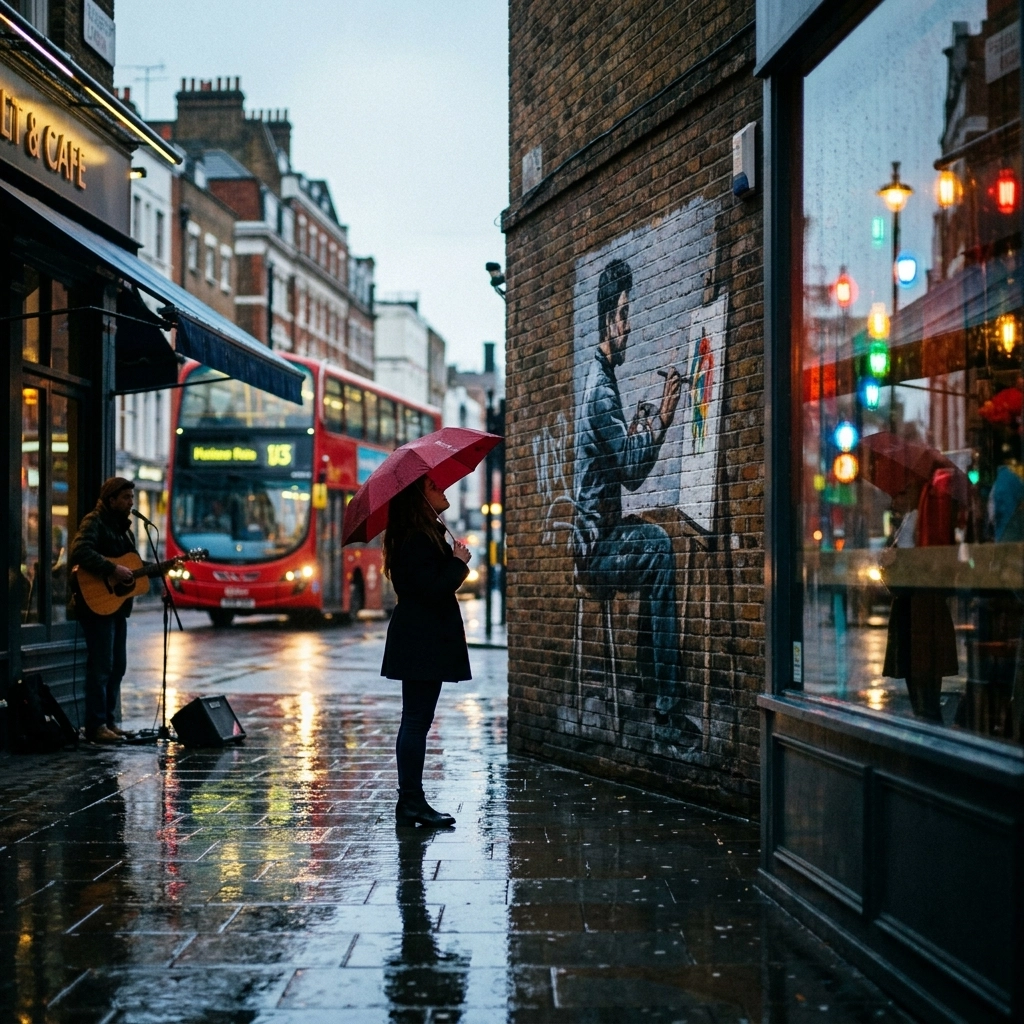
10. Night Neon
Don’t pack your gear away just because the sun went down. Neon signs provide a unique color palette that you just can't get during the day. Look for the way neon light spills onto the wet pavement or lights up the face of a person standing nearby. For more on this, our guide to natural light actually has some great crossovers for understanding how light: artificial or not: interacts with subjects.

11. Intentional Camera Movement (ICM)
Who says your photos have to be sharp? Set a slow shutter speed and move your camera vertically or horizontally as you click. This turns the city into an abstract painting of light and color. It’s a great way to capture the "vibe" of a busy intersection without needing a clear subject.
12. The "Wait for It" Method
Find a great background: maybe some cool graffiti or a perfectly framed doorway: and just… stay there. Don't move. Wait for the right person to walk into your "trap." This is how the masters do it. You’ve already composed the shot; you’re just waiting for the final element to complete the story.
13. Slow Shutter Ghosting
Use a tripod (or a very steady hand) and a slow shutter speed in a crowded area. The stationary objects (buildings, benches) will remain sharp, while the people moving through the frame will become ghostly blurs. It’s a powerful way to show the passage of time and the "rush" of city life.
14. The Panned Action Shot
See a cyclist or a car zooming by? Follow their movement with your camera while using a slower shutter speed. If you time it right, the subject will be sharp while the background is a streak of motion. This is a classic technique that takes practice but looks incredible when done right.
15. Street Portraits (The Polite Approach)
Most street photography is candid, but there’s a lot of value in actually talking to people. Approach someone with an interesting look and ask, "Can I take your portrait?" Most people are flattered. It changes the dynamic from "observer" to "participant." If you're nervous about this, you can learn a lot from the principles of corporate headshot photography regarding how to put people at ease.
16. Hands and Gestures
You don't always need a face to tell a story. A hand holding a cigarette, two people holding hands, or someone counting change can be incredibly evocative. Focus on the details that suggest a larger narrative.
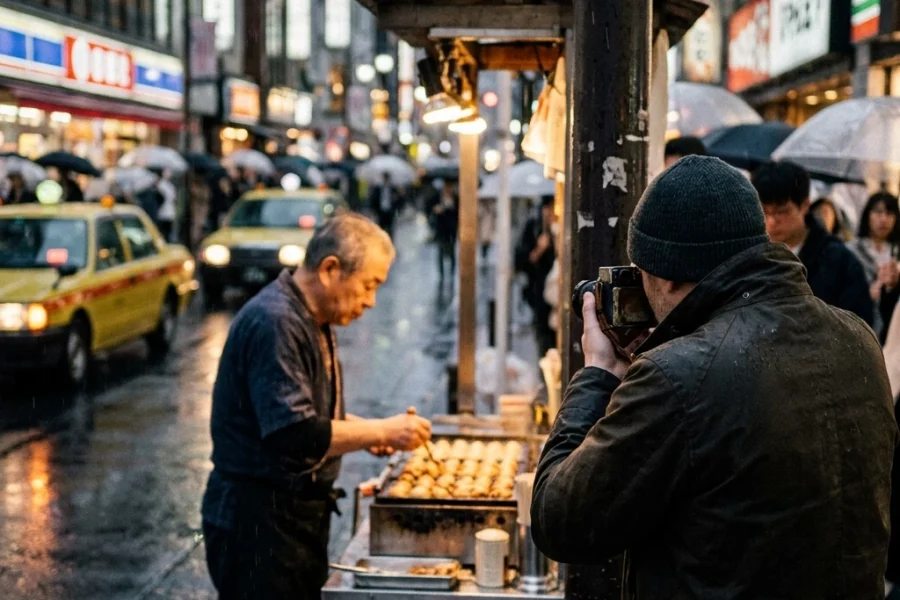
17. Photographing Photographers
The "meta" shot. In tourist-heavy areas, you'll see hundreds of people taking photos. Capture them. It’s a funny, often ironic look at how we interact with our environment in the digital age.
18. Frame Within a Frame
Look for natural frames in the environment: archways, windows, or even the gap between two parked buses. Using a frame within your photo draws the eye directly to the subject and adds a layer of professional polish to your composition.
19. High Contrast Black & White
Street photography and Black & White go together like peanut butter and jelly. When you strip away color, you're forced to focus on light, shadow, and texture. Try pushing your contrast in post-processing using Luminar to give your shots a classic, timeless feel.
20. Leading Lines in Alleys
Alleys are a street photographer’s playground. The walls create natural leading lines that pull the viewer’s eye deep into the frame. Look for alleys with interesting trash, steam vents, or dramatic light leaks.

21. Abstract Architectural Lines
Sometimes the street isn't about people at all. It’s about the shapes we build. Look up at skyscrapers and find where the glass meets the sky. Look for repeating patterns in windows or the brutalist curves of a concrete parking garage.
22. Minimalist Streets
We usually think of cities as crowded, but some of the best street shots are the most minimal. One person in a massive, empty plaza. One lone car on a long stretch of road. Use negative space to make your subject feel small and isolated.
23. Texture and Layers
Look for peeling posters, rusted metal, or layers of old graffiti. These textures tell the history of a city. You can combine these textures with a human element by using a shallow depth of field, keeping the texture in the foreground and the person in the background.
24. Upside Down World
Try photographing a reflection in a puddle and then flipping the image 180 degrees in post-processing. It creates a disorienting, "Inception-like" effect where the world feels slightly off-balance. It’s a simple trick that always stops people mid-scroll.
25. Use AI to Your Advantage
We live in 2026, and AI-powered mirrorless tech is changing the game. Use AI autofocus to track eyes in a crowd so you never miss a moment, or use AI-based editing to clean up distracting elements like power lines or trash. Embracing AI photography news isn't "cheating": it's using the tools at your disposal to create the best possible art.
Putting It All Together
Street photography is as much about your mindset as it is about your gear. If you go out expecting to see nothing, that's exactly what you'll find. But if you go out with a specific "mission": like finding the color red or shooting from the ground: you’ll start seeing shots you would have walked right past yesterday.
Remember, even the pros make mistakes. If you find your shots aren't hitting the mark, you might be falling for some common traps. Take a look at our guide on 7 mistakes you’re making with your photography to see if any of those apply to your street work.
Once you’ve captured your shots, the real magic happens in the edit. I personally love using Luminar for my street work because it handles contrast and "grit" better than almost anything else on the market. It allows you to enhance the mood of the street without making it look fake.

The most important thing? Just get out there. The street is constantly changing, and the "perfect" shot is happening right now, somewhere in your city. Stop overthinking your settings, stop worrying about what people think of you, and just master your camera enough to get the job done.
For more inspiration, check out the fine art collections at www.edinfineart.com or dive into deeper tutorials over at blog.edinchavez.com. The world is your studio: go shut your aperture and start shooting!