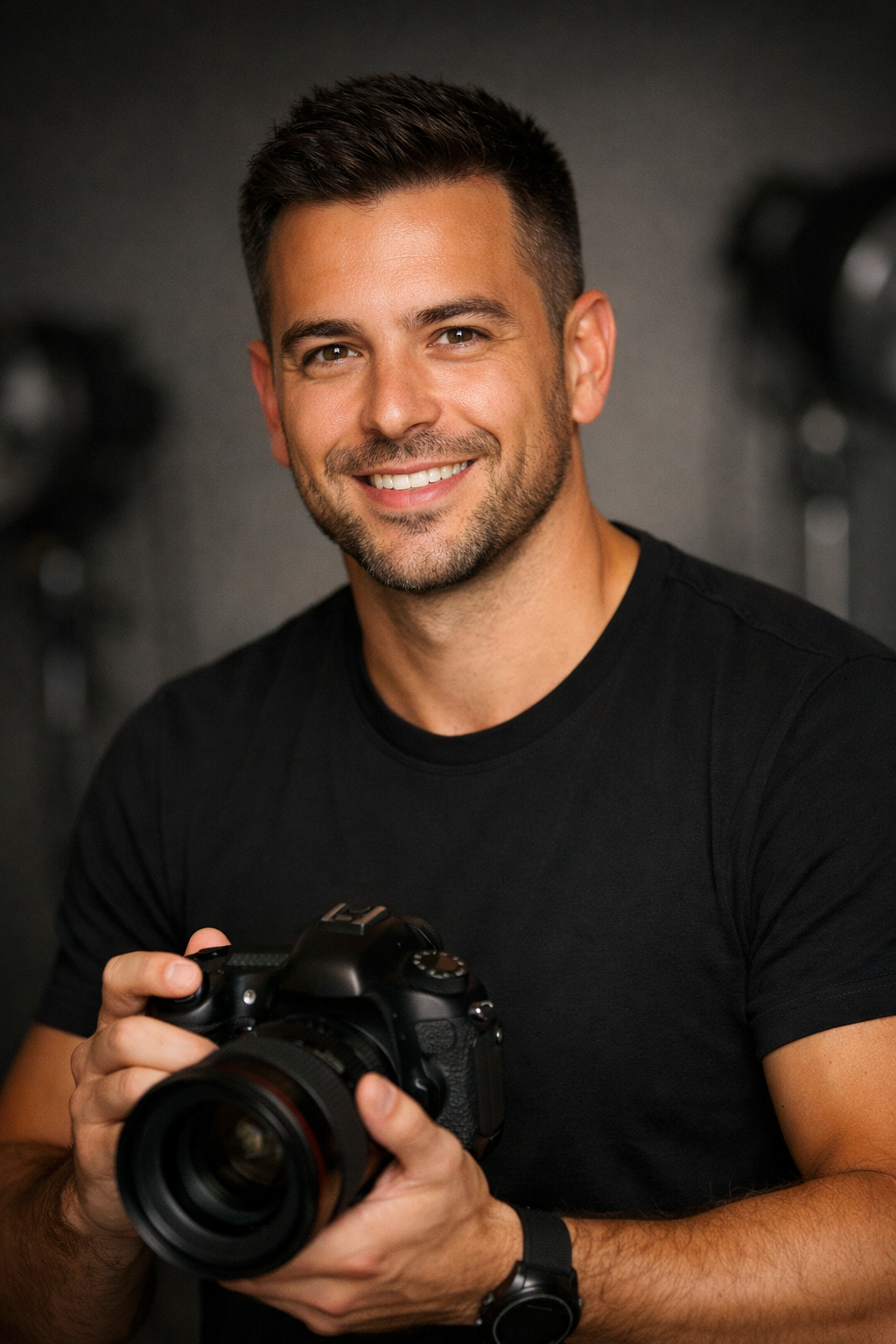

Let’s be real for a second: portrait photography is a lot harder than it looks. We’ve all been there. You have a beautiful subject, a professional-grade camera, and a location that looks like it was ripped from a travel magazine. You click the shutter, look at the back of the screen, and… it’s just meh.
Maybe the skin looks a little gray. Maybe their nose looks twice its actual size. Or maybe the background is so busy it looks like a telephone pole is growing out of your subject’s head.
The good news? Most of these "unlucky" shots aren't bad luck at all. They’re usually the result of a few common technical hiccups that even pros struggle with from time to time. If you want to stop taking "okay" photos and start creating portraits that actually stop the scroll, you need to fix these seven common mistakes.
1. The Eyes Are Out of Focus (The Cardinal Sin)
If you take away only one thing from this post, let it be this: if the eyes aren't sharp, the portrait is a failure. Period.
The eyes are the connection point between the subject and the viewer. They carry the emotion, the story, and the "soul" of the image. When a viewer looks at a portrait, their eyes naturally gravitate toward the subject's eyes. If those eyes are blurry, even slightly, it creates a sense of visual discomfort.
Why it happens:
Usually, this happens because you’re shooting with a very wide aperture (like f/1.4 or f/1.8) to get that creamy background blur, and your focus point slipped just an inch. If you’re focused on the tip of the nose or the ear, the eyes will be soft.
How to fix it:
- Use Eye-AF: Most modern mirrorless cameras (like the Panasonic Lumix S5 II or Sony A7 IV) have incredible Eye-Autofocus. Turn it on and let the AI do the heavy lifting.
- Stop Down: If you’re struggling with focus, move from f/1.8 to f/2.8 or f/4. You’ll still get a nice background, but you’ll have a larger "slice" of focus to work with.
- Focus on the Near Eye: If the subject is angled, always focus on the eye closest to the camera.

2. Using the Wrong Focal Length (The "Big Nose" Effect)
Choosing a lens isn't just about how much of the scene you can fit in the frame; it’s about how that lens "sees" the world. A common mistake beginners make is using a wide-angle lens (like 24mm or 35mm) for tight headshots.
Why it happens:
Wide-angle lenses create perspective distortion. When you get close to a subject with a wide lens, whatever is closest to the glass (usually the nose) looks much larger than it actually is, while the ears look like they’re receding. This is rarely flattering.
How to fix it:
- Go Long: For classic portraits, stick to the "portrait range" of 85mm to 135mm. These focal lengths "compress" the features, making the face look more natural and slimming.
- The Nifty Fifty: If you’re on a budget, a 50mm lens is a great middle ground, but try to avoid getting too close for a tight headshot. Use it for waist-up or full-body shots instead.
- Understand Distortion: If you must use a wide lens for environmental portraits, keep your subject toward the center of the frame to minimize stretching at the edges.
For more on choosing the right gear for different styles, check out The Ultimate Guide to Photography Tutorials.
3. Ignoring the "Raccoon Eyes" (Bad Lighting)
Lighting is the "photo" in photography. You can have the best posing in the world, but if your lighting is harsh, your subject is going to look tired and aged.
Why it happens:
The most common mistake is shooting in direct, overhead midday sun. This creates deep, dark shadows in the eye sockets (the "raccoon" look) and harsh highlights on the forehead and nose. Another common issue is "flat" light, where the subject is so evenly lit they look like a cardboard cutout.
How to fix it:
- Find Open Shade: Move your subject under a tree, an awning, or the shadow of a building. This provides soft, wrap-around light that is universally flattering.
- The Golden Hour: Shoot in the hour after sunrise or before sunset. The light is directional, warm, and soft.
- Use a Reflector: If you’re shooting in a tricky spot, use a simple white or silver reflector to bounce light back into those dark eye shadows.
- Post-Processing: If you did catch some harsh shadows, tools like Luminar have incredible AI tools designed specifically to lighten under-eye circles and balance skin tones with a single slider.

4. Lazy Posing (The "School Photo" Vibe)
Nothing kills a vibe faster than a subject who doesn’t know what to do with their hands. If you just tell someone to "stand there and smile," you’re going to get a stiff, awkward, "first day of kindergarten" photo.
Why it happens:
We often forget that being in front of a camera is nerve-wracking. If you aren't directing your subject, they will default to a "safe" (read: boring and stiff) position.
How to fix it:
- Give Them an Action: Instead of "stand there," tell them to "walk toward me" or "fix your cufflink" or "run your hand through your hair." Action creates natural movement.
- The "Turtle" Move: To get rid of a double chin or a soft jawline, have your subject push their forehead slightly toward the camera and then down. It feels weird for them, but it looks amazing on camera.
- Shift the Weight: Tell your subject to put their weight on their back foot. This naturally angles the body and creates more interesting lines.
- Communicate: Keep talking. Silence is the enemy of a good portrait session. Even if you're just saying "that’s great," it keeps the energy up.
If you’re doing more formal work, you might want to look at our guide on 7 mistakes you’re making with corporate headshots to refine those professional poses.
5. The "Busy Background" Blunder
You’re so focused on the person that you completely forget what’s behind them. Then you get home, look at the photos, and realize there’s a bright red trash can growing out of their shoulder.
Why it happens:
We have binocular vision, which helps us see depth. The camera, however, flattens everything into a 2D plane. If there’s a distracting element behind your subject, the camera will treat it with the same importance as the subject’s face.
How to fix it:
- Check the Edges: Before you click, scan the edges of your frame. Is there a stray branch? A random passerby? Move your subject or yourself a few inches to hide it.
- Create Distance: The further your subject is from the background, the more "bokeh" (blur) you’ll get. Don't let them lean flat against a wall; bring them five feet forward.
- Use Color Contrast: If your subject is wearing blue, find a background with warm tones (like a sunset or a brick wall). This makes them "pop" out of the frame.
- Scout Better Locations: Sometimes the best background is just a simple texture. Think about using rare textures for tangible aesthetic photography to add depth without clutter.

6. Terrible Framing and Cropping
Where you "cut" your subject in the frame matters. A common mistake is cutting people off at the joints: ankles, knees, or wrists. This makes the subject look like an amputee and creates an uncomfortable visual tension.
Why it happens:
Usually, it’s a result of trying to "fit everything in" without a plan, or just being sloppy with the composition.
How to fix it:
- Never Cut at the Joints: The golden rule of portraiture is to crop at the "meat," not the "joint." Crop at the mid-thigh, the waist, or the mid-upper arm.
- Mind the Headroom: Don't leave a massive gap of empty space above the subject’s head unless it’s a deliberate stylistic choice. It makes the subject look small and unimportant.
- Rule of Thirds: Place the subject’s eyes on one of the top horizontal "third" lines. This creates a more balanced, professional feel.
- Look for Lines: Use leading lines in the environment to point toward your subject. You can find more tips on this over at Shut Your Aperture.
7. Over-Editing (The "Plastic" Skin Look)
We live in the age of filters, and the temptation to "fix" everything in post-production is huge. But there is a very fine line between a polished portrait and a photo that looks like a 3D render of a human being.
Why it happens:
It’s easy to get carried away with frequency separation or "smooth skin" sliders. Before you know it, you’ve removed all the skin texture, the pores, and the natural shadows that define a face.
How to fix it:
- The 50% Rule: Once you finish an edit, walk away for ten minutes. Come back, look at it with fresh eyes, and then dial back your opacity by about 20-30%. Usually, we overdo it in the moment.
- Keep the Texture: Skin has pores. People have fine lines. These things make us human. Use software like Luminar which uses AI to enhance features rather than just blurring them into oblivion. Its "Skin AI" is particularly good at keeping texture while removing blemishes.
- Color Grading: Instead of just fixing skin, focus on the mood. Use color to tell a story. For inspiration on mood and atmosphere, take a look at Edin’s work on www.edinfineart.com.
Bringing it All Together
Improving your portrait photography isn't about buying a more expensive camera; it’s about being more intentional with the gear you already have. I’ve been working with Sonny, our Social Media Manager, to pull together some visual examples of these fixes, so keep an eye on our Instagram for more side-by-side comparisons.
If you want to see how these techniques apply to different genres: like how to avoid similar errors in nature shots: check out our guide on 7 mistakes you’re making with landscape photography.
Portraiture is a journey. You’re going to mess up the focus. You’re going to have a shoot where the lighting is garbage. The trick is to recognize why it happened so you can fix it next time.
Keep shooting, keep experimenting with hidden gem locations, and most importantly, keep talking to your subjects. The best portraits are the ones where the person on the other side of the lens feels seen.
For more tips, tricks, and behind-the-scenes stories, head over to blog.edinchavez.com. Now go out there and shut your aperture!
Skylum’s Aperty is purpose-built for portrait retouching with AI skin, eye and detail enhancement. Luminar Neo’s Portrait AI complements it for full-body and editorial work. Tagged as affiliate per FTC.