Before going further, make sure your aperture fundamentals are locked in: our aperture photography guide walks through it shot by shot.
Let’s be real for a second: street photography is exhausting. You’re out there pounding the pavement for hours, dodging tourists, trying not to look like a creep, and sometimes you come home with absolutely nothing. We’ve all been there. You look at your portfolio and it feels like a collection of "people walking past walls." It’s stale. It’s repetitive. It’s time for a shake-up.
Refreshing your portfolio doesn't mean you need to fly to Tokyo or Paris. It just means you need to change how you see the world right in front of you. Whether you’re a seasoned pro or just getting started with photography for beginners, these 25 ideas are designed to get you out of your comfort zone and help you capture shots that actually tell a story.
1. Focus on the Backs
If you’re still a bit shy about pointing a camera at someone’s face, this is your golden ticket. Photographing people from behind allows you to focus on their silhouette, their clothing, or the environment they are walking into. It adds a layer of mystery. Who are they? Where are they going? It’s a great way to ease into the craft while you’re still mastering your first camera.
2. The One-Block Challenge
Pick one city block. Just one. Stay there for an entire hour. You’ll be surprised at how much you miss when you’re constantly moving. By staying still, you become part of the furniture. People stop noticing you, and the "real" moments start to happen. You’ll begin to see how the light changes and how different characters interact with the same backdrop.
3. Catch the "Photographers Photographing"
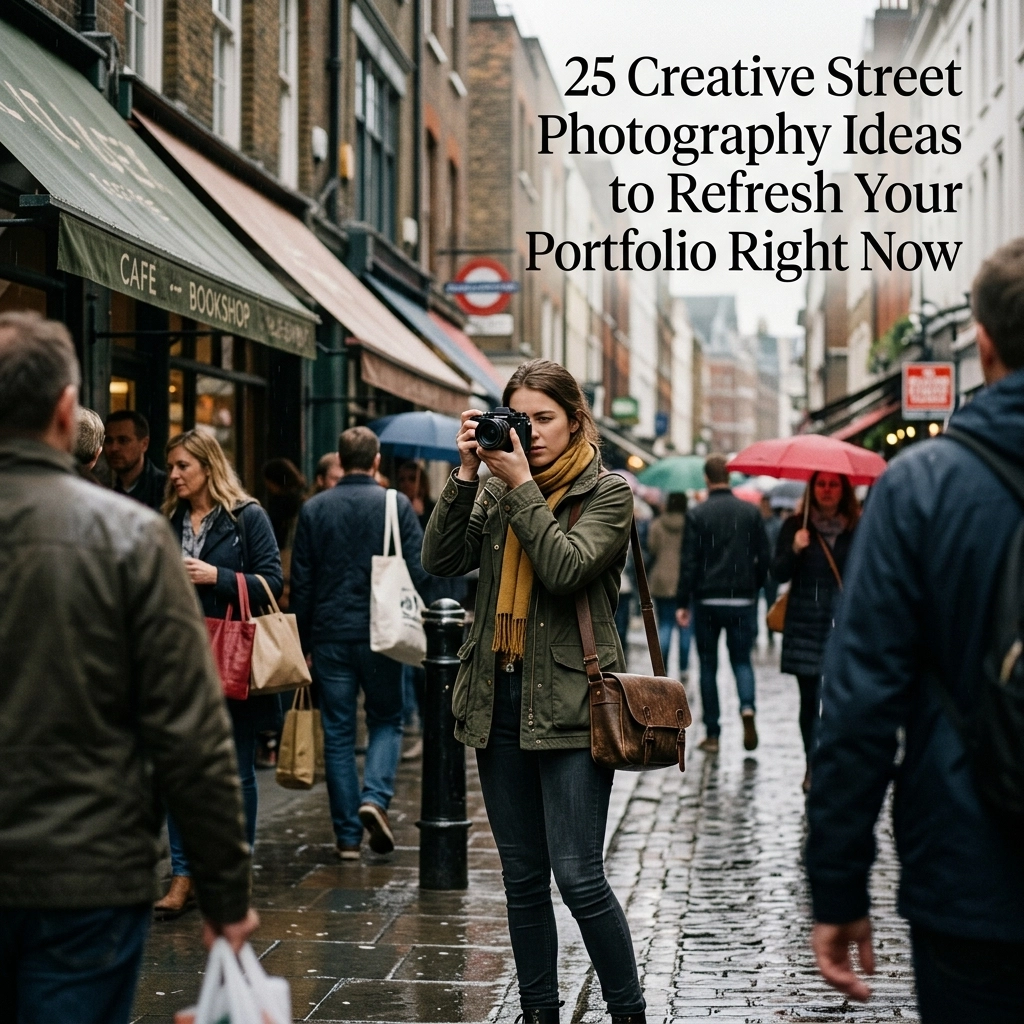
There is something inherently meta and funny about a photographer catching another photographer in the act. Whether it’s a tourist with a selfie stick or a pro struggling with a tripod, these shots offer a behind-the-scenes look at our culture’s obsession with images. Plus, they usually won't mind because they’re doing the same thing!
4. Isolate Hands and Feet
Sometimes the whole person is too much. Try focusing on just the details. A pair of weathered hands holding a cigarette, or someone in bright red heels stepping over a puddle. These "partial" portraits can be incredibly powerful and often tell a more intimate story than a full-body shot.
5. Intentional Motion Blur
Stop trying to freeze everything. Lower your shutter speed and let the world blur. This is a fantastic way to convey the "hustle and bustle" of city life. If you’re struggling with the technical side of this, check out our guide on how to master manual mode.
6. Shoot Through Things
Find a window, a fence, or even some hanging leaves. Shooting through an object creates layers and depth. It makes the viewer feel like they are "peeking" into a private moment. If you’re shooting through glass, the reflections can add a surreal, dreamlike quality to your work.
7. Find the Geometry
Street photography isn't always about people. Sometimes it’s about the shapes the city makes. Look for leading lines, triangles, and repeating patterns in architecture. When a person finally walks into that perfectly framed geometric space, that’s when you hit the shutter.
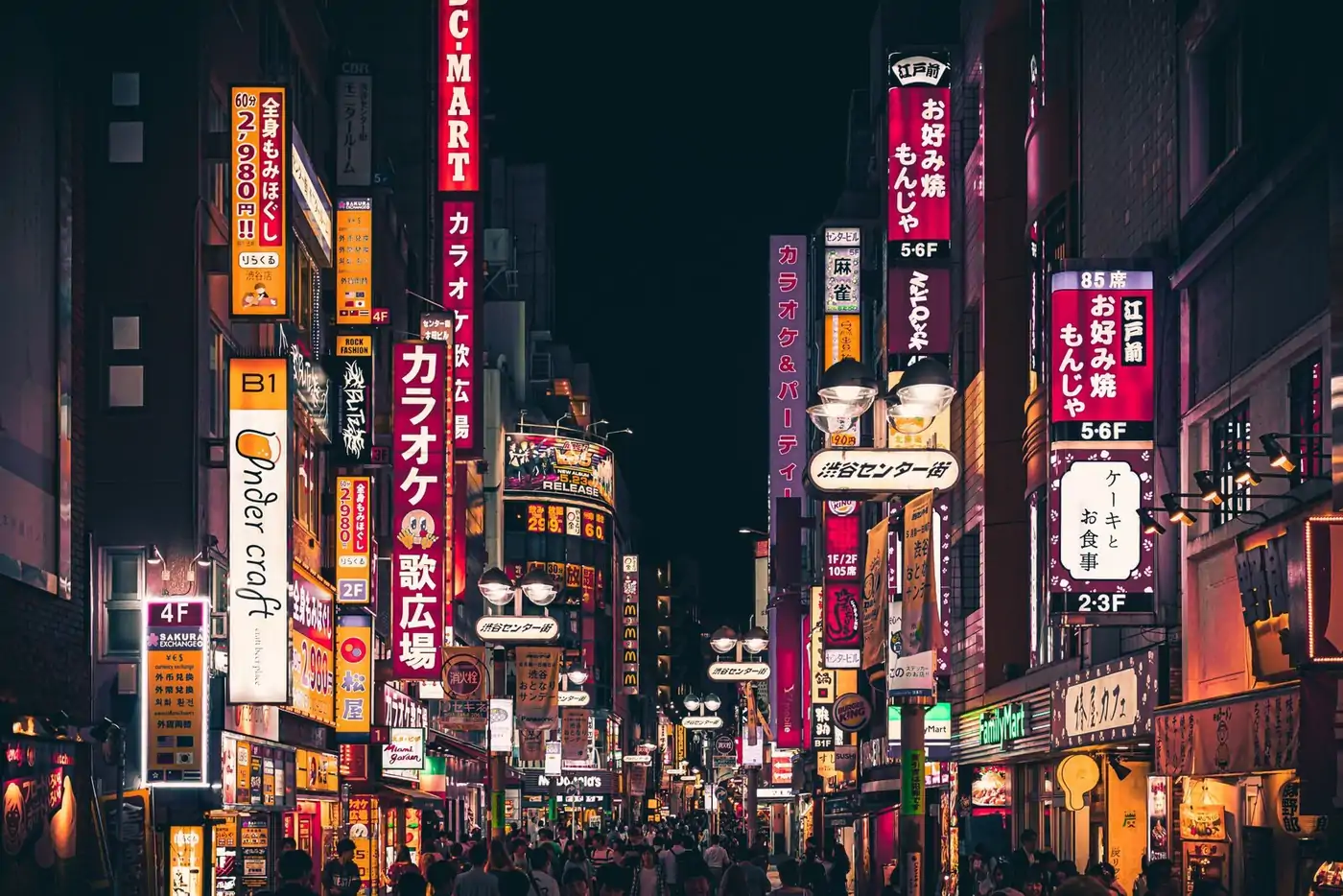
8. Neon Nights
When the sun goes down, the city changes. Grab a fast lens and look for neon signs. The high contrast between the bright lights and the deep shadows is a perfect recipe for moody, cinematic shots. If your night shots are looking a bit flat, you can always use Luminar to help pop those colors and manage the digital noise during your edit.
9. High-Angle Perspectives
Get high. Find a parking garage, a balcony, or a rooftop. Looking down on the street changes the scale of everything. People look like ants in a giant maze. It’s a classic perspective that never gets old and helps break up the "eye-level" monotony of most portfolios.
10. Low-Angle (The Worm’s Eye View)
On the flip side, get your camera as close to the ground as possible. This makes subjects look more imposing and heroic. It also lets you use the texture of the pavement or a puddle as a foreground element. If you have a flip-out screen, use it! Your knees will thank you.
11. Reflections in Puddles
Rainy days are the best days for street photography. Don't let a little water stop you. Puddles act as natural mirrors. Flip the photo upside down in post-processing to create a "parallel universe" effect that always stops people mid-scroll.
12. Silhouettes Against the Sun
During the golden hour, find a bright light source and position your subject between you and the light. Expose for the highlights, and let your subject fall into total blackness. This is great for emphasizing shape and movement over detail.
13. Street Style and Fashion
The street is the ultimate runway. Look for people who are intentionally expressing themselves through their clothes. This is a bit more like portrait photography, but the candid nature of the street keeps it feeling authentic rather than staged.
14. Animals of the City
Street photography doesn't have to be human-centric. Dogs waiting outside shops, cats lounging on window sills, or pigeons fighting over a crust of bread, these are all part of the urban fabric. Animals often provide the humor or heart that a street portfolio needs.
15. Minimalist Street
Most street photos are busy and chaotic. Try the opposite. Find a plain wall with a single door or a lone street lamp. Wait for a single person to enter the frame. The vast amount of negative space will make your subject pop and create a sense of isolation or calm.
16. The "Decisive Moment"
This is the holy grail of street photography, popularized by Henri Cartier-Bresson. It’s that split second where everything aligns, the light, the composition, and the action. It requires a lot of patience and a bit of luck. To get better at this, you really need to know your gear inside and out so you don't miss the shot while fumbling with dials. If you need a refresher, head over to Shut Your Aperture's learning center for some deep dives.
17. Use Street Art as a Backdrop
Murals and graffiti are gifts from the city. Don't just take a photo of the art, that’s someone else’s work. Use the art to add context or irony to a person walking by. If the mural is a giant face, wait for someone to walk by so it looks like the mural is looking at them.
18. Public Transport Scenes
Subways, buses, and train stations are gold mines for raw emotion. People are in their own worlds, staring out windows or lost in thought. The lighting is often harsh and dramatic, which adds to the gritty "street" feel. Just be respectful of people’s space in cramped quarters.
19. Capture the Weather
Most people stay inside when it’s snowing or pouring rain. That’s exactly when you should go out. Umbrellas, splashing boots, and misty air add incredible atmosphere to your shots. Just make sure your gear is weather-sealed. If you're looking for gear that can handle the elements, checking out the latest mirrorless cameras for 2026 is a good place to start.
20. Juxtaposition
This is all about irony. Look for signs that contradict what’s happening in front of them. A "Fitness" sign next to a guy eating a massive burger, or a "No Loitering" sign with a group of people hanging out right under it. These shots are witty and show that you have a keen eye for social commentary.
21. Abstract Textures
Sometimes the street is just a collection of textures. Peeled paint, rusted metal, or the way shadows fall on a corrugated fence. These shots lean into fine art territory. If you want to see how these can be elevated, take a look at some of the work on EdinFineArt.com.
22. Street Portraits (With Permission)
Wait, isn't street photography supposed to be candid? Usually, yes. But stopping someone and asking, "Hey, can I take your photo?" can lead to some of the most striking portraits in your portfolio. It’s a different skill set, but it adds a human connection that candid shots sometimes lack. For more on this, check out these corporate headshot tips which actually apply quite well to street portraits too.
23. Double Exposures
Many modern cameras allow you to do double exposures in-camera. This lets you blend a street scene with a texture or another person. It’s a great way to get creative and experimental. If your camera doesn't do it, you can easily layer images in Luminar to achieve that ethereal look.
24. Abandoned Spaces
The "street" doesn't have to be busy. Abandoned buildings or empty alleyways tell the story of a city’s past. These locations are often filled with incredible light and a sense of "stillness" that contrasts beautifully with the usual chaos of street photography.
25. Shoot in Black and White
When you strip away color, you’re left with light, shadow, and emotion. If your portfolio feels messy, try switching your camera to "Monochrome" mode. It forces you to see the world differently. You stop looking for "red shirts" and start looking for "bright light."
Bonus: Embrace the AI Revolution
It’s 2026, and ignoring AI is just silly. You don't have to let a robot take your photos, but you can use AI to enhance them. Whether it’s removing a distracting trash can or fixing the lighting in a shot you almost nailed, tools are changing fast. If you're curious about how to stay ahead, read up on AI-powered mirrorless tech. Just remember to keep it looking natural: nobody wants a street photo that looks like a Pixar movie.
Wrapping It Up
The best thing about street photography is that the "set" is always changing. Every day is a new chance to find something weird, beautiful, or totally mundane but somehow fascinating. If you’re feeling stuck, just pick one of these ideas and commit to it for a weekend.
Don't worry about the "7 mistakes" or "perfection." Just get out there. If you want more inspiration or some technical deep dives, check out Shut Your Aperture or head over to Edin Chavez’s personal blog to see how he tackles the streets.
Now, stop reading this and go shut your aperture!