If you’ve been paying any attention to the headlines lately, you know the photography world is vibrating. It’s May 2026, and the industry is right in the middle of the most significant transition since we ditched film for digital sensors. But here’s the thing: most of the "experts" out there, the ones paid by the big camera brands, are telling you the wrong story.
They want you to focus on megapixel counts, stacked sensors, and the latest autofocus algorithms that can track a hummingbird’s heartbeat from a mile away. But that’s not the real "2026 Camera Shift." The real shift is happening under the surface, in how we think about the craft, how we use mobile tools, and how we finally stop being slaves to the social media algorithm.
Today, I’m pulling back the curtain. We’re going to talk about what’s actually happening in the world of photography news and why the gear you think you need might be the very thing holding you back.
The AI Elephant in the Room: It’s Not Just a Tool Anymore
We’ve all seen the headlines about why everyone is talking about AI photography news. But in 2026, AI has moved past being a "cool feature" and has become the invisible foundation of everything we do.
The experts don’t want to admit that the hardware gap is closing because the software is doing the heavy lifting. When you look at tools like Luminar, you realize that the difference between a $5,000 professional body and a mid-range mirrorless camera is shrinking daily. The software can now replicate depth of field, correct lens aberrations, and even relight a scene with such precision that the average viewer can’t tell the difference.
But here is the secret: AI isn't here to replace your creativity; it's here to kill the grunt work. The shift in 2026 is about using AI-powered mirrorless tech to spend less time behind a computer and more time behind the lens. If you’re still spending four hours masking out a sky by hand, you’re not being a "purist", you’re just wasting time.

The Modular Mobile Revolution
For years, "real" photographers laughed at iPhones. In 2026, nobody is laughing. The shift we’re seeing now is the legitimization of the mobile workflow. It’s no longer about a phone being a "backup" camera; it’s about the phone being a modular hub for a professional ecosystem.
We’re seeing professional-grade telephoto attachments, external SSD recording via USB-C (which is now the universal standard), and apps that allow for full manual control that rivals high-end DSLRs. If you’re just starting out, check out Photography 101: A Beginner’s Guide to Mastering Your First Camera, and you'll see that the principles apply whether you’re holding a Nikon or an iPhone 17 Pro.
The secret experts won't tell you? A lot of the commercial work you see on billboards today was shot on a mobile device and processed through advanced workflows. The "gear gap" is officially dead. The win goes to the person who knows how to use their tools, not the one with the biggest invoice from the camera store.
Why "Perfect" is the New Boring
One of the biggest shifts in 2026 is the rejection of the "clinical" look. For a decade, lens manufacturers raced to make lenses that were perfectly sharp from corner to corner with zero distortion. Now that everyone has achieved that, the photos all look… well, the same.
The real pros are moving back to character. They are hunting for vintage glass, using diffusion filters, and embracing "bad" lighting conditions. While everyone else is chasing the golden hour, the experts are out in the harsh midday sun or the pouring rain, finding beauty in the "imperfections."
If you're struggling with this, take a look at these 7 mistakes you’re making with natural light portraits. Often, the "mistake" is actually trying too hard to make things perfect instead of letting the environment speak for itself.
The Death of the Algorithm-Driven Photographer
We’ve all been there. You take a photo you love, post it, and it gets ten likes. Then you post a generic sunset, and it blows up. For years, photographers have been shooting for the algorithm, but the 2026 shift is about personal taste.
The experts are finally admitting that the algorithm is a treadmill that leads to burnout. The most successful photographers right now are the ones building their own communities and focusing on high-quality, intentional work. They aren't worrying about "reels" or "trending audio." They are focusing on mastery.
If you want to join that group, you need to get back to the basics. I always recommend people start by learning how to master manual mode. Once you stop fearing your camera, you stop letting the technology (and the social platforms) tell you what a "good" photo looks like.

Mastering the Light: The Only Secret That Actually Matters
If you want to know what experts really don't want you to know, it's this: The camera doesn't matter nearly as much as the light. It sounds like a cliché, but in 2026, it’s more true than ever. With AI and high-dynamic-range sensors, anyone can get a "decent" exposure. But very few people know how to shape light.
Understanding the difference between soft light, sidelight, and the "glow" that happens right before the sun disappears is what separates the pros from the amateurs. You can read more about this on PhotoGuides.org, where they break down the physics of light in a way that actually makes sense for photographers.
At Shut Your Aperture, we believe that daily photography tutorials are the key to building this muscle. You can’t just read about light; you have to see it. You have to notice how it hits a building in the city or how it falls across a face during a corporate headshot session.
The Street Photography Resurgence
Urban shooting has exploded in 2026. Why? Because in a world of AI-generated landscapes and perfectly retouched studio portraits, people are hungry for reality. Street photography is the ultimate "truth" in our industry.
But there’s a catch. The "experts" will tell you that you need a discreet Leica or a specific 35mm lens to be a street photographer. That’s nonsense. Some of the best urban work being done right now is being shot with long telephoto lenses or even wide-angle mobile setups. If you want the real tea, check out these street photography secrets revealed.
The secret to great street work in 2026 isn't the gear; it's the ability to blend in and anticipate the moment. It’s about being a participant in the world, not just an observer.

Choosing the Right Kit for 2026
If you are in the market for new gear, don't just buy what's on the "best seller" list. The 2026 camera shift means that "all-in-one" cameras are becoming more popular than ever. People want a camera that can handle 8K video for their YouTube channel but also produce stunning stills for fine art prints.
When you’re looking at how to choose the best mirrorless cameras for your 2026 kit, look for features like:
- Computational Raw: Cameras that use internal AI to stack exposures instantly.
- Global Shutter: Eliminating distortion in fast-moving subjects.
- Seamless Connectivity: Because if you can't get your photo to your client or your phone in three seconds, you're already behind.
For those focusing on specific niches, like landscapes, sometimes a specialized setup is better. Check out the Sony ZV-E10 II settings for landscape photography to see how a "vlogging" camera can actually be a powerhouse for stills.
The Fine Art Influence
We’re seeing a massive crossover between commercial photography and fine art. In the past, these were two separate worlds. Today, clients want their corporate headshots to look like portraits hanging in a gallery. They want mood, texture, and soul.
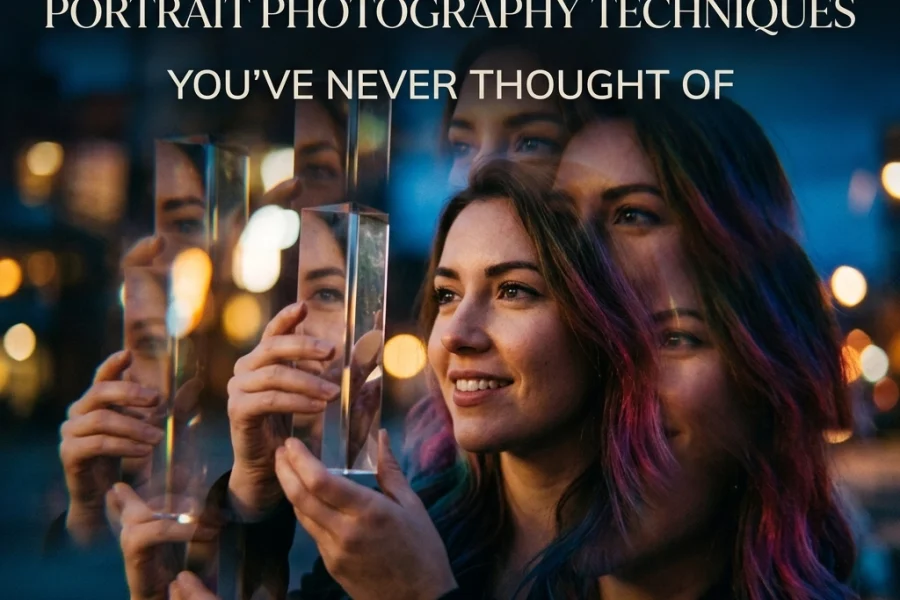
This is why mastering portrait photography techniques is so vital. It’s not just about the technical settings; it’s about the psychology of the shoot. You have to connect with your subject. Edin often talks about this on blog.edinchavez.com, the idea that the camera is just a bridge between two people.
Common Pitfalls: Don't Get Caught in the 2026 Hype
With all this "news" flying around, it's easy to make mistakes. Here are the big ones we’re seeing right now:
- Over-reliance on AI Editing: Yes, Luminar is amazing, but if you push the sliders too far, your photos will look like plastic. Avoid these 7 mistakes with AI photo editing.
- Ignoring the Basics: People are buying 2026 tech but don't know the exposure triangle. Don't be that person. Go back and fix those 7 mistakes you're making with manual mode.
- Landscape Laziness: Just because you have a high-res sensor doesn't mean you can ignore composition. See our guide on 7 mistakes you're making with landscape photography.

Intentionality: The Real Secret Weapon
If you take one thing away from this "news reveal," let it be this: The experts aren't smarter than you; they are just more intentional.
In 2026, the shift is away from "spraying and praying." With sensors that can shoot 60 frames per second, it’s tempting to just hold the shutter down and hope for the best. But the best photographers are slowing down. They are spending more time looking and less time clicking.
They are planning their moments. They are researching locations. They are mastering light before they even take the camera out of the bag. This intentionality is what makes a photo stand out in a world of AI-generated noise.
Your Next Steps in the 2026 Camera Shift
The industry is moving fast, but you don't have to feel overwhelmed. The key is to keep learning and keep shooting. Don't let the marketing hype tell you that your gear is obsolete. Instead, focus on your vision.
If you really want to dive deep and master these shifts, come hang out with us at learn.shutyouraperture.com. We break down all of this in way more detail, without the fluff.
Whether you are trying to fix 7 mistakes with your corporate headshot or you're trying to figure out if you should upgrade your mirrorless body, remember that the most important part of the 2026 camera shift is you.
The "secrets" aren't really secrets. They are just the fundamental truths of photography that get buried under the noise of new product releases. Master the light, master your tools (whether it's an iPhone or a Sony), and stop asking the internet for permission to be creative.
Now, go out there and shut your aperture. Or open it. Just make sure you know why you're doing it.