If aperture still feels fuzzy, start with our deep-dive aperture photography guide — it covers everything from f-stop math to bokeh control.
Let’s be real: street photography can get a little stale. If I see one more photo of a person walking past a brick wall with a "deep" expression, I might just sell my gear and become a competitive knitter. Okay, maybe not, but you get the point.
In the world of photography for beginners 101, street photography is often the first thing people try because the barrier to entry is low. You just walk outside and click. But as we move further into 2026, the bar for "good" street photography has moved. With the 2026 camera shift emphasizing smarter sensors and integrated AI, capturing a sharp image is easy. Capturing a creative image? That’s where the human element still reigns supreme.
If you’re tired of the same old "man in a hat" shots, here are 25 creative street photography ideas that will actually make people stop scrolling and look at your work.
1. Shoot Through the Mess
Don't wait for a clear line of sight. Find a dirty window, a metal grate, or a dense bush. Shooting through "junk" creates a voyeuristic, layered look that adds immediate depth to your image. It makes the viewer feel like they are peeking into a private world. If you find your autofocus is struggling with this, it might be time to master manual mode to ensure your subject stays sharp through the clutter.
2. The Worm’s Eye View
Most street photos are taken at eye level. That’s boring. Get your camera as low as possible, literally on the pavement. This perspective makes pedestrians look like giants and gives ordinary buildings a sense of epic scale. If you’re worried about getting your pants dirty, use a flip-out screen or a remote trigger.
3. High Vantage Point Geometry
Head to the top floor of a parking garage or look over a bridge. From above, the chaos of the city turns into clean, geometric patterns. Look for the way crosswalks, shadows, and colored umbrellas interact. It’s less about the people and more about the shapes they create in the urban landscape.
4. The "Interactive" Puddle Reflection
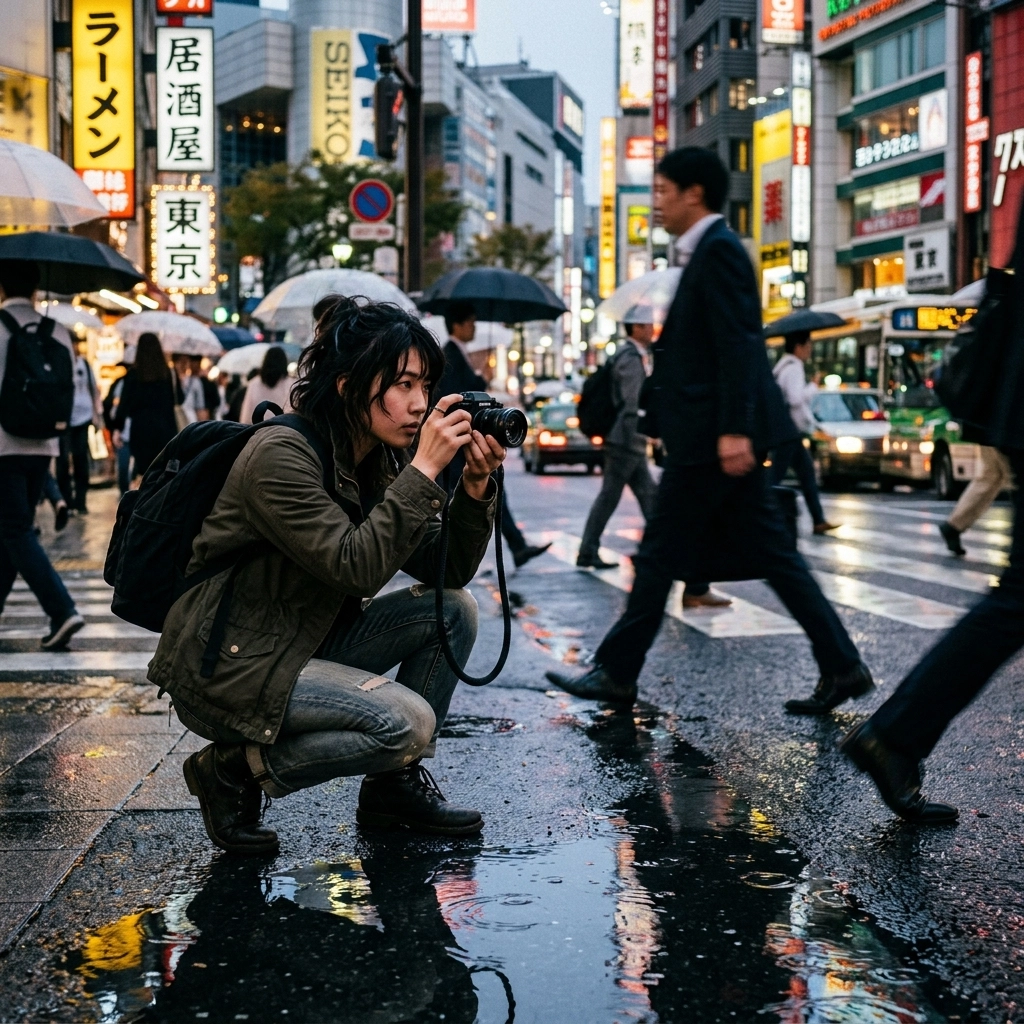
Reflections are a street photography staple, but don’t just take a photo of a puddle. Wait for someone to interact with it. A cyclist splashing through, a child jumping, or even just the ripple caused by a raindrop adds motion and life to an otherwise static reflection.
5. Flash in Broad Daylight
Who says flash is only for the night? Using a powerful external flash in the middle of a sunny day can create high-contrast, edgy, editorial-style shots. It fills in those harsh shadows and makes your subject "pop" against the background in a way that looks almost surreal. It’s a bold move, but the results are incredibly striking.
6. Shadow Play and Long Exposures
Set your camera on a tripod (or a steady trash can) in a spot with high-contrast shadows. Use a slow shutter speed to capture people as ghostly blurs moving through sharp, dark shapes. This technique turns the city into a dreamscape. If you find yourself struggling with blurry messes instead of artistic shots, check out these 7 mistakes you’re making with manual mode to get your settings dialed in.
7. The Silhouette Story
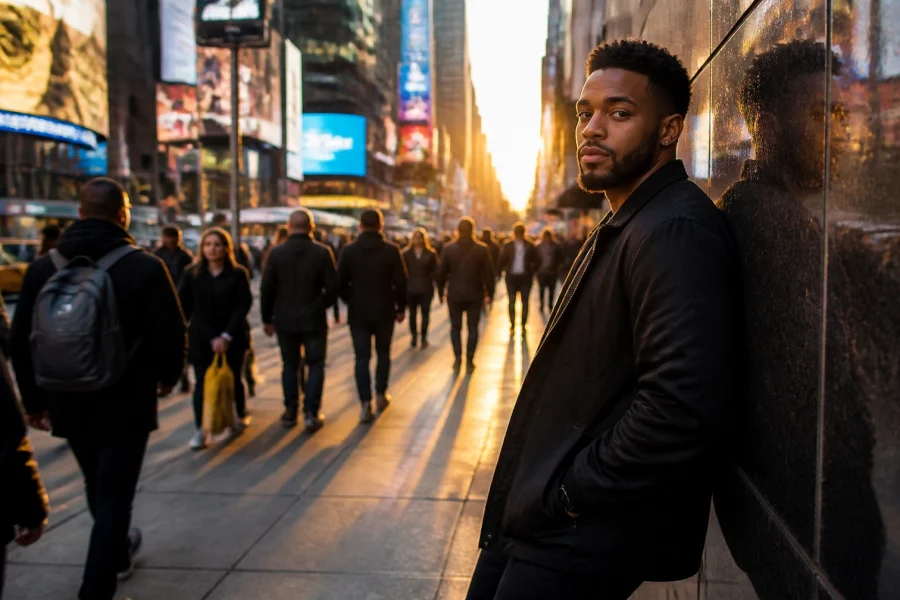
Find a strong light source: the setting sun, a bright shop window, or a street lamp: and expose for the highlights. This will turn your subjects into silhouettes. Without facial expressions, your subjects become universal symbols, allowing the viewer to project their own story onto the image.
8. Street Art Parody
Look for murals or graffiti and wait for a person to walk by who either perfectly matches the art or completely contradicts it. A businessman walking past a mural of a punk rocker, or someone wearing a shirt that matches the colors of the wall, creates an ironic, clever moment that reveals something the viewer would otherwise miss beyond just a "candid" shot.
9. Intentional Camera Movement (ICM)
Forget about sharpness for a second. Use a shutter speed of about 0.5 seconds and deliberately move your camera while taking the photo. You can pan, tilt, or even zoom. The result is an abstract, painterly version of the street. It’s unpredictable, but when it works, it’s fine art. Speaking of fine art, you can see how professionals handle these concepts at EdinFineArt.com.
10. Glass Distortion
Shop windows aren't just for reflections; they are for distortion. Use the warped glass of older buildings or the curved windows of modern skyscrapers to bend and stretch your subjects. It adds a psychedelic quality to your street work.
11. Focus on the Hands
We usually focus on faces, but hands tell an incredible story. An old man gripping a cane, a teenager frantically texting, or two people holding hands. These "partial" portraits are often more intimate than a standard headshot. If you’re looking to improve your portrait game in general, our guide on portrait photography techniques 101 is a great place to start.
12. The "Follow the Red" Strategy
Pick a color: let’s say red: and only photograph things that contain that color. This forces your brain to look past the general noise of the street and hunt for specific details. It’s a great exercise to train your "photographer’s eye."
13. Mid-Frame Slicing
Use architectural elements like poles, trees, or the edge of a building to literally slice your frame in half. Position your subject on one side and leave the other side completely different: maybe one side is dark and the other is light. This creates a powerful visual tension.
14. Night Rain Neon
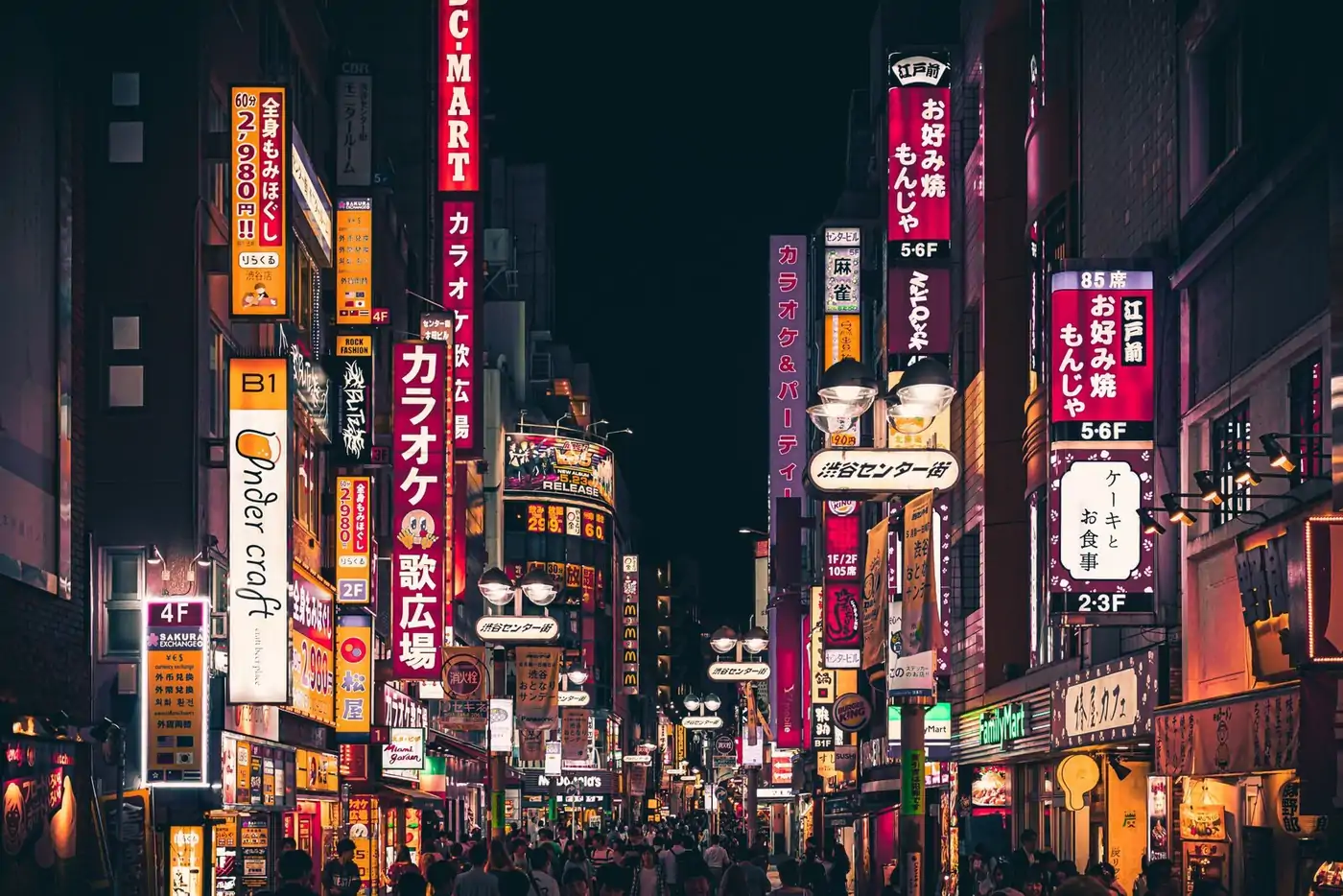
Rain is a gift. At night, wet asphalt becomes a mirror for neon signs and car lights. Instead of staying dry inside, grab a weather-sealed mirrorless camera and head out. The colors and textures you’ll find are unmatched.
15. Low Shutter Speed Crowds
Find a busy intersection. Use a shutter speed slow enough (around 1/8th or 1/15th of a second) so that anyone moving is a blur, but anyone standing still is sharp. It highlights the frantic pace of city life versus the stillness of an individual moment.
16. Canine Perspective
What does the city look like to a dog? Get your camera down to that 12-inch height and walk around. You’ll see a world of fire hydrants, legs, and discarded coffee cups that most humans completely ignore.
17. Extreme Minimalism
Find a massive, blank wall and wait for a single person to enter the frame. Composition is everything here. Place them in a corner to emphasize the scale of the environment. Minimalism is hard to master but incredibly rewarding.
18. Motion Blur Pan
Track a moving subject (like a cyclist or a car) with your camera while using a slow shutter speed. If you time it right, the subject will be sharp, and the background will be a streak of motion. This is one of those street photography secrets that separates the pros from the amateurs.
19. The "Hidden" Portrait
Capture people from behind or in ways where their faces are obscured by objects: like someone holding a large bouquet of flowers or a newspaper. It creates a sense of mystery. Who are they? Where are they going?
20. Subway Symmetry
Subways and train stations are built with symmetry in mind. Use the vanishing points of the tracks or the repetitive nature of the pillars to create a balanced, satisfying composition.
21. High-Key Overexposure
Purposely overexpose your image to blow out the background into pure white. This works best on overcast days. It strips away the "location" and leaves your subject floating in a clean, minimalist space.
22. Framing within Frames
Don't just use the camera's frame. Use windows, alleyways, or even the gap between two people to create a "frame within a frame." It directs the viewer's eye exactly where you want it to go.
23. Human Textures
Get close: maybe not "invade their personal space" close, but close enough to see textures. The wool of a coat, the wrinkles on a forehead, or the steam coming off a coffee cup. These details add a tactile element to your photography.
24. Dramatic Backlighting
Position yourself so the sun is directly behind your subject. This creates a "rim light" effect, making their hair or clothing glow. It’s a classic technique that never goes out of style.
25. AI-Assisted Reinterpretation
In 2026, we can't ignore AI. Use tools like Luminar to enhance the mood of your street shots. Maybe you captured a great moment, but the sky was boring: AI can help bring that vision to life without spending hours in manual masking. Just be careful not to overdo it; you want to fix the photo, not replace it. For more on this, check out the 7 mistakes you're making with AI photo editing.
Why Technique Matters More Than Gear
We talk a lot about AI-powered mirrorless tech because it makes our lives easier. But at the end of the day, a camera is just a box that records light. Whether you’re shooting with the latest 2026 flagship or an old film camera you found at a thrift store, these ideas remain the same.
Street photography is about observation. It’s about seeing the things everyone else is too busy to notice. If you want to dive deeper into these techniques, I highly recommend checking out the full library at learn.shutyouraperture.com. We have everything from basic gear setups to advanced post-processing workflows.
Keeping Your Workflow Simple
Don't overcomplicate your gear. When I'm out on the street, I usually carry one camera and one prime lens (usually a 35mm or 50mm). This forces me to move my body instead of relying on a zoom lens. It keeps me engaged with the environment. If you’re just starting out, read our beginners guide to mastering your first camera.
The Ethical Side of the Street
In 2026, privacy is a bigger conversation than ever. Always be respectful. If someone clearly doesn't want their photo taken, don't take it. A smile and a nod go a long way. If you capture a truly stunning portrait of a stranger, offer to send it to them. It’s a great way to build a connection and practice your corporate headshot tips in a real-world setting.
Editing Your Street Shots
Once you’ve captured these 25 ideas, the work isn’t done. Post-processing is where you define your style. Whether you prefer a gritty, high-contrast black and white look or a vibrant, cinematic color grade, tools like Luminar allow you to speed up the tedious parts of editing so you can focus on the creative side.
For more tips on how to handle different types of photography, check out PhotoGuides.org. They have some excellent breakdowns on the technical side of things that complement our more "vibe-focused" approach here at Shut Your Aperture.
Final Thoughts on Creative Street Photography
The best street photography doesn't happen because you have the best camera; it happens because you have a unique perspective. Use these 25 ideas as a jumping-off point. Combine them. Break the rules. If you want to see how these concepts apply to other genres, take a look at our landscape photography tutorials or learn how to avoid common mistakes in corporate headshots.
Get out there, keep your eyes open, and stop taking the same photos as everyone else. The city is full of stories: go find one that hasn't been told yet. For more inspiration, you can always browse the latest galleries at blog.edinchavez.com.
Street photography is a journey, not a destination. It’s about the hunt. It’s about that one split second where everything aligns: the light, the subject, and your shutter click. Now that you have 25 new ideas in your pocket, there's no excuse to stay on the couch. Grab your gear and hit the pavement.
Stay creative. Stay curious. And most importantly, shut your aperture (or open it wide, depending on the shot).