Landscape photography looks easy on paper. You find a mountain, you point the camera, and you press a button. But if you’ve ever come home from a trip to a majestic national park only to find your photos look flat, boring, or just "off," you’re not alone. The truth is that capturing the scale and soul of the great outdoors requires more than just a fancy sensor; it requires avoiding the subtle traps that trip up even experienced shooters.
At Shut Your Aperture, we see these common hiccups all the time. Whether you’re shooting the rocky coasts of Oregon or the serene lakes of the Adirondacks, the principles remain the same. If you want to stop taking snapshots and start making art, you need to identify these seven mistakes and implement the fixes today.
1. The "Drunken" Horizon
There is nothing that ruins a professional-looking landscape faster than a crooked horizon line. It’s the visual equivalent of a hangnail, once you see it, you can’t unsee it. Even a one-degree tilt can make the viewer feel like the ocean is about to drain out of the side of the frame.
Why it happens:
When we’re out in the field, we’re often distracted. We’re worrying about the incoming tide, the fading light, or the fact that our fingers are freezing. In the rush to "get the shot," we eyeball the horizon through the viewfinder and call it good. Unfortunately, our eyes are easily fooled by slanting hillsides or uneven terrain.
The Fix:
Modern cameras are packed with tools to prevent this. Turn on your Electronic Level (often called a virtual horizon). If your camera doesn’t have one, turn on the Grid Lines in your viewfinder or on your LCD screen. Align the horizon with one of those horizontal lines.
If you’re shooting water, this is even more critical. A tilted lake looks unnatural. If you realize you’ve messed up after the fact, you can fix it in post-processing using the straighten tool, but be careful, straightening a photo requires a crop, which means you might lose those important elements near the edges of your frame. For a deeper dive into getting everything right in-camera, check out our guide on best camera settings for stunning water landscapes.
2. The "Empty Middle" (Ignoring the Foreground)
You’ve found a beautiful mountain range. You pull out your wide-angle lens, snap the photo, and… it looks like a tiny strip of mountains at the top of a giant, empty field of grass. This is the "Empty Middle" syndrome, and it’s a direct result of not using your foreground effectively.
Why it happens:
Wide-angle lenses are deceptive. They don’t just "fit more in"; they push things away. If you stand back and shoot a distant subject, that subject becomes a tiny part of the frame, leaving a massive, boring gap between you and the mountain.
The Fix:
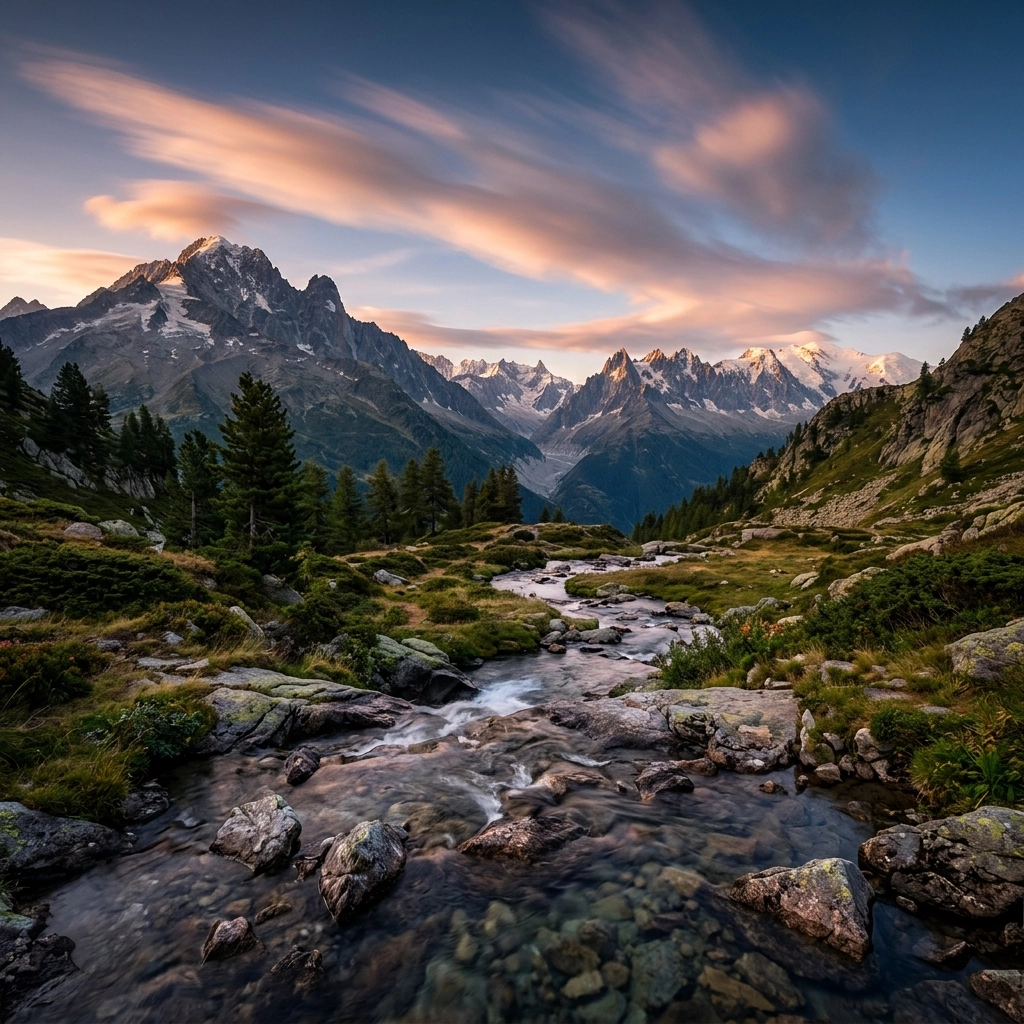
You need a "hook." A strong landscape image should lead the viewer's eye through the frame: Foreground to Midground to Background.
- Get Low: Physically lower your tripod. If there’s a cool rock, a patch of wildflowers, or a swirling tide pool, get right on top of it.
- The Anchor: Use that foreground element to anchor the shot. It gives the viewer a place to start their visual journey.
- Lens Choice: Sometimes a wide-angle isn't the answer. If the foreground is ugly, try a telephoto lens to compress the scene and make the mountains look massive.
Using foreground effectively is a hallmark of fine art photography. You can see how this plays out in professional work at www.edinfineart.com, where foreground elements are used to create incredible depth.

3. Shooting During "Tourist Hours" (Harsh Midday Light)
If you’re out shooting at 2:00 PM on a bright, sunny day, you’re playing the game on "Impossible Mode." Harsh midday sun creates deep, black shadows and blown-out highlights. It strips the texture away from rocks and makes colors look washed out.
Why it happens:
It’s convenient. We’re usually awake and out exploring during the day. But the sun is high and direct, which is the least flattering light for a landscape.
The Fix:
Become a creature of the edges. The Golden Hour (the hour after sunrise and the hour before sunset) provides soft, directional light that rakes across the landscape, highlighting textures and providing a warm glow.
Don't forget the Blue Hour either, the period just before sunrise or after sunset. The light is cool, moody, and ethereal. If you must shoot during the day, pray for clouds. An overcast sky acts as a giant softbox, which is actually perfect for shooting waterfalls or forests. If you want to learn more about how light interacts with different environments, read our article on mastering light and water for perfect shots. Even in other genres, the principles remain; for instance, the Golden Hour's magic in sports photography shows just how universal these lighting "rules" are.
4. The "Where Do I Look?" Problem (No Clear Subject)
A common mistake is thinking that because a place is beautiful, the photo will be beautiful. You take a photo of a forest, but there’s no specific tree that stands out. You take a photo of a beach, but it’s just a flat line of sand. The viewer's eye wanders around the frame with nowhere to land.
Why it happens:
As humans, we experience a landscape in 360 degrees. We smell the air, hear the wind, and feel the scale. A camera flattens that into a two-dimensional box. Without a clear subject, that "feeling" is lost.
The Fix:
Before you press the shutter, ask yourself: "What is this photo actually about?"
- Is it about that one red leaf?
- Is it about the way the river curves?
- Is it about the storm cloud on the horizon?
Once you identify the subject, use composition to highlight it. Use the Rule of Thirds, or better yet, use Leading Lines (like a path or a fence) to point directly at your subject. This is where kinesis and its impact on composition comes into play, creating a sense of movement that leads the eye. If you're struggling with composition, PhotoGuides.org has some great classic breakdowns on visual hierarchy.

5. The "Shake and Blur" (Lack of Stability)
There is nothing more heartbreaking than thinking you nailed a shot, only to get home, zoom in, and realize it’s slightly blurry. In landscape photography, sharpness is king. If your image isn't tack-sharp from front to back, it usually ends up in the digital trash bin.
Why it happens:
This is usually caused by two things: a slow shutter speed or poor tripod technique. Even the act of pressing the shutter button with your finger can cause enough vibration to blur an image during a long exposure.
The Fix:
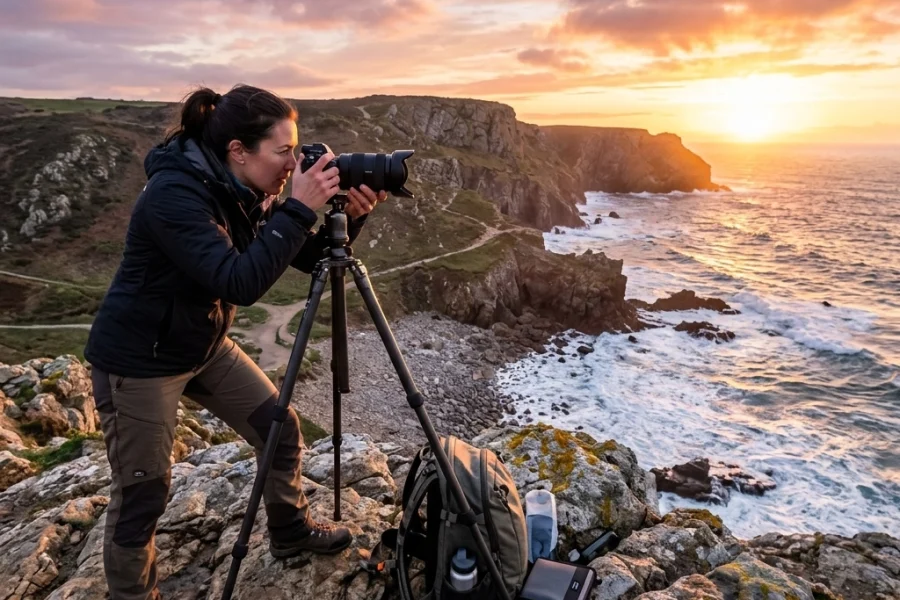
- Use a Tripod: Not a cheap $20 plastic one from a big-box store. You need something sturdy. If it’s windy, hang your camera bag from the center column hook to weigh it down.
- Remote Release: Use a remote shutter release or the camera’s built-in 2-second timer. This ensures the camera is completely still when the shutter opens.
- Mirror Lock-up: If you’re still using a DSLR, use mirror lock-up mode to prevent the physical "slap" of the mirror from causing vibration.
- The Sweet Spot: Stop shooting at f/22. While you want depth of field, most lenses suffer from "diffraction" at their smallest apertures, which actually makes the image softer. Stick to f/8 or f/11 for the best balance of sharpness and depth.
For those interested in the gear side of things, check out our essential water photography gear guide. If you're specifically trying to capture movement in nature, our guide on long exposure techniques in water photography is a must-read.

6. Trusting "Landscape Mode" (Poor Settings)
If your camera dial is set to the little "mountain" icon (Auto Landscape Mode), you’ve surrendered your creative control to a computer chip that doesn't know what you're trying to achieve. Auto modes often prioritize the wrong things, like popping up the flash in the middle of a forest or choosing a high ISO that introduces unwanted noise.
Why it happens:
Manual mode is intimidating. We’re afraid of overexposing the sky or underexposing the shadows. But the camera’s "meter" is easily tricked by bright snow or dark rocks.
The Fix:
Switch to Aperture Priority (A or Av) or Full Manual (M).
- ISO: Keep it at the "Base ISO" (usually 100) to ensure the highest dynamic range and the least amount of noise.
- Aperture: Choose f/8 to f/11 for landscapes to ensure everything is in focus.
- Histogram: Stop looking at the image on the back of the screen to judge exposure. The screen brightness can lie to you. Look at the histogram instead. If the graph is piled up against the right side, you’re "clipping" your highlights (losing detail in the clouds). If it’s piled up on the left, you’re losing detail in the shadows.
Learning to control your camera is the first step toward professional results. You can find deep-dive tutorials on mastering these technical aspects at learn.shutyouraperture.com.
7. The "Nuclear" Edit (Over-Processing)
We’ve all seen them: photos where the grass is neon green, the sky is an impossible shade of purple, and there’s a weird "glow" around the trees. This is the result of over-processing, specifically overusing the saturation, contrast, and HDR sliders.
Why it happens:
When we edit, our eyes become "color-blind" to the changes we’re making. We add a little bit of "Pop," then a little more, and before we know it, the photo looks like a radioactive wasteland.
The Fix:
- Walk Away: After you finish an edit, walk away from the computer for 15 minutes. When you come back with fresh eyes, you’ll usually realize you went too far.
- Subtlety is Key: Use the "Vibrance" slider instead of "Saturation." Vibrance is smarter; it boosts the less-saturated colors without making the already-bright colors look fake.
- Luminosity Masks: Instead of applying a global change to the whole photo, use local adjustments. Software like Luminar makes this incredibly easy with AI-driven masking that can identify the sky or the ground automatically.
- Reference Nature: Does the scene look like something that could actually happen in nature? If the answer is no, dial it back.
If you’re looking for pro-level workflows, our water photography post-processing tips offer a great starting point for keeping your edits clean and believable. You can also find more inspiration and behind-the-scenes editing thoughts over at blog.edinchavez.com.

Putting It All Together: Your Pre-Flight Checklist
Landscape photography is a meditative process. It shouldn't be rushed. To avoid these seven mistakes, try running through this mental checklist before you press the shutter button:
- Check the Horizon: Is my camera level?
- Find the Subject: What am I actually looking at?
- Inspect the Foreground: Is there something interesting close to the lens?
- Evaluate the Light: Is the sun too harsh? Should I wait 20 minutes?
- Test for Stability: Is the tripod locked down? Am I using a timer?
- Verify Settings: Am I at ISO 100? Is my aperture set for depth?
- Mind the Histogram: Am I protecting my highlights?
By slowing down and being intentional, you’ll find that your "keeper" rate skyrockets. You’ll stop coming home with 500 mediocre photos and start coming home with five gallery-worthy shots.
Landscape photography isn't just a hobby; for many, it’s a path to a career. If you’re interested in the business side of things, we’ve even touched on esoteric strategies for photographer financial success. But before you can sell the work, you have to master the craft.
If you found these tips helpful, we’re always putting out new content. I work closely with Sonny, our Social Media Manager, to make sure our latest blog insights are being shared across our channels. If you see a post on our Instagram about composition or lighting, it’s likely there’s a deep-dive article right here waiting for you.
Photography is about the journey. It's about being outside, breathing the air, and trying to capture a sliver of that magic to take home with you. Avoid these common mistakes, keep practicing, and don't be afraid to get your boots muddy.
For more in-depth training and to take your skills to the next level, head over to learn.shutyouraperture.com. We have courses designed to take you from beginner to pro, covering everything from the basics of exposure to advanced post-processing in Luminar.