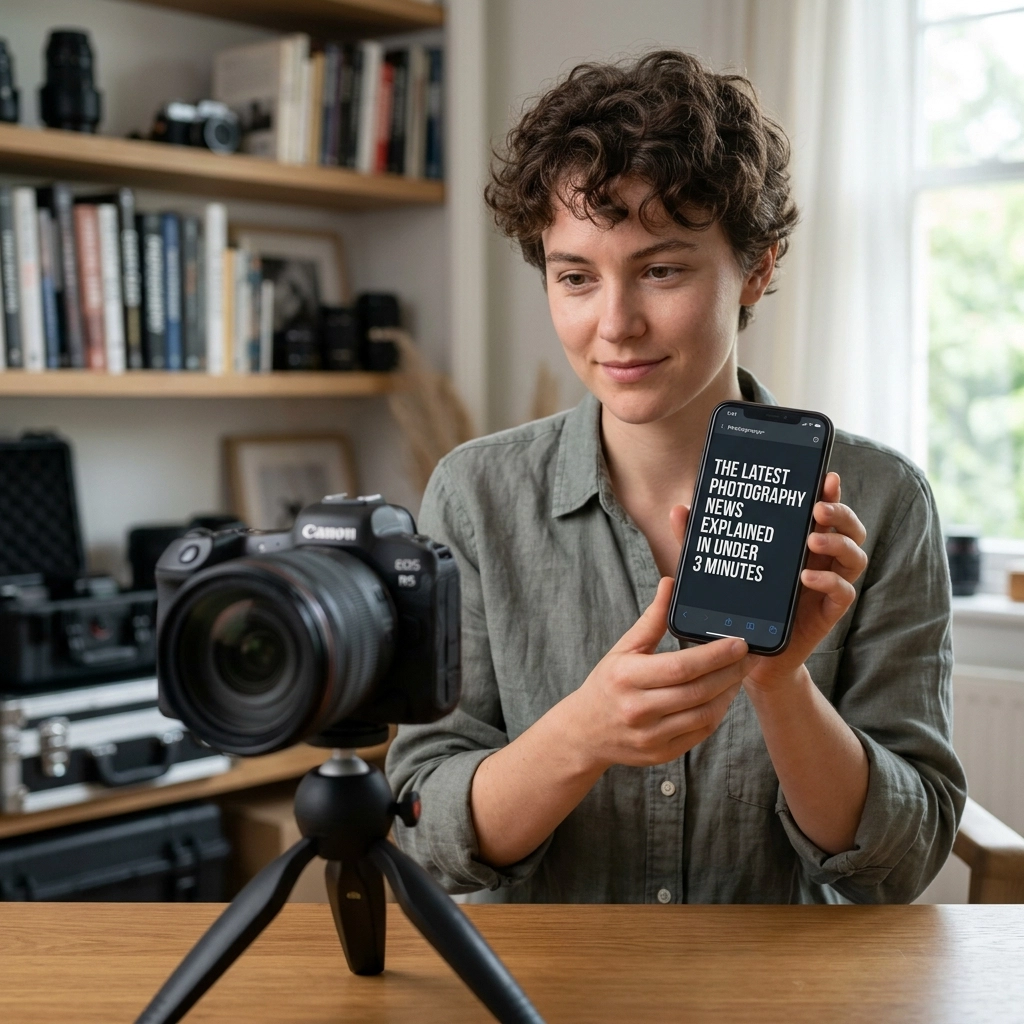
It’s May 2026, and the photography world is moving faster than a shutter at 1/8000th of a second. If you’ve been busy shooting and haven't looked at a tech blog in a few weeks, you’ve missed a lot. We’ve seen Sony drop a resolution monster, Canon lean even harder into the creator space, and software companies finally giving Adobe some serious competition.
I know you’re busy. You’d rather be out capturing light than reading gear specs. That’s why I’ve broken down the biggest stories into a quick-read format. If you’ve only got three minutes, read the bold headers. If you’ve got a coffee in hand and want to know how this gear actually changes your workflow, stick around for the deep dive.
The Big Three: Sony, Canon, and Nikon Are Reshaping the Market
The "Mirrorless War" isn't over; it just entered a new phase. We are no longer just looking for "more megapixels." We are looking for smarter AI, better heat management, and cameras that can handle both a high-end fashion shoot and a 4K 120p video production without breaking a sweat.
Sony a7R VI: The New King of Resolution
Sony just dropped the a7R VI, and it is a beast. Packing a 66.8MP sensor, it’s being hailed as the new "standard-bearer" for stills photographers. But here’s the twist: it’s not just for landscapes anymore. Usually, high-resolution cameras are slow. Not this one. Sony has improved the autofocus and burst rates so much that this could easily be your primary body for weddings or even some sports.
If you are currently looking at the Canon EOS R5 vs Sony a7R V, the arrival of the VI might make the V a massive bargain on the used market. Or, it might just convince you to jump ship to the latest and greatest.
Canon EOS R6 V: The Video Creator’s Dream
Canon is going all-in on the "solo creator." The R6 V is a video-first full-frame mirrorless camera. We’re talking 7K capture and a new 32.5MP sensor. It’s priced around $2,499, which puts it right in the sweet spot for professional YouTubers and indie filmmakers.
Along with the camera, Canon released an RF 20–50mm f/4 L IS USM power zoom lens. If you’ve ever tried to zoom smoothly while holding a gimbal, you know why "power zoom" is a game-changer. It’s smooth, silent, and built for movement. For those comparing older models, check out our breakdown of the Sony a7 IV vs Canon EOS R6 Mark II to see how far the R6 line has come.

Nikon ZR: Cinema for Everyone
Nikon is doing something disruptive. The Nikon ZR is a cinema-focused camera that is actually affordable. For years, if you wanted "real" cinema tools, you had to spend $10k+. Nikon is bringing those tools to the indie crowd. It’s a bold move that shows Nikon isn’t just playing catch-up anymore; they are setting the pace for video shooters.
Glass: Why Your Next Lens Might Be Chinese (or Very Fast)
The lens market is exploding. While the big names are making "exotic" glass, a new wave of manufacturers is making photography accessible to everyone.
The Chinese Lens Boom
Brands like Brightin Star are flooding the market. They just released a 10mm f/5.6 II for APS-C sensors that costs about $75. Is it the sharpest lens in the world? No. Is it a blast to shoot with? Absolutely. It’s manual focus, ultra-wide, and perfect for street photography where you want that "lo-fi" look without spending a fortune.
Specialized Cinema Glass
Laowa is continuing their streak of "weird but awesome" lenses. They’ve launched 15–24mm T8 and 15–35mm T12 probe macro zooms. These are those long, skinny lenses you see in commercials that can go inside a bottle of soda or through a dense forest of grass. They are highly specialized but open up creative doors that were previously closed to anyone without a Hollywood budget.
The Bokeh King: Sigma 85mm f/1.2 Art
Sigma is currently developing an 85mm f/1.2 Art lens. If you do portrait work, this is the lens you’ve been dreaming of. It’s going to be heavy, it’s going to be expensive, but the bokeh will likely be creamy enough to make a grown photographer cry.
Speaking of portraits, if you’re looking to up your game, take a look at The Ultimate Guide to Portrait Photography Techniques. Pairing good glass with the right technique is the only way to truly stand out in 2026.

Software: The Great Adobe Migration?
This might be the biggest news of the year. For a decade, Adobe Lightroom and Photoshop have been the undisputed kings. But the winds are shifting. Between AI training controversies and subscription fatigue, photographers are looking elsewhere.
DaVinci Resolve 21: Not Just for Video
Blackmagic’s DaVinci Resolve 21 has added full still-photo tools. We’re talking raw processing, tethering, and organization. If you already use Resolve for video, you might not even need a Lightroom subscription anymore. This is a massive shot across Adobe’s bow.
AI Editing Gets Easier
Luminar Neo continues to lead the pack in AI-driven editing. Their latest update brings an "effortless" AI portrait toolkit. If you’re tired of spending hours masking skin or fixing stray hairs, Luminar handles it in a few clicks. It’s perfect for the photographer who wants to spend more time shooting and less time staring at a computer screen.
For those who want to stick with the classic workflow but need a boost, check out our Lightroom learning hub. It’s still a powerhouse, but you need to know how to use the new AI masking features to stay competitive.
DxO and Nik Collection
DxO PureRAW 6 tech is now integrated into PhotoLab 9.6, and Nik Collection 9 has added AI masking. These tools are becoming essential for photographers who need to rescue high-ISO shots or add specific creative effects like halation or glass textures.
Mobile Photography: Is the Xperia 1 VIII a "Real" Camera?
Every year we say phone cameras are getting better. In 2026, they might actually be reaching parity for most hobbyists. The Sony Xperia 1 VIII is basically a tiny Sony Alpha camera that makes phone calls. It has Alpha-style controls, a physical shutter button, and a redesign that feels like a tool, not a toy. If you’re a pro who wants a "pocket" backup, this is currently the one to beat.

Industry Shake-ups and Ethical Dilemmas
Photography isn't just about gear; it’s about the community and the ethics behind the tools we use.
- The Adobe Backlash: Many creators are feeling "run out of allies" with Adobe. Issues over how AI is trained on user data have pushed people toward DxO, Luminar, and Affinity Photo.
- Canon’s Massive Firmware Update: Canon didn't just release new cameras; they fixed the old ones. The R1 and R5 II received major AF improvements, specifically for tracking fast action like American football or soccer.
- The End of an Era on YouTube: Gerald Undone, one of the most trusted names in camera reviews, is stepping back. This signals a shift in how gear is covered online. We might see fewer "spec-sheet" reviews and more "real-world" usage content moving forward.
How to Apply This to Your Photography
It’s easy to get overwhelmed by news. The key is to filter it based on what you shoot.
For Landscape Photographers
If you’re out in the elements, the Sony a7R VI’s resolution is tempting, but don't ignore the software side. Better raw processing in DxO or Luminar can often do more for your images than a few extra megapixels. Also, make sure you aren’t making these 7 common landscape mistakes before you drop $4,000 on a new body.
For Wildlife and Sports Photographers
Speed is everything. The new Canon firmware is a free upgrade that makes your existing gear feel new. If you are using the OM System, we’ve got specific guides for you to maximize your hit rate:
For Real Estate and Commercial Shooters
The Sony ZV-E10 II is making waves as a budget-friendly option for high-end video tours. Pair it with the right settings, and you have a pro-level rig for a fraction of the cost. Check out the Sony ZV-E10 II settings for product photography to see how to dial in those commercial shots.

The "3-Minute" Summary
If you skipped to the bottom, here is the "too long; didn't read" version of May 2026:
- Sony released the a7R VI (66.8MP, very fast).
- Canon released the R6 V (Video-focused, power zoom).
- Nikon is making affordable cinema cameras (Nikon ZR).
- Lenses are getting cheaper and weirder (Brightin Star, Laowa Probes).
- Software is moving away from Adobe (DaVinci Resolve 21 for photos, Luminar Neo for AI).
- Mobile is becoming "Pro" (Xperia 1 VIII).
Where to Go From Here?
The best piece of gear you have is your brain. No matter how many megapixels Sony packs into a sensor, it won't compose the shot for you. If you feel like you've hit a plateau, stop looking at B&H Photo and start looking at tutorials.
Head over to https://learn.shutyouraperture.com/ to master the skills that actually make your photos better. Whether it's mastering lighting or learning how to post-process without making things look "fake," education is the only investment that never depreciates.
For more inspiration and deep dives into the art of photography, check out PhotoGuides.org or see what Edin is up to over at blog.edinchavez.com. If you want to see what happens when you combine top-tier gear with years of experience, browse the gallery at www.edinfineart.com.

Photography in 2026 is more accessible, more powerful, and more confusing than ever. But at the end of the day, it's still just about chasing the light. Don't let the news cycle keep you from getting out there and shooting.
If you’re looking for more specific gear advice, we’ve got a whole library of "best settings" guides to help you get the most out of your kit:
- OM System OM-1 Mark II for Landscape
- OM System OM-1 Mark II for Street Photography
- OM System OM-1 Mark II for Wedding Photography
- Sony ZV-E10 II for Wildlife Photography
Keep shooting, stay curious, and don't forget to shut your aperture every once in a while to see what's really in focus.