25 Creative Street Photography Ideas You’ve Never Thought Of to Refresh Your Portfolio
Let’s be real for a second: street photography can get repetitive. We’ve all seen a million shots of a person walking past a colorful wall, or a grainy black-and-white photo of an elderly man on a park bench. Don’t get me wrong, those classics are classics for a reason, but if you’re looking at your portfolio and feeling like it’s a bit… "meh," it’s time to shake things up.
Refreshing your portfolio isn't about buying a new camera (though we all love a good gear upgrade). It’s about changing how you see the world. It’s about looking at the mundane corners of your city and finding the magic that everyone else is literally walking over. Whether you’re a seasoned pro or just starting to figure out your street photography gear, these 25 ideas are designed to push you out of your comfort zone and help you capture images that actually make people stop scrolling.
If you really want to take your skills to the next level, you should check out our comprehensive photography tutorials where we dive deep into the technical side of making these shots pop.
1. The Obstructed View
Most photographers spend their time trying to get a "clean" shot. I want you to do the opposite. Shoot through things. Use a chain-link fence, a dirty window, or even some foliage to partially block your subject. This creates a sense of depth and mystery. It makes the viewer feel like they’re peeking into a private moment. If you're struggling with the focus, you might want to revisit our guide on fixing manual mode mistakes to ensure you're hitting the right spot.
2. Extreme Negative Space
Give your subject some room to breathe, a lot of room. Find a massive, blank wall or a vast expanse of pavement and place your subject in a tiny corner of the frame. This emphasizes isolation and scale. It’s a minimalist approach that works wonders for a modern portfolio.
3. Hard Juxtaposition (The "Old vs. New" Clash)
Cities are living museums. Find a spot where a centuries-old building sits right next to a glass-and-steel skyscraper. Wait for someone to walk by who fits one of those eras (or neither). This visual storytelling highlights the passage of time and the changing face of urban life.
4. The Ant’s Eye View
Get low. No, lower than that. Put your camera on the ground. Use a tilting screen if you have one. Shooting from the ground up makes ordinary people look like giants and gives the architecture a looming, powerful presence. It’s a perspective we rarely see in our daily lives, which is exactly why it’s so compelling.
5. Pure Reflections (No Direct Subjects)
Challenge yourself to go out for a day and only shoot reflections. Puddles, shop windows, polished car hoods: don't include the actual subject in the frame, only their reflected image. This adds an abstract, dreamlike quality to your street photography.
6. Frame Within a Frame
Use the environment to box in your subject. This could be an archway, a bus stop shelter, or even the space between two parked cars. It forces the viewer’s eye exactly where you want it to go and adds a layer of structural complexity to the image.
7. Intentional Camera Movement (ICM)
Who says your photos have to be sharp? Slow down your shutter speed to about 1/4 of a second and intentionally move the camera while you take the shot. Pan vertically, horizontally, or even in a circle. You’ll end up with impressionistic streaks of color that feel more like a painting than a photograph. If the colors feel a bit flat after the shoot, you can easily enhance them using the AI-powered tools in Luminar.
8. Panning for Gold
Unlike ICM, panning involves following a moving subject (like a cyclist or a car) at a slow shutter speed so the subject stays sharp while the background becomes a blur of motion. It’s a classic technique that never gets old and adds instant energy to your portfolio.
9. In-Camera Double Exposures
Many modern cameras allow you to overlay two images in-camera. Try combining a shot of a textured brick wall with a silhouette of a person walking. It’s a great way to create art that feels intentional and multi-layered. For more inspiration on artistic compositions, take a look at Edin Fine Art.
10. The Cubist "In-the-Round" Portrait
Find a stationary subject: a street performer or a unique statue: and take 20 photos as you walk in a circle around them. Later, you can layer these in post-processing to create a fragmented, Cubist-style image that shows the subject from every angle at once.
11. High-Contrast Geometry
On a bright, sunny day, look for the harshest shadows you can find. Expose for the highlights so the shadows turn pitch black. You’re no longer photographing people; you’re photographing shapes and light. It’s an excellent way to practice your composition skills.
12. Shadow Puppetry
Forget the people; photograph their shadows. On a late afternoon when the sun is low, shadows become elongated and distorted. Capturing a shadow walking across a textured sidewalk without showing the person who cast it creates a haunting, anonymous vibe.
13. Ghostly Long Exposures
Use a tripod or a steady ledge and set a long exposure (2-5 seconds) in a busy area. The static buildings will remain tack-sharp, while the crowds of people will turn into ghostly, semi-transparent smears. It’s a powerful way to visualize the "hustle and bustle" of a city.
14. Shooting from the Hip
This is the ultimate candid technique. Don’t look through the viewfinder. Just hold the camera at waist level and click as you walk. It’s unpredictable, often messy, and incredibly authentic. It captures the world from a height we usually ignore.
15. The Anonymous Silhouette
Look for a strong light source behind your subject: a sunset, a bright shop window, or a tunnel opening. Expose for the light and let your subject fall into a complete black silhouette. This strips away their identity and makes the photo about the gesture and the moment.
16. Pattern Hunting
The city is full of patterns: rows of windows, stacked bicycles, a line of umbrellas in the rain. Find a pattern and wait for a human element to break it. Maybe it’s someone wearing a bright red coat in a sea of grey suits. That "break" is where the story lives.
17. The One-Color Challenge
Pick a color: let’s say yellow: and spend the entire day only taking photos where yellow is the dominant element. This forces you to look past the obvious and find details you’d normally miss, like a yellow fire hydrant or a discarded banana peel next to a yellow taxi.
18. Focus on the Hands
People express so much through their hands. Instead of a full portrait, zoom in on someone’s hands as they count money, hold a cigarette, or gesture while talking. It’s an intimate way to tell a story without showing a face.
19. Through the Looking Glass
Shop displays are a goldmine for street photographers. You can capture the mannequins inside, the reflections of the street outside, and the people looking in, all in one frame. It creates a complex, layered image that comments on consumerism and observation.
20. Urban Decay vs. New Growth
Look for the spots where nature is reclaiming the city. A weed growing through a crack in the sidewalk, or ivy crawling up a derelict building. Including a person in these shots adds a layer of scale and highlights the tension between the man-made and the natural world.
21. The "Red Thread" Project
This is a long-term project idea. Look for a recurring element in your city: maybe it's a specific type of hat, a brand of soda, or a certain gesture. Over months, collect photos of this one thing. When presented together, it shows a fascinating through-line in urban culture.
22. Cyberpunk Night Rain
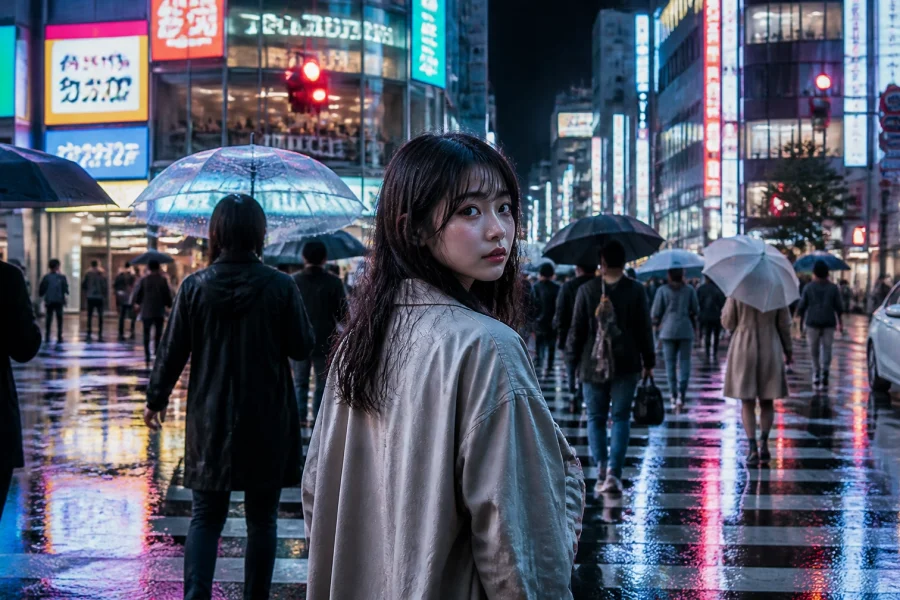
Rainy nights are a gift. The wet pavement acts like a giant mirror for neon signs and traffic lights. Lean into the "Cyberpunk" aesthetic by pushing your ISO and embracing the grain. If the noise gets too distracting, Luminar’s Noiseless AI can help clean things up without losing the mood. Check out PhotoGuides.org for more tips on night shooting.
23. Public Transit Intimacies
Buses and trains are where people are at their most "real." They’re commuting, dreaming, or just staring out the window. The lighting is often dramatic and directional. It’s a great place to practice capturing raw human emotion in a confined space.
24. The Gear of the Performer
Street performers are often photographed, but what about their stuff? The battered guitar case, the hat full of coins, the portable speaker. These objects tell a story of their own. Focus on the tools of the trade to create a different kind of "street portrait."
25. Extreme Verticality
We live in a horizontal world, but cities are vertical. Try shooting in a very tight vertical crop. Find a narrow alleyway or a sliver of space between buildings and frame a person at the bottom. It emphasizes the overwhelming scale of the urban environment and makes for a very striking portfolio piece.
How to Actually Use These Ideas
The mistake most photographers make is trying to do all 25 at once. Don’t do that. Pick three that resonate with you and commit to shooting only those for the next month. By narrowing your focus, you’ll actually see more.
Once you’ve gathered a new body of work, take the time to edit them with intent. Whether you’re going for a gritty, high-contrast look or something soft and ethereal, tools like Luminar can help you bring your vision to life. For a deeper look into the philosophy of photography and more creative inspiration, head over to Edin Chavez’s personal blog.
Street photography is a marathon, not a sprint. Your portfolio should be a reflection of your evolving eye, not just a collection of lucky shots. So, get out there, get low, shoot through some fences, and start seeing your city in a way you never have before.
If you found these tips helpful, you’ll love the deep-dive courses available at Shut Your Aperture Learn. We cover everything from the basics of composition to advanced post-processing techniques that will help you stand out in a crowded market.