Let’s be honest for a second. It is April 2026, and the camera industry is moving faster than a shutter at 1/8000th of a second. Every other week, it feels like there is a new announcement about a "revolutionary" sensor or a "groundbreaking" AI autofocus system. We are seeing cameras like the Nikon Z50 II and the Canon R6 Mark II being replaced by even shinier versions that promise to do everything except make you coffee in the morning.

But here is the million-dollar question: Do you actually need any of it?

If you are browsing for the best mirrorless cameras of 2026, you are likely being bombarded with marketing jargon about "neural processing units" and "8K 120fps raw video." It is easy to feel like your current gear belongs in a museum. However, before you pull out the credit card, let’s peel back the layers of the 2026 gear hype and look at what really matters for your photography.

The State of Mirrorless Tech in 2026

We have reached a point where the hardware has almost outpaced our human ability to use it. In 2026, even entry-level cameras are incredibly capable. If you are just starting out and looking for photography for beginners, you might think you need a $3,000 setup to get "professional" results.

The truth? You don't.

Most of the "advancements" we see today are incremental. Yes, the autofocus is stickier. Yes, the low-light performance is slightly cleaner. But a photo taken on a top-tier mirrorless camera from 2022 still looks fantastic in 2026. The shift toward AI-integrated bodies is the biggest trend right now. If you want to know why everyone is talking about AI-powered mirrorless tech, it’s because the cameras are now doing the heavy lifting for subject tracking and exposure calculation.

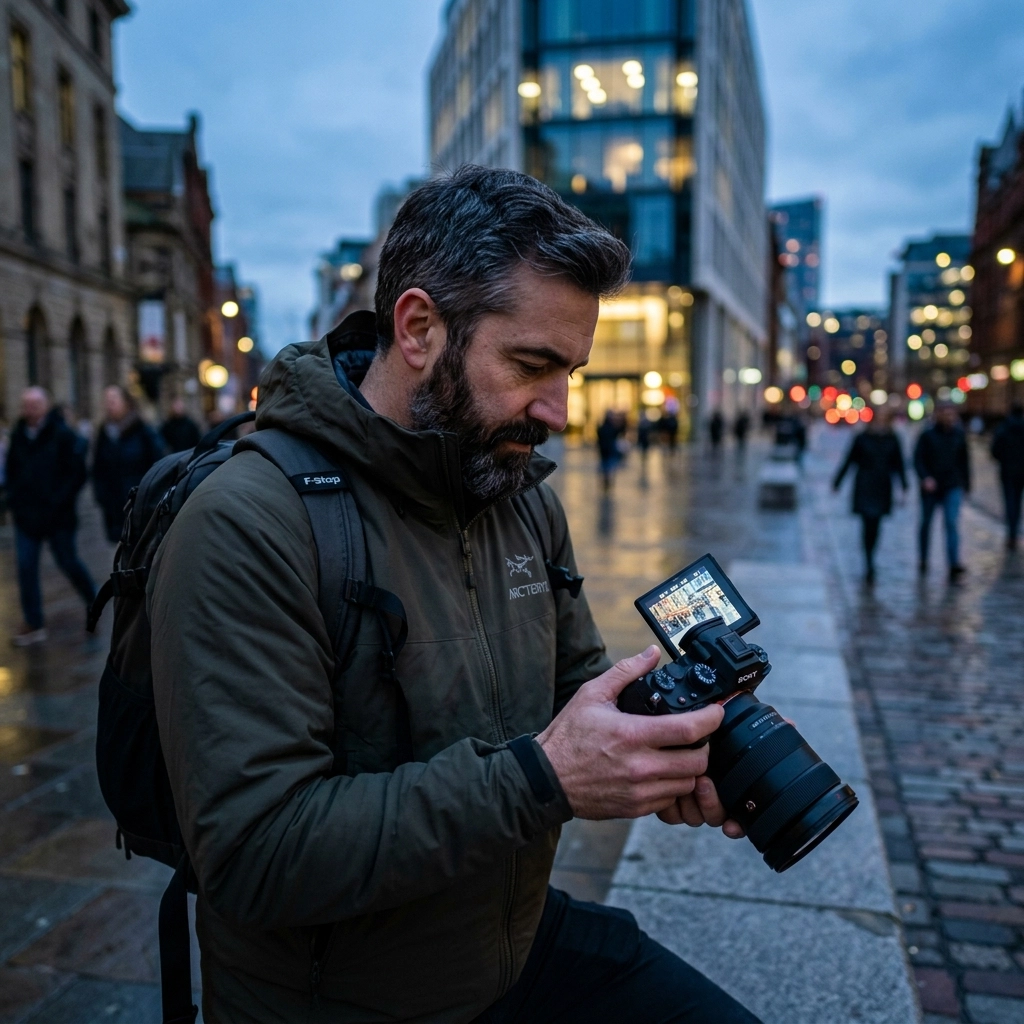
Modern mirrorless camera featuring AI-powered autofocus tracking for dynamic street photography ideas.
SEO Alt Text: A high-tech 2026 mirrorless camera displaying AI-assisted subject tracking on its rear LCD screen during a street photography session.

Photography for Beginners: Don't Fall for the Hype

If you are new to the game, the gear industry wants you to believe that "more expensive" equals "better photos." It’s a classic trap. When you’re learning how to use manual mode camera, it doesn't matter if you’re using a brand-new Sony A7 Mark VI or a used Fujifilm from four years ago. The exposure triangle: aperture, shutter speed, and ISO: remains the same.

In fact, starting with a slightly older or simpler camera can actually make you a better photographer. Why? Because you have to think. You can't rely on a "Smart Auto" AI mode to fix a poorly lit scene. You have to learn the portrait photography techniques that rely on light and shadow, not just eye-autofocus.

If you are looking for camera gear reviews, focus on ergonomics and lens selection rather than just the pixel count. A camera that feels good in your hand is one you will actually take out and use.

Landscape Photography Tips: Pixels vs. Practicality

Landscape photographers are often the most tempted by new gear. We want that ultra-high resolution and dynamic range. But let's look at the landscape photography tips that actually move the needle:

  1. Being there at the right time (Golden Hour).
  2. Using a sturdy tripod.
  3. Understanding composition.
  4. Mastering your photo editing tutorials.

A 45-megapixel sensor from 2023 is still a 45-megapixel sensor in 2026. Unless you are printing billboards for a living, you probably won't notice the difference between the "old" sensor and the "new" stacked sensor. For those interested in fine art, check out Edin Fine Art to see how composition and light matter far more than the latest spec sheet.

Landscape photography tips illustrated by a photographer capturing a scenic mountain sunrise with a tripod.
SEO Alt Text: A landscape photographer standing on a mountain ridge at sunrise with a mirrorless camera on a tripod, capturing a vast valley.

Street Photography Ideas: Speed and Stealth

For street photography ideas, the latest gear can actually be a hindrance. Giant, "pro-spec" mirrorless bodies are intimidating. In 2026, the best tool for the street is often a compact, unobtrusive camera.

Newer cameras do offer "silent shutters" that are truly silent, but that tech has been around for a while now. If your current camera can focus quickly and doesn't weigh five pounds, you are already set. The secret to street photography isn't a faster frame rate; it's anticipation and patience. You can find more inspiration on PhotoGuides.org for techniques that don't require a $5,000 budget.

The Role of Software: Hardware Isn't Everything

One reason you might not need a new camera is that software is filling the gap. In 2026, photo editing tutorials often focus on how to rescue images that would have been "trash" five years ago.

With tools like Luminar, you can use AI to enhance details, remove noise, and even change the lighting of a scene after the fact. If your current camera's sensor is a bit noisy at high ISOs, AI noise reduction in Luminar can make it look like it was shot on the latest flagship body.

Investing in better software and learning how to use it is often a much better ROI (return on investment) than buying a new body. It's the same for photography tutorials: skills stay with you; gear depreciates the moment you open the box.

Portrait Photography Techniques: It’s About the Lens

When people ask me about the best mirrorless cameras for portraits, I usually redirect them to lenses. A five-year-old body with a stunning 85mm f/1.2 lens will outperform a 2026 flagship body with a cheap kit lens every single day.

Portrait photography techniques rely on "the look": the bokeh, the compression, and the way the glass renders skin tones. The camera body is just the box that records it. If you’re doing corporate work, check out these corporate headshot tips to see how lighting and posing trump gear specs.

Portrait photography techniques showcased by an 85mm prime lens in a professional studio setting.
SEO Alt Text: A professional portrait session in a studio showing a photographer using an 85mm lens to capture a model's headshot.

When Should You Actually Upgrade?

I’m not saying you should never buy new gear. There are legitimate reasons to upgrade in 2026:

  1. Your Current Gear is Failing: If your buttons are sticking, your sensor has permanent spots, or the shutter is about to die, it's time.
  2. You Need a Specific Feature: Maybe you’ve started shooting sports and you genuinely need the 40fps burst rate of the latest photography news favorites.
  3. Low Light Limitations: If you consistently shoot in dark venues and your current camera produces unusable grain, a newer sensor with better signal processing might be a lifesaver.
  4. Client Perception: Sadly, in some professional niches, showing up with "old" gear can affect how clients see you, even if the results are the same.

But if you’re upgrading just because a YouTube reviewer said the new autofocus can track a bird's eyelash from a mile away, and you only shoot still landscapes… you’re wasting your money.

The 2026 Reality: The "Old" Gear is the Best Deal

The best thing about the 2026 gear cycle is that it makes the "old" 2024 flagships incredibly affordable. If you are looking for camera gear reviews, look for comparisons between the current models and their predecessors.

The Sony A7 IV, for example, is a legendary camera that still kills it today. You can find used ones for a fraction of the price of the newest models. This allows you to spend the saved money on what actually matters: travel, workshops, and high-quality lenses.

Comprehensive camera gear reviews featuring a variety of mirrorless camera bodies and lenses on a desk.
SEO Alt Text: A photographer's desk with multiple camera bodies and lenses, highlighting the variety of gear available in the 2026 secondary market.

How to Use Manual Mode Camera: The Great Equalizer

One of the most important photography tutorials you can ever take is learning manual mode. Once you master it, the camera becomes a tool rather than a mystery box.

Whether you have a 2018 mirrorless or a 2026 "AI-inside" beast, the physics of light don't change. When you know how to use manual mode camera, you can make any camera perform at its peak. You learn how to overexpose for the shadows or underexpose to save the highlights. You learn that "AI" is often just a guess based on an algorithm, and your human eye is still better at deciding the "mood" of a shot.

Final Thoughts: Focus on the Vision, Not the Version

We live in a world that thrives on FOMO (Fear Of Missing Out). The photography industry is no different. But remember, the most iconic photos in history were taken on cameras that would be considered "garbage" by 2026 standards.

The truth about 2026 gear is that it's amazing, but it's not a shortcut to being a great photographer. If you have the budget and it makes you happy, go for it. But if you’re feeling pressured to upgrade, take a breath. Go through your current portfolio. If you aren't hitting the technical limits of your camera, then your camera isn't the problem.

Focus on your landscape photography tips, experiment with new street photography ideas, and keep practicing your portrait photography techniques. Use software like Luminar to get the most out of your files.

The best camera is the one you have with you: and the one you actually know how to use. For more tips and the latest photography news, keep following us here at Shut Your Aperture. We’re here to help you navigate the hype and focus on what really matters: capturing the world around you.

Photography for beginners showing a photographer with a compact camera exploring a scenic redwood forest.
SEO Alt Text: A photographer walking through a scenic forest with a simple camera strap, looking ready to shoot, symbolizing the joy of photography over gear specs.

Whether you're looking for photography for beginners or you're a seasoned pro, the message is the same: Your vision is what makes the image. The camera is just the witness. Don't let the 2026 spec wars distract you from the art. Happy shooting!