Let’s be real for a second: choosing a camera in 2026 is a lot like choosing a smartphone. They’re all pretty incredible, they all have more computing power than the Apollo 11 moon mission, and they all claim to be the "best." But if you’re standing in a camera shop (or more likely, scrolling through a dozen tabs), you know that the "best" camera is a moving target.
The landscape of best mirrorless cameras has shifted. We aren't just talking about megapixels anymore. We’re talking about AI-driven subject tracking that can tell the difference between a golden retriever and a labradoodle, 8K video that looks like a Hollywood feature film, and global shutters that make distortion a thing of the past.
Whether you are looking for photography for beginners or you’re a seasoned pro trying to decide if the Sony a1 II is worth the price of a used car, I’ve got you covered. Here is the lowdown on how to choose your next rig in 2026.
Why Mirrorless is King (And Why 2026 is Different)
If you’re still clinging to your DSLR, I get it. There’s something satisfying about that mechanical "clack." But honestly, it’s time to move on. Mirrorless technology has officially lapped DSLRs in every single category: speed, autofocus, video, and size.
In 2026, the biggest trend isn't just better glass: it’s AI integration. Modern cameras now use deep learning to predict movement. This is a game-changer for portrait photography techniques and sports. You can literally lock onto a subject's eye and the camera will stay there, even if they run behind a tree or turn their back. It feels like cheating, and I love it.
If you want to know more about why this tech is exploding, check out our piece on why everyone is talking about AI-integrated mirrorless cameras.
The Heavy Hiters: Professional Grade
If your budget is "whatever it takes," these are the cameras dominating the photography news cycles this year.
1. Sony a1 II: The Spec Monster
The Sony a1 II is the Swiss Army knife of the camera world, if that knife was made of carbon fiber and lasers. With 8K video at 30fps and a staggering AI-powered autofocus system, this is for the professional who does everything. It’s fast enough for the Olympics and high-res enough for a billboard in Times Square.
- Best for: High-end commercial work and sports.
- The catch: It costs about $7,000. Ouch.
2. Nikon Z8: The All-Rounder
Many pros are calling the Nikon Z8 the best camera ever made. It’s essentially a Z9 (their flagship) but shoved into a body that doesn't require a gym membership to carry. The image quality is legendary, making it a top pick for landscape photography tips enthusiasts who need every bit of dynamic range.
- Best for: Everyone who wants the best and has the cash.
3. Canon EOS R5 Mark II: The Hybrid King
Canon hasn't stayed quiet. The R5 Mark II is a beast with 45 megapixels and 8K 60fps video. If you’re a wedding photographer or a hybrid shooter who needs to switch from stills to video in a heartbeat, this is your weapon of choice. It’s especially great for portrait photography techniques due to Canon’s famous color science.
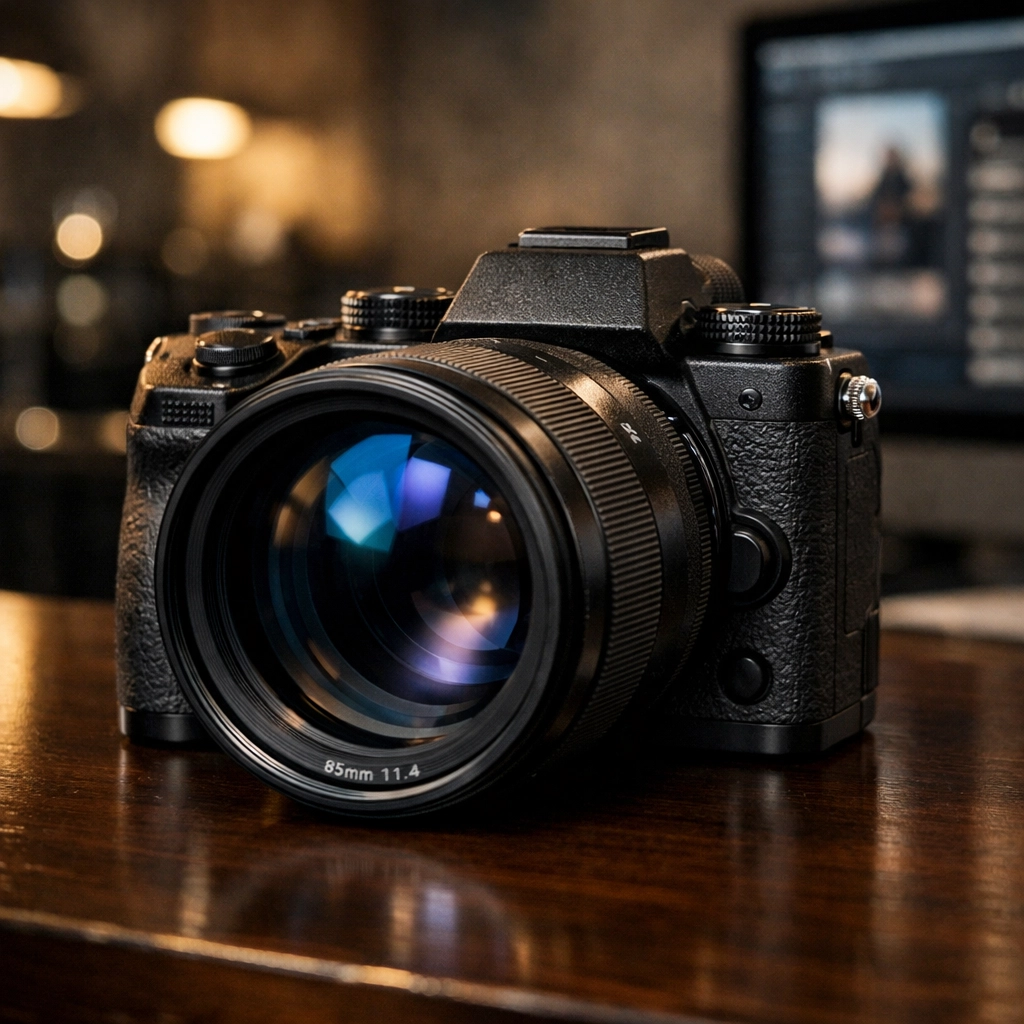
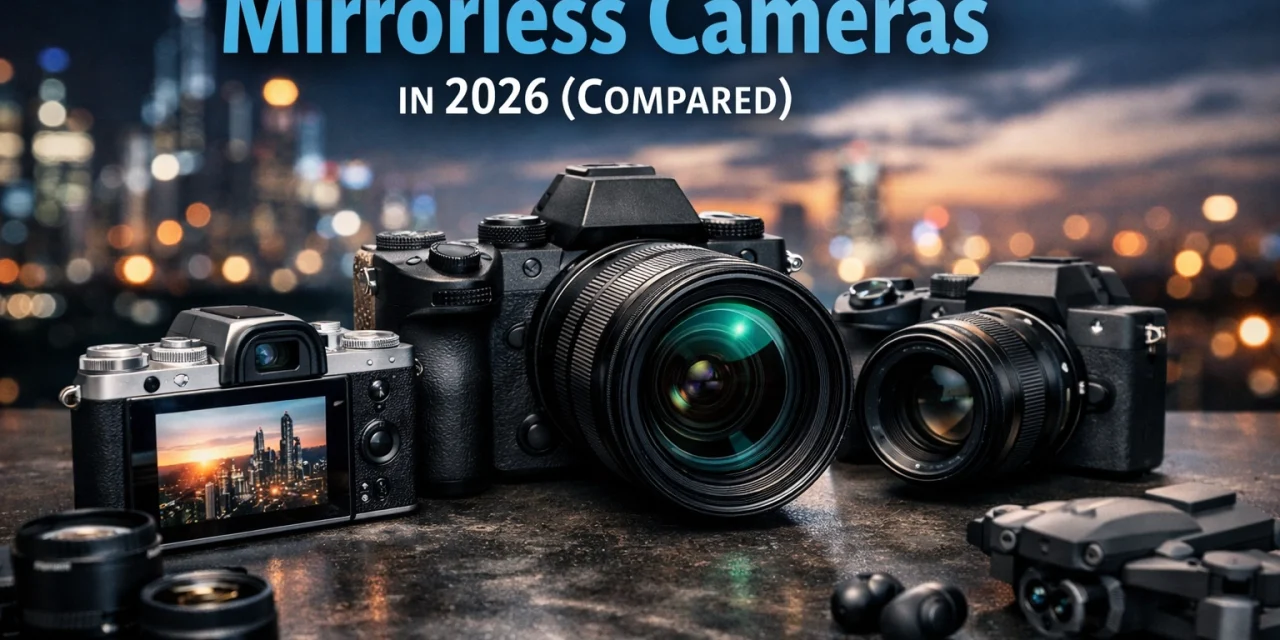
SEO Alt Text: A high-end professional mirrorless camera sitting on a wooden desk with a large 85mm lens attached, shallow depth of field, cinematic lighting.
The Mid-Range: Where Most People Live
You don't need to spend $7k to get a world-class image. In fact, the mid-range market is where the most innovation is happening right now.
Canon EOS R6 Mark II
This is widely considered the best "practical" camera. It has 24 megapixels (which is plenty for almost everyone), 40fps burst shooting, and dual memory card slots. If you are looking for camera gear reviews that focus on value, the R6 II wins every time. It’s a workhorse that won’t let you down.
Nikon Z6 III
Nikon’s latest update to the Z6 line is a hybrid dream. It’s weather-sealed, fast, and handles video like a champ. For those into street photography ideas, the Z6 III is compact enough to be discrete but powerful enough to capture the vibe of a neon-lit alley at midnight.
Photography for Beginners: Getting Started in 2026
If you’re just starting, don’t buy a $5,000 camera. You’ll be overwhelmed by the buttons and menus. You need something that grows with you.
Nikon Z50 II
At around $1,000, the Z50 II is the perfect entry point. It’s an APS-C sensor (smaller than full-frame), but it punches way above its weight. It features AI autofocus inherited from the higher-end models, which is perfect for photography for beginners because it handles the hard part of focusing for you.
Canon EOS RP
If you absolutely must have a full-frame sensor (which is better for that blurry background "bokeh" look), the Canon EOS RP remains the best value. It’s older, but it’s cheap and intuitive. It’s a great way to start learning how to use manual mode camera settings without breaking the bank. Speaking of which, if you’re struggling with settings, check out our Manual Mode 101 guide.
How to Choose: The Decision Matrix
Choosing a camera shouldn't be a headache. Ask yourself these four questions:
-
What are you shooting?
- Portraits? Look for Eye-AF and great color science (Sony or Canon).
- Landscapes? You need resolution. Go for 45MP+ (Nikon Z8 or Sony a7R V).
- Street? Go small and fast (Fujifilm or Sony C series).
-
Does video matter?
If you’re a YouTuber or content creator, look for 10-bit internal recording and good internal stabilization (IBIS). The Sony a7S III or Canon R6 II are favorites here. -
How much do you want to carry?
Mirrorless cameras are smaller than DSLRs, but some of the "pro" ones are still chunky. If you travel a lot, look at the "Compact" lines like the Sony a7C II. -
What's your lens budget?
The body is only half the story. You need good glass. Sony has the most third-party options (cheaper lenses from Sigma and Tamron), while Canon and Nikon have incredible (but pricey) proprietary lenses.
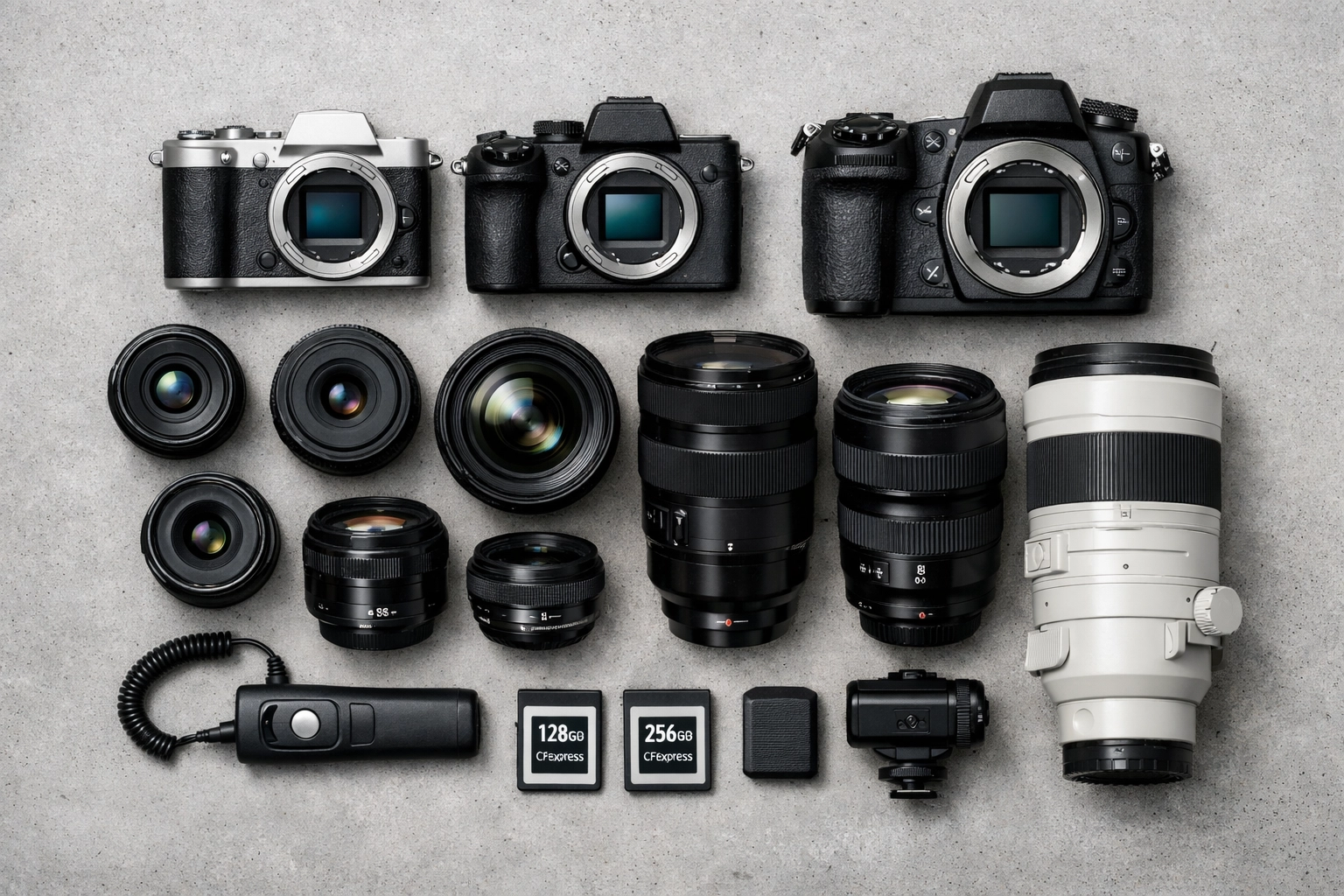
SEO Alt Text: A collection of various mirrorless camera lenses and bodies neatly arranged on a flat surface, showing different sizes and brands.
Essential Photography Tutorials for New Owners
Once you’ve picked your camera, the real work begins. Owning a Ferrari doesn't make you a racecar driver, and owning an a1 II doesn't make you a pro photographer.
- Master the Light: No matter which camera you choose, understanding light is the #1 way to get better. For some quick inspiration, dive into our ultimate guide to photography tutorials.
- Landscape Perfection: If you’ve grabbed a high-res Nikon or Sony, you’ll want to maximize those pixels. We’ve put together a guide on the fastest way to get better at landscape photography.
- Post-Processing: Every great photo you see on Instagram was edited. There is no way around it. I highly recommend using Luminar for your editing. It uses AI to handle the tedious stuff like masking and sky replacement, so you can focus on the creative side.
The Importance of the Lens Ecosystem
I see people make this mistake all the time: they spend their entire budget on a camera body and then buy a cheap, "kit" lens. Don't do that.
A $1,000 camera with a $1,000 lens will almost always take better pictures than a $4,000 camera with a $200 lens. In 2026, the glass is what defines your "look." If you want to dive deep into gear reviews and lens comparisons, ProShoot.io is a fantastic resource for side-by-side specs.
If you’re interested in the fine art side of things: seeing what these cameras can actually do in the hands of a pro: take a look at Edin Fine Art or Edin Studios. Seeing the end result often helps you decide which "look" you prefer.
Trends to Watch in 2026
If you’re reading this, you probably want to stay ahead of the curve. Here are a few things that are changing the game right now:
- Global Shutters: Sony introduced this in the a9 III, and it's trickling down. It eliminates "rolling shutter" (that weird wavy effect you get in videos when you move the camera fast).
- Computational Photography: Cameras are starting to do what iPhones have done for years: stacking multiple exposures instantly to give you better HDR without you having to do anything.
- Social Media Integration: Many 2026 models now have built-in vertical shooting modes and the ability to upload directly to the cloud or frame-io for instant client delivery.
For a deeper dive into the industry's direction, check out the latest photography trends here.
SEO Alt Text: A photographer standing on a mountain peak during sunset, holding a mirrorless camera on a tripod, capturing a vast mountain range.
Practical Tips for Your First Shoot
So, you’ve got the camera. You’ve read the photo editing tutorials. Now what?
- Format your cards: Do it in the camera, not on your computer.
- Update the firmware: In 2026, camera companies release updates that can literally give you a brand-new autofocus system for free.
- Shoot in RAW: If you shoot JPEG, you’re throwing away half the data your expensive sensor just captured.
- Practice Manual Mode: Even if the AI is great, you need to understand the exposure triangle. It’s the difference between a "lucky" shot and a "made" shot.
For more technical breakdowns, PhotoGuides.org has some of the best step-by-step instructions for beginners.
Comparison Summary Table
| Camera Model | Best For | Standout Feature | Price Range |
|---|---|---|---|
| Sony a1 II | Professional Hybrid | 8K 30fps / Global Shutter tech | $$$$$ |
| Nikon Z8 | Landscape & Pro Stills | Incredible Build & Sensor | $$$$ |
| Canon R5 Mk II | Weddings & Portraits | Eye-Control AF / 45MP | $$$$ |
| Nikon Z6 III | All-Around / Video | Weather Sealing / Speed | $$$ |
| Canon R6 Mk II | Content Creators | Ease of Use / AF | $$$ |
| Nikon Z50 II | Beginners | Portability / AI AF | $ |
Final Thoughts
The "best" mirrorless camera isn't the one with the most megapixels: it’s the one that makes you want to go outside and shoot. If a camera is too heavy, you’ll leave it at home. If it’s too complicated, you’ll get frustrated.
If you’re still on the fence, I recommend checking out the latest photography news to see if any major releases are around the corner. But honestly? 2026 is a plateau year: the tech is so good right now that whatever you buy today will be relevant for the next five to ten years.
Don't get too bogged down in the specs. Grab a body, find a lens you love, and start shooting. And when you get home with those RAW files, don't forget to run them through Luminar to really make them pop.
For more daily inspiration and gear talk, keep an eye on blog.edinchavez.com. Now get out there and capture something amazing.