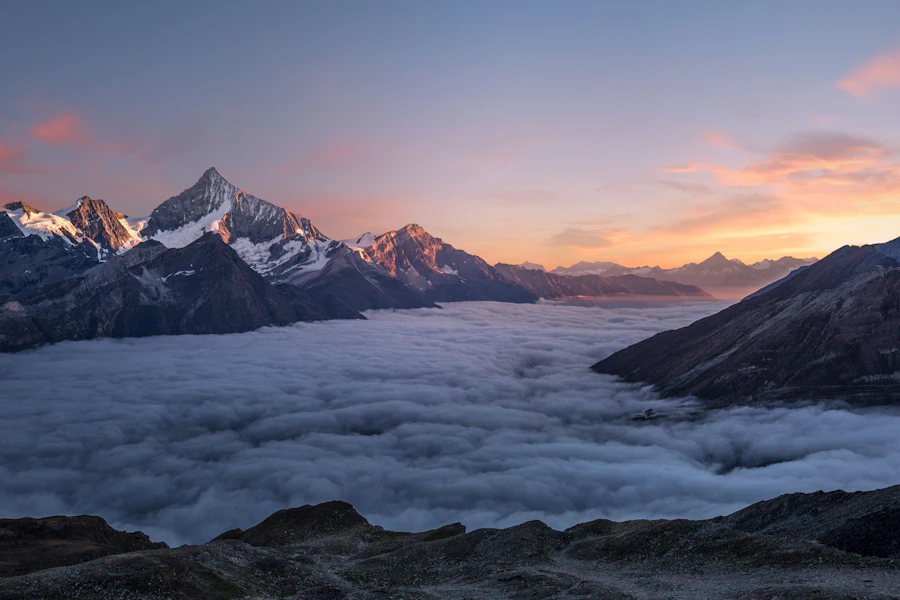

So, you want to be a landscape photographer? Welcome to the club. It’s a hobby that involves a lot of waking up at 4:00 AM, shivering in the cold, and occasionally questioning your life choices while waiting for a sun that might not even show up. But when it does? When that light hits the peaks and the clouds turn pink? There is nothing else like it.
If you’re just starting out with photography for beginners, it can feel like you’re trying to learn a foreign language while juggling flaming chainsaws. There are so many buttons, so many settings, and everyone on the internet seems to have a different opinion on what you should do. At Shut Your Aperture, we like to keep things simple. We’ve distilled years of trail-and-error (mostly error) into these 20 pro secrets that will actually help you take better photos without needing a PhD in optics.
Whether you are looking for photography tutorials or just want to stop taking blurry photos of mountains, this guide is for you. Let’s dive in.
1. Stop Chasing Gear, Start Chasing Light
The biggest lie in the industry is that you need a $5,000 setup to take a good photo. While reading camera gear reviews is a fun way to spend a Tuesday night, the truth is that a basic kit in great light will beat a pro kit in bad light every single time.
If you're hunting for the best mirrorless cameras, check out our guide on how to choose the best mirrorless cameras for your 2026 kit. But remember, the camera is just a box that records light. Your job is to find the good light.
2. Master the "Golden Hour"
You’ve heard the term, but are you actually using it? The Golden Hour happens twice a day: just after sunrise and just before sunset. The sun is low, the shadows are long and soft, and everything looks like it was dipped in honey.
If you're still learning photography for beginners, this is your best friend. It’s much harder to screw up a photo during the golden hour than at noon when the sun is harsh and making everything look flat and ugly.
3. Don't Sleep on the "Blue Hour"
Once the sun goes down, don't pack up your bags. The 30 minutes after sunset is called the Blue Hour. The sky turns a deep, moody blue, and the world takes on a peaceful, ethereal vibe. This is also a great time to experiment with street photography ideas if you’re near a city, as the building lights will start to glow against the blue sky.
4. Use a Tripod (Even When You Don't Want To)
I know, they’re heavy. They’re annoying to carry. But if you want sharp, professional-looking landscapes, you need one. A tripod allows you to use a low ISO (for maximum quality) and a slow shutter speed (for that silky water effect).

Without a tripod, you’re forced to raise your ISO, which introduces "noise" (grain) and ruins the detail in your mountains. Plus, slowing down to set up a tripod forces you to think about your composition. If you want to learn more about the technical side, jump over to PhotoGuides.org for some deep dives into gear stability.
5. Master Manual Mode
If you’re still shooting on "Auto," your camera is making the decisions for you. And let’s be honest, your camera doesn’t have an artistic soul. Learning how to use manual mode camera is the single biggest leap you can take.
You need to control the Aperture (depth of field), Shutter Speed (motion), and ISO (sensitivity). If that sounds scary, don’t panic. We have a full breakdown in our 5 steps to master manual mode guide. Once you get it, you’ll never go back.
6. Foreground is Your Secret Weapon
Beginners often see a beautiful mountain and just point the camera at it. The result? A flat, boring photo. To create depth, you need a foreground. Find a rock, a flower, a stream, or even a weird-looking patch of grass. Put it close to your lens. This "layers" your photo, leading the viewer's eye from the front of the image all the way to the back.
7. The Rule of Thirds (And When to Break It)
Imagine your screen is divided into a 3×3 grid. Most cameras have a setting to show this. Place your horizon on the top or bottom line, and your main subject (like a lonely tree) on one of the intersections. It’s a classic composition trick for a reason, it works.
However, if you have a perfectly symmetrical reflection in a lake, throw the rule out the window and center that horizon. Art is about knowing the rules so you can break them with style. For more creative layout thoughts, check out these street photography ideas which often translate well to landscape framing.
8. Get Low, Get High, Just Move!
Most people take photos from eye level because that’s where their head is. It’s also why most photos look the same. Get down in the dirt. Crouch. Climb a rock. Changing your perspective by just two feet can completely change the story of the image.
9. Use a Polarizing Filter
If you only buy one filter, make it a Circular Polarizer (CPL). It works like sunglasses for your camera. It cuts through glare on water, makes the green in the trees pop, and turns a "meh" blue sky into a "wow" blue sky. It’s one of those things you can’t really replicate perfectly in photo editing tutorials.
10. Shoot in RAW
If you’re shooting in JPEG, your camera is throwing away about 80% of the data it captures. RAW files look a bit flat and "boring" straight out of the camera, but they hold all the secrets. They allow you to recover shadows and highlights that would be lost forever in a JPEG.
11. The Power of "Luminar"
Once you’ve got those RAW files, you need to edit them. While some people enjoy spending five hours in Photoshop, most of us just want our photos to look awesome quickly. That’s where Luminar comes in. It uses AI to handle the boring stuff like sky replacement and atmospheric haze, so you can focus on the artistic side. It's a game-changer for photo editing tutorials and saves you a ton of time.
12. Use the Histogram
Don't trust the screen on the back of your camera; it lies to you, especially in bright sunlight. Use the histogram: a little graph that shows the distribution of light in your photo. If the graph is touching the right side, your highlights are "blown" (pure white with no detail). If it’s touching the left, your shadows are "crushed" (pure black). Aim for a nice mountain shape in the middle.
13. Focus One-Third Into the Scene
A common question in photography tutorials is "Where do I focus?" In landscape photography, you usually want everything from the front to the back to be sharp. A good rule of thumb is to focus about one-third of the way into the scene. This usually hits the "sweet spot" for depth of field.
14. Use a Small Aperture (But Not Too Small)
To get that deep focus, you want an aperture like f/8 or f/11. However, don't go all the way to f/22 unless you have to. Most lenses suffer from "diffraction" at their smallest apertures, which actually makes the whole image look slightly blurry. F/8 is usually the sharpest point on most lenses.
15. Add Scale with a Human Element
Mountains are big. But without something familiar in the frame, it's hard for the viewer to tell how big. Adding a person (even just a tiny figure in the distance) gives the viewer a sense of scale. It turns a "pretty picture" into an epic adventure.

If you're interested in how to pose people or use natural light on subjects, our portrait photography techniques guide has some great cross-over tips.
16. Scout Your Locations
The best pros don't just wander around hoping to find something cool. They use apps like Google Earth and PhotoPills to see exactly where the sun will be at 6:14 AM. Spend your "bad light" hours (midday) scouting. Find your composition while the sun is high and ugly, then come back when the light is perfect.
17. Don't Fear "Bad" Weather
Blue skies are actually the worst for landscape photography. They’re boring. You want clouds. You want storm fronts. You want mist. Some of the best photos are taken right as a storm is breaking. Just make sure your camera is weather-sealed or bring a plastic bag! If you’re curious about the latest tech that can handle these conditions, keep an eye on our photography news section.
18. Long Exposure is Magic
Want that misty water or streaky cloud look? That’s long exposure. Use an ND (Neutral Density) filter, basically a very dark piece of glass: to trick your camera into needing a 30-second shutter speed during the day. It turns a chaotic ocean into a calm, foggy dreamscape.

19. Check Your Corners
Before you click the shutter, run your eyes around the edge of the frame. Is there a stray branch sticking in? A piece of trash? A bright white rock that’s distracting from the mountain? It’s much easier to move your camera an inch to the left now than it is to try and fix it later in Luminar.
20. Print Your Work!
We live in a digital world, but there is something magical about seeing your photo on a large canvas. It forces you to look at your work differently. If you want to see what professional-grade prints look like, check out Edin Fine Art. Seeing your work physically manifested is the ultimate reward for all those early mornings.
Putting it All Together
Landscape photography is a marathon, not a sprint. You’re going to have days where you hike for three hours and come home with nothing but a wet pair of socks. That’s okay. It’s part of the process. Sonny, our social media manager, often says that the best photo is the one you actually went out to take.
If you’re feeling overwhelmed, start small. Pick one of these tips: maybe it’s foreground interest or using a tripod: and focus on just that for a week. Once it becomes second nature, move on to the next.
For those who want a structured way to learn, we’ve put together some incredible resources over at Shut Your Aperture Academy. It’s designed to take you from "What does this button do?" to "Look at this epic shot I just took."
Also, don’t forget to check out Edin Chavez’s personal blog for more behind-the-scenes stories of what it’s actually like to be a pro in the field.
Essential Gear Checklist for Landscapes
If you're looking for camera gear reviews, here's the "Short List" of what you actually need:
- A Mirrorless Camera: Check out the latest Sony or Canon mirrorless options.
- A Wide-Angle Lens: Something in the 16-35mm range is classic.
- A Sturdy Tripod: Don't buy the cheapest one; you'll regret it when it falls over in the wind.
- Extra Batteries: Mirrorless cameras eat batteries, especially in the cold.
- Microfiber Cloths: Because mist is real, and it loves your lens.

Conclusion
At the end of the day, landscape photography is about your relationship with the outdoors. It’s an excuse to go to beautiful places and sit quietly while the rest of the world is asleep. Whether you're using portrait photography techniques to capture your friends in the wild or mastering how to use manual mode camera, the goal is the same: tell a story.
Keep shooting, keep exploring, and remember to shut your aperture (or open it, depending on the shot). See you on the trail!