Grab your coffee. It is Saturday, March 21, 2026, and the tech world is moving faster than a shutter at 1/8000th of a second. If you’ve been feeling like your gear is getting a bit dusty or your software is lagging behind, you’re in the right place.
Staying on top of the latest photography and videography news isn't just about bragging rights; it’s about making your workflow smoother and your shots better. From AI that plans your travel to laptops you can actually fix yourself, here are the 10 things you need to know this morning to stay ahead of the curve.
1. Gemini AI is Taking Over the Logistics of Your Shoots
We’ve all been there: you want to go shoot some hidden-gem locations for travel photography, but the logistics of booking flights, hotels, and transport feel like a full-time job.
Google’s Gemini AI is now being baked directly into the new Samsung Galaxy S26 and the Google Pixel 10. This isn't just another chatbot. We’re talking about "Agentic AI" that can see a calendar entry for a shoot in Iceland and automatically start preparing your travel documents and booking your rental car. For a photographer, this means less time behind a screen and more time behind the lens. It’s about automating the boring stuff so you can focus on the art.
2. The MacBook Neo: Apple Finally Lets You Fix It
For years, the "Right to Repair" movement has been fighting an uphill battle. But Apple has finally blinked. The new MacBook Neo is being hailed as the most repairable MacBook ever made.
Why does this matter for photographers? We put our gear through hell. Whether it’s sand at the beach or a spilled latte in a darkroom, things break. Instead of being forced to buy a whole new machine or pay a king's ransom at the Genius Bar, the Neo’s modular design means you can swap out components more easily. This is a huge win for long-term gear sustainability. If you’re looking for more gear advice, definitely check out PhotoGuides.org for deep dives on hardware longevity.
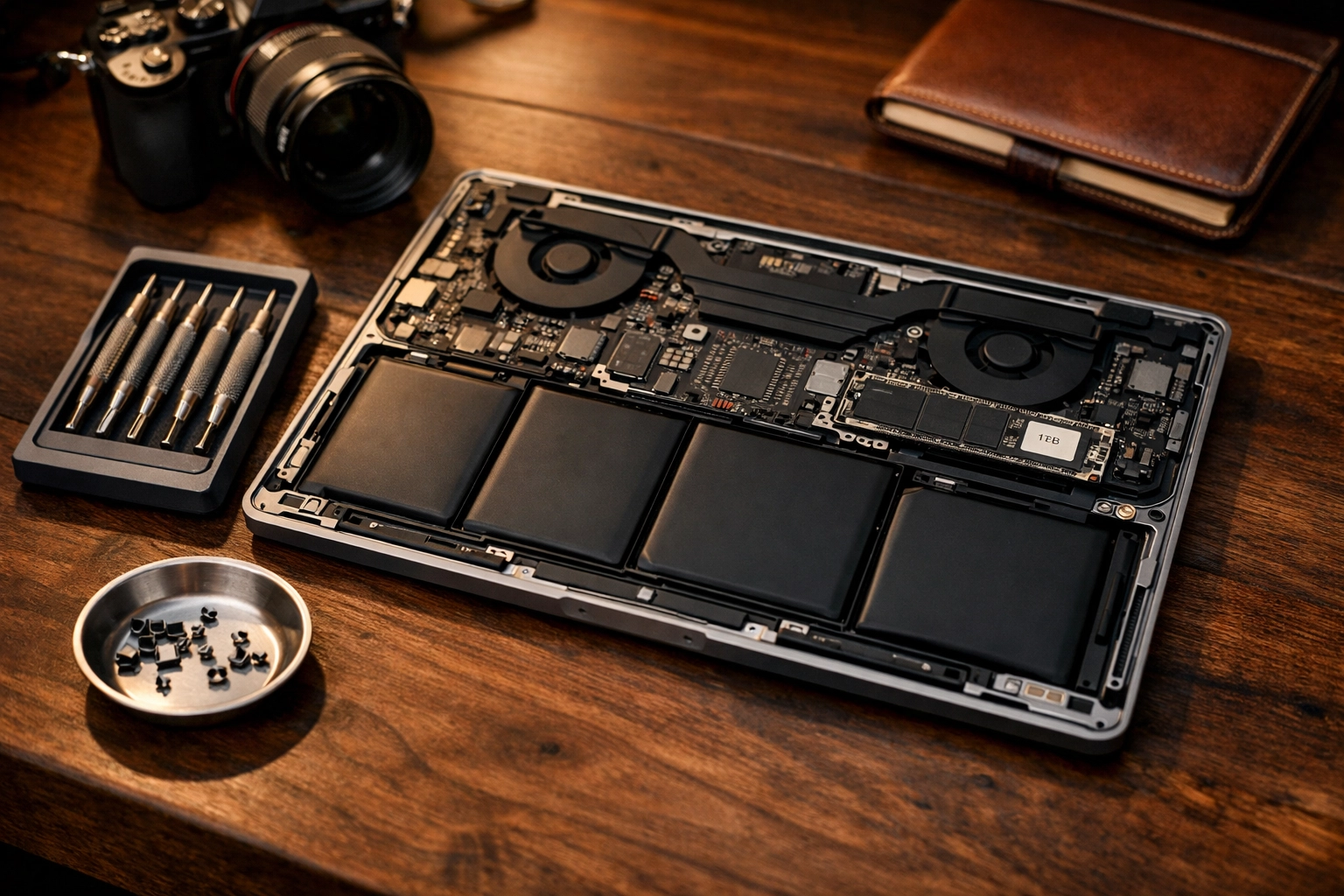
Alt Text: A high-tech, modular laptop being repaired on a wooden desk with camera lenses in the background.
3. iPhone 17e: On-Device AI for Faster Editing
Apple just dropped the iPhone 17e, and the big story here is "Apple Intelligence." Unlike previous versions that relied heavily on the cloud, the 17e handles a massive amount of AI processing right on the chip.
For us, this means mobile editing is about to get a lot faster. If you’re using heavy-duty software like Luminar on your mobile devices, you’ll notice the AI masking and sky replacement tools are nearly instantaneous. No more waiting for "the cloud" to decide if your photo looks good. You get privacy, speed, and efficiency all in one pocket-sized device.
4. Luminar and the Rise of Generative Editing
Speaking of software, the trend this morning is all about "Generative Editing." We aren't just fixing exposure anymore; we’re reimagining scenes. Luminar continues to lead the pack here by integrating tools that allow you to add complex textures and light leaks with a single click.
If you’re interested in how to make these digital edits feel more "real," you should read our guide on using rare textures for tangible aesthetic photography. Combining high-end software with classic aesthetic principles is how you stand out in 2026.
5. NVIDIA’s Automotive Tech is Helping Our Drones
You might think NVIDIA is just for gamers, but their automotive revenue just hit $1.1 billion. They are building the "brains" for self-driving cars. So, what does that have to do with your camera bag?
The same chips that help a BMW navigate a highway are finding their way into high-end drones and stabilized camera rigs. We are seeing a massive jump in "obstacle avoidance" and "active tracking." Imagine a drone that can navigate a dense forest to follow you while you discover ethereal landscapes for captivating shots without ever hitting a branch. That technology is trickling down from the car industry as we speak.
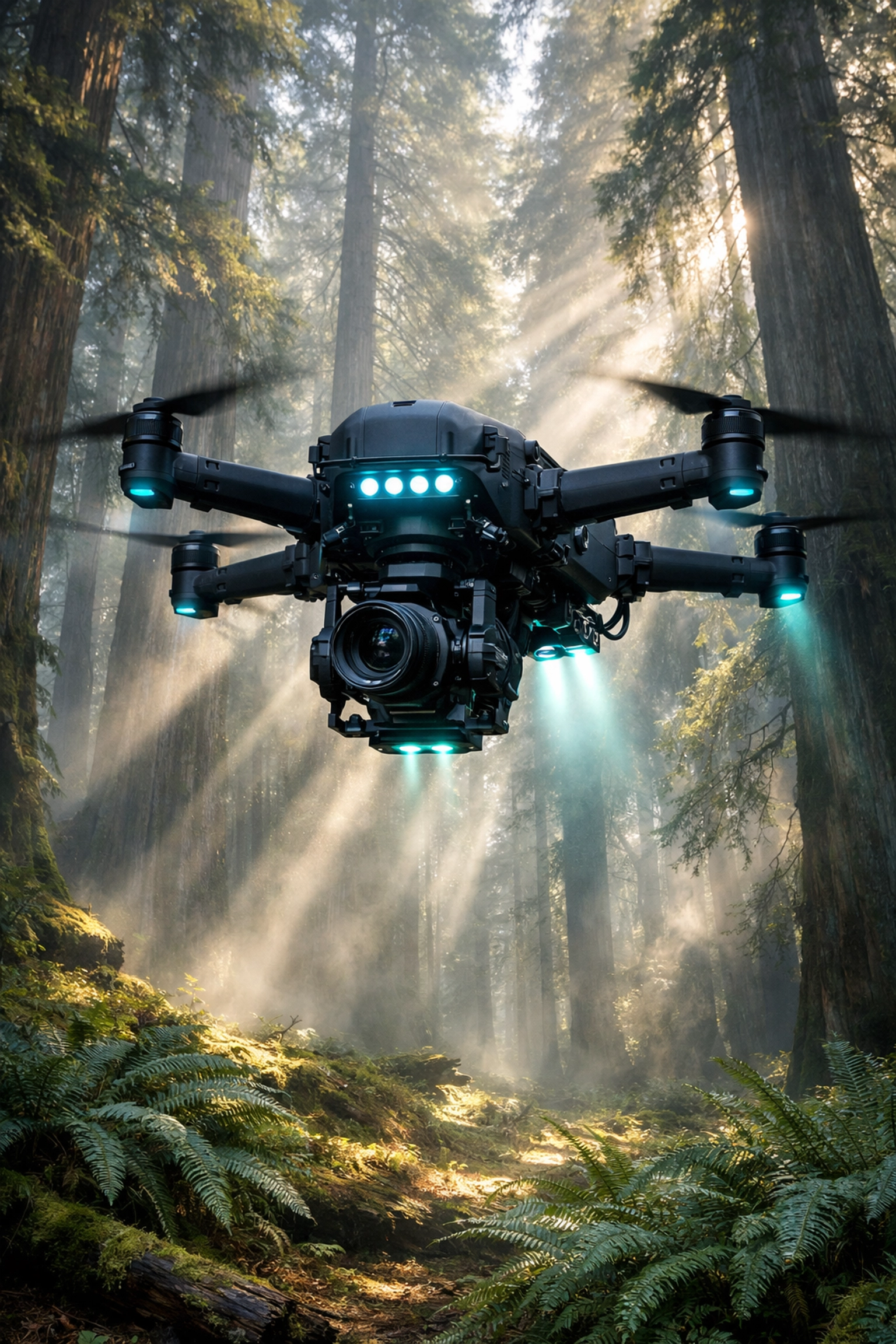
Alt Text: A sleek professional drone flying through a misty forest with advanced sensors glowing.
6. Neuromorphic Computing: The Future of Sensors?
Intel and IBM are working on something called "Neuromorphic Chips." These are chips designed to mimic the human brain’s neural structure.
In the world of photography, this could revolutionize how camera sensors process light. Current sensors are great, but they are "dumb": they just collect data. A neuromorphic sensor could potentially "see" and prioritize movement or focus points in real-time with almost zero power consumption. It’s the kind of tech that will eventually lead to cameras that can shoot in near-total darkness without any noise.
7. Amazon’s Millionth Robot and Studio Automation
Amazon just deployed its millionth robot, coordinated by something called DeepFleet AI. While this is great for getting your lens filters delivered in two hours, it’s also a sign of where professional studios are headed.
We are starting to see "Smart Studios" where lighting rigs and camera dollies are coordinated by similar fleet AI. Instead of having five assistants moving lights, a single DP can use an AI interface to shift the entire mood of a room in seconds. It’s autonomous filmmaking, and it’s closer than you think. If you need to upgrade your studio gear to keep up, head over to www.proshoot.io for the latest professional listings.
8. Agentic AI Workflows for Photography Businesses
The term "Agentic AI" is the buzzword of the year. Unlike a standard AI that responds to a prompt, an agentic AI is given a goal and figures out the steps to get there.
Venture capital is pouring billions into this. For a freelance photographer, this could mean an AI "agent" that handles your client inquiries, sends out invoices after a shoot, and even posts teasers to your social media. It acts as a virtual studio manager. This allows you to stay creative while the AI handles the administrative grind.
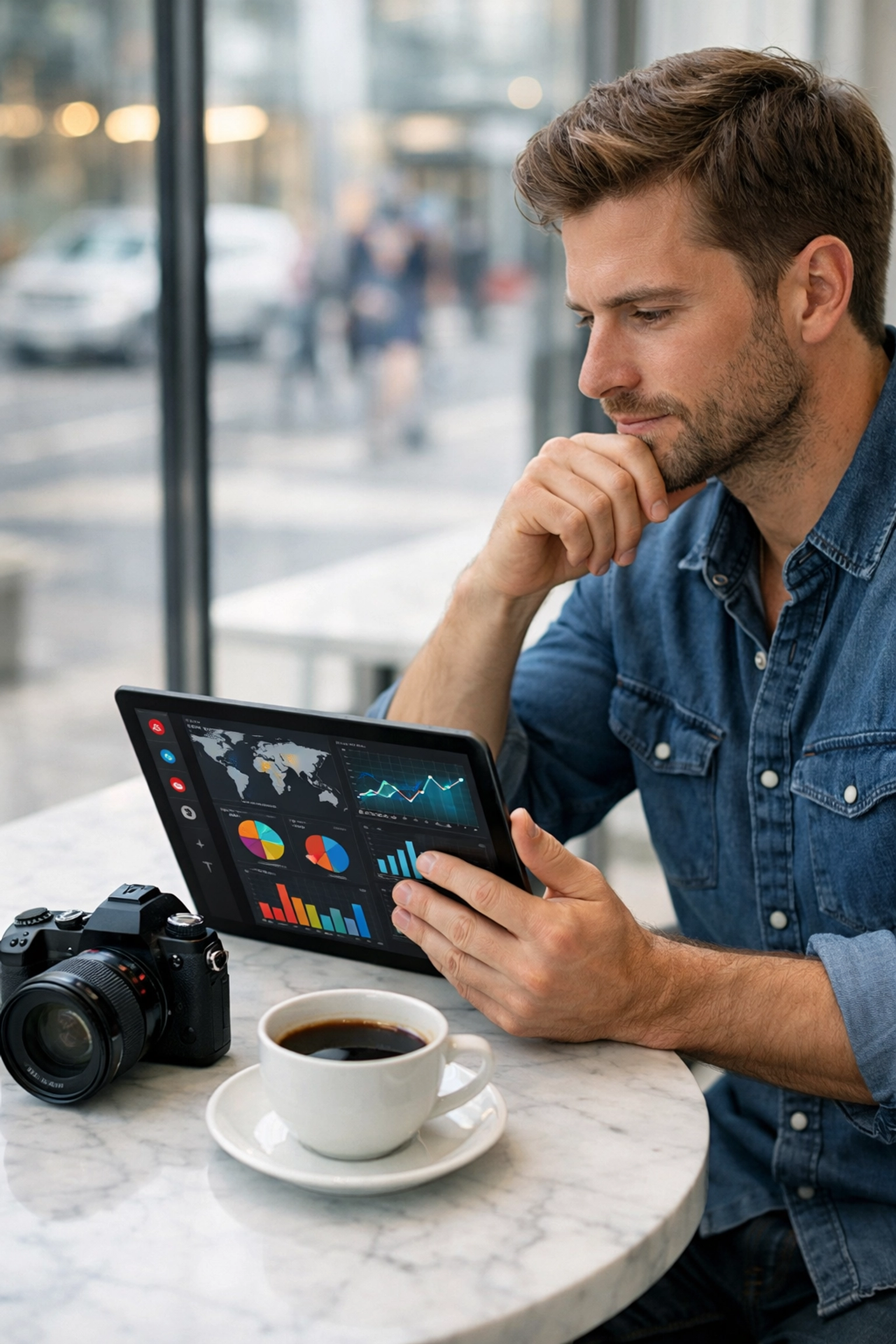
Alt Text: A photographer sitting in a modern cafe using a tablet to manage an automated AI workflow.
9. BMW’s Self-Driving Factories and Production Value
BMW is now using cars that drive themselves through the production line. This is a masterclass in efficiency and precision.
In the videography world, we are seeing this translated into "Virtual Production." Large-scale LED volumes (like those used in The Mandalorian) are becoming more accessible. The precision of industrial robotics is being used to move cameras with sub-millimeter accuracy, allowing for repeatable shots that were impossible five years ago. High-end production value is no longer just for Hollywood; it’s moving into the hands of independent creators.
10. Open-Source AI: Customizing Your Craft
Alibaba and other tech giants are releasing open-source AI models. This is huge because it allows developers to create niche tools specifically for photographers.
Instead of being stuck with whatever features a big corporation thinks you need, we are seeing an explosion of "community-built" plugins. Want an AI that specifically edits photos to look like 1970s Kodachrome? Someone is probably building that right now on an open-source model. It’s a democratization of technology that keeps the creative power in the hands of the artists.
Why This Matters for You
It’s easy to get overwhelmed by the "latest camera releases" or the constant stream of software updates. But the underlying theme of 2026 is Efficiency and Empowerment.
Whether it's a repairable MacBook Neo that saves you money or Luminar saving you hours in post-production, these tools are designed to remove the friction between your vision and the final image.
If you're looking to dive deeper into how to use these technologies to find better locations or create more tangible art, check out our internal resources like the post-sitemap to find specific tutorials on every topic we've covered.
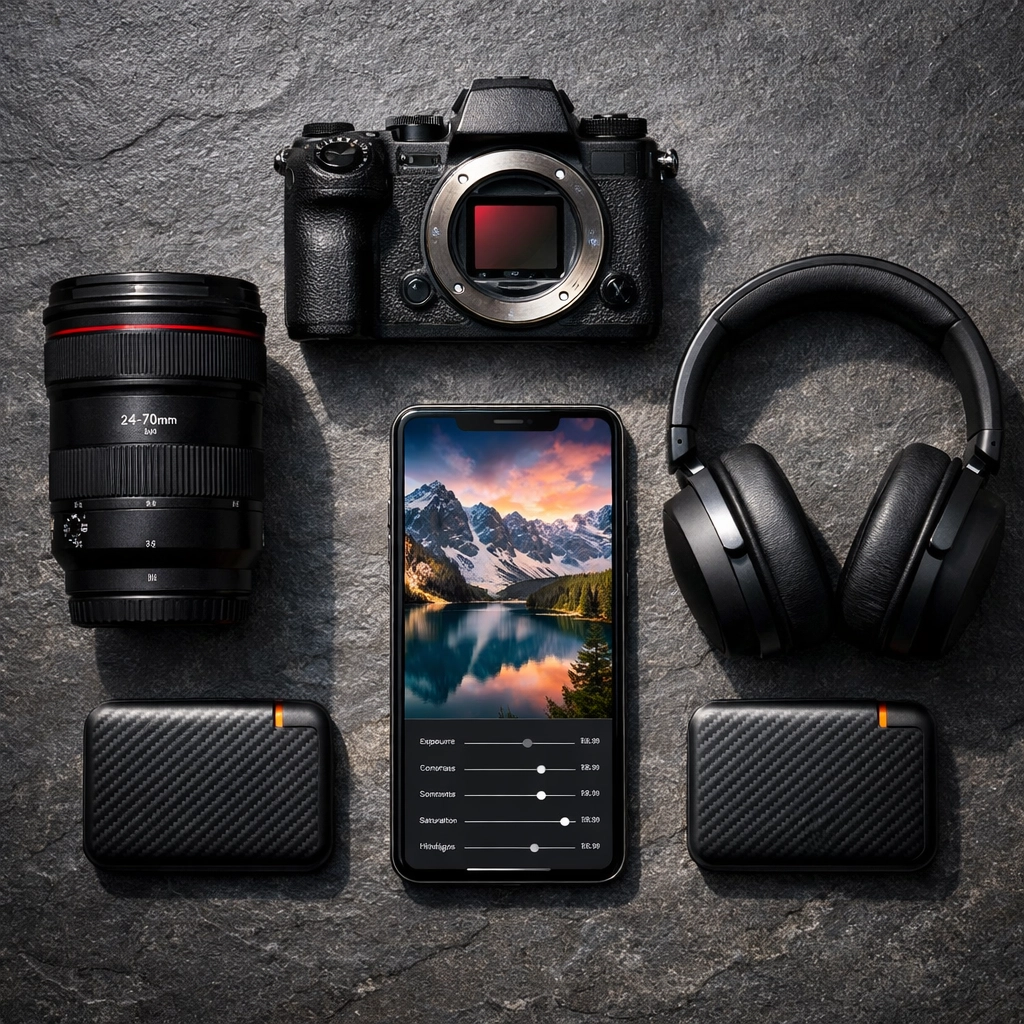
Alt Text: A collage of modern camera gear, a smartphone with AI editing software, and a beautiful landscape photo.
Pro Tip: Check the Secondary Market
With tech moving this fast, the "last generation" of gear is becoming incredibly affordable. If you don't need the cutting-edge AI of the iPhone 17e, you can find incredible deals on slightly older models that still blow away cameras from a decade ago. Always keep an eye on sites like www.proshoot.io for those "hidden gem" gear deals.
The world of photography is no longer just about glass and sensors; it's about how you integrate these smart tools into your daily life. Stay curious, keep shooting, and don't let the tech get in the way of your story.
If you want to stay updated on these daily trends, make sure to bookmark our main page and keep an eye out for more updates from the team here at Shut Your Aperture. We're here to make sure you never miss a beat: or a shot.
For more inspiration on where to take your new gear, explore our curated list of ethereal landscapes and get out there and shoot. The morning is just starting, and there’s a whole world of tech waiting to be used.