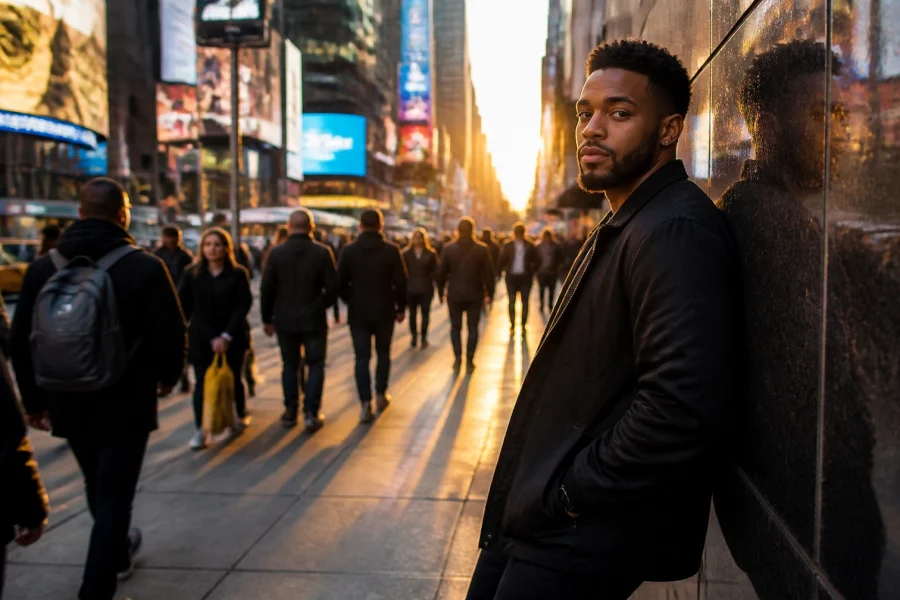

If aperture still feels fuzzy, start with our deep-dive aperture photography guide — it covers everything from f-stop math to bokeh control.
Monday mornings usually come with a heavy dose of caffeine and a mountain of emails, but in the photography world, they also come with a flood of gear announcements. If you’ve been living under a rock (or just actually sleeping), May 18, 2026, has already turned into a massive day for camera geeks.
Between Sony dropping bombshells about their high-resolution flagship and Nikon teasing glass that might make you want to sell a kidney, there is a lot to digest. We aren't just talking about minor "stability improvements" here. We’re talking about shifts in sensor technology and AI-driven autofocus that are changing how we shoot everything from birds in flight to late-night street scenes.
Let’s break down the 10 most important things you need to know from this morning’s news cycle so you can stay ahead of the curve.
1. The Sony a7R VI: High Resolution Meets Real Speed
For years, if you wanted high resolution, you had to sacrifice speed. The Sony a7R series was the king of detail, but it was always a bit of a "slow and steady" beast compared to its siblings. That just changed. The first deep-dive impressions of the Sony a7R VI are hitting the web, and the consensus is that the new stacked sensor is a total game-changer.
Unlike the previous Sony a7R V, the a7R VI is finally handling high-speed action without the dreaded rolling shutter. Reviewers are noting that the readout speeds are so fast you can actually use the electronic shutter for sports and wildlife without warping your subject into a Salvador Dalí painting.
If you are currently debating between the Canon EOS R5 vs Sony a7R V, you might want to pause and see how the VI affects the market. The improved AF tracking: powered by a dedicated AI processing unit that’s even more beefed up than the last generation: makes this a legitimate hybrid tool.

Alt text: A professional photographer using the new Sony a7R VI to capture high-speed bird photography in a forest.
2. Canon EOS R6 V: The Professional Workhorse Gets Smarter
Not to be outdone, Canon has officially launched the EOS R6 V. While the R5 line gets the headlines for megapixels, the R6 line is what most working pros actually carry in their bags. This morning’s coverage highlights that Canon is doubling down on "intelligent" autofocus.
The R6 V is borrowing the eye-tracking algorithms from the flagship R1, allowing it to lock onto eyes even when the subject is wearing glasses, helmets, or standing behind thick foliage. For wedding photographers, this is huge. Imagine not losing focus when the bride walks behind a floral arrangement. If you’re still rocking the older models, check out our comparison of the Sony a7 IV vs Canon EOS R6 Mark II to see just how far this mid-range line has come.
Alongside the body, Canon released a few mid-range RF lenses that are specifically aimed at hybrid shooters. These aren't the $2,500 L-series glass, but rather high-value, constant-aperture zooms that offer a great balance for those doing both video and stills.
3. DJI Osmo Pocket 4P Teaser: Multi-Lens Magic?
DJI is teasing something that could disrupt the vlogging world again. The Osmo Pocket 4P teaser suggests a multi-lens or multi-camera design. In a world where we are used to smartphones having three lenses, DJI seems to be bringing that logic to their gimbal cameras.
Why does this matter? Currently, you’re stuck with one focal length unless you use a clip-on adapter. A multi-lens Pocket 4P would allow creators to jump from a wide-angle "walking and talking" shot to a tighter, more cinematic 50mm equivalent for b-roll without stopping. It’s a bold move that targets the "one-man-band" creator who needs maximum flexibility in a tiny footprint.
For more on how to use tools like this for professional results, you can dive into our ultimate guide to portrait photography techniques. Even with a small sensor, understanding lighting and composition is key.
4. Voyager 24–50mm F2.8 AF: The Budget King?
Chinese lens manufacturer Thypoch just shook up the market by announcing the Voyager 24–50mm F2.8 AF. At an aggressive price point of $649, this is their first full-frame autofocus zoom.
Usually, when we think of "budget" zooms, we think of variable apertures (like F4-6.3). To see a constant F2.8 at this price is wild. While it won't replace a Sony G-Master or a Canon L lens in terms of build quality, for hobbyists or those starting out, it’s a massive win. It’s a great focal range for everything from street photography to casual portraits.
5. Insta360 Goes Retro with "Vintage Vibes"
Content creation isn't just about specs; it’s about style. Insta360 just released a new bundle for their tiny action cameras called "Vintage Vibes." It’s essentially a hardware and software kit that wraps their modern stabilization and 4K tech in a retro-styled aesthetic.
But the real magic is in the software filters. They’ve developed a "film-stock" emulation that looks surprisingly good: not like the cheap filters we saw in 2012, but actual color-graded profiles that mimic 16mm film. If you’re a fan of using Luminar to get that perfect "look" in post-processing, you’ll appreciate the effort Insta360 is putting into their in-camera color science.
6. Flagship Love: Canon R1 and R5 II Firmware Updates
If you already own the Canon EOS R1 or the R5 II, check your settings. Canon just pushed a massive firmware update. This isn't just "bug fixes." They’ve added significant refinements to the tracking AF, especially for sports photographers.
The update improves the "Register People Priority" feature, allowing the camera to better identify a specific athlete on a crowded field. If you’re shooting with an OM System OM-1 Mark II for sports, you know how important specialized settings are. Canon is trying to match that level of customization by giving pros more control over how the AI behaves in chaotic environments.
Alt text: A close-up of a professional mirrorless camera screen showing the new firmware update menu for autofocus tracking.
7. Sony Xperia 1 VIII: The Camera That Is Also a Phone
Sony’s latest flagship smartphone, the Xperia 1 VIII, was announced this morning, and it’s being marketed strictly as a "camera-first" device. Sony is leaning hard into the Alpha brand here. The interface looks exactly like the menu system on an a7R VI or an a1.
It features advanced manual controls and upgraded computational photography that focuses on "natural" looks rather than the over-sharpened, plastic look of most smartphones. For pro photographers, this is the ultimate "scouting" tool. You can take a shot, check the manual settings, and know exactly what you need when you come back with your "real" gear.
If you’re moving from mobile to more professional setups, it’s always a good idea to learn Lightroom to truly unlock the potential of the RAW files these devices can now produce. You can find more structured help on our photography tutorials page.
8. Why Everyone is Talking About the Sony FE 100–400mm Again
In a weird twist, an "older" lens is getting a lot of traction this morning. The Sony FE 100–400mm F4.5-5.6 GM OSS is being highlighted in several "Top Gear" lists for 2026. Why? Because as sensors get more megapixels, the quality of the glass matters more than ever.
Wildlife and sports photographers who don't want to carry a 600mm prime are finding that this zoom holds up incredibly well on the new high-res sensors like the a7R VI. If you’re looking for the right setup for birds or fast action, check out our guide on OM System OM-1 Mark II settings for wildlife photography to see how another system handles the same challenges.
Alt text: A wildlife photographer in a camouflage jacket using a long telephoto zoom lens on a tripod to photograph a distant eagle.
9. Nikon’s Secret Weapon: The Built-In Teleconverter
Nikon has officially confirmed they are developing a fast telephoto zoom with an integrated teleconverter. This is huge for sports and wildlife shooters. Imagine having a 200-400mm F4 lens where you can just flip a switch and instantly have a 280-560mm F5.6 without ever taking the lens off the body.
This technology has existed in super-expensive primes before, but bringing it to a more "accessible" (though still pricey) zoom is a game-changer. No more worrying about dust on the sensor while changing lenses in the rain at a football game. For those specializing in high-stakes environments, like real estate photography or weddings, gear that minimizes downtime is always worth the investment.
10. Samyang L-Mount Expansion
Finally, Samyang has released an L-mount version of its AF 14–24mm F2.8. This is great news for the "L-Mount Alliance" (Leica, Panasonic, and Sigma shooters). Up until now, high-quality ultra-wide options were either very expensive or very heavy.
The Samyang offers a lightweight, affordable alternative that doesn't skip on the autofocus performance. Whether you’re shooting landscape photography or trying to fix common landscape mistakes, having a sharp 14mm is essential for that grand sense of scale.
Alt text: An ultra-wide landscape shot of a mountain range at sunrise, showing the clarity and scale possible with a 14mm lens.
Making Sense of the Noise
With so much news hitting at once, it’s easy to feel like your current gear is obsolete. It’s not. Most of these updates are about making the job easier, not necessarily better. A great photo still comes down to the person behind the lens.
If you are feeling overwhelmed, take a breath. You don't need every new release. But knowing what’s available helps you make smart decisions when it is time to upgrade. Whether you are looking for product photography settings or just want to stay informed about tonight’s photography news, keeping an eye on the tech is part of the craft.
For more deep dives into how to actually use this gear, head over to PhotoGuides.org or check out Edin’s latest thoughts on his personal blog. If you’re looking for inspiration that isn’t gear-related, you can’t go wrong with the gallery over at Edin Fine Art.
Pro Tip: Don’t Ignore the Software
New gear is sexy, but software is where the real work happens. If you haven't checked out the latest AI tools in Luminar, you’re missing out on some incredible time-saving features. It can take a "meh" shot from this morning’s news walk and turn it into something portfolio-ready in minutes.
Also, if you're struggling with getting the right look in your edits, we have a massive library of resources to help. Whether you shoot Sony, Canon, or Nikon, the fundamentals are the same. Start with our Lightroom tutorials and see how much your work improves without spending a dime on new glass.
Keeping Up with the Trends
The photography world in 2026 is moving faster than ever. We’ve seen more innovation in the last six months than we saw in the five years prior. Between the "vintage vibes" of Insta360 and the high-tech AI of the Sony a7R VI, there’s a clear split in the market: half the people want their photos to look like they were taken in 1970, and the other half want their cameras to do the thinking for them.
Wherever you fall on that spectrum, stay curious. The best gear is the gear you have with you: but it never hurts to know what's coming next.
Alt text: A sleek, modern photography studio with various cameras and lenses laid out on a table, representing the latest gear of 2026.
If you want to dive deeper into specific camera setups, we’ve got you covered:
- OM System OM-1 Mark II for Portraits
- Sony ZV-E10 II for Wildlife
- Product Photography on the OM-1 Mark II
Stay tuned for more updates as we get our hands on this gear for real-world testing. This morning was just the tip of the iceberg!