There’s a world of beauty waiting to be captured, and mastering natural light can elevate your photography skills significantly. Understanding how to manipulate and utilize natural light will enhance your images, making them more dynamic and engaging. This guide provides imperative tips tailored for you as a beginner photographer, helping you to harness the power of light to create stunning photographs. Dive in and discover techniques that will transform ordinary scenes into extraordinary visuals.

Understanding Natural Light
While mastering photography, understanding natural light is fundamental to your success. Light shapes your images, influences mood, and impacts colors. By recognizing how light behaves, you can use it to your advantage, creating stunning photographs that convey your vision. A keen awareness of natural light will elevate your photography, allowing you to capture the world authentically.
Types of Natural Light
While exploring natural light, it’s necessary to familiarize yourself with the various types it offers:
- Direct sunlight
- Diffused light
- Golden hour light
- Overcast light
- Shadows and reflections
After understanding these types, you will be better equipped to utilize them in your photography.
| Type of Light | Description |
| Direct sunlight | Bright, harsh light providing high contrast. |
| Diffused light | Soft, even light that reduces shadows. |
| Golden hour light | Warm, soft light occurring shortly after sunrise or before sunset. |
| Overcast light | Soft light with minimized shadows due to cloud cover. |
| Shadows and reflections | Unique patterns of light created by objects. |
Quality of Light Throughout the Day
Along your photography journey, you’ll notice that the quality of light changes throughout the day. The position of the sun influences how light behaves, affecting shadows and colors in your images. Understanding these fluctuations can help you choose the best times to shoot.
Due to the earth’s rotation, the light quality transforms significantly, especially during sunrise and sunset when it is softer and warmer, enhancing textures and depth in your photos. Midday light, on the other hand, is stark and can create harsh shadows that might not be flattering for your subjects. By tracking these changes, you can maximize your photography potential and create compelling images.
Essential Camera Settings
Some key camera settings can significantly influence your ability to capture stunning images in natural light. By mastering ISO, aperture, and shutter speed, you empower yourself to adapt to various lighting conditions. Understanding how to manipulate these settings will help you create well-exposed photographs that showcase the beauty of your surroundings.
ISO and Natural Light Photography
One of the first steps in optimizing your photography in natural light is adjusting your ISO. A lower ISO, such as 100-200, works best in bright conditions, ensuring minimal noise. Conversely, in lower light situations, you can increase the ISO to maintain the desired exposure without sacrificing sharpness. However, be cautious not to push it too high to avoid grainy images.
Aperture and Shutter Speed Relationships
For every shot you take, understanding the relationship between aperture and shutter speed is vital. Both settings play an integral role in determining exposure while also affecting the aesthetics of your images. A wider aperture allows more light in and creates a shallow depth of field, making your subject stand out against a softly blurred background. In contrast, a faster shutter speed can freeze motion, which is ideal when capturing dynamic scenes or fast-moving subjects. Balancing these settings enables you to manipulate light effectively and tailor your photographic style.
Photography is both an art and a science, where the interplay of aperture and shutter speed allows you to express your creative vision. By widening the aperture and slowing down the shutter speed, you can achieve a beautifully lit portrait with a dreamy background. Alternatively, if your subject is in motion, using a narrower aperture with a faster shutter speed can capture those fleeting moments with clarity. Understanding how to combine these settings effectively will significantly improve your image quality and help you respond adeptly to changing light situations.

Positioning and Direction
Your ability to manipulate natural light can significantly enhance your photography. By understanding positioning and direction, you can create stunning images that highlight your subject effectively. Pay attention to the time of day and the light’s angle to achieve the best results. Different positions can evoke various moods, so experiment and find what works best for your style.
Finding the Best Light Angles
Below are some tips to help you discover the light angles that suit your subject. Try shooting during the golden hour—just after sunrise or before sunset—when the light is soft and warm. Position yourself around your subject to see how the light affects it from different angles, and don’t hesitate to move around until you find that sweet spot that enhances your composition.
Subject Placement in Natural Light
Before you press the shutter, consider where you place your subject in relation to the light source. This positioning can dramatically vary the mood and impact of your photograph. Think about whether your subject should be backlit, side-lit, or front-lit, and how this alignment can either enhance or obscure details.
To make the most of natural light, ensure your subject is placed to showcase the light’s effect. For instance, positioning your subject with the sun behind them can create a beautiful halo effect, while front-lighting can help reveal details and textures. Experiment with different placements and distances from the light source to find the best approach for your desired outcome. Observing how shadows and highlights interact can also lead to more dynamic compositions.
Working with Different Weather Conditions
Despite the challenges that varying weather conditions can present, each offers unique opportunities for stunning photography. Embrace the elements and adapt your techniques to maximize your results, whether you’re shooting in bright sunlight or the soft glow of an overcast day. By understanding how to work with the weather, you can create captivating images that truly reflect the environment.
Shooting in Bright Sunlight
One of the most common challenges you’ll face as a photographer is shooting in bright sunlight. The harsh light can create unflattering shadows and overly bright highlights. To work with this, consider shooting during the golden hour, which is shortly after sunrise or before sunset, for softer, warmer light. If midday sun is inevitable, you can also seek out shaded areas or use reflectors to bounce light back onto your subjects, softening those hard shadows.
Utilizing Overcast Days
Utilizing overcast days offers a fantastic opportunity to capture beautifully diffused light, which is ideal for portrait and landscape photography. The clouds act as a natural filter, softening shadows and reducing contrast, allowing your subjects to be illuminated evenly. This kind of lighting is particularly flattering for skin tones, making it easier to highlight details without the risk of harsh glare.
With overcast days, you’ll want to take full advantage of the rich, even lighting. Consider experimenting with your camera settings; increase your ISO slightly to compensate for the lower light conditions, and don’t hesitate to use a wider aperture to achieve a lovely depth of field. Additionally, the saturated colors that emerge on these days can create striking images, whether you’re capturing foliage or urban scenes. Embrace the softer, more subdued tone of overcast weather to enhance your photography skills.
Tools and Techniques
Now that you understand the importance of natural light in photography, it’s time to explore vital tools and techniques that will elevate your skills. Whether you’re shooting outdoors or in a well-lit indoor space, utilizing the right equipment can help you achieve the best results. This section will guide you through effective accessories that enhance your understanding and control of natural light, allowing you to take stunning photographs with ease.
Reflectors and Diffusers
Reflectors can dramatically improve your lighting by bouncing light onto your subject, creating a more flattering and even illumination. By positioning a reflector opposite your light source, you can fill in shadows and soften harsh contrasts, which is especially valuable for portraits. Diffusers, on the other hand, help to soften direct sunlight or strong overhead light, resulting in a more gentle and pleasing effect on your subject. Using these tools effectively can make a significant difference in your photos.
Natural Light Modifiers
At the heart of mastering natural light is the use of various light modifiers that shape and control your light source. These modifiers can include items like sheer curtains, bounce boards, or professional-grade reflectors. Each has a unique function that enhances the quality of light interacting with your subject, allowing for greater creativity and mood-setting in your compositions.
Even simple adjustments with natural light modifiers can transform an ordinary shot into an extraordinary one. By strategically placing sheer fabrics in your shot, you can diffuse sunlight, which creates a lovely, dreamy ambiance. Bounce boards can reflect golden hour light, enriching your images with warmth and depth. Experimenting with these modifiers will give you more creative control over the light, enabling you to achieve different effects that convey your artistic vision.

Common Challenges and Solutions
Unlike studio lighting, natural light presents unique challenges that can impact your photos. You may encounter issues such as harsh shadows, uneven exposure, or overly bright highlights. Understanding these challenges allows you to adapt your technique, ensuring that you capture images that reflect the scene authentically. By taking a few strategic steps, you can transform potential obstacles into creative opportunities.
Dealing with Harsh Shadows
One common issue you may face while shooting in natural light is the presence of harsh shadows, especially during midday when the sun is high. To mitigate this effect, consider using reflectors to bounce light onto the shaded areas or shoot during the golden hour for a softer, more flattering light.
Managing Dynamic Range
Shadows and highlights in a scene can sometimes create a dynamic range that your camera struggles to capture fully. This typically occurs in high-contrast settings, where areas of bright sunlight compete against deep shadows.
In fact, managing dynamic range effectively can dramatically enhance your photography. Utilize techniques like bracketing—where you take multiple exposures at different settings—and then merge them in post-processing to create a balanced image. Alternatively, consider using tools such as graduated ND filters to tone down bright spots while maintaining detail in shadowed areas. Mastering this aspect will significantly improve your composition and visual storytelling.
To wrap up
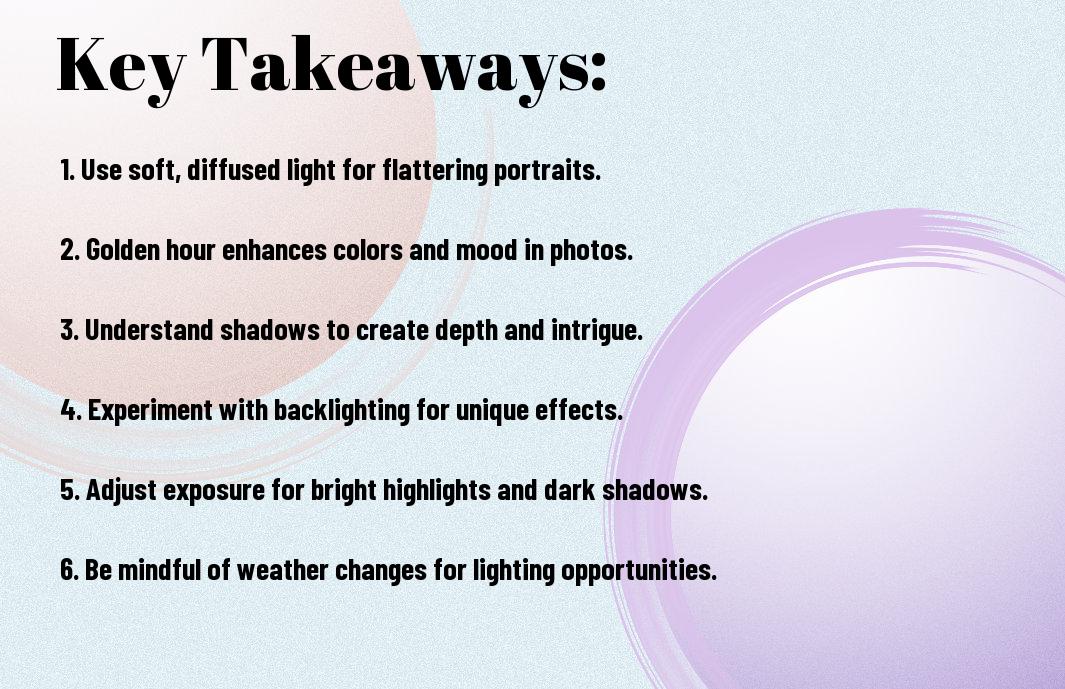
Conclusively, mastering natural light is an imperative skill that can significantly enhance your photography. By understanding the different qualities of light, knowing the best times to shoot, and experimenting with shadow and exposure, you can create captivating images that truly reflect your vision. Embrace these tips, pay attention to your environment, and don’t hesitate to practice regularly. Your journey in photography will flourish as you learn to manipulate and enjoy the beauty of natural light in your work.