
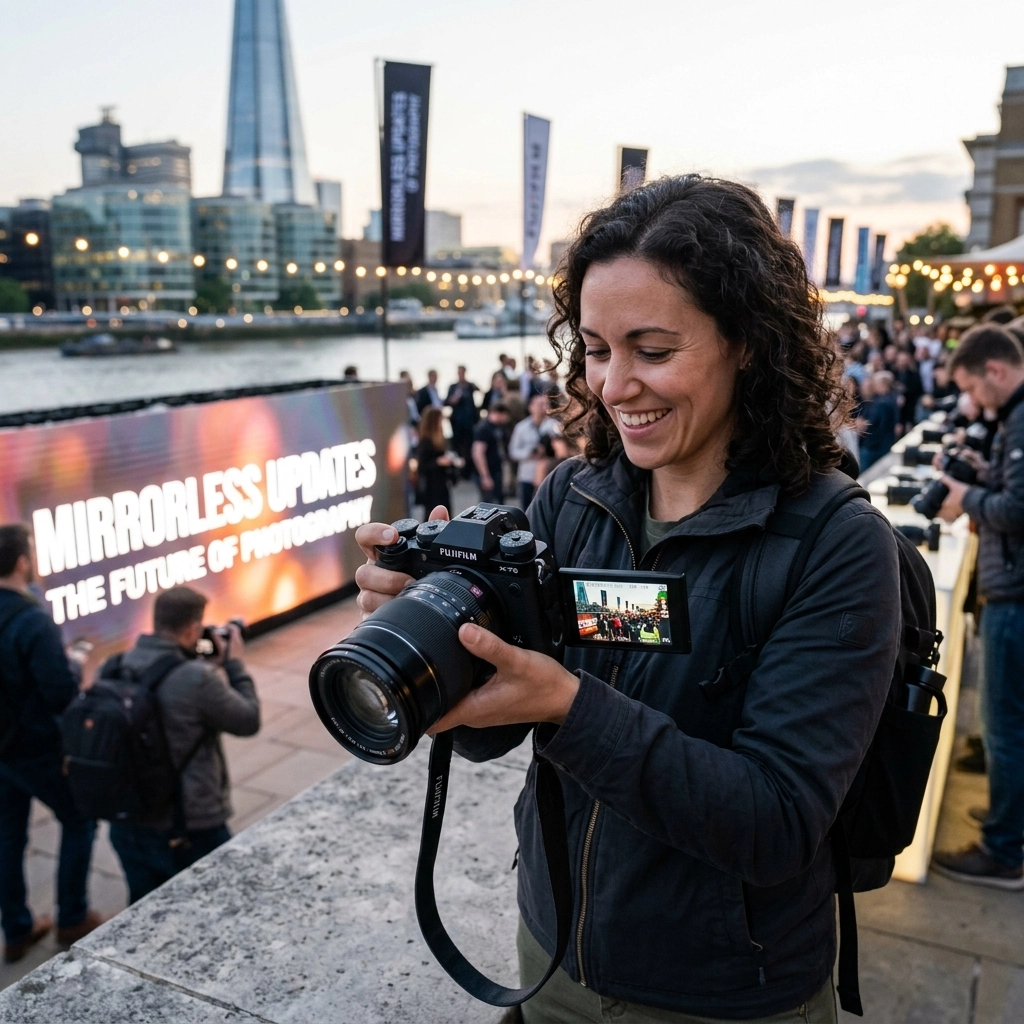
If you woke up today, April 15, 2026, and felt a disturbance in the Force, it’s probably because the mirrorless camera world is currently on fire. No, not literally (hopefully), but the sheer volume of news, firmware drops, and "leaked" specs hitting the wires this morning is enough to make any gear head's heart skip a beat.
At Shut Your Aperture, we try to keep things simple. But today? Today is anything but simple. From Nikon’s sneaky firmware refinements to the massive hype train surrounding tomorrow’s DJI launch, there is a lot to unpack. If you’ve been sitting on the fence about upgrading your kit or if you’re still clinging to that DSLR like it’s a vintage vinyl record, this is the sign you’ve been waiting for.
The "Calm" Before the DJI Osmo Pocket 4 Storm
While everyone is technically waiting for tomorrow, April 16, the internet is already flooded with what we believe are the final, confirmed specs for the DJI Osmo Pocket 4. If the rumors are true: and they usually are 24 hours before a launch: this little gimbal camera is about to disrupt the travel vlogging scene all over again.
We are looking at a dual CMOS sensor capable of 50MP stills. For a camera that fits in your pocket, that’s borderline ridiculous. But the real kicker? 6K recording at 60fps and 4K at a staggering 240fps. If you’re into water photography and capturing beauty in motion, having that kind of frame rate in a handheld device is a game-changer. Imagine crisp, super-slow-motion waves hitting the shore in 4K resolution without needing a $5,000 rig.

Alt text: A sleek, futuristic handheld gimbal camera capturing a high-speed mountain bike race in a forest.
Nikon’s Z9 Firmware 5.32: The Stability We Needed
Nikon owners, check your memory cards. Firmware version 5.32 just dropped, and while it might look like a "minor" point-update, it solves some of those nagging workflow issues that pros have been grumbling about in the forums.
The biggest fix involves how the camera handles aperture settings when waking up from standby mode. It sounds small until you’re shooting a wedding or a fast-moving wildlife subject and your exposure shifts unexpectedly because the lens didn't "wake up" at the right setting. Nikon also addressed the "freeze" issue during FTP uploads. For those of us using our Z9s in high-pressure environments, this stability is worth its weight in gold.
If you’re still learning the ropes of your Z-series, checking out essential water photography gear guides can help you understand how to push these high-end bodies to their limits.
Why 2026 is the "Year of the Stacked Sensor"
The industry trend we are seeing today isn't just about megapixels anymore. It’s about speed. The transition to stacked sensors is finally reaching the mid-tier market. We’ve seen it in the flagship models, but the rumors surrounding the upcoming Sony A7R VI (expected next month) suggest a 67–80 MP stacked sensor.
Why does a "stacked" sensor matter? It means the data moves faster. It means zero rolling shutter. It means your AI-driven autofocus can "see" the subject and process the movement almost instantly. When you’re out exploring hidden gem locations for travel photography, you don't want to miss a fleeting moment because your sensor couldn't read the data fast enough.
The Role of AI in Today’s Updates
You can’t talk about 2026 technology without mentioning AI. Today’s mirrorless updates aren't just hardware; they are software revolutions. Most new cameras now ship with dedicated AI processing units that don't just recognize "eyes" but recognize "intent."
The autofocus systems are becoming so smart they can predict where a bird will fly before it even spreads its wings. This is making it easier than ever to get top spots for stunning nature imagery without needing twenty years of tracking experience.
But the AI doesn't stop in the camera. Once you bring those files into your computer, the real magic happens. Using a tool like Luminar allows you to take those high-dynamic-range files and enhance them with one click. The synergy between in-camera AI and post-processing AI is the biggest industry trend of the year.
Alt text: A photographer using a mirrorless camera with an augmented reality overlay on the screen showing AI subject tracking and lighting suggestions.
What This Means for Your Portfolio
If you’re a professional or even a serious hobbyist, these updates represent a shift in the "minimum viable product." Clients are starting to expect the look that only high-speed, high-resolution mirrorless systems can provide.
At ProShoot.io, we’ve seen a massive uptick in photographers looking to upgrade their entire workflow. It’s not just about the camera; it’s about the lenses that can resolve these 60+ megapixel sensors and the software that can handle the files.
If you are looking to unlock secrets to enchanting urban photography, having a camera that can handle the high-contrast lighting of a city at night is crucial. Today’s updates specifically target low-light noise reduction and dynamic range, making those neon-soaked streets look better than ever.
Sony, Fujifilm, and the Long Game
While Nikon and DJI are stealing the headlines today, don't sleep on Sony and Fujifilm. We are just weeks away from the Sony A7R VI announcement, and the Fujifilm X-T6 is looming on the horizon for September.
The X-T6 is rumored to finally bring 6K internal recording to the X-series without the massive crop we’ve seen in previous iterations. For those who prefer the tactile feel of Fuji but need pro-level video, the wait is almost over. If you are planning a trip to some picturesque coastal escapes, the X-T6 might be the ultimate travel companion for 2026.
The Death of the DSLR: Is It Finally Here?
We’ve been saying it for years, but today’s firmware updates might be the final nail in the coffin. When a "small" firmware update can completely change how a camera tracks a subject, the static nature of a DSLR starts to feel like a liability.
Mirrorless cameras are essentially computers with lenses attached. They evolve. Your DSLR is the same camera today as it was when you bought it. In a world where top spots for majestic sunset photography are crowded with creators, having a tool that grows with you gives you a competitive edge.
Alt text: A side-by-side comparison of a vintage DSLR and a modern 2026 mirrorless camera, showing the size difference and the advanced electronic viewfinder.
How to Stay Ahead of the Curve
So, what should you do with all this information?
- Check your firmware. If you own a Nikon Z-series, Sony Alpha, or Canon R-series, go to their support page right now. You might be missing out on "free" features that were added overnight.
- Evaluate your needs. Don’t buy the DJI Osmo Pocket 4 just because it’s new. Buy it if you’re tired of carrying a heavy gimbal to secluded paradises.
- Master your gear. New specs are useless if you don't know how to use them. Whether you're mastering water photography in any environment or shooting portraits, spend time in the menus.
- Invest in Software. Hardware is only half the battle. Use Luminar to make sure your editing keeps up with your sensor's output.
The Technical Deep Dive: Why These Updates Matter
Let's get nerdy for a second. Today's updates focus heavily on "Computational Photography." This isn't just for iPhones anymore. Modern mirrorless bodies are using multiple exposures and AI-interpolation to create images that technically shouldn't be possible with the physics of the glass.
For instance, the new autofocus updates aren't just looking for high contrast. They are using pattern recognition databases to understand what a "bird" looks like even if it's behind branches. For those shooting in ethereal landscapes, this means the camera won't accidentally focus on a stray leaf when it should be locked on the horizon or a subject.
Alt text: A macro shot of a camera sensor showing the complex layering of a stacked CMOS architecture.
Final Thoughts on the Current State of Gear
April 2026 is shaping up to be a historic month for photography. We are seeing a convergence of AI, extreme resolution, and portability that was unthinkable just five years ago. Whether you are hunting for lesser-known vistas for enigmatic photos or just taking photos of your kids in the backyard, the technology available today is designed to remove the "technical" barriers between your vision and the final image.
Don't let the jargon scare you off. At its core, every mirrorless update is about one thing: making it easier for you to tell your story. Keep an eye on the DJI launch tomorrow, and in the meantime, get out there and shoot. For more guides and deep dives into specific techniques, check out Shut Your Aperture.
Stay tuned to Shut Your Aperture for more daily updates. We’ll be covering the DJI launch live tomorrow to see if it lives up to the hype. If you need more inspiration for your next shoot, why not look into using rare textures for tangible aesthetic photography? It’s a great way to put your high-res sensor to work.
Alt text: An overhead view of a photographer's desk with multiple cameras, lenses, and a tablet showing photo editing software.