Street photography is the ultimate test for any photographer. It’s raw, it’s fast, and it’s unpredictable. Most people hit the pavement, see a guy on a bench, click the shutter, and call it a day. But if you want to stand out in a world where everyone has a high-res camera in their pocket, you’ve got to get weird. You’ve got to see the things everyone else is walking right past.
Whether you are rocking the latest AI-integrated mirrorless cameras or an old film body, the secret isn't the gear: it's the perspective. Let’s dive into 25 creative street photography ideas that will shake up your portfolio and make people stop scrolling.
1. The Puddle Portal
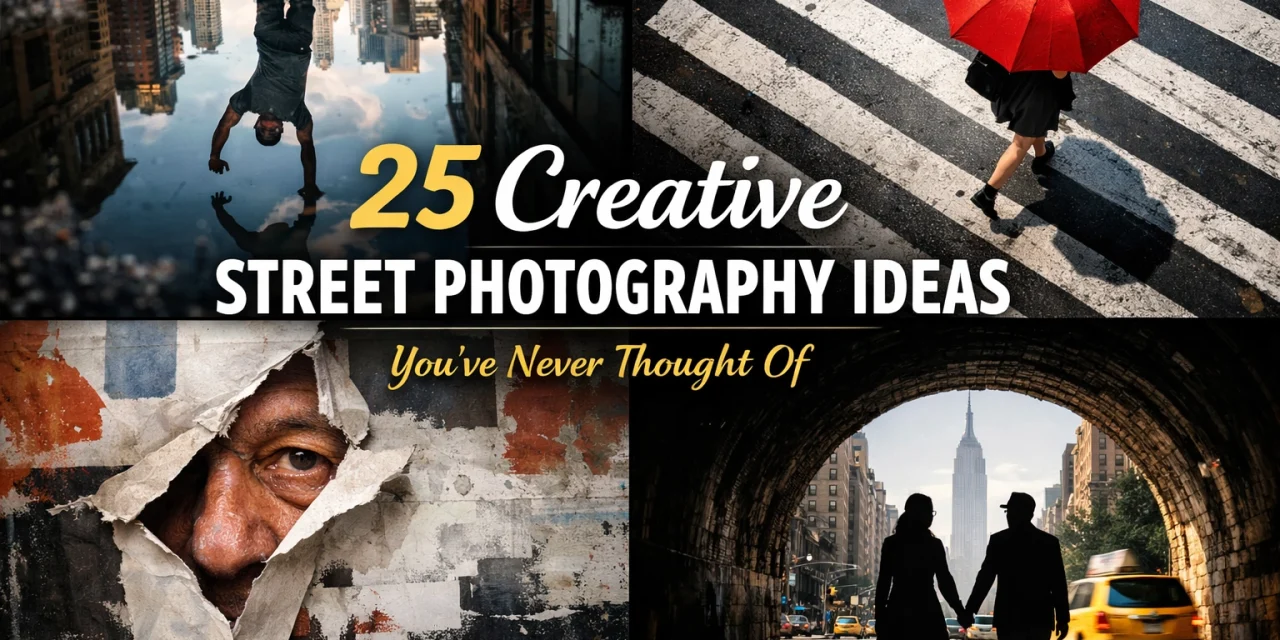
Don’t walk around the puddles; walk into them. When it rains, the ground becomes a mirror. Flip your camera upside down, get the lens as close to the water as possible, and capture the world reflected. It creates a surreal, symmetrical look that feels like a parallel universe. If you struggle with getting the focus right in these tricky conditions, check out our Manual Mode 101 guide.
2. Shooting Through Shop Windows
Layering is everything. Instead of just shooting the person inside a cafe, stand outside and shoot through the glass. You’ll get a mix of the subject inside and the street life reflected behind you. It creates a complex, "stacked" image that tells two stories at once.
3. Use Fences as a Texture
Fences, mesh, and grates aren’t obstacles; they’re filters. By shooting wide open (low f-stop), you can turn a chain-link fence into a soft, hazy texture that frames your subject. It adds a sense of "voyeurism" and depth that a clean shot just can't match.
4. The Worm’s Eye View
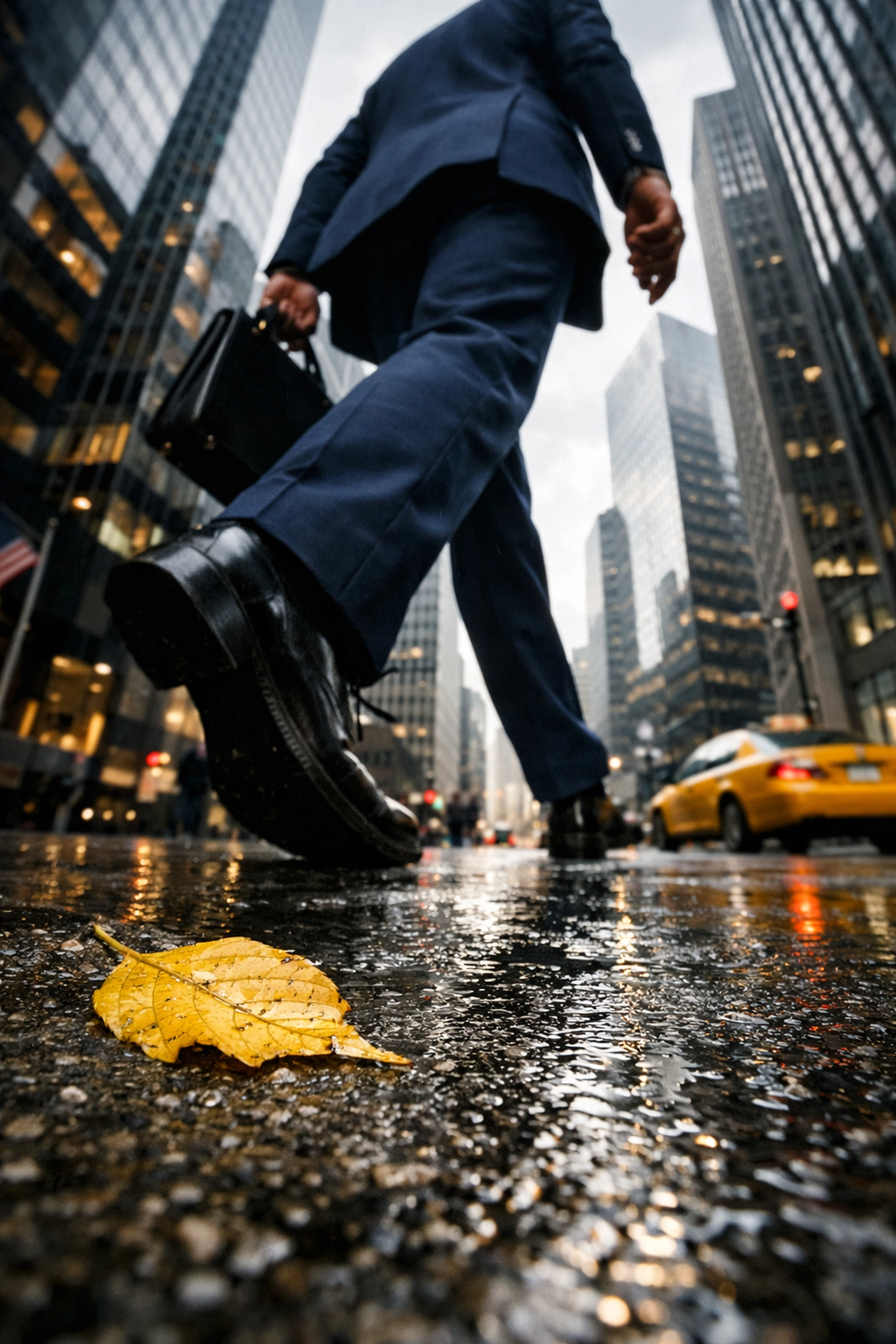
We spend our whole lives seeing the world from 5 to 6 feet up. Change that. Get down on the ground. Use a tilt-shift screen or just lie in the dirt. Shooting upward at pedestrians makes them look like giants and turns ordinary city buildings into towering cathedrals. This is a great way to experiment with vistas and perspectives.
5. Shadow Play
Sometimes the shadow is more interesting than the person casting it. On a bright, sunny day, look for high-contrast areas. Frame your shot so the person is secondary and their elongated, distorted shadow is the main character. If you’re editing these later, Luminar is fantastic for boosting that contrast to make the shadows truly "pop."
6. Motion Blur in the Crowd
Set your shutter speed to something slow: maybe 1/10th or 1/15th of a second. Find a busy corner and keep your camera perfectly still. The stationary architecture will stay sharp while the sea of people turns into a ghostly blur. It captures the "vibe" of a city better than a frozen moment ever could. For more on this, look into latest photography trends.
7. The Neon Drip
Night photography doesn’t have to be clean. When it's raining at night, find a street with heavy neon signage. Capture the way the colors bleed into the wet asphalt. The goal here isn't sharpness; it's color and mood. Use the car headlights as secondary light sources to fill in the gaps.
8. Silhouettes Against Sunset
Find a "bright" background: a sunset, a bright storefront, or even a white wall in harsh sun. Underexpose your shot so your subject becomes a pitch-black shape. This strips away their identity and makes the image about the form and the movement. It’s a classic technique used by pros at PhotoGuides.org.
9. Intentional Camera Movement (ICM)
This one feels like "breaking" your camera, but it’s an art form. While the shutter is open (slow speed), intentionally move your camera vertically or horizontally. It turns a street scene into an abstract painting. It’s unpredictable and addictive.
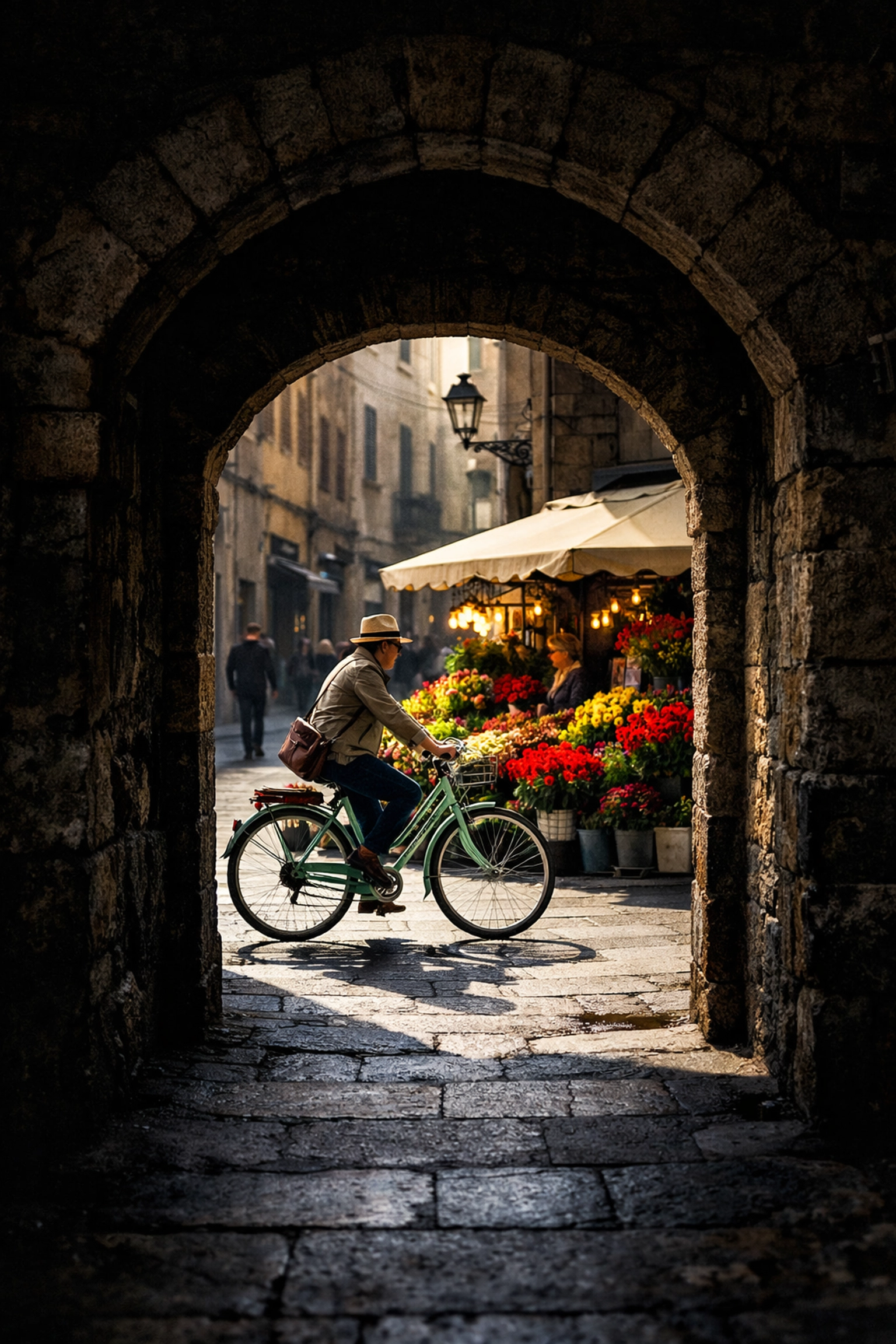
10. Frame Within a Frame
The city is full of frames: doorways, alley exits, bridge supports, and even the space between two parked cars. Use these to box in your subject. It forces the viewer's eye exactly where you want it to go. This is a fundamental skill we talk about in our ultimate guide to photography tutorials.
11. Focusing on Hands and Feet
You don’t always need a face to tell a story. A businessman’s polished shoes next to a street performer’s tattered boots says a lot about society. Close-ups of hands: holding a cigarette, gripping a briefcase, or gesturing in conversation: can be incredibly powerful.
12. Shooting Through Foliage
Street photography isn't just concrete and steel. Use the leaves of a city park tree or even a hanging plant in a shop window to frame the street. The green adds a natural element that contrasts beautifully with urban grit. It’s a trick often used in landscape photography that works just as well in the city.
13. The Flash in Daylight
Most people think flash is only for dark rooms. Try using a "fill flash" on the street during the day. It creates an edgy, high-fashion look that freezes motion and makes colors look incredibly vibrant. It’s a bit bold, but the results are worth the weird looks you’ll get.
14. Monochrome Textures
Switch your camera (or your brain) to Black and White. Stop looking for color and start looking for patterns, brickwork, wrinkles in a face, and the play of light. Without color, the "bones" of your composition have to be stronger. You can learn a lot from the masters of this, like Peter Lik’s landscape photography.
15. The Waiting Game
Instead of hunting for subjects, find a "perfect" background: a colorful mural, an interesting door, or a shaft of light: and just wait. Eventually, the right person will walk into your frame. This patience is what separates the snapshots from the art.
16. Abstract Hubcaps
Car wheels and chrome bumpers are basically distorted mirrors. Use them to get "fish-eye" style shots of the street without buying a $1,000 lens. The distortion adds a psychedelic feel to an otherwise normal street scene.
17. The "Working" Shot
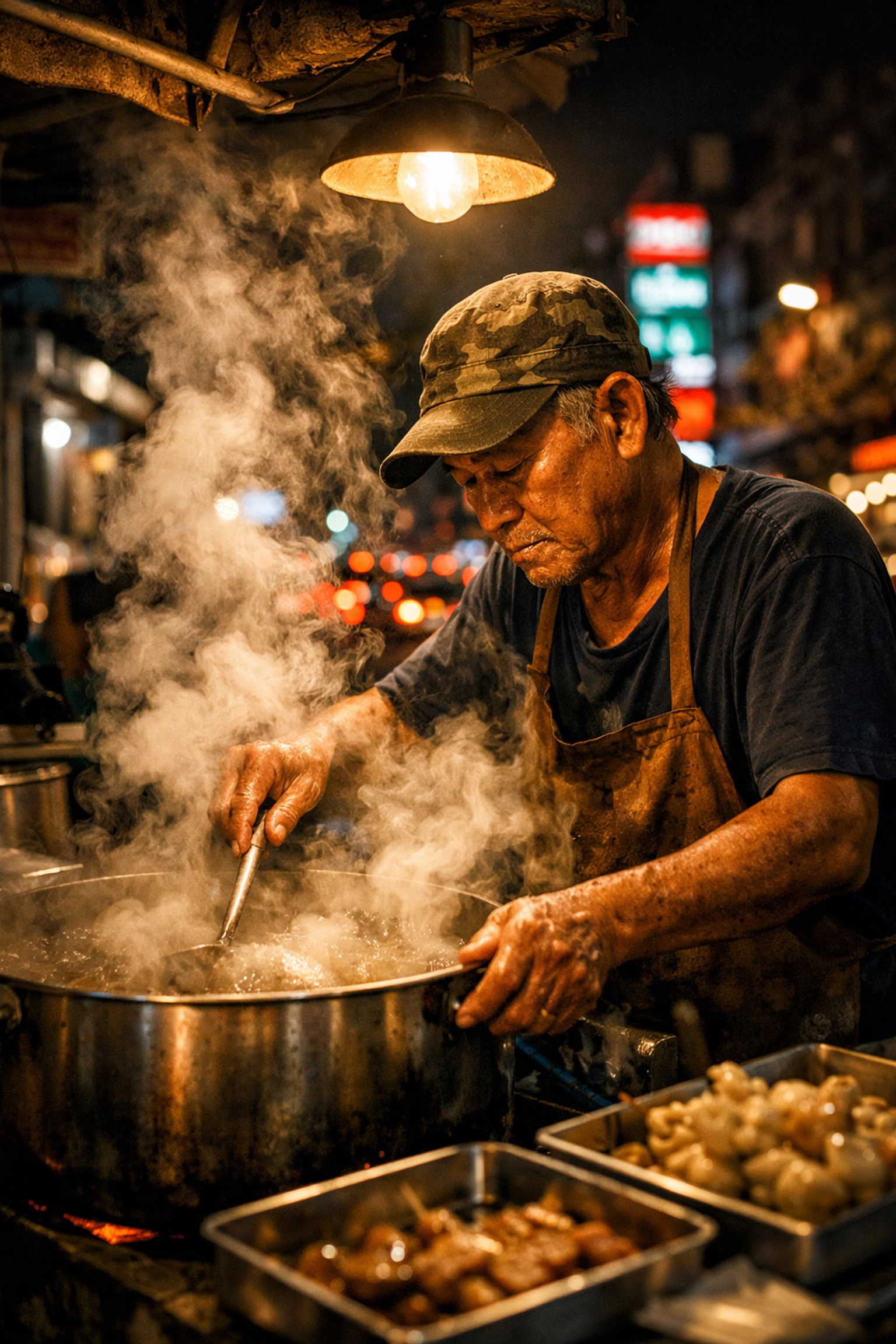
Street photography often focuses on people walking. Switch it up and shoot people working. The construction worker, the chef in the window, the street sweeper. These shots have a sense of purpose and motion that adds a different layer of "real life" to your work.
18. Dog’s Eye Level
Have you ever wondered what the city looks like to a Golden Retriever? Lower your tripod (or your hands) to about 12 inches off the ground. It’s a perspective we rarely see and makes the most mundane sidewalk look epic.
19. Shooting the Commute
Trains and buses are gold mines. The lighting is often dramatic, and people are lost in their own worlds. Use the reflections in the bus windows or the leading lines of the subway tiles to create a sense of direction and movement. If you want to see how cinematic techniques can help here, check out our post on cinematic property showcases.
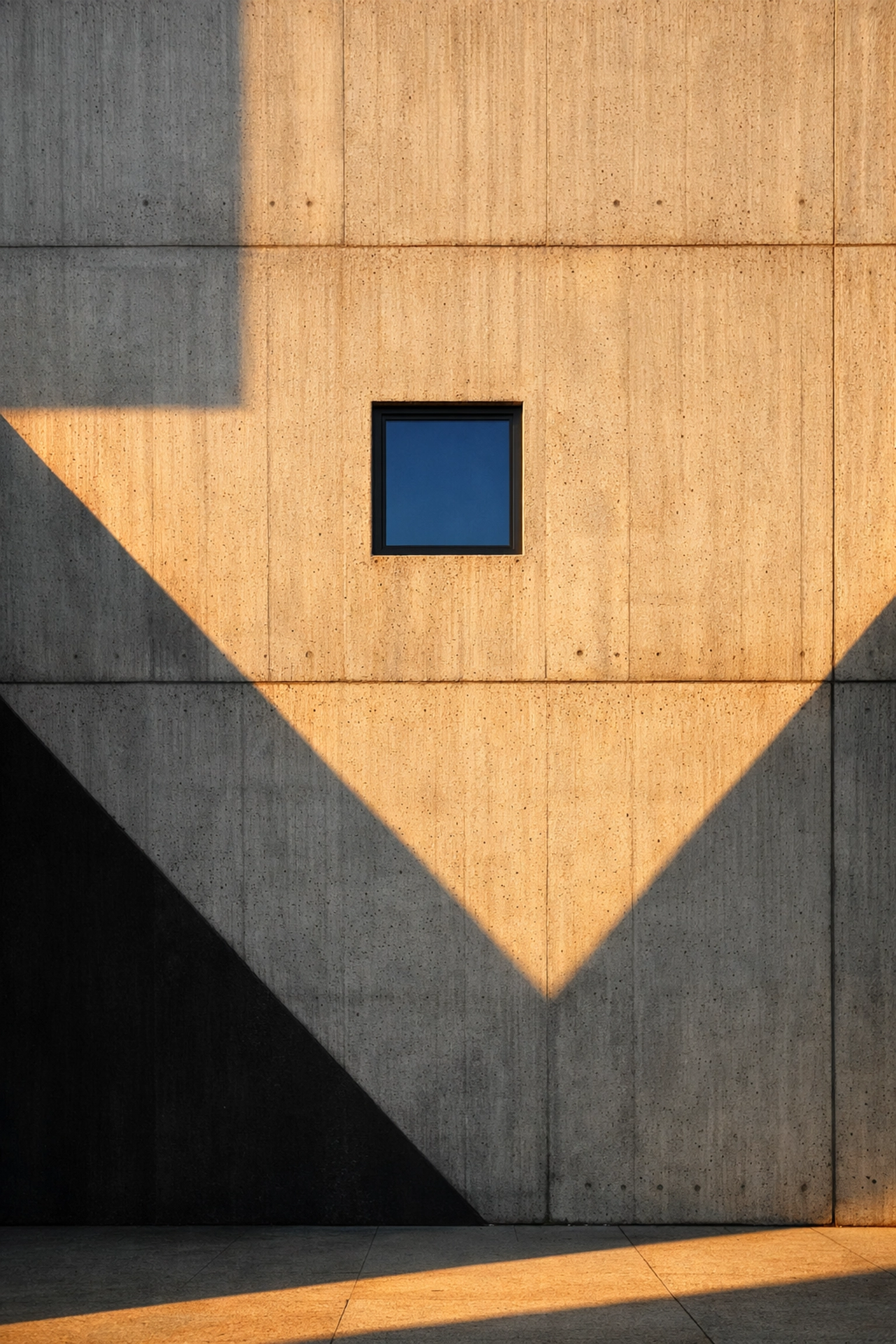
20. Negative Space Minimalism
Don't be afraid of "empty" space. A tiny person at the bottom of a massive, blank concrete wall creates a sense of scale and isolation. It’s a very modern, clean look that works great on social media.
21. Rainy Windows (The Impressionist Look)
When you’re inside a bus or a cafe and it’s pouring outside, focus on the raindrops on the glass. The street outside will become a blurred wash of colors. It looks more like an oil painting than a photograph. You can further enhance these textures in Luminar to bring out the detail in the water droplets.
22. Street Art Integration
Don't just take a photo of a mural: that's someone else's art. Instead, wait for a person to walk by and interact with it. Maybe a person walking past a mural of a giant bird looks like they’re being chased. It’s about the "juxtaposition."
23. The Defocused Mystery
Manual focus isn't just for getting things sharp. Intentionally defocus your lens until the street lights and cars become soft "bokeh" circles. It’s abstract, moody, and very "art-house." It works especially well for cityscapes at night. For more inspiration, check out Edin Chavez’s blog.
24. High Contrast Geometry
Cities are built on shapes. Triangles formed by shadows, rectangles of windows, circles of manhole covers. Strip away the "people" for a moment and focus purely on the geometry. It’s a great exercise in composition that will make your regular street shots much stronger.
25. The Asked Portrait
While candid shots are the "purest" form of street photography, there is a special skill in approaching a stranger and asking for a portrait. It changes the dynamic. You get a look in the eye that you can't get any other way. It’s scary at first, but it’s the fastest way to get a compelling character study.
Getting Out There
The best thing about street photography is that the "studio" is always open and the admission is free. You don't need a permit to walk around with a camera and see the world differently. If you feel like your work is getting stale, pick just one of these ideas and spend a whole Saturday focusing on it.
If you’re just starting out and feeling overwhelmed, don't worry. We’ve all been there. Mastering your gear is the first step, so make sure you’ve got the basics down with our Manual Mode 101 guide. Once you stop worrying about the buttons, you can start worrying about the art.
Street photography is about the "decisive moment," as Henri Cartier-Bresson famously said. But sometimes, you have to create the conditions for that moment to happen. Whether you’re shooting for your own portfolio or looking to provide distinctive elements for real estate, these creative pivots will help you see the "unseen."
For more professional tips and high-end gear reviews, keep an eye on ProShoot.io and stay tuned to our latest updates here at Shut Your Aperture. Now, grab your camera, get outside, and start looking for those reflections. The city is waiting.