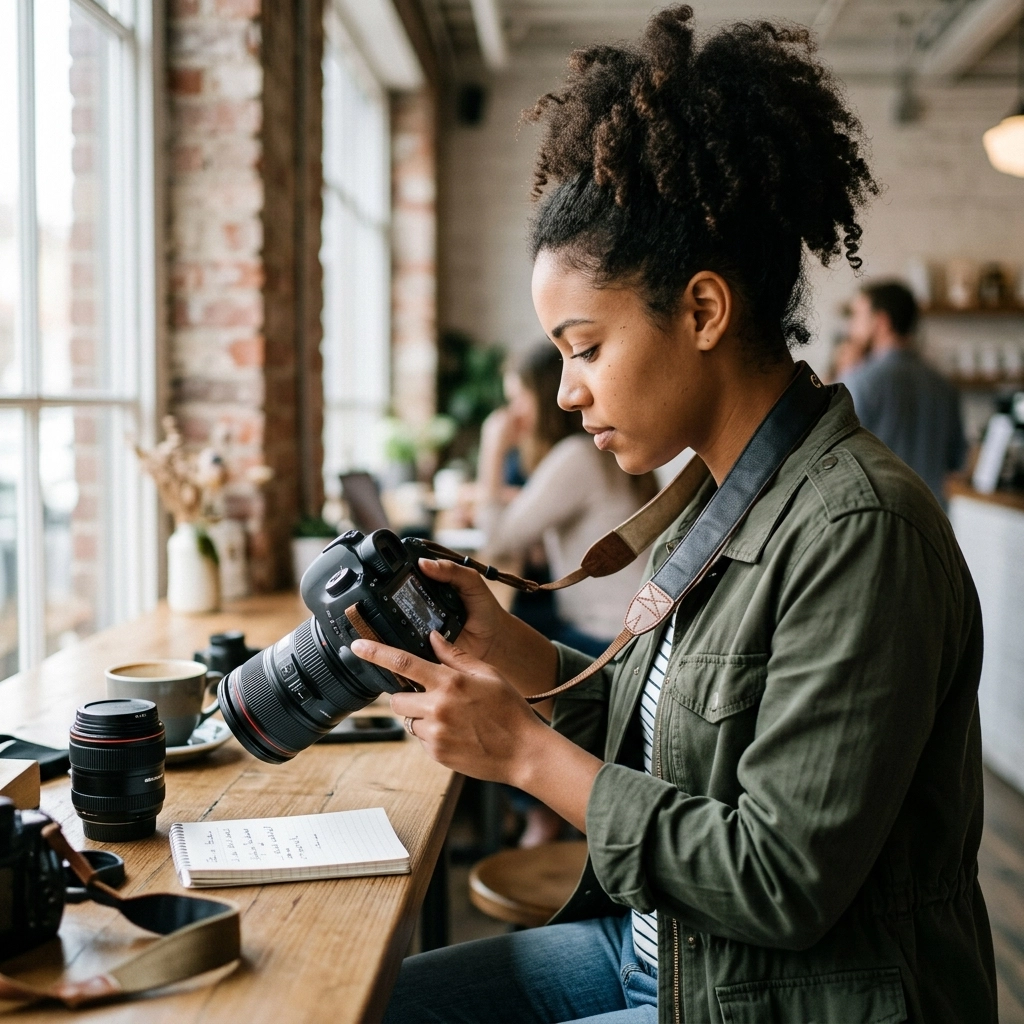
You finally did it. You turned that dial from the "Green Box" or "P" mode over to the big, intimidating "M." You’re officially a photographer, right? You’re in control. You’re the captain of the ship. But then you look at your screen and the photos are either pitch black or look like a nuclear explosion of white light.
Don't panic. We've all been there.
Manual mode is the holy grail of photography because it stops the camera from guessing what you want and forces you to make the decisions. But here is the thing: your camera is a computer, and computers are literal. If you give them bad instructions, they give you bad results. Most beginners (and even some "pros") fall into the same traps when they first start taking full control of their exposure.
I’ve spent years behind the lens, and I can tell you that mastering the "M" mode isn't about memorizing math; it’s about understanding light. If you’re struggling, you’re likely making one of these seven common mistakes. Let’s break them down and get you shooting like a pro.
1. Chasing the "Zero" on Your Light Meter
This is the number one mistake I see in my photography workshops. When you look through your viewfinder in manual mode, you see a little scale with a "0" in the middle, a "+" on one side, and a "-" on the other. This is your internal light meter.
Most people think that for a photo to be "correct," that little ticker has to be exactly on the zero.
The Problem: Your camera’s light meter is actually pretty dumb. It doesn't know what you are looking at. It is programmed to assume the entire world should be "Middle Gray." If you are shooting a bright snowy landscape, the camera thinks, "Whoa, way too bright!" and tells you to underexpose to make the snow look gray. If you are shooting a black cat in a dark alley, it thinks, "Too dark!" and tells you to overexpose, making the cat look muddy gray.
The Fix: Use your eyes, not just the meter. If you’re shooting something bright, you might need to be at +1 or +2. If you’re shooting something dark and moody, you might need to be at -1. Don't be afraid to "break" the meter to get the look you want. If you find your exposure is slightly off after the fact, tools like Luminar can help you recover those highlights or shadows, but it's always better to get it right in the camera first.
For more on the basics, check out our Photography 101 guide.
2. The "ISO Forgetfulness" Syndrome
You’re outside in the beautiful morning sun. You’ve got your ISO set to 100 for maximum quality. Then, you walk inside a dark building to keep shooting. You adjust your aperture and your shutter speed, but for some reason, your photos are still coming out dark or your shutter speed is so slow that everything is blurry.
The Problem: You forgot to change your ISO. This is the most common "manual mode" mistake because ISO is often tucked away in a menu or a secondary button. It’s the "set it and forget it" setting that ruins more shoots than anything else.
The Fix: Make it a habit. Every time the light changes: even slightly: check your ISO. If you’re moving between different lighting environments, you need to be riding that ISO button. If you’re shooting something fast-paced and don't have time to constantly fiddle, try "Auto-ISO" with a manual shutter and aperture. It’s a "semi-manual" hybrid that many pros actually use to ensure they don't miss the shot.

3. Ignoring the Histogram (The LCD Lie)
You look at the back of your camera. The photo looks amazing. Bright, vibrant, and perfect. You get home, put it on your computer, and it’s either way too dark or the sky is a giant white blob with no detail.
The Problem: Your LCD screen is a liar. The brightness of that screen is affected by your environment. If you’re outside in the sun, the screen looks dark, so you overexpose your photo to make it look "right" on the screen. If you’re in a dark room, the screen looks blindingly bright, so you underexpose.
The Fix: Learn to read the histogram. This is a mathematical graph of your exposure. If the "mountain" is pushed all the way to the right and touching the edge, you’ve "clipped" your highlights (lost detail in the whites). If it’s all the way to the left, you’ve "crushed" your shadows. Use the histogram to verify your exposure, not the pretty picture on the screen. For a deep dive into reading these graphs, visit PhotoGuides.org.
If you want to master these technicalities, I highly recommend our 5 steps to master manual mode guide.
4. Using the Wrong Metering Mode
Since we’re talking about manual mode, we have to talk about how the camera sees light. Most cameras default to "Evaluative" or "Matrix" metering, where the camera looks at the whole scene and averages the light.
The Problem: If you are shooting a portrait with a bright light behind the subject, Matrix metering will see all that bright light and try to turn it gray, leaving your subject’s face completely in the dark. In manual mode, if you are following the meter (Mistake #1), you are going to get a silhouette when you wanted a portrait.
The Fix: Switch to "Spot Metering." This tells the camera to only care about the light in the very center of the frame (usually where your subject's face is). Now, your meter will tell you the correct exposure for the person, not the background. This is a game-changer for portrait photography techniques.

5. Fear of High ISO (Noise Phobia)
"Don't go above ISO 400 or your photos will be grainy!" This is old-school advice from the days of early digital cameras.
The Problem: Photographers are so scared of "noise" (that grainy look) that they keep their ISO low in dark situations. To compensate, they use a shutter speed that is way too slow, leading to "motion blur."
The Fix: Grainy photos are fixable. Blurry photos are trash. Modern cameras (especially the latest mirrorless tech) can handle ISO 3200, 6400, or even higher with very little issue. I’d rather have a sharp, slightly grainy photo than a smooth, blurry one. Plus, with AI-powered software like Luminar, you can remove noise in seconds. Don't be afraid to crank that ISO when you need the speed.
If you're curious about how AI is changing how we handle these issues, read about AI-powered mirrorless tech.
6. Shutter Speed vs. Focal Length (The "Shake" Rule)
You’re in manual mode, you’ve set a decent aperture, and your meter says you’re at "zero." You take the shot, but it’s just… soft. Not quite blurry, but not sharp either.
The Problem: You’re likely shooting with a shutter speed that is too slow for your lens. There’s an old rule called the "Reciprocal Rule." It states that your shutter speed should be at least 1 over your focal length. If you’re shooting with a 200mm lens, your shutter speed needs to be at least 1/200th of a second to avoid camera shake.
The Fix: If you’re shooting handheld, always keep an eye on that shutter speed. If you’re using a long lens, you need a faster shutter speed. If you’re shooting a wedding or a corporate event, you can’t afford soft images. Check out our tips for corporate headshots to see why sharpness is king.

7. Shooting Wide Open for No Reason
We all love "bokeh": that creamy, out-of-focus background. To get it, you set your aperture to the lowest number possible (like f/1.8 or f/2.8).
The Problem: When you shoot "wide open," your depth of field is paper-thin. If you’re shooting a portrait and the person moves an inch, their eyes are out of focus. If you’re shooting a landscape in manual mode at f/2.8, the foreground might be sharp, but the mountains will be a blur.
The Fix: Just because your lens can go to f/1.8 doesn't mean it should. For landscapes, try f/8 or f/11 to ensure everything is sharp. For portraits, f/2.8 or f/4 is often safer than f/1.4. You’ll get more of the face in focus and the lens is usually much sharper a few stops down from its maximum.
Avoid these common landscape photography mistakes by learning when to stop down your aperture.
Why Manual Mode Matters (And When to Quit)
Look, manual mode is a tool. It’s not a religion. There are times when shooting in Aperture Priority (Av or A) is actually smarter. If the light is changing every two seconds (like on a partly cloudy day), chasing the settings in manual mode might cause you to miss the moment entirely.
However, understanding manual mode is what separates a "snap-shooter" from a "photographer." It forces you to understand the relationship between Shutter Speed (motion), Aperture (depth), and ISO (sensitivity).
If you want to dive deeper into these concepts, our learning portal has everything you need to go from beginner to pro. I’ve been coordinating with Sonny, our social media manager, to put together some quick video reels on these specific mistakes, so keep an eye on our Instagram for those visual demos.
The Cheat Sheet for Manual Mode Success:
- Check your meter, but trust your eyes. Don't be a slave to the "zero."
- ISO is your best friend and worst enemy. Check it every time you move.
- The Histogram is the truth. The LCD screen is a suggestion.
- Use Spot Metering for tricky lighting situations.
- Shutter speed = 1/Focal Length. Keep it fast to keep it sharp.
- Stop down for sharpness. f/8 is your "safe" zone for detail.
- Shoot RAW. This isn't a manual mode setting, but it gives you the "room" to fix exposure mistakes later in Luminar.

Mastering the Craft
Photography is a journey. You’re going to mess up. You’re going to come home with a card full of black squares or white blurs. That’s part of the process. The key is to look at those mistakes and understand why they happened. Did you forget your ISO? Was your shutter speed too slow?
If you can identify the mistake, you can fix it. And once you fix it, manual mode becomes second nature. It becomes like breathing. You’ll start to see a scene and instinctively know that you need 1/500th at f/5.6 because the sun just dipped behind a cloud.
For more tips on refining your kit, check out our guide on choosing the best mirrorless cameras for 2026.
Final Thoughts on the Manual "Fear"
Don't let the buttons scare you. Your camera is a tool designed to help you create art. Manual mode is simply the way you tell that tool exactly what you want. Start slow. Maybe spend one day only focusing on Shutter Speed. The next day, focus on Aperture.
The more you practice, the more control you have. And control is the key to creativity. If you’re looking for more inspiration, head over to blog.edinchavez.com or check out the fine art work at www.edinfineart.com to see what’s possible when you truly master your gear.
Stop letting the camera make the decisions for you. Take the wheel, turn the dial to "M," and go make something incredible. If you get stuck, we’re always here to help you learn the ropes.
Happy shooting!