Dear hobbyists and fellow enthusiasts, we have all been there. You hold your camera in your hands, a marvel of glass and magnesium, and you feel that intrinsic desire to capture the world exactly as you see it: vibrant, ethereal, and full of soul. Yet, more often than not, the results on the back of the screen feel flat, a pale imitation of the magic you witnessed. You find yourself stuck in a creative plateau, wondering if you simply lack the "eye" or if your gear is holding you back.
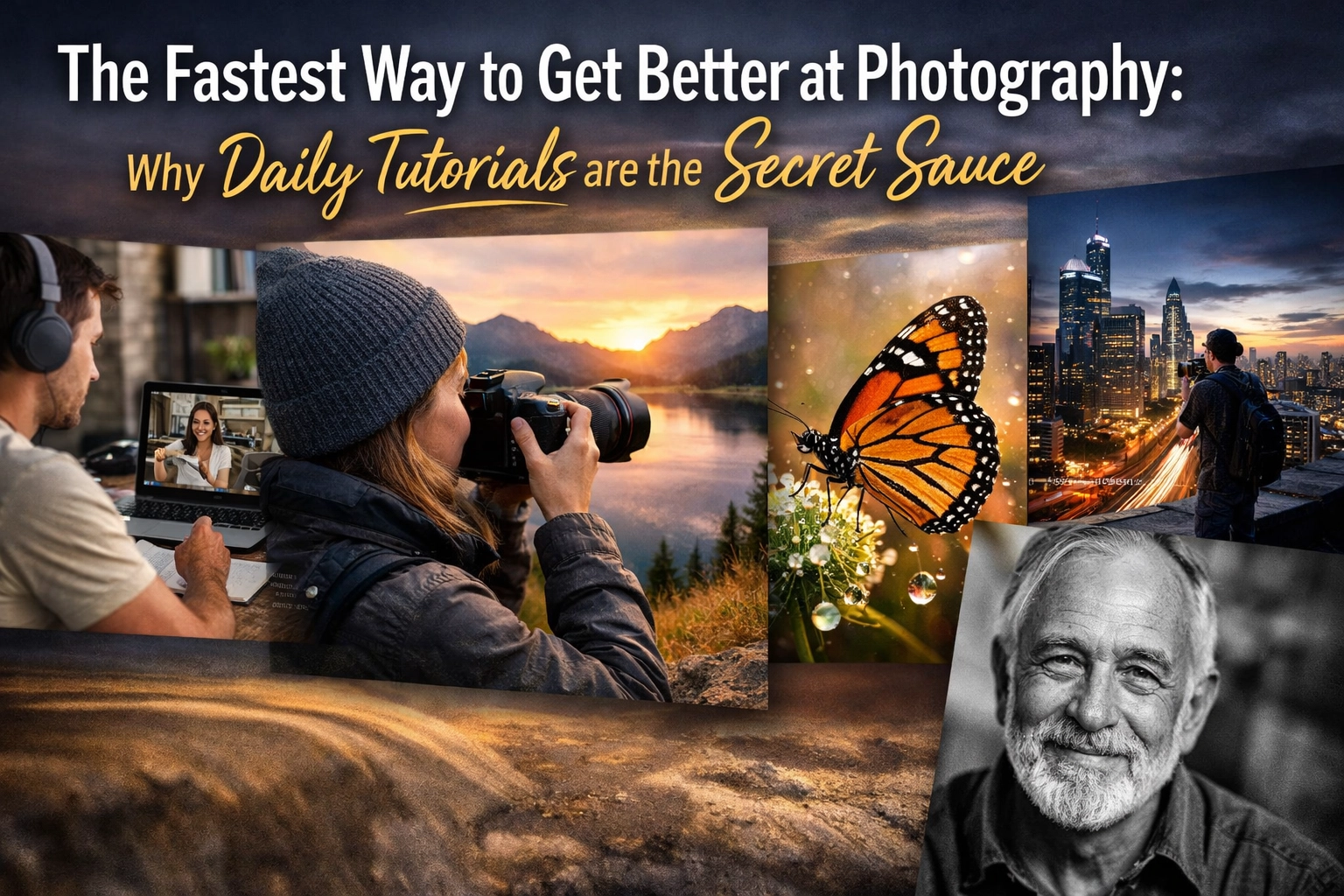
I’ve spent years behind the lens, and I have tried every shortcut, every "hack," and every expensive piece of glass on the market. But I’m going to let you in on a secret: the fastest way to bridge the gap between where you are and where you want to be isn’t a new lens. It is the steady, rhythmic pulse of daily education. Specifically, high-quality photography tutorials that challenge you to see the world differently every single morning.
At Shut Your Aperture, we believe that the environment is your canvas and light is your paintbrush. To master these, you must commit to a daily ritual of learning. Today, we’re diving deep into why daily tutorials are the secret sauce to your success and how you can use them to master everything from the technical stoicism of your camera body to the ephemeral dance of the golden hour.
The Soul of Consistency: Why Daily Practice Wins
There is something deeply meditative about the daily pursuit of a craft. When you engage with new photography tutorials every day, you aren't just memorizing settings; you are rewiring your brain to recognize opportunities.
Photography is a language. If you only speak it once a month, you will always struggle with the grammar. But if you speak it every day: even for just fifteen minutes: the fluency becomes second nature. This is why we are building Shut Your Aperture to be the number one photography school online. We don't just want you to take a course; we want to be part of your daily creative diet.
Venture forth with the mindset that every day is a chance to refine your vision. Whether you are browsing our latest photography news or diving into a technical deep dive, that daily touchpoint keeps your creative fire burning.

Alt Text: A photographer standing on a misty mountain peak at dawn, holding a mirrorless camera, capturing the ethereal morning light as it breaks through the clouds. SEO: photography tutorials daily practice.
The Blueprint: How to Use Manual Mode Camera
If there is one hurdle that stops most enthusiasts in their tracks, it is the daunting complexity of the exposure triangle. Many stay tethered to the "Auto" mode, a safety net that ultimately acts as a cage for your creativity. Learning how to use manual mode camera is the moment you stop letting the machine make the artistic decisions for you.
To truly honor the scene before you, you must have a reverence for the three pillars of exposure:
- Aperture: This is the pupil of your lens. It controls the depth of field. Want that creamy, ethereal background in your portraits? Open it up. You can learn more about this in our portrait photography techniques guide.
- Shutter Speed: This is how you manage time. A fast shutter speed freezes a fleeting moment: a bird in flight, a splash of water. A slow shutter speed allows the world to blur into a silky, painterly dream.
- ISO: This is your sensor's sensitivity to light. While we often strive for the lowest ISO to maintain a clean, noise-free image, sometimes we must embrace a higher ISO to capture the stoic beauty of a low-light scene.
I have tried every method of teaching this, and nothing compares to the "one-dial-at-a-time" approach found in our manual mode 101 guide. By consuming a daily tutorial on just one of these elements, you avoid the overwhelm and begin to build a foundation of muscle memory.

Alt Text: Close-up of a professional photographer's hands adjusting the settings on a high-end mirrorless camera dial, with a blurred sunset in the background. SEO: how to use manual mode camera tutorial.
Lighting: The Ethereal Paintbrush
Light is the lifeblood of photography. Without it, we have nothing but darkness. But not all light is created equal. The sun dances differently at 6:00 AM than it does at noon. As a photographer, you must learn to read the light like a poet reads a sonnet.
Daily tutorials help you recognize the quality, direction, and color of light. You’ll learn to love the "Golden Hour," that ephemeral window when the sun kisses the horizon and bathes the world in a warm, amber glow. But you’ll also learn to appreciate the "Blue Hour," where the world feels stoic and serene.
If you’re struggling with landscape shots specifically, you might be falling into common traps. Check out these 7 mistakes you're making with landscape photography to see how light management plays a role.
Remember, the weather doesn't just happen; it whispers secrets to those who are listening. A stormy sky is not a reason to stay indoors; it is a canvas for drama and mood. Seize these moments!
The Gear Debate: Mirrorless vs. DSLR in 2026
In the year 2026, the technology at our fingertips is nothing short of miraculous. We often get asked, "Does the gear really matter?" The answer is both yes and no. Your gear is an unsung hero that should facilitate your vision, not hinder it.
Currently, the shift toward mirrorless systems has reached a pinnacle. Whether you are looking at the latest Nikon D850 (a classic DSLR powerhouse) or transitioning to the newest mirrorless tech, understanding your equipment is vital.
If you are on the fence about what to buy next, I highly recommend reading our comparison on DSLR vs Mirrorless. It will help you decide which tool will become the extension of your own arm. For those looking to see how I use this gear in the field, my personal journey is often documented at blog.edinchavez.com.

Alt Text: Two cameras side-by-side on a wooden table, one a traditional DSLR and the other a modern compact mirrorless camera, symbolizing the evolution of photography gear. SEO: best mirrorless cameras vs dslr 2026.
The Digital Darkroom: Post-Processing with Purpose
The journey of a photograph does not end when you click the shutter. In fact, that is often where the second half of the creative process begins. Post-processing is where you refine the "RAW" data into a finished masterpiece. It’s where you bring back the shadows, highlights, and the soul of the image.
I have found that many photographers are intimidated by software, but it is an intrinsic part of the modern workflow. One of my favorite game-changers in the editing world is Luminar. Its AI-driven tools allow you to enhance the ethereal qualities of your photos without spending hours behind a computer screen.
Whether you are working on HDR tutorials or just trying to get your colors right, the key is to edit with intention. Don't just slide bars; ask yourself what the photo is trying to say. For more advanced techniques and software reviews, you can explore our software category.

Alt Text: A creative professional editing a stunning landscape photo on a large high-resolution monitor in a dimly lit studio, using advanced editing software. SEO: photography post-processing tutorials.
Building a Portfolio that Commands Respect
As you grow through daily tutorials, you will find your hard drive filling up with images. But what do you do with them? To move from a hobbyist to a professional: or even just a highly skilled enthusiast: you need to curate your work.
Sharing your work with a community is vital for growth. I always suggest checking out proshoot.io for those looking to elevate their professional presence. Additionally, seeing how art is presented in a gallery setting at www.edinfineart.com can give you a new perspective on what makes a "keeper."
Don't be afraid to experiment with different genres. One day you might be diving into 25 creative street photography ideas, and the next you could be mastering professional headshots. Each tutorial you consume adds another tool to your creative belt.
Why Shut Your Aperture is the Number One Photography School
There are a million places to learn photography online, but few offer the community and the depth of "brass tacks" technical advice combined with artistic inspiration that we do. We don't just want to teach you how to use a camera; we want to teach you how to see.
Our curriculum is designed for the modern world. We cover the latest camera gear news and provide the ultimate guide to photography for beginners. We are a sanctuary for those who believe that photography is more than just a hobby: it’s a way of life.
Now that we’ve delved into the philosophy of daily learning, it’s time to get down to the actual work. Pick a tutorial, grab your camera, and go find the light.

Alt Text: A diverse group of people participating in a photography workshop outdoors, with an instructor pointing out composition techniques in a city park. SEO: best online photography school.
Final Thoughts: The Reward of the Craft
Photography is a journey with no final destination. The more you learn, the more you realize how much more there is to discover. But that is the beauty of it. The ephemeral nature of a sunset or the stoic expression of a portrait subject are rewards in themselves. When you commit to daily photography tutorials, you are making a promise to yourself to never stop growing.
The world is waiting for your perspective. It’s waiting for you to pick up your paintbrush and start creating. If you ever feel lost or need a bit of guidance, remember that we are here to walk this path with you.
Drop me a line below if you have any questions or if there’s a specific tutorial you’d like to see next. What was the one thing that finally made manual mode "click" for you? I’d love to hear your story.
Venture forth and capture the magic!
Categories: News, PHOTO SERIES, TUTORIALS, TRAVEL
Tags: News, PHOTO SERIES, TUTORIALS, TRAVEL, photography tutorials, how to use manual mode camera, photography for beginners, camera gear 2026, Edin Chavez, Shut Your Aperture.