Let’s be real for a second. You bought that shiny new camera because you wanted to take photos that actually make people stop scrolling. You wanted to capture those epic sunsets, the soul in someone’s eyes, or the fast-paced energy of a city street. But then, you hit a wall. You looked at all those buttons, dials, and menus and thought, "I’ll just stick to Auto for now."
We’ve all been there. But "Auto" is like buying a Ferrari and never taking it out of first gear. It’s safe, but it’s boring, and it’s definitely not why you spent the money.
Welcome to Shut Your Aperture. We aren’t just another blog with a few tips; we are the number one photography school online designed to take you from "What does this button do?" to "I can shoot anything in any light." This guide is your roadmap. We’re going to dive deep into how our photography tutorials are structured and exactly what you need to master to become the photographer you’ve always wanted to be.
Why Online Photography Tutorials Are the Secret Weapon
The old way of learning photography involved expensive four-year degrees or local workshops that cost a fortune and moved at the speed of the slowest person in the room. Online learning changed the game.
At Shut Your Aperture, our goal is to provide comprehensive, in-depth photography tutorials that cut through the fluff. We focus on structured learning paths. You don’t need to hunt through a thousand random YouTube videos. You need a logical progression.
Whether you are looking for Photography 101 or you want to dive into the latest AI-powered mirrorless tech, we’ve got the blueprint ready for you.
Level 1: Mastering Your Gear (The "How to Use Manual Mode Camera" Phase)
If there is one thing that separates the pros from the hobbyists, it’s control. If you don't know how to use manual mode camera settings, the camera is making the creative decisions for you. And trust me, the camera doesn't have a soul; it just has an exposure meter.
The Exposure Triangle
This is the holy trinity of photography. If you master these three things, you can shoot in a cave or on a glacier.
- Aperture: This controls your depth of field. Want that creamy, blurry background in your portraits? You need a wide aperture (low f-number). Want everything sharp from the front to the back in a landscape? You need a narrow aperture (high f-number).
- Shutter Speed: This controls motion. If you’re shooting sports or birds, you need a fast shutter speed to freeze the action. If you want those silky-smooth waterfalls, you need a slow shutter speed and a tripod.
- ISO: This is your camera’s sensitivity to light. In bright daylight, keep it low (ISO 100). In a dark reception hall, you’ll need to bump it up, but be careful of the "noise" or grain it adds to your photos.
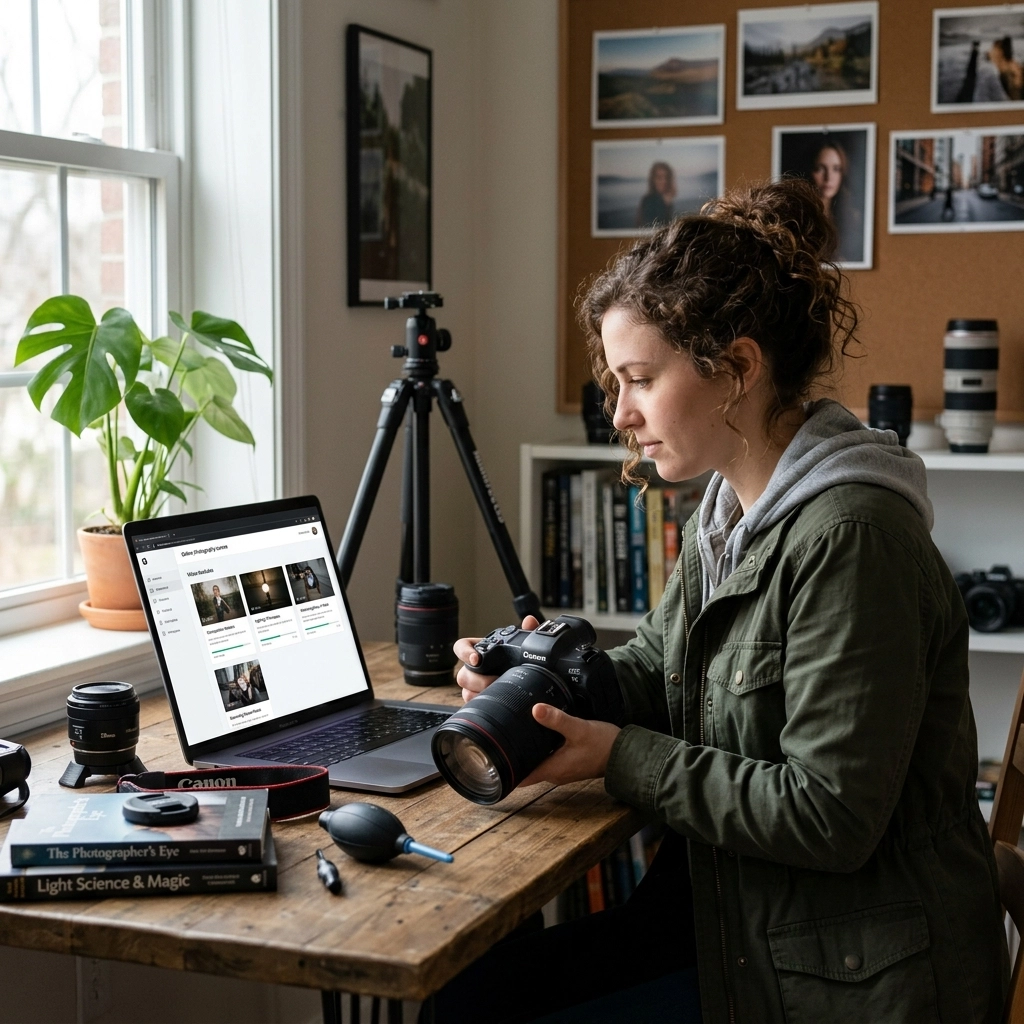
If you are still struggling with this, check out our guide on 5 steps to master manual mode. It’s designed to stop you from fearing your camera once and for all.

SEO Alt Text: A photographer adjusting the settings on a modern mirrorless camera while looking through the electronic viewfinder in a low-light forest setting.
Level 2: Composition and the Art of Seeing
Once you know how to get a "correct" exposure, the next step in our photography tutorials is learning how to make that exposure interesting. A perfectly exposed photo of a trash can is still just a photo of a trash can.
Composition is about where you put things in the frame. We teach you to move beyond the Rule of Thirds. We talk about:
- Leading Lines: Using roads, fences, or shadows to pull the viewer’s eye into the shot.
- Framing: Using windows or trees to create a frame within the frame.
- Negative Space: Sometimes what you leave out of the photo is just as important as what you put in.
If you are just starting out, our beginners guide to mastering your camera covers these creative foundations in detail.
Level 3: Specialized Tracks – Find Your Niche
One of the best parts of our online school is that we don’t just stay in the shallow end. We have deep dives into specific genres.
Portrait Photography
Learning how to work with people is a totally different skill set than learning how to work with a camera. You have to be a director, a psychologist, and an artist all at once. Our tutorials cover everything from natural light portrait techniques to high-end corporate headshots.
Speaking of headshots, did you know most people make the same three mistakes? If you're looking to get into the professional world, read up on 10 things you should know about professional headshots.
Landscape Photography
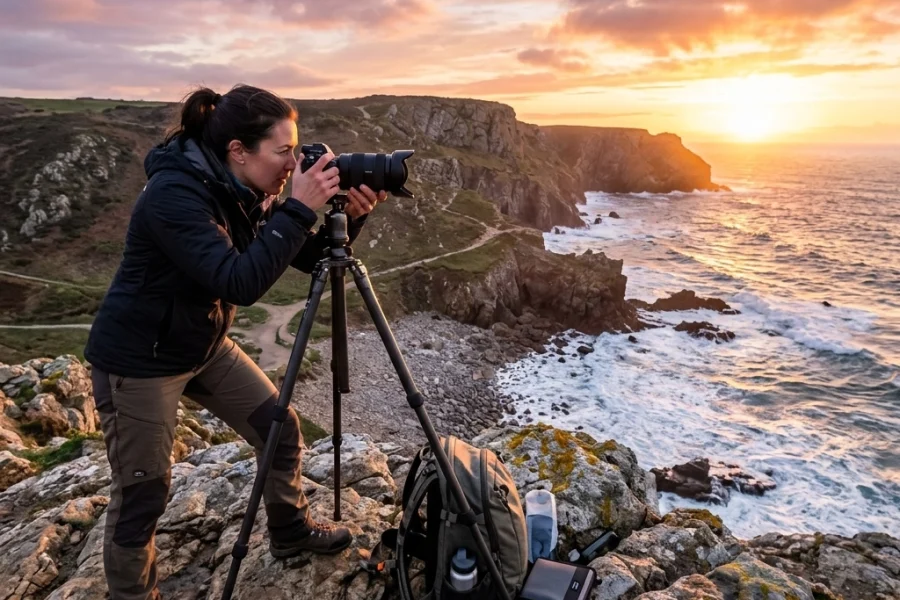
Landscape photography is 10% shooting and 90% waiting for the light to be perfect. But even with perfect light, a bad composition or the wrong focus point can ruin the shot. We’ve identified the 7 biggest mistakes landscape photographers make so you don't have to learn the hard way.

SEO Alt Text: A breathtaking landscape photo of a mountain range at sunrise, showing perfect use of leading lines and a balanced composition.
Level 4: Post-Processing – The Digital Darkroom
A RAW file is like a piece of unbaked dough. It has all the ingredients, but it’s not a cake yet. You have to bake it.
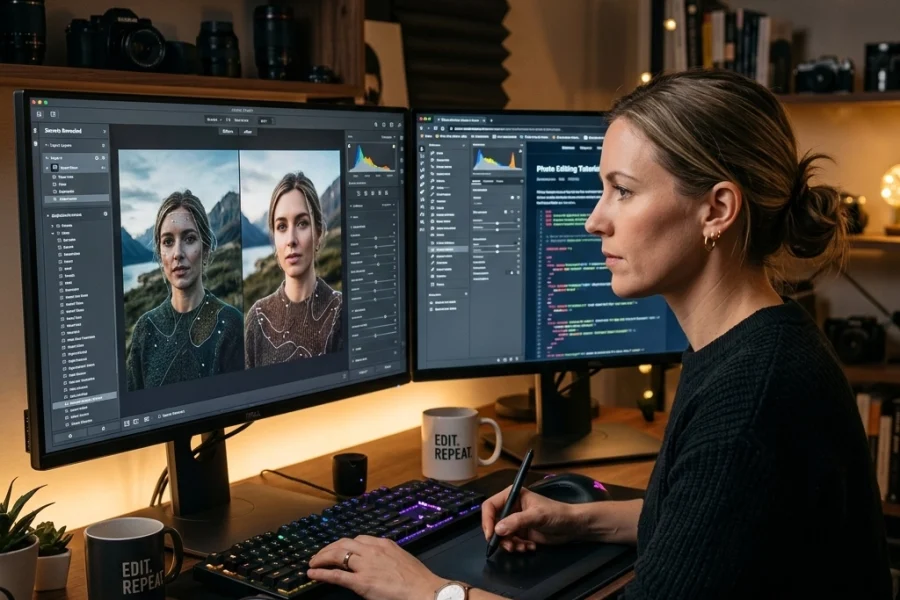
Post-processing is where you define your "look." Whether you prefer the classic feel of Adobe Lightroom or the AI-powered magic of Luminar, our tutorials walk you through the workflow.
We cover:
- Color Grading: How to create a mood using color.
- Masking: How to edit only specific parts of your image.
- AI Retouching: Using modern tools to speed up your workflow without making people look like plastic.
Be careful, though. It’s easy to over-edit. We actually have a whole lesson on mistakes people make with AI photo editing because, let’s be honest, we’ve all pushed that "clarity" slider a little too far once or twice.
Level 5: Staying Ahead of the Industry
In 2026, photography is moving faster than ever. If you aren't keeping up with the latest gear news, you’re going to get left behind. We don't just teach you how to shoot; we teach you what tools to use.
From understanding why the latest camera news changes how you buy gear to choosing between the newest 2026 mirrorless cameras, we keep our students informed. For a more technical deep dive into the industry, you can also check out resources like PhotoGuides.org.

SEO Alt Text: An ultra-realistic close-up of a high-end mirrorless camera lens reflecting a city skyline at night.
How to Actually Succeed in Our School
Most people sign up for courses and then let them sit there. Don't be that person. Here is how you actually get your money's worth and see results:
1. The 1:1 Rule
For every hour you spend watching our photography tutorials, you need to spend at least one hour with your camera in your hand. Watching someone talk about "how to use manual mode camera" settings is not the same as feeling the dial click under your thumb while you try to capture a moving dog.
2. Share Your Work
Photography is a visual language. You can’t learn to speak it if you only talk to yourself. Our community at Shut Your Aperture is designed for feedback. Post your "mistakes." That’s where the growth happens.
3. Don't Be a Gear Snob
I’ll tell you a secret: I’ve seen incredible photos taken on 10-year-old entry-level DSLRs and absolute garbage taken on $6,000 flagship cameras. The gear helps, but the eye is what matters. Learn the fundamentals first. If you're curious about the gear side of things, Edin often shares behind-the-scenes thoughts on blog.edinchavez.com.
Advanced Lighting: The Final Frontier
Once you’ve mastered the sun, it’s time to bring your own light. Off-camera flash and studio lighting are what turn a "good" photographer into a "professional" photographer.
Our advanced tutorials show you:
- How to use a single speedlight to create dramatic shadows.
- How to set up a three-point lighting system for interviews or portraits.
- The difference between softboxes, umbrellas, and beauty dishes.
Lighting is where you truly start to "paint" with your camera. It’s intimidating at first, but once the lightbulb goes off (pun intended), your work will never look the same again.

SEO Alt Text: A professional studio setup with a model, two softboxes, and a photographer using a tripod to capture a high-fashion portrait.
Common Roadblocks and How to Smash Them
"I don't have time."
You don't need eight hours. You need 15 minutes. Set your camera on your kitchen table. Practice changing your aperture without looking at the buttons. That’s how you build muscle memory.
"I don't live in a beautiful place."
Some of the best street photography in the world is shot in "ugly" industrial areas. Beauty is about light and shadow, not just mountains and beaches. Look for textures, look for contrast, and look for the latest industry news to see what other pros are doing in mundane environments.
"I'm overwhelmed by the tech."
Focus on one thing at a time. This week, only worry about shutter speed. Next week, only worry about composition. By the end of the month, you’ll be combining them without even thinking about it.
The Future of Photography at Shut Your Aperture
We are constantly updating our curriculum. As AI changes the landscape and camera manufacturers release new tech, we are right there on the front lines. Whether you are wondering if prime lenses are dead or how to build your 2026 kit, we have the answers.
If you want to see the pinnacle of what’s possible when you master these techniques, take a look at the gallery over at www.edinfineart.com. It’s proof that the time you spend learning pays off in the long run.
Your Path Starts Now
You have the camera. You have the passion. Now you just need the roadmap. Shut Your Aperture is here to provide the most comprehensive photography tutorials on the web. We don't just want you to take "better" photos; we want you to create art that lasts.
Ready to stop guessing and start shooting? Head over to our online school and pick a track. Whether it's mastering the basics of how to use manual mode camera or diving into the world of professional portraits, we’re ready when you are.

SEO Alt Text: A group of diverse photography students on a photo walk, discussing settings and sharing their camera screens in a vibrant urban park.
Photography is a journey, not a destination. There is always a new technique to learn, a new piece of gear to master, and a new way to see the world. Don't let your camera sit on a shelf. Pick it up, turn the dial to Manual, and let's get to work.