
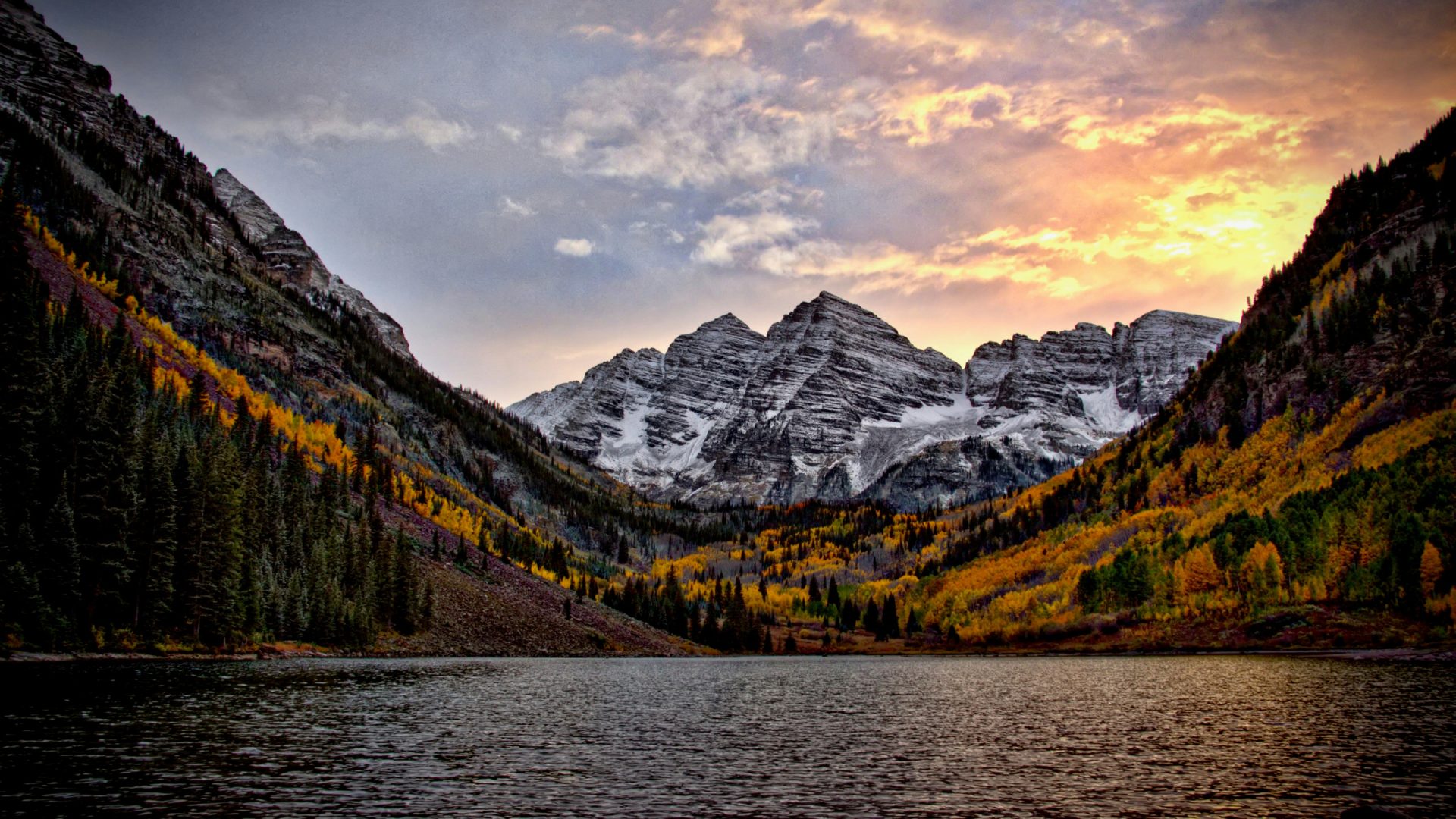
Hero: colorful clouds and rippled water at Maroon Bells. The photograph illustrates a light-and-water combination, not current access or weather. Photo: Mike Scheid. Source · Unsplash License. Resized; no generative edits.
Maroon Bells photography starts with a choice about access, not a lens. A mountain reflection at Maroon Lake, a tighter frame of the peaks and a walk toward Crater Lake need different amounts of time and preparation. A parking reservation does not promise still water or warm light, and a photograph made close to the water does not give you permission to cross a barrier.
This guide separates the current access rules from photographic choices. The credited photographs show different light, seasons and foregrounds. They are illustrations, not a report of today’s trail conditions or a claim that Edin Chavez made every image.
Check the season before planning a sunrise
Late-season 2026 update: The official reservation portal says shuttle service ended October 18, 2026. Parking reservations remain required through October 31. From October 19, the requirement to arrive before 8 a.m. was lifted, but visitors must still stay within their reservation’s valid hours. The portal says parking becomes first-come, first-served November 1, with November 9 the last visit day before the announced November 10 winter road closure. Weather and operational changes can alter access, so check the current notice immediately before traveling.
Those are 2026 dates, not a permanent annual calendar. Do not reuse them for another year. The portal’s parking FAQ still carries different shuttle-season dates from its current home page. Use the current season notice and the terms of your actual reservation rather than combining pieces of old schedules.
For the 2026 shuttle season, the portal lists May 22 through October 18 and restricts inbound private vehicles between 8 a.m. and 5 p.m. Parking reservation holders use the arrival window for their reservation type. The portal explicitly says visitors can depart during the restricted inbound period. That is different from saying cars are banned from traveling in either direction all day.
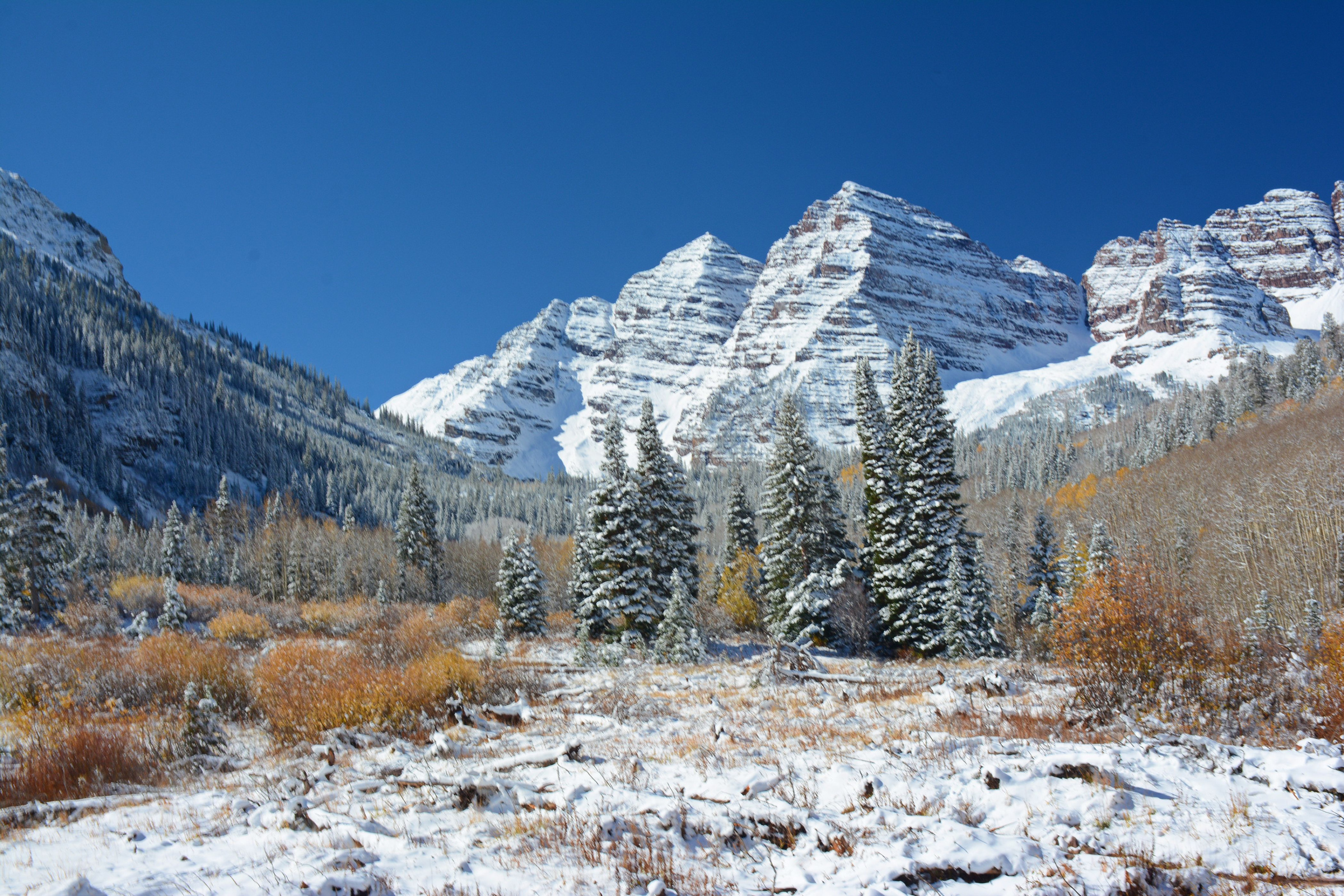
Winter photographs do not imply that ordinary road access is available. When the road closes, treat any winter approach as a separate backcountry plan with current access, weather and avalanche information. This article does not provide a winter route or suggest walking a closed road as a casual substitute for a reservation.
Parking, shuttle tickets and the return journey
The Forest Service scenic-area page directs visitors to the reservation portal for parking and shuttle access. A shuttle reservation and a trailhead parking reservation are different products. A shuttle ticket does not reserve a parking space at Maroon Lake; you leave your vehicle at a lawful starting point and ride to the scenic area.
The portal lists trailhead parking at $10 per vehicle and 2026 shuttle fares at $16 for adults, $10 for children 12 and younger and $10 for seniors 65 and older. Check the final reservation terms for service charges and what a pass covers. The portal separately mentions a $2.40 service fee in its season-pass explanation, so do not assume every quoted entrance fee is an all-in checkout total.
The shuttle starts from the Maroon Bells Welcome Center at Aspen Highlands, 75 Boomerang Road, Aspen. Parking at the Highlands garage costs extra and does not need the same trailhead reservation. Read the portal’s parking options before deciding whether to drive to the garage or use a connecting bus. Do not calculate a sunrise arrival by adding a generic drive-time estimate to a bus departure.
RFTA’s Maroon Bells page lists the last return shuttle from Maroon Lake at 5 p.m. during the shuttle season. Confirm the current schedule and leave time to walk back and wait. A photographer staying for evening light cannot assume a later bus will appear. If your return depends on transit, the departure is a firm part of the shoot plan.
Download your reservation details before leaving town. The portal’s FAQ warns that there is no cell service or Wi-Fi at the scenic area. Save the confirmation, a map and the return instructions offline. Read the display instructions for early or late parking arrivals rather than relying on a phone connection at the entrance.
The Forest Service says a reservation at Silver Bar, Silver Bell or Silver Queen campground removes the need for a separate Maroon Lake parking reservation. That does not guarantee a particular lakeside position, a clear road or a quiet sunrise. Accessibility and child-seat exceptions also have conditions; the portal warns that an exempt arrival without reserved parking may still be turned away when the lot is full. Confirm your exact circumstances with the operator instead of treating an exception as guaranteed admission.
Make a reflection without entering the lake
The Maroon Valley forest order prohibits entering or being in Maroon Lake. Do not wade in to lower the camera or clear a foreground. Stay on designated routes and observation areas, behind ropes and barriers. An older image may show a shoreline position that is not available to you now.
Start by looking from the permitted area at the whole frame: peaks, trees, water and near shoreline. A small movement can separate a tree from a mountain edge or change how much reflection is visible. Work only within the space that is open. If the barrier prevents a complete mirror image, make a different composition instead of moving the tripod beyond it.
Wind and surface movement decide whether the lake acts like a mirror. There is no dependable 45-to-90-minute still-water window after first light, and a low wind estimate for Aspen does not guarantee calm at the lake. A broken reflection can still carry color and shape. Try less water, a tighter frame or a shoreline foreground rather than waiting for a condition that may not arrive.
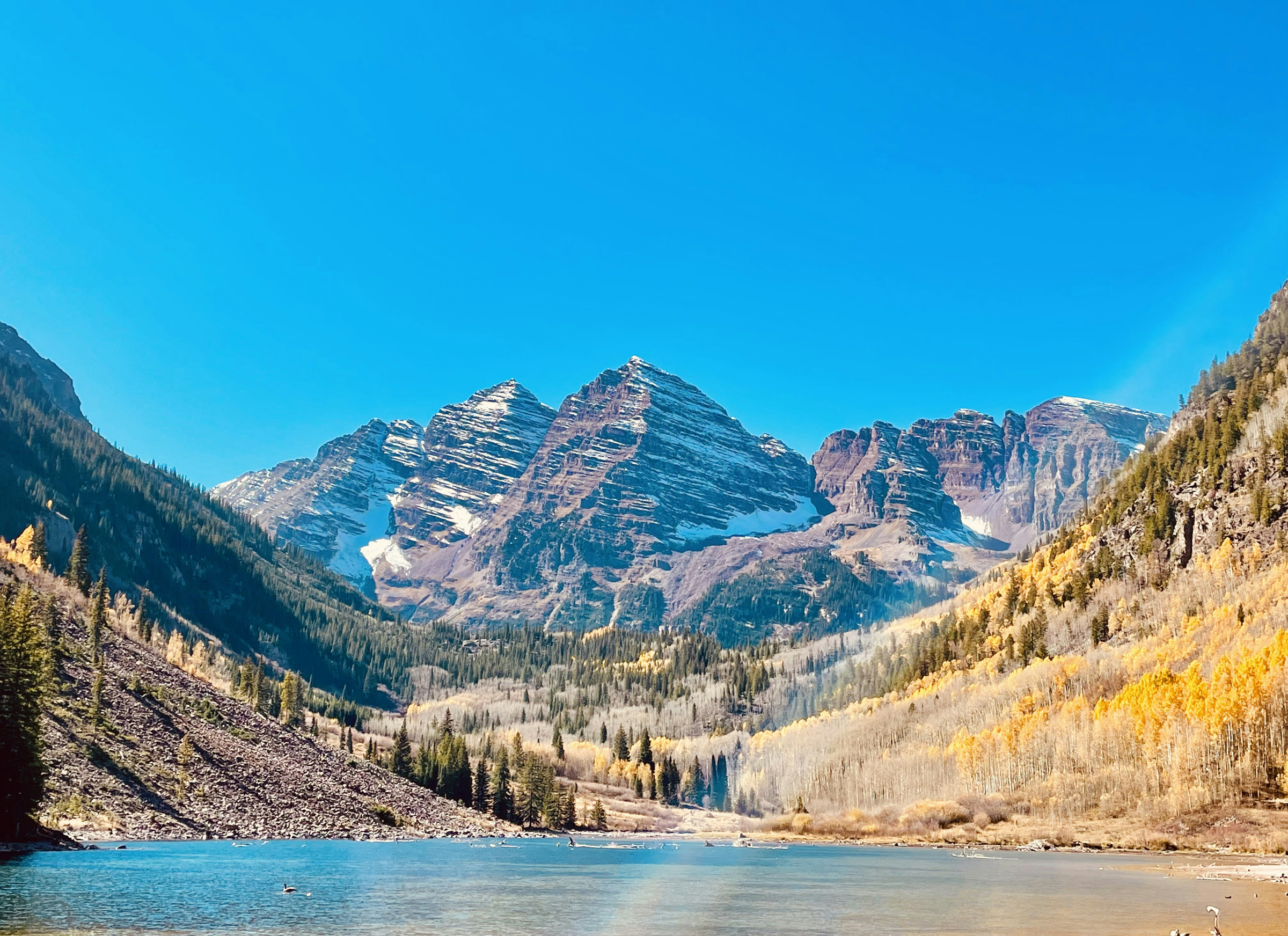 Save
Light: watch what happens, not a fixed timetable
Warm light on the peaks
Early light can separate the mountain faces from a darker valley. Arrive with enough time to walk from your approved access, find a permitted position and set up without rushing. Look at the peaks and the sky as the light changes. Do not assume the warm phase begins a fixed number of minutes before the published sunrise or lasts until a particular clock time.
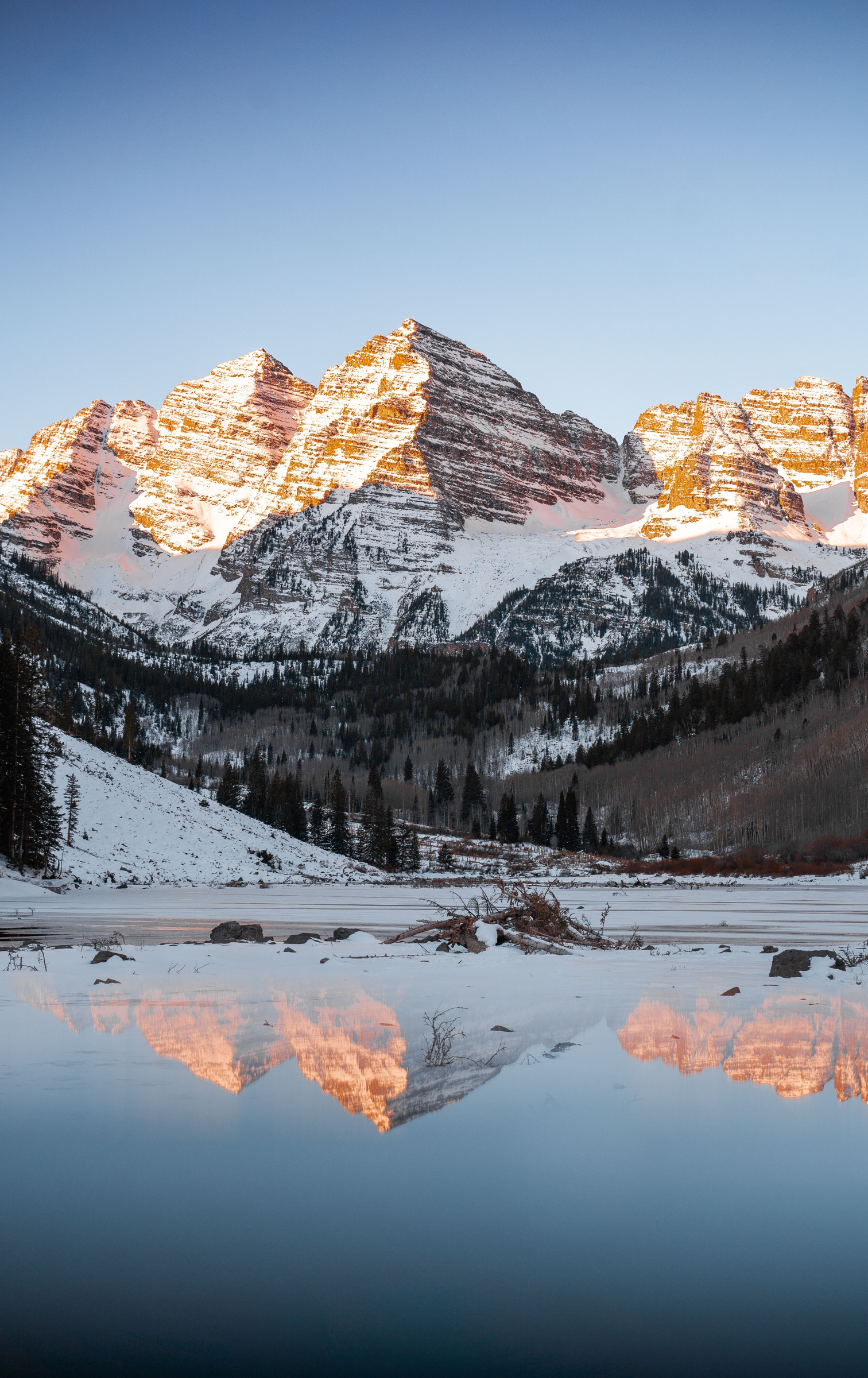
Take a test exposure before the color becomes strongest. Bright snow and sunlit rock may need a darker exposure than the shaded trees suggest. Check the histogram and highlight warning, then decide whether you need a second exposure for the shadows. Keep both frames when the water or leaves move between them; blending is a choice, not an automatic improvement.
A photograph of snow and warm light does not tell you when the road was open, how the photographer arrived or whether the same position is currently allowed. Check access independently. If snow or ice makes the walking surface unsafe, the light is not a reason to continue.
 Save
Clouds, afternoon light and blue hour
Overcast conditions can reduce the contrast between the lake and the peaks. Use the clouds as part of the picture when their structure matters, or give more space to the trees and shoreline when the sky is flat. A polarizer changes glare and reflections; it does not remove cloud or guarantee richer color. Rotate it while watching the actual water because it can weaken the reflection you wanted.
Evening is not a failed sunrise. Shadowed mountains, lit clouds and cooler water can make a different picture. Check your lawful departure before waiting for blue hour. The absence of a crowd is not proof that the road, parking window or return transport remains available.
Carry a light for walking after dark, keep track of the route and stop before visibility becomes a problem. A long exposure makes a dark scene look brighter on the camera screen than it looks to your eyes. Do not let that preview persuade you that a rough path is easy to follow.
 Save
Build several photographs from an allowed position
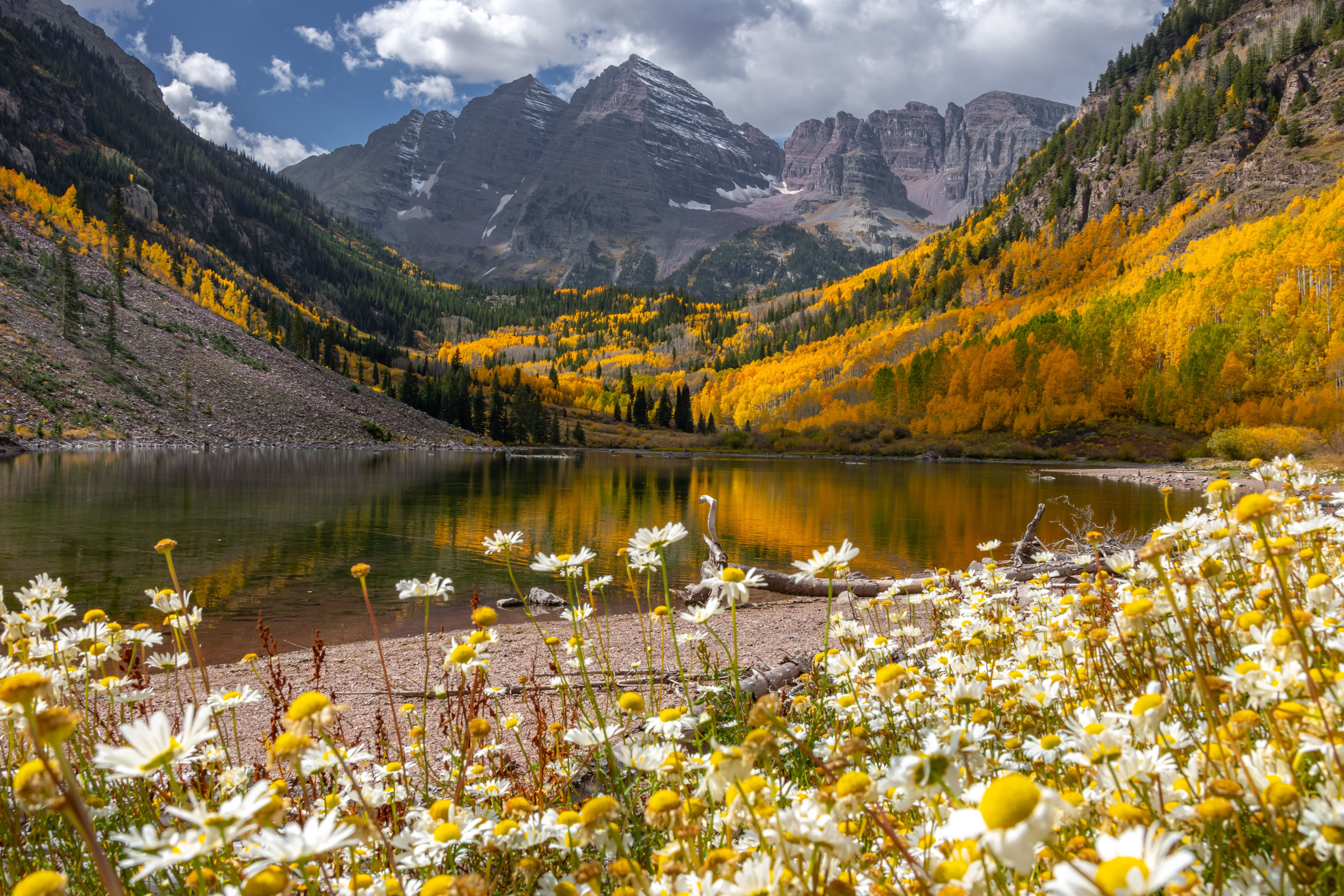
The broad mountain-and-lake frame
A standard zoom is a useful starting point because you can compare a broad view with a tighter one without moving into fragile ground. Include the full reflected shape when the water and permitted viewpoint allow it. If not, decide whether a partial reflection adds something or simply cuts through the main subject.
Check the frame edges for bright branches, cut-off logs and a shoreline that pulls attention away from the peaks. Foreground plants can add depth, but they do not need to fill the bottom half of every picture. Change camera height within the allowed area and compare the result before changing lenses.
For a panorama, keep exposure and white balance consistent and allow enough overlap. Watch moving clouds, water and leaves when judging whether the stitch works. A single frame with a simpler foreground can be stronger than a wide panorama assembled only to include everything.
 Save
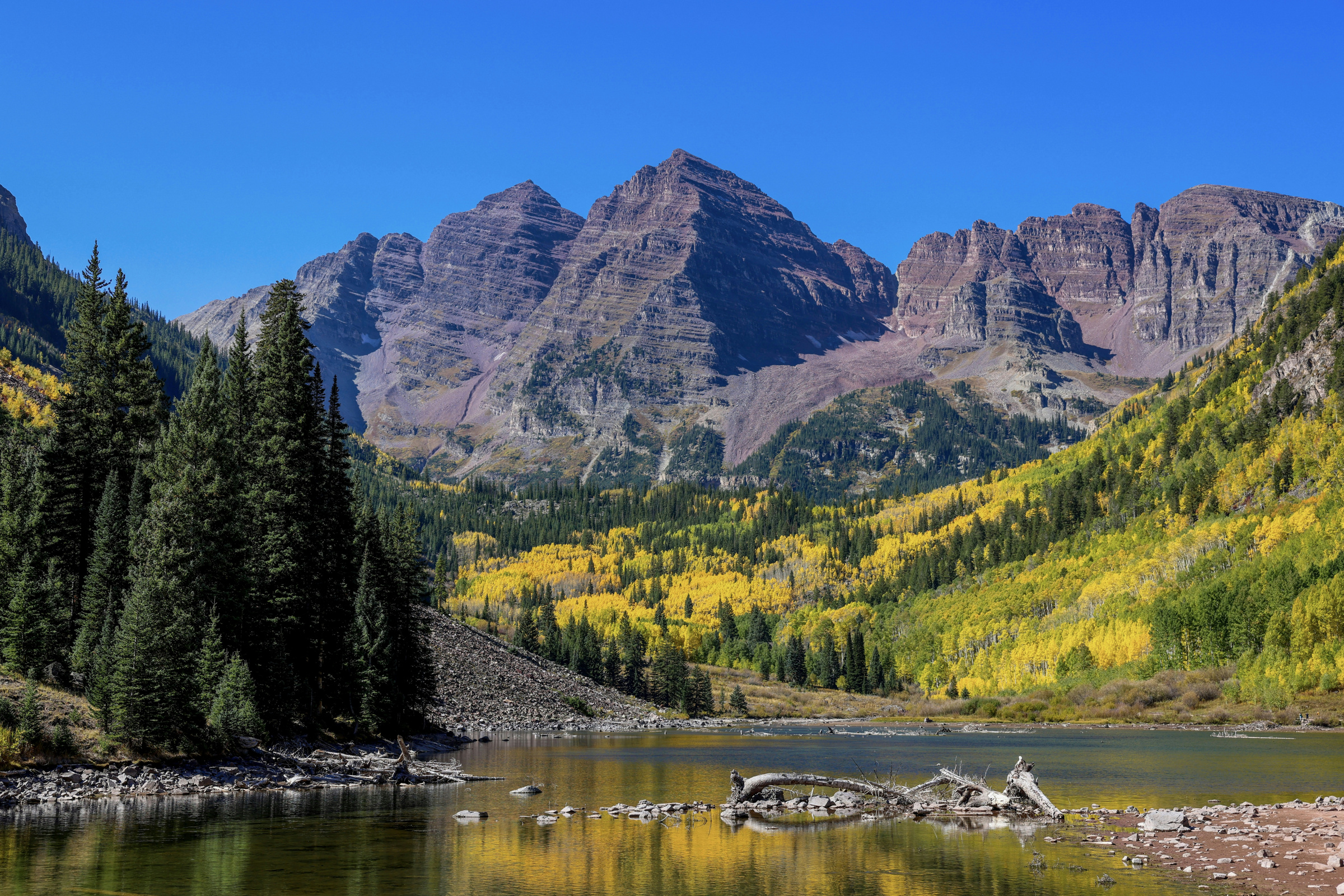
A tighter frame of peaks and trees
A longer focal length can isolate mountain structure, a band of autumn trees or the edge between sunlight and shadow. It is an alternative to repeating the lake reflection, not a requirement to buy a particular lens. Start with the equipment you have and compare how much surrounding valley the picture needs.
Do not call a frame a geological diagram unless you have checked the geology. Describe the visible layers and shapes as photographic subjects. The point is to make their relationships clear, not to attach an unsupported angle, rock age or elevation to a caption.
When the peaks are partly hidden, try a detail of color or texture rather than forcing an incomplete version of the familiar scene. Keep wildlife at a distance and avoid blocking a trail while watching through the viewfinder. Other visitors need the same safe passage you do.
 Save
Crater Lake is a separate hiking decision
The Forest Service’s Crater Lake trail page describes an extremely rocky, dry trail and calls for good hiking shoes and plenty of water. It is not simply another lakeside camera position. Decide whether the route, weather, daylight and your return arrangement make sense before leaving Maroon Lake.
Use the current official trail information and a reliable offline map for distance and navigation. Do not plan around a guaranteed one-hour walk or a promise to reach another alpenglow view before 8 a.m. Your pace with camera equipment, footing and stops may be very different. Turn around with enough time for the actual return, not only the outbound photograph.
Crater Lake and the wider Maroon Bells-Snowmass Wilderness have their own rules. The wilderness page requires advance overnight permits in specified zones, including Crater Lake. An overnight wilderness permit is separate from transport and parking arrangements. Do not turn a day visit into an unplanned camp because the return bus has gone.
The trail page lists bear-resistant food-storage requirements, a group-size limit and camping restrictions. Read those details when planning an overnight trip. This photography guide is not a substitute for a wilderness itinerary, current trail conditions or the rules attached to your permit.
Weather, water and a practical camera kit
The Forest Service warns that mountain conditions change rapidly and recommends layers and rain protection. Carry enough water for the visit: both its current scenic-area page and the reservation portal say water is not available. An older FAQ and a May safety release mention water, but those statements should not be used to plan a refill against the current no-water notice.
Leave room in the schedule for a slower walk at elevation. If you feel unwell, shorten the visit and seek appropriate help rather than trying to finish a composition first. Drinking water does not guarantee that you will avoid altitude illness. This guide does not prescribe an acclimatization schedule or medical treatment.
Use the forecast and current warnings, not a promise that storms always arrive after a particular afternoon hour. Avoid waiting in exposed places for dramatic weather. A camera cover protects equipment, not the photographer from lightning or cold.
- Lens: A normal zoom can cover a broad reflection and a tighter mountain frame. Add a longer lens if you want isolated peaks or distant details.
- Support: Use a stable tripod when shutter speed requires it, only where it does not block a route or cross a barrier. A carbon-fiber model or a particular clamp system is not an entry requirement.
- Exposure: Choose aperture for the depth you need, shutter speed for motion and ISO for the remaining exposure. Magnify a test frame to check focus instead of relying on a universal setting.
- Filters: Test a polarizer before committing to it. A graduated filter can affect a mountain edge unevenly; a separate exposure may suit the scene better.
- Protection: Pack layers, a rain cover, a dry cloth, spare power and a light. Weather sealing is not waterproofing, and no particular camera rating makes poor conditions safe.
Photography permissions and drones
The current national Forest Service filming and photography guidance explains the EXPLORE Act changes. It does not use commercial intent alone as the general permit test. Five or fewer people may work without a permit when the activity meets every listed condition, including public access, hand-carried equipment, no exclusive use and no adverse resource or visitor impact or likely additional administrative cost.
That is not blanket permission for every shoot. The guidance describes a possible authorization for six to eight people and special-use permits for larger or impactful projects. It also requires additional review for proposals intended to produce commercial content in congressionally designated wilderness. Contact the Forest Service about your actual plan, especially for client productions, workshops, exclusive setups or wilderness work. A parking reservation is not a production authorization.
Do not include a drone in the default photography plan. The Forest Service’s drone guidance prohibits takeoff, landing and operation from designated wilderness. Check the actual boundary and all current restrictions rather than assuming that a parking area provides a lawful launch site. This guide does not identify or approve a drone location.
Explore the photo-spots library for other location guides. Check each destination’s own access rules rather than carrying these reservations or permissions into another place.
Frequently asked questions
Can I drive to Maroon Bells for sunrise?
Only when the road is open and your access arrangement allows it. During reservation periods, use the arrival and departure terms for your exact parking reservation. A sunrise plan does not create an exception to road closures or parking rules.
Is the Maroon Bells shuttle still running in late October 2026?
The official portal says the 2026 shuttle season ended October 18. Parking reservations remain required through October 31, with first-come parking announced from November 1 and winter road closure announced for November 10. Check the current notice before traveling.
Can I enter Maroon Lake to improve a reflection?
No. The Maroon Valley forest order prohibits entering or being in Maroon Lake. Stay on permitted routes and observation areas and behind barriers, even when an older photograph shows a closer shoreline position.
Is there drinking water at the scenic area?
The current Forest Service scenic-area page and official reservation portal say water is not available. Bring what you need instead of relying on older FAQ or news statements about refilling there.
Does every commercial photograph require a permit?
The current national Forest Service guidance uses group size, equipment and impacts rather than commercial intent alone as the general test. All conditions must be met. Commercial-content proposals in designated wilderness need additional review; ask the Forest Service about your exact plan.
Is Crater Lake just another easy camera position?
No. The Forest Service describes a rocky, dry hiking trail. Plan the route, conditions, water and return separately. Overnight wilderness permits and transport or parking arrangements cover different parts of a visit.
Access and policy sources checked October 30, 2026. Dates above are labeled for the 2026 season. Confirm current road, reservation, trail and weather information before each visit.
What to Pack
A landscape kit built around wide views, steady support, and changing light is a useful starting point. Compare the gear and choose what fits your camera, budget, and conditions. These links lead to B&H Photo Video and Amazon.
| What & Why | B&H | Amazon |
|---|---|---|
Sony 16-35mm f/2.8 GM Check the camera mount before buying. Choose a focal length that fits the photos you plan to make. | Shop B&H → | Shop Amazon → |
Peak Design Travel Tripod Check the load rating, packed size and local tripod rules before buying. | Shop B&H → | Shop Amazon → |
Breakthrough X4 CPL Check the filter type and lens thread size before buying. Use a filter only when the effect fits your photo. | Shop B&H → | Shop Amazon → |
Breakthrough X4 10-stop ND Check the filter type and lens thread size before buying. Use a filter only when the effect fits your photo. | Shop B&H → | Shop Amazon → |
Sony NP-FZ100 battery Use the battery type specified for your camera. Bring a spare if your shooting plan calls for one. | Shop B&H → | Shop Amazon → |
SanDisk Extreme Pro 128GB Check the card format and speed requirements specified for your camera. | Shop B&H → | Shop Amazon → |
Koh microfiber cloths Compare this option with your current kit. Check compatibility and the product details before buying. | Shop B&H → | Shop Amazon → |
B&H and Amazon links are affiliate links. We earn a small commission on purchases at no extra cost to you.