Best Photography Spots Near Delhi Airport (DEL): Layover Guide
Updated
~12 min read · 2026-09-27
Delhi’s Indira Gandhi International Airport (DEL) is the eleventh-busiest airport in the world – 78.1 million passengers in 2025 – and India’s busiest, a title it has held since 2009. It moves every Indian carrier plus almost every major international airline, and it once handled 82 movements in a single hour. It is also, honestly, the most security-sensitive airport in this series: plane spotting around the Indian capital requires more discipline than anywhere else we cover, and this guide tells you exactly how that works. Below: seven locations within 30 minutes of the terminals, five of India’s greatest photo subjects within an hour, the Airport Express metro reality, and the rules – real ones, from real consequences – that decide what you can shoot.
Why Delhi airport is a photographer's launchpad
DEL’s three runways feed three terminals: T1 (IndiGo and SpiceJet domestic), T2 (more domestic) and T3 (Air India and the international carriers). The variety is the draw – every Indian low-cost carrier, Air India’s widebodies, ATRs to 747s, plus cargo heavies, with international banks often arriving in the hours of darkness and daylight hours rich in domestic exotics. The two honest complications: weather and security. Delhi is smoggy or hazy most of the year – visibility is a problem roughly 90% of the time, with the cleanest air after monsoon (October-November) and after rain – and as the capital’s airport, shared with the Indian Air Force, it is extremely security-sensitive. The established, lower-risk positions below are the ones the local spotting community actually uses; the rules section is the most important part of this guide.
Quick layover map: 7 spots within 30 minutes of DEL
- Terminal 3 airside window fronts — boarding pass required
- Shiv Murti temple park, NH-48 — 29 arrivals, safest option
- Andaz Delhi, Aero City — rooms overlooking 28 arrivals / 10 departures
- Dwarka Sector 21 mall parking — 11 arrivals, metro-accessible
- UER II roadside — 29 arrivals, brief stops only
- Expressway roadside (Aerocity upas) — 28 arrivals, brief stops only
- Mahipalpur extension, exit 3 — 29L/R views, brief stops only
Best photography spots within 30 minutes of Delhi Airport
Terminal 3 Airside Window Fronts
Location: Terminal 3, along the gate window fronts, airside – boarding pass required.
The simplest and safest plane photography at DEL: most aircraft taxiing to and from runways 29/11 pass the T3 piers, with Air India’s widebodies and the international carriers in front of you. 20-300mm covers the scene. Best in the morning and evening; window tint, dirty glass and APU haze are the practical problems. Everything you need is inside the terminal.
Shiv Murti Temple Park, NH-48
Location: Shiv Murti (the giant Hanuman statue) temple park, just off the Delhi-Gurgaon highway before the UER II junction.
The established safe choice for Delhi spotting: a temple park (free entry, roughly 9am-5pm) whose walled parking area gives an open view of runway 29 arrivals – the wide-body runway – in afternoon light, 70-300mm. Because it is a legitimate tourist stop with proper parking, you attract far less attention than at the roadside positions. Trees give shade, and locals confirm this is the position visiting photographers should default to.
Andaz Delhi, Aero City
Location: Andaz Delhi by Hyatt, Aero City hotel district.
The hotel option: certain rooms at the Andaz overlook runway 28 arrivals and 10 departures, so you photograph from your own window in air conditioning – no small thing in Delhi’s heat. Aero City hotels run airport-grade security (luggage X-ray at the door); book a runway-facing room and confirm the view. The sensible base for a dedicated DEL spotting day.
Dwarka Sector 21 Mall Parking
Location: Parking lot in front of the mall at Dwarka Sector 21 metro station (Airport Express line).
The metro-accessible spot: ride the Airport Express one stop past the airport to Dwarka Sector 21 and photograph runway 11 arrivals from the mall parking lot, late morning to evening, at 50-200mm. Shops and food are in the mall. A police post sits right next door – keep a low profile, take a few frames, and move on.
UER II Roadside
Location: Urban Extension Road II, just before the Delhi-Gurgaon highway junction.
A pull-over position for runway 29 arrivals – IndiGo, Air India, SpiceJet, Alliance Air ATRs and some international traffic – best in the afternoon, 70-300mm. Delhi discipline applies in full: stop briefly, photograph one or two aircraft, and leave. Stopping here is not officially permitted, it disrupts traffic, and it draws highway agency and police attention. Do not settle in.
Expressway Roadside, Aerocity Upas
Location: The smaller road running parallel to the expressway west of Aerocity.
The angle for runway 28 arrivals – internationals and cargo along with domestic traffic – from late morning to early evening, 70-300mm. The same discipline, with extras: a large police building stands just across the expressway, you are beside the perimeter wall (never attempt to look over or climb it), stopping is not allowed, and tow trucks work this road quickly. One or two frames from the car, then go.
Mahipalpur Extension, Exit 3
Location: Exit 3 of the Mahipalpur extension road.
A community-contributed position with excellent visibility of the 29L/R runways where brief stops are tolerated; heat haze, weather and backlight are the challenges. Treat it like the other roadside spots: brief stop, low profile, move on.
Best photography spots within 1 hour of Delhi Airport
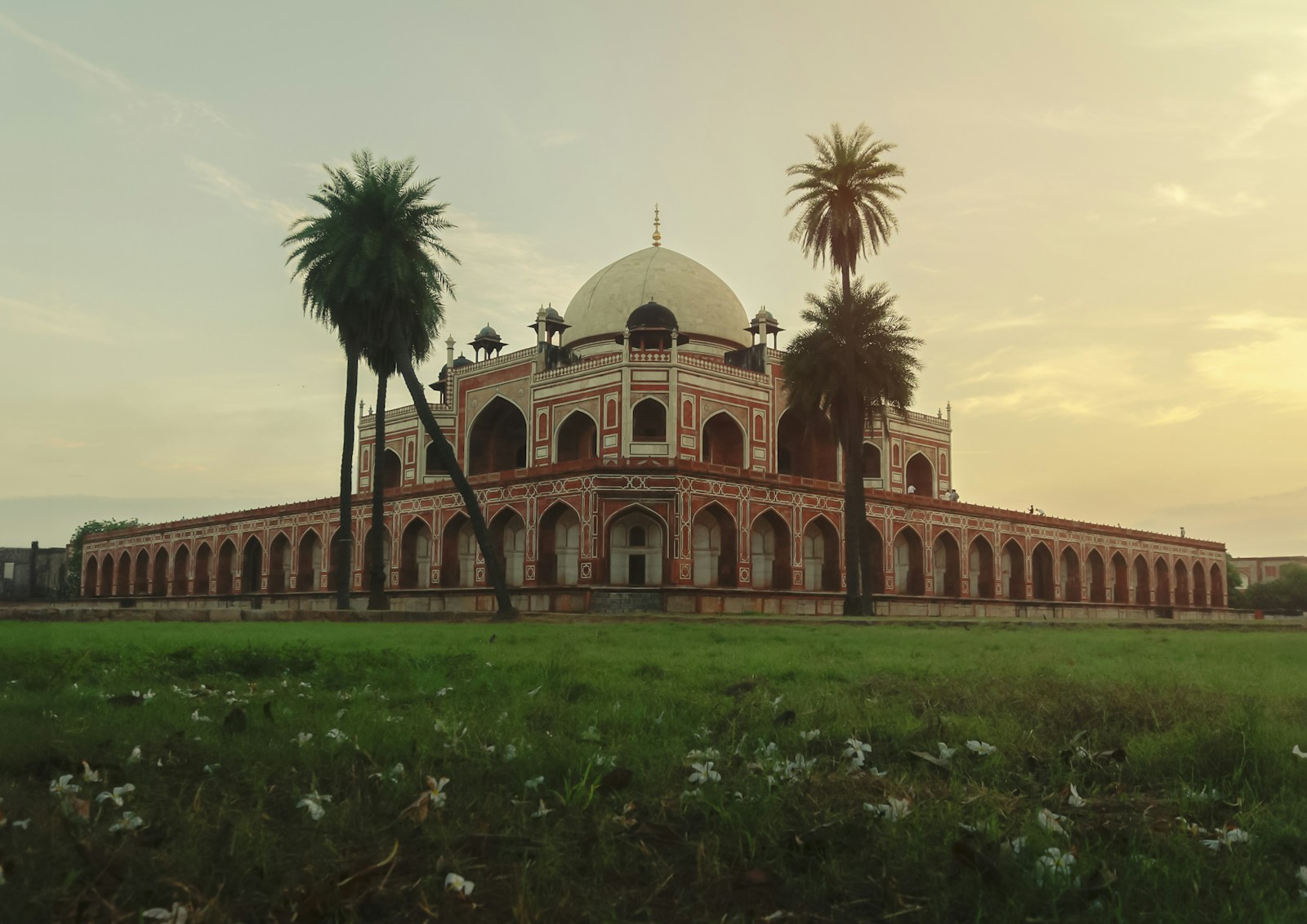
Humayun's Tomb
Location: approx 28.5933, 77.2507
The 16th-century garden tomb that became the architectural template for the Taj Mahal – red sandstone and white marble symmetry inside a charbagh garden, UNESCO-listed. First light through the morning haze is magical here; arrive at opening. About 40 minutes from DEL by car, or Airport Express to New Delhi then the metro/violet line toward JLN Stadium.
 Save
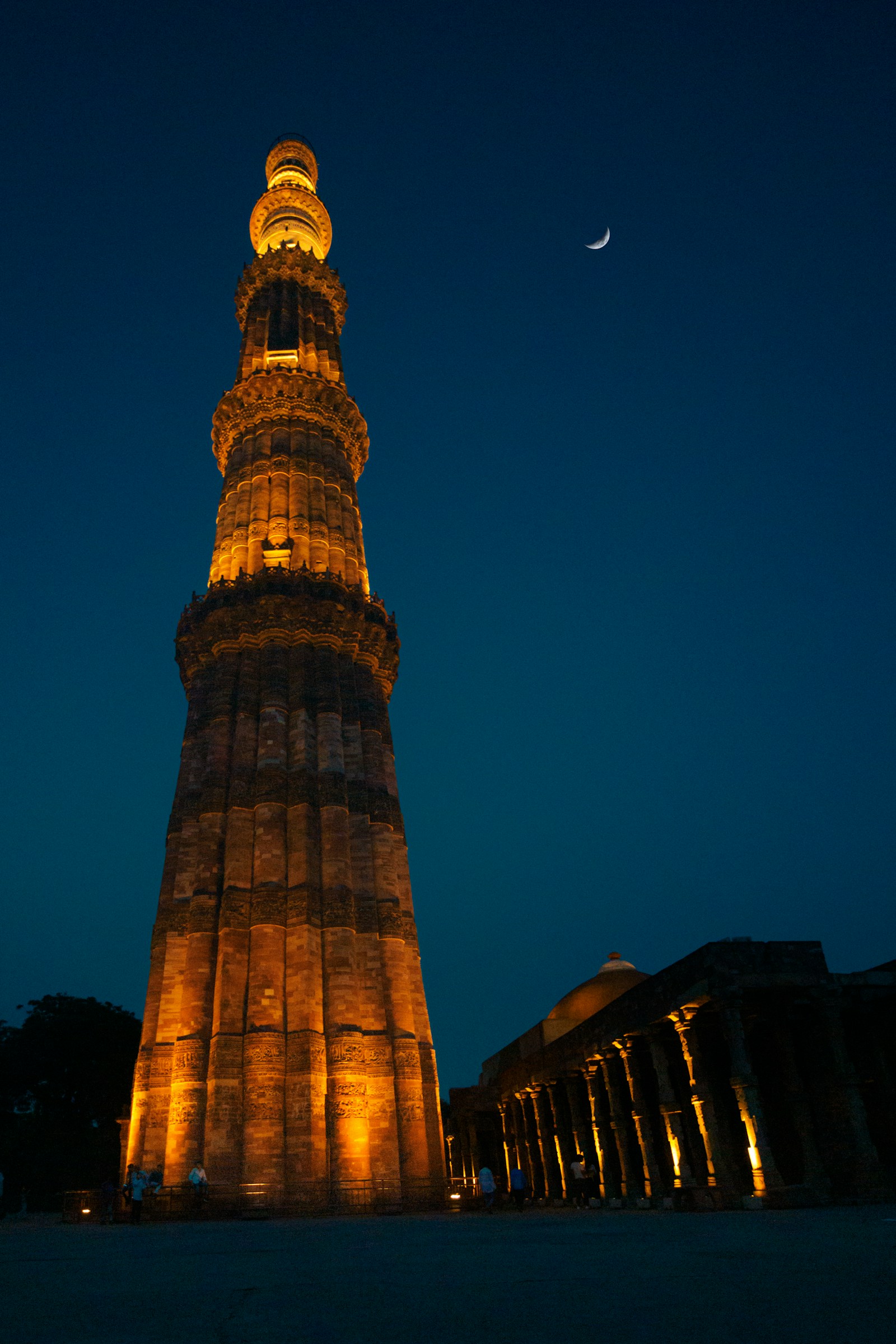
Qutub Minar
Location: approx 28.5245, 77.1855
The 73-meter brick minaret begun in 1199 – the world’s tallest brick minaret – inside a complex of early Islamic ruins and the famous 1,600-year-old rust-free iron pillar. Late afternoon light rakes the carved sandstone bands. About 30 minutes south of the airport by car; metro Yellow Line to Saket/Qutub Minar then a short auto-rickshaw.
 Save
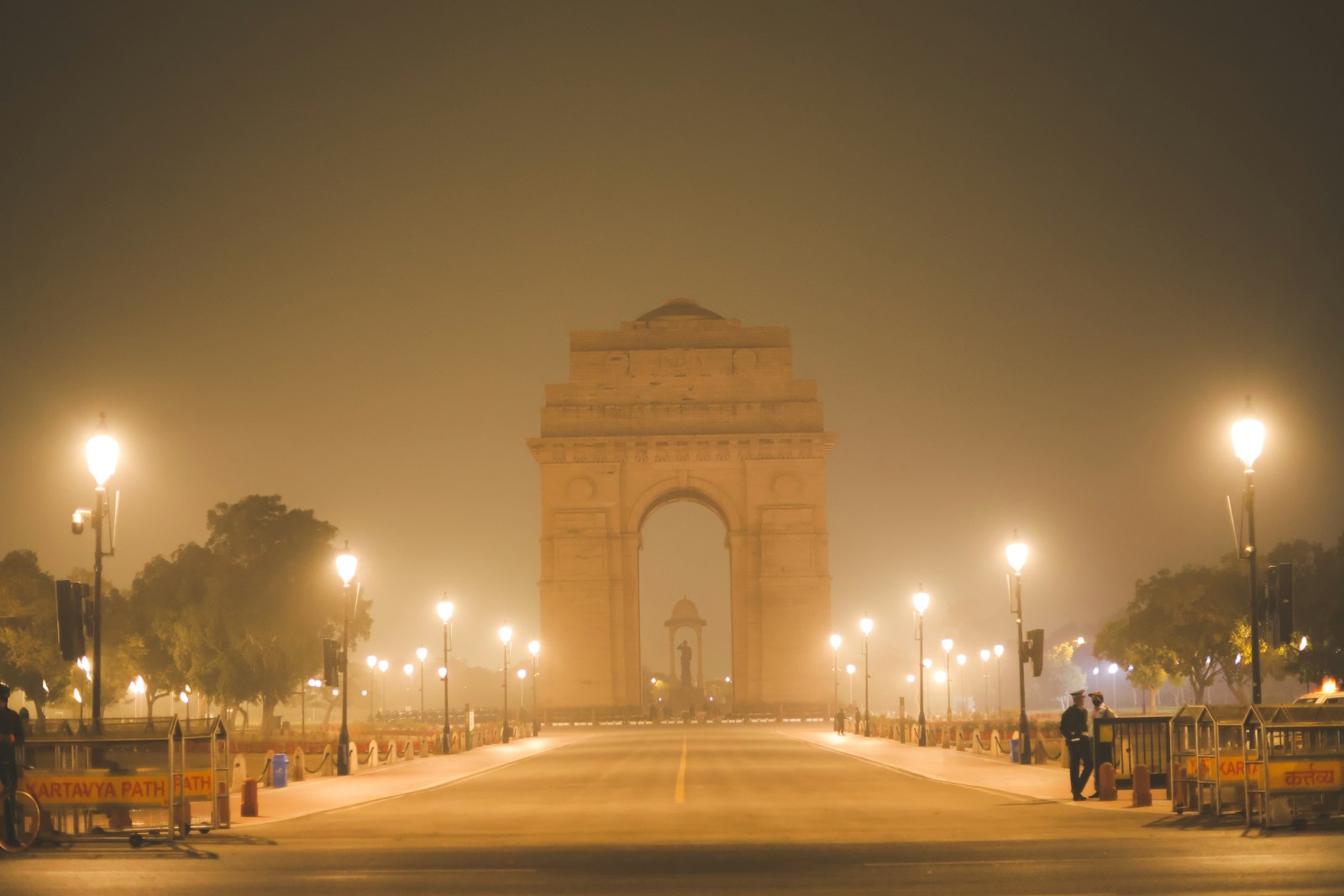
India Gate and Kartavya Path
Location: approx 28.6129, 77.2295
Delhi’s ceremonial axis: the 42-meter India Gate arch at the east end of Kartavya Path, with the water channels and lawns of the Central Vista. Blue hour, when the arch is floodlit and the crowds swirl, is the shot; sunrise gives empty frames through the haze. Airport Express to New Delhi or Shivaji Stadium, then a short ride.
 Save
Jama Masjid and Chandni Chowk
Location: approx 28.6507, 77.2334
Old Delhi at full intensity: the courtyard of India’s largest mosque (climb the minaret for the rooftop panorama over the old city) and the Chandni Chowk bazaar lanes below – cycle rickshaws, spice sacks, street food, temple spires. Modest dress and shoe removal at the mosque; a small camera fee applies. Metro Yellow Line to Chandni Chowk.
Agrasen ki Baoli
Location: approx 28.6260, 77.2250
A centuries-old stepwell hidden in a downtown lane: 108 stone steps descending between arched niches, free entry, and one of Delhi’s most distinctive frames – shoot down the well’s axis for pure geometry. Best mid-morning. Walking distance from Barakhamba Road metro, a short hop from Shivaji Stadium on the Airport Express.
Photographing the airport itself
Inside the terminals, handheld photography in public areas is tolerated, and T3’s airside window fronts are the established apron vantage. Everything outside the terminal is a different matter at DEL: the airfield is ringed by concrete walls (never attempt to see over or climb them), the airport is shared with the Indian Air Force, and roadside photography positions draw police attention quickly. If you stop at the roadside spots, shoot from the car, take one or two frames, and leave. The terminal, the Shiv Murti temple park and a runway-facing Andaz room are the low-friction choices.
Layover length guide
2-hour layover
Two hours at DEL: stay airside in T3 and work the window fronts with a 70-200mm – the Air India widebody and international traffic is constant. Delhi’s terminals are large; do not attempt anything landside.
4-hour layover
Four hours: a runway-facing Andaz room is the comfortable answer if you plan ahead; otherwise the Shiv Murti temple park for 29 arrivals in the afternoon (taxi or ride-hail, about 15-20 minutes from the terminal). Skip the roadside pull-over spots on a tight clock – a single police interaction costs more time than the position is worth.
6-hour-plus layover
Six hours opens the city if you can enter India – most foreign nationals need an e-Visa, obtained online in advance (do this before travel, not at the airport). Airport Express from T3 to New Delhi station in about 25 minutes (₹64), then: Humayun’s Tomb and India Gate on one circuit, or Qutub Minar on its own. With 8+ hours add Old Delhi’s Jama Masjid and Chandni Chowk. Keep a 2-hour return buffer – Delhi’s security screening at both metro and airport is thorough.
Camera and lens recommendations for layovers
Delhi layover kit: a 70-300mm zoom covers every listed spot including the terminal windows. Distances are short at the temple park and mall spots (50-200mm is often enough). No ladder – it would be read as an attempt on the perimeter wall and end your day with the police. The city work wants a 24-70mm plus something fast for Chandni Chowk’s lanes. The defining constraint is the air itself: Delhi’s smog and haze soften everything roughly 90% of the year, and summer heat haze compounds it. The best aviation-image days are October-November after the monsoon, and the first clear day after rain any time of year; winter mornings bring dense fog that can zero out visibility entirely. Check the air quality and visibility forecast before planning a spotting session.
Transit from DEL to top spots
Airport Express (Orange Line): Terminal 3 station to New Delhi Railway Station in about 25 minutes, ₹64, first trains around 4:45 AM and last around 11:15-11:30 PM; Shivaji Stadium (for Connaught Place and Agrasen ki Baoli) and Dhaula Kuan are en route, and Dwarka Sector 21 is one stop past the airport for the mall spotting position. T2 is a short walk or shuttle from T3. Delhi Metro’s wider network reaches every city subject in this guide for pocket change. Ride-hail (Uber and Ola) and prepaid official taxis queue at each terminal – to Aero City about 10 minutes, to Connaught Place 40-60 minutes depending on Delhi’s formidable traffic. A car is required for the roadside spotting positions, and Delhi’s driving is aggressive: if you are not comfortable in it, take a car with a driver, which is inexpensive and standard practice.
Photography restrictions and aviation rules
Drones: India’s Drone Rules 2021 map airspace on the DGCA’s Digital Sky platform – within 5 km of the airport perimeter is a red zone where drone flight is prohibited, and much of central Delhi (the national capital’s government district) carries its own restrictions. Practically: do not fly a drone anywhere in this guide. Ground photography needs the most honest paragraph in this series: DEL is a high-sensitivity airport. Indian and foreign spotters have been stopped, questioned, and in the worst cases taken in for background checks for photographing aircraft from the roadside. The rules the local community lives by: never photograph Indian Air Force traffic, ever; stay at the established positions; keep roadside stops to one or two frames from the car; never approach, climb, or photograph over the perimeter walls; carry your passport and visa at all times; and comply immediately and politely with police or security. The low-risk path – terminal windows, Shiv Murti temple park, the Andaz rooms, the Dwarka mall lot – still delivers the full variety of Indian aviation. Photographing monuments and city subjects is normal and welcomed; monument camera fees at some sites are standard and small.
Frequently asked questions
Can I leave Delhi airport during a layover for photography?
Yes, with 6+ hours and the right paperwork – most foreign nationals need an Indian e-Visa, which you must arrange online before travel. The Airport Express metro runs from T3 to New Delhi station in about 25 minutes (₹64), putting Humayun’s Tomb, India Gate and Connaught Place within reach. Keep a 2-hour return buffer for metro and airport security screening.
What is the best plane spotting location at Delhi airport?
The safest established option is the Shiv Murti temple park on NH-48 – free, legal, parked off the road, with open views of runway 29’s wide-body arrivals in the afternoon. Airside, Terminal 3’s window fronts are excellent. The roadside pull-over positions work but demand brief stops and real caution: DEL is the most security-sensitive airport we cover, and lingering is how photographers end up in questioning rooms. Never photograph military aircraft.
Are drones allowed near Delhi airport?
No. Under India’s Drone Rules 2021 the airspace within 5 km of the airport perimeter is a red zone – prohibited – and central Delhi is heavily restricted as the seat of government. Check the DGCA Digital Sky map for any location; the practical answer everywhere in this guide is no. Fines and confiscation are real, and enforcement in the capital is strict.
How far is central Delhi from the airport?
About 16 km to Connaught Place. The Airport Express metro covers T3 to New Delhi Railway Station in about 25 minutes (₹64) from around 4:45 AM to 11:30 PM; a taxi takes 40-60 minutes depending on traffic. Aero City, the hotel district, is 10 minutes away and walkable from T3.
Can I photograph inside the Delhi airport terminals?
Yes – handheld photography in public areas is tolerated and T3’s airside windows are a well-used apron vantage. Do not photograph security checkpoints, immigration, or security personnel, and expect extra scrutiny generally: this is the capital’s airport. Outside the terminal, follow the location guidance in this guide closely and keep stops short.
More airport guides: browse the complete airport photography hub → for sibling guides.
What to Pack
A landscape kit built around wide views, steady support, and changing light is a useful starting point. Compare the gear and choose what fits your camera, budget, and conditions. These links lead to B&H Photo Video and Amazon.
| What & Why | B&H | Amazon |
|---|---|---|
Sony 16-35mm f/2.8 GM Check the camera mount before buying. Choose a focal length that fits the photos you plan to make. | Shop B&H → | Shop Amazon → |
Peak Design Travel Tripod Check the load rating, packed size and local tripod rules before buying. | Shop B&H → | Shop Amazon → |
Breakthrough X4 CPL Check the filter type and lens thread size before buying. Use a filter only when the effect fits your photo. | Shop B&H → | Shop Amazon → |
Breakthrough X4 10-stop ND Check the filter type and lens thread size before buying. Use a filter only when the effect fits your photo. | Shop B&H → | Shop Amazon → |
Sony NP-FZ100 battery Use the battery type specified for your camera. Bring a spare if your shooting plan calls for one. | Shop B&H → | Shop Amazon → |
SanDisk Extreme Pro 128GB Check the card format and speed requirements specified for your camera. | Shop B&H → | Shop Amazon → |
Koh microfiber cloths Compare this option with your current kit. Check compatibility and the product details before buying. | Shop B&H → | Shop Amazon → |
B&H and Amazon links are affiliate links. We earn a small commission on purchases at no extra cost to you.